Visionary
 82
82

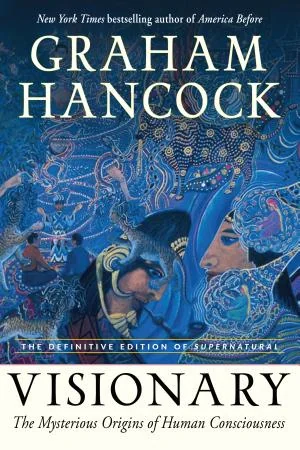
Visionary
Graham Hancock’s *Visionary* is less a historical account and more a speculative ethnography of the human mind. He argues compellingly that altered states of consciousness, particularly those brought on by entheogenic plants, were the crucible in which human culture, art, and spirituality were forged. Hancock’s strength lies in his ability to synthesize disparate fields – anthropology, archaeology, psychology, and even neuroscience – to build his case. The work’s limitation, however, is its reliance on interpretation over definitive proof, a necessary hurdle when discussing subjective experiences from prehistory. A passage detailing the interpretation of the Lascaux cave paintings as potentially mapping visionary journeys vividly illustrates Hancock's approach. Ultimately, *Visionary* offers a radical re-framing of humanity’s origins, prioritizing inner experience as a foundational element of our species' development.
📝 Description
82
Graham Hancock's 2007 book, *Supernatural*, reissued as *Visionary* in 2022, challenges conventional ancient history.
First published in 2007 as *Supernatural* and reissued in 2022, Graham Hancock's *Visionary* examines how altered states of consciousness may have shaped early human culture. Hancock argues that the subjective experiences induced by psychedelic substances were not peripheral but central to the development of human imagination, spirituality, and abstract thought. This work moves beyond physical archaeology to consider the role of shamanic practices and visionary states in our species' cognitive evolution.
The book appeals to readers interested in the connections between anthropology, psychology, and religious history. It is for those who question established timelines of human development and look for alternative explanations for the emergence of complex thought and symbolic expression. Individuals drawn to shamanism, altered states, and the idea that consciousness can drive cultural innovation will find much here to consider.
Hancock's work taps into a long tradition of inquiry into shamanism and altered states as sources of knowledge and cultural genesis. It echoes the research of figures like R. Gordon Wasson, who studied the use of psilocybin mushrooms in indigenous cultures, and Terence McKenna, who championed the role of psychedelics in human development. The book engages with the idea that visionary experiences, often facilitated by psychotropic plants, were instrumental in the birth of human mythologies and sophisticated abstract thought, positioning consciousness as a primary driver of cultural innovation.
💡 Why Read This Book?
• Gain an alternative perspective on prehistoric art, understanding the Lascaux cave paintings not just as decoration but as potential maps of visionary journeys, challenging conventional art historical interpretations. • Explore the entheogenic theory of religion, learning how substances like psilocybin might have been critical catalysts for the development of early spiritual beliefs and complex human consciousness. • Re-evaluate human cognitive evolution by considering the role of shamanic experiences and altered states, moving beyond purely materialist explanations for our species' intellectual and cultural leaps.
⭐ Reader Reviews
Honest opinions from readers who have explored this book.
❓ Frequently Asked Questions
What is the primary argument of Graham Hancock's Visionary?
The book's central thesis is that altered states of consciousness, particularly those induced by entheogenic plants, were crucial drivers in the development of early human culture, art, spirituality, and abstract thought, challenging conventional historical narratives.
What historical period does Visionary primarily focus on?
Visionary concentrates on the Upper Paleolithic and Neolithic periods, examining the origins of human consciousness, symbolic representation, and early religious experiences from around 40,000 BCE onwards.
What is the connection between shamanism and the book's thesis?
Hancock posits that shamanic practices, involving visions and altered states, represent a primordial form of human experience that laid the groundwork for later religious and cultural developments, linking them to prehistoric cave art.
How does Visionary relate to the book Supernatural?
Visionary is the 2022 reissue of Graham Hancock's 2007 book titled Supernatural, which itself was published by Disinformation. The core content remains largely the same, updated for a new edition.
Does the book offer scientific proof for its claims?
While Hancock synthesizes findings from various disciplines, the book primarily offers interpretations and theories based on anthropological evidence, ancient art, and psychological studies of altered states, rather than definitive scientific proof.
What is the significance of cave paintings discussed in Visionary?
Hancock interprets cave paintings, such as those at Lascaux and Chauvet Cave (dating back over 30,000 years), as potentially representing visionary experiences and shamanic cosmology, suggesting a shared ancient perceptual reality.
🔮 Key Themes & Symbolism
Entheogenic Origins of Consciousness
The book champions the view that substances like psilocybin mushrooms and ayahuasca were not mere recreational aids but fundamental catalysts for the emergence of human self-awareness, symbolic language, and complex thought. Hancock argues that these entheogenic experiences provided early humans with clear insights into the nature of reality, leading to the development of mythology, religion, and art. He suggests this 'spirit plant medicine' was integral to our species' cognitive leap, a perspective often sidelined by mainstream scientific and historical discourse.
The Shamanic Worldview
Visionary studies the universality of shamanic practices across disparate ancient cultures. Hancock proposes that a common thread connecting these traditions is the exploration of non-ordinary reality through altered states of consciousness. He links the visions experienced by shamans – often involving encounters with spirit beings and journeys to other realms – directly to the imagery found in prehistoric art, such as the cave paintings of Europe dating back tens of thousands of years.
Challenging Historical Orthodoxy
A central theme is Hancock's critique of established archaeological and historical paradigms that he believes have neglected or deliberately ignored the role of subjective experience and altered states in human development. He contends that conventional approaches, focusing solely on material culture, fail to account for the rich inner lives and symbolic expressions of ancient peoples. The book advocates for a more holistic understanding that integrates consciousness as a primary factor in our evolutionary story.
Consciousness as Primary Reality
Rather than viewing consciousness as a mere byproduct of brain activity, Hancock suggests it may be a fundamental aspect of reality itself. The visionary experiences described in the book hint at a deeper, interconnected consciousness that early humans perceived more directly. This perspective challenges the materialistic worldview and opens possibilities for understanding ancient wisdom traditions and their emphasis on inner exploration and spiritual insight.
💬 Memorable Quotes
Direct passages from the work, attributed to the author.
“The visions were not invented; they were discovered.”
— This interpretation of a core idea suggests that Hancock believes the experiences accessed through altered states are not mere figments of imagination but represent encounters with an actual, albeit non-ordinary, dimension of reality that humans have historically perceived.
“Cave art as a map of the spirit world.”
— This interpretation frames the book's analysis of prehistoric art, suggesting that ancient paintings are not merely decorative but serve as symbolic representations or 'maps' of the visionary landscapes and spiritual realities experienced by early shamans.
“The suppression of the shamanic past.”
— This concept points to Hancock's view that modern society, particularly its academic and scientific establishments, has largely ignored or actively suppressed the significance of shamanic experiences and altered states in understanding human origins and consciousness.
“The birth of religion from visionary experience.”
— This interpretation connects the emergence of early religious beliefs and practices directly to the profound and often awe-inspiring experiences encountered during shamanic journeys and altered states of consciousness.
💡 Key Ideas
Editorial paraphrase of the work's core concepts — not direct quotes.
Psychedelics may have been the trigger for the human imagination.
This paraphrased concept highlights the book's central argument that psychedelic substances played a key role in unlocking abstract thought, creativity, and symbolic representation, thereby catalyzing the development of human culture and consciousness.
🌙 Esoteric Significance
Tradition
The work aligns with Gnostic and Hermetic traditions that posit hidden knowledge accessible through altered states or direct experience, rather than solely through rational intellect or dogma. It echoes ancient shamanic practices found globally, predating formalized esoteric schools, suggesting a universal human capacity for accessing non-ordinary realities. Hancock’s approach can be seen as re-interpreting these ancient practices through a modern lens, emphasizing consciousness as a primary force in evolution, distinct from purely materialist or religious doctrines.
Symbolism
Key symbols include the 'shamanic journey' itself, representing the exploration of inner or other dimensions of reality. The labyrinth, often found in ancient art and mythology, symbolizes the complex path of consciousness exploration and the potential for disorientation and revelation. Animal spirits and visionary figures depicted in prehistoric art, such as the famous 'sorcerer' of Les Trois-Frères, are interpreted not as literal beings but as potent symbols of the archetypal forces encountered in altered states.
Modern Relevance
Hancock's work remains relevant to contemporary psychedelic research, consciousness studies, and neo-shamanic movements. Thinkers exploring the intersection of psychedelics and spirituality, and artists inspired by visionary experiences, frequently cite or engage with his ideas. His emphasis on subjective experience as a valid source of knowledge speaks to post-materialist philosophies and individuals seeking to integrate ancient wisdom with modern scientific inquiry, particularly in fields like anthropology of religion and psychology.
👥 Who Should Read This Book
• Students of comparative religion and ancient mythology seeking alternative explanations for the origins of spiritual beliefs and symbolic systems. • Explorers of consciousness and altered states interested in the potential role of entheogens in human evolution and cultural development. • Skeptics of mainstream historical narratives who are open to unconventional interpretations of prehistoric art and the early development of human cognition.
📜 Historical Context
Graham Hancock’s *Visionary* (originally *Supernatural*, 2007) arrived during a period of burgeoning interest in consciousness studies and the anthropological exploration of shamanism, spearheaded by figures like Terence McKenna. It engaged with, and often challenged, established archaeological narratives that had largely relegated altered states of consciousness to a secondary role in human development. The book’s re-release in 2022 places it within a contemporary landscape where psychedelics are experiencing a renaissance in therapeutic and research settings, and where questions of consciousness are increasingly central. Hancock’s work can be seen as a continuation of the entheogenic theory of religion, a concept explored by researchers like R. Gordon Wasson in the mid-20th century. While mainstream archaeology often debated his theories, figures like historian John Mearsheimer have engaged with Hancock's broader critiques of historical interpretation, even if not directly on his specific theories.
📔 Journal Prompts
The concept of the 'shamanic journey' as a map.
Visionary art's role in understanding consciousness.
The entheogenic trigger for human imagination.
Re-evaluating the suppression of the shamanic past.
The discovery versus invention of visionary experiences.
🗂️ Glossary
Entheogen
A psychoactive substance that is used in a religious or shamanic context, believed to connect the user to the divine or to facilitate spiritual experiences. Examples include psilocybin mushrooms and ayahuasca.
Shamanism
A spiritual practice originating in ancient cultures, characterized by a practitioner's alleged ability to communicate with the spirit world, often through trance states or altered consciousness.
Altered States of Consciousness (ASC)
Any mental state significantly different from ordinary waking consciousness, often characterized by profound changes in perception, mood, and cognitive processes, frequently induced by meditation, dreams, or psychoactive substances.
Visionary Art
Art created under the influence of altered states of consciousness, or art intended to depict or evoke such states. It often features symbolic imagery, abstract patterns, and encounters with non-ordinary realities.
Paleolithic Era
The prehistoric period during which stone tools were first widely used, spanning from about 2.5 million years ago to the end of the last ice age (around 10,000 BCE). The Upper Paleolithic is particularly relevant for early symbolic art.
Cognitive Revolution
A hypothesized period around 70,000 years ago when Homo sapiens developed new ways of thinking and communicating, leading to cultural and technological advancements. Hancock links this to the emergence of visionary experiences.
Archetype
A universally understood symbol, character, or pattern of behavior that recurs in different cultures and contexts, often seen as manifesting in dreams and visionary experiences.
This book appears in 1 collection
🔮 Readers Also Liked
Browse all →







From the “Shamanism” Collection
View all →






More Free Occult Philosophy Books
View all →