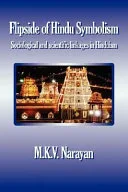
Flipside of Hindu Symbolism
 72
72

Flipside of Hindu Symbolism
Narayan’s "Flipside of Hindu Symbolism" is a welcome counterpoint to the often-sanitized portrayals of Hindu iconography. Instead of merely cataloging the pantheon, Narayan seems more interested in the conceptual 'flipside' – the less-discussed implications and alternative readings of well-known symbols. The strength lies in its analytical rigor, challenging readers to question received meanings. For instance, his discussion of the symbolism surrounding Kali, moving beyond the typical 'destroyer of evil' to explore its potential as a symbol of primal creative energy, is particularly striking. A limitation, however, is the book's dense prose, which can sometimes obscure the very insights it seeks to illuminate. The author’s departure from mainstream interpretations, while laudable, may alienate those seeking straightforward devotional material. Ultimately, it is a work for the intellectually curious, offering a more complex understanding of Hindu symbolism.
📝 Description
72
M.K.V. Narayan's 2007 book challenges conventional interpretations of Hindu symbolism.
Published in 2007, "Flipside of Hindu Symbolism" offers a distinct perspective on Hindu traditions. M.K.V. Narayan moves past standard explanations of scriptures like the Vedas and Upanishads, and common devotional practices. Instead, he concentrates on symbolic dimensions that are less frequently discussed. The book encourages readers to look beyond the surface stories of epics such as the Ramayana and Mahabharata, proposing that deeper, often overlooked meanings exist.
This work is suitable for those already acquainted with Hinduism's basic principles or individuals seriously interested in comparative religion and esoteric studies. It will appeal to scholars and practitioners aiming to grasp the symbolic foundations of Indic traditions from an unconventional angle. Readers seeking a devotional text or a basic introduction to Hindu mythology will find Narayan's analysis more academic and critical. Narayan examines the symbolic value given to various Hindu elements, including deities, rituals, and narrative structures. He questions the possibility of multiple, sometimes conflicting, meanings for these symbols. He proposes that standard interpretations may hide deeper psychological or philosophical layers, encouraging a reassessment of established views.
This book appeared in 2007 amid growing global interest in Eastern philosophies, often viewed through Western esoteric frameworks. Narayan's work stands apart from earlier Theosophical interpretations or academic Indology. It engages with a field that has attracted continuous scholarly and popular attention since the British colonial period, when figures like Sir Edwin Arnold made epics and philosophical texts more accessible.
💡 Why Read This Book?
• Gain a novel interpretive framework for Hindu symbols by examining the "flipside" of established meanings, as explored in the book's analysis of common motifs. • Understand how traditional narratives like the Ramayana can be approached for deeper, less conventional symbolic readings, offering a critical lens beyond popular interpretations. • Explore the symbolic underpinnings of Hindu iconography beyond devotional or purely scriptural accounts, as Narayan probes the conceptual weight of deities and rituals.
⭐ Reader Reviews
Honest opinions from readers who have explored this book.
❓ Frequently Asked Questions
What makes M.K.V. Narayan's approach to Hindu symbolism unique?
Narayan deviates from standard expositions of Hindu scriptures and iconography. He focuses on the 'flipside' of symbolism, exploring less common interpretations and deeper conceptual layers beyond popular epics and devotional practices.
Does "Flipside of Hindu Symbolism" discuss specific Hindu deities?
Yes, the book analyzes the symbolic weight and potential alternative readings of various Hindu deities and their iconographies, encouraging a re-evaluation of their established meanings.
Is this book suitable for beginners in Hinduism?
It is best suited for those with some prior knowledge of Hinduism or an interest in esoteric and comparative religious studies, as it offers a critical and analytical perspective rather than a basic introduction.
When was "Flipside of Hindu Symbolism" first published?
The book was first published in April 2007, placing it within a period of growing global interest in Eastern philosophies.
What kind of symbolism does the book focus on?
It delves into the symbolic weight of Hindu elements including deities, rituals, and narrative motifs, probing for deeper psychological or philosophical layers beyond conventional understanding.
Does the book reference specific Hindu scriptures?
While acknowledging the importance of scriptures like the Vedas and Upanishads, the book's primary focus is on analyzing the symbolism derived from them and other aspects of Hinduism, rather than textual exegesis.
🔮 Key Themes & Symbolism
Deconstruction of Iconography
Narayan challenges the reader to look beyond the surface-level meanings of Hindu deities and their visual representations. The work dissects the symbolic weight assigned to figures and forms, suggesting that conventional interpretations may obscure deeper psychological or philosophical layers. It encourages a move from rote acceptance of iconographic norms to a more critical, analytical engagement with their potential meanings.
Symbolic Ambiguity in Epics
The book examines how popular epics like the Ramayana and Mahabharata, while widely known for their narratives, also harbor layers of symbolic meaning that are often overlooked. Narayan suggests that these stories can be read not just as tales of dharma and conflict, but as complex allegories with multiple, sometimes contradictory, interpretations accessible through symbolic deconstruction.
The 'Flipside' of Meaning
Central to Narayan's thesis is the concept of the 'flipside' – the idea that symbols possess hidden or alternative significations. This approach prompts a re-evaluation of established understandings, positing that the most potent meanings might lie in what is not immediately apparent. The work invites readers to consider the psychological and philosophical implications that arise when familiar symbols are viewed from an unconventional angle.
Ritual and Symbolic Practice
Beyond iconography and mythology, the book touches upon the symbolic dimensions of Hindu ritual practices. It probes how repetitive actions and ceremonial elements carry deeper meanings, often tied to cosmic principles or psychological states. Narayan encourages an understanding of ritual not merely as prescribed action, but as a symbolic language with profound, often understated, significance.
💬 Memorable Quotes
Direct passages from the work, attributed to the author.
“The author deviates from this general trend and analyses Hindu...”
— This phrase from the original blurb highlights Narayan's distinctive method, signaling his intent to move beyond standard religious exegesis and explore less conventional symbolic interpretations within Hinduism.
“Many books publicise the spiritual symbolism of these facets of Hinduism.”
— This sentence sets up the contrast for Narayan's work, implying that while much literature focuses on the spiritual aspects, his book aims for a different, perhaps more analytical or critical, examination of symbolism.
“Hinduism is one of the major religions of the world with considerable antiquity and complexity.”
— This opening statement contextualizes the subject matter, acknowledging Hinduism's global significance, ancient origins, and intricate nature, thereby establishing the scope for symbolic exploration.
“It is identified by its ancient scriptures called Vedas, Upanishads, Puranas and Epics...”
— This phrase lists key components of Hinduism that serve as the foundational texts and narrative structures from which Narayan derives his symbolic analysis, grounding his work in established religious literature.
“...its iconography and temple culture visible in India and abroad.”
— This points to the visual and architectural elements of Hinduism that are central to symbolic study, indicating that the book likely engages with the tangible manifestations of religious expression as sources of symbolic meaning.
🌙 Esoteric Significance
Tradition
While not explicitly aligning with a single Western esoteric lineage like Hermeticism or Gnosticism, Narayan's work appeals to the Hermetic principle of 'As Above, So Below' by seeking deeper correspondences and hidden meanings within manifest symbols. It approaches Hindu traditions with an analytical lens common in esoteric studies, aiming to uncover universal principles through specific cultural expressions. The book departs from purely devotional or historical accounts, seeking a more symbolic and psychological interpretation.
Symbolism
The book likely examines the symbolic weight of key Hindu motifs. For instance, the multi-headed deities might be explored not just as representations of power, but as symbols of integrated consciousness or cosmic principles. Similarly, the symbolism of the lotus flower, often associated with purity and spiritual awakening, could be re-examined for its less obvious associations with primal creation or divine feminine energy, moving beyond common interpretations.
Modern Relevance
Contemporary thinkers in comparative mythology, depth psychology, and esoteric philosophy can find value in Narayan's methodology. His analytical deconstruction of symbols offers a tool for re-interpreting classical texts and traditions in light of modern psychological insights. Practitioners seeking to deepen their understanding of sacred symbols beyond literal or devotional meanings may also draw from his approach to uncover layers of meaning relevant to personal spiritual development.
👥 Who Should Read This Book
• Students of comparative religion seeking to understand diverse interpretive methodologies applied to major world traditions. • Esoteric practitioners interested in exploring the symbolic underpinnings of Eastern philosophies from an analytical rather than purely devotional standpoint. • Scholars of mythology and iconography looking for unconventional readings of well-known Hindu symbols and narratives, moving beyond established academic discourse.
📜 Historical Context
Published in 2007, "Flipside of Hindu Symbolism" emerged in a landscape where Western engagement with Indic traditions was robust, yet often polarized between academic Indology and popular esoteric interpretations. Narayan's work distinguishes itself by offering a critical, analytical approach to symbolism that steps away from the more prevalent, often simplified, Theosophical or New Age perspectives prevalent in the late 20th and early 21st centuries. While scholars like Wendy Doniger were exploring nuanced mythological and psychological interpretations of Hinduism, Narayan’s focus remained specifically on the 'flipside' – the often-unacknowledged alternative meanings within established iconography and narratives. The book's reception likely appealed to a niche audience interested in deeper symbolic deconstruction, diverging from mainstream devotional literature or purely historical scholarship.
📔 Journal Prompts
The concept of the 'flipside' of Hindu symbolism and its implications for understanding familiar motifs.
Narayan's analysis of the Ramayana and Mahabharata: How do alternative symbolic readings challenge conventional interpretations?
The symbolic weight assigned to specific Hindu deities: What 'flipside' meanings emerge upon critical examination?
The relationship between iconography and deeper philosophical layers as presented in the book.
Re-evaluating ritual practices through the lens of hidden symbolic significance.
🗂️ Glossary
Vedas
The oldest scriptures of Hinduism, considered by adherents to be divinely revealed. They form the foundational texts for much of Hindu philosophy, ritual, and cosmology.
Upanishads
A part of the Vedas, these philosophical texts explore concepts of Brahman (ultimate reality) and Atman (the self), forming the basis of Vedanta philosophy.
Puranas
A vast genre of Indian literature, primarily in Sanskrit, dealing with cosmology, genealogies of deities, heroes, and kings, and consisting of stories and verses.
Epics (Ramayana and Mahabharata)
Major Sanskrit narrative poems that are central to Hindu tradition, containing philosophical and devotional material alongside epic tales of heroes and divine incarnations.
Iconography
The visual images and symbols used in a work of art or the study or interpretation of these. In Hinduism, it refers to the visual representation of deities and religious concepts.
Temple Culture
The practices, rituals, social interactions, and architectural significance associated with Hindu temples, which serve as centers of worship and community.
Symbolic Deconstruction
An analytical approach that breaks down symbols into their constituent parts or potential meanings, often revealing layers of interpretation beyond their common or intended significance.