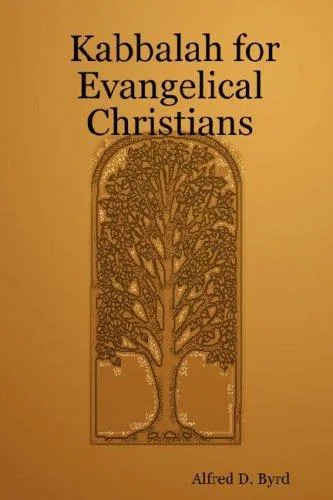
Kabbalah for Evangelical Christians
 61
61

Kabbalah for Evangelical Christians

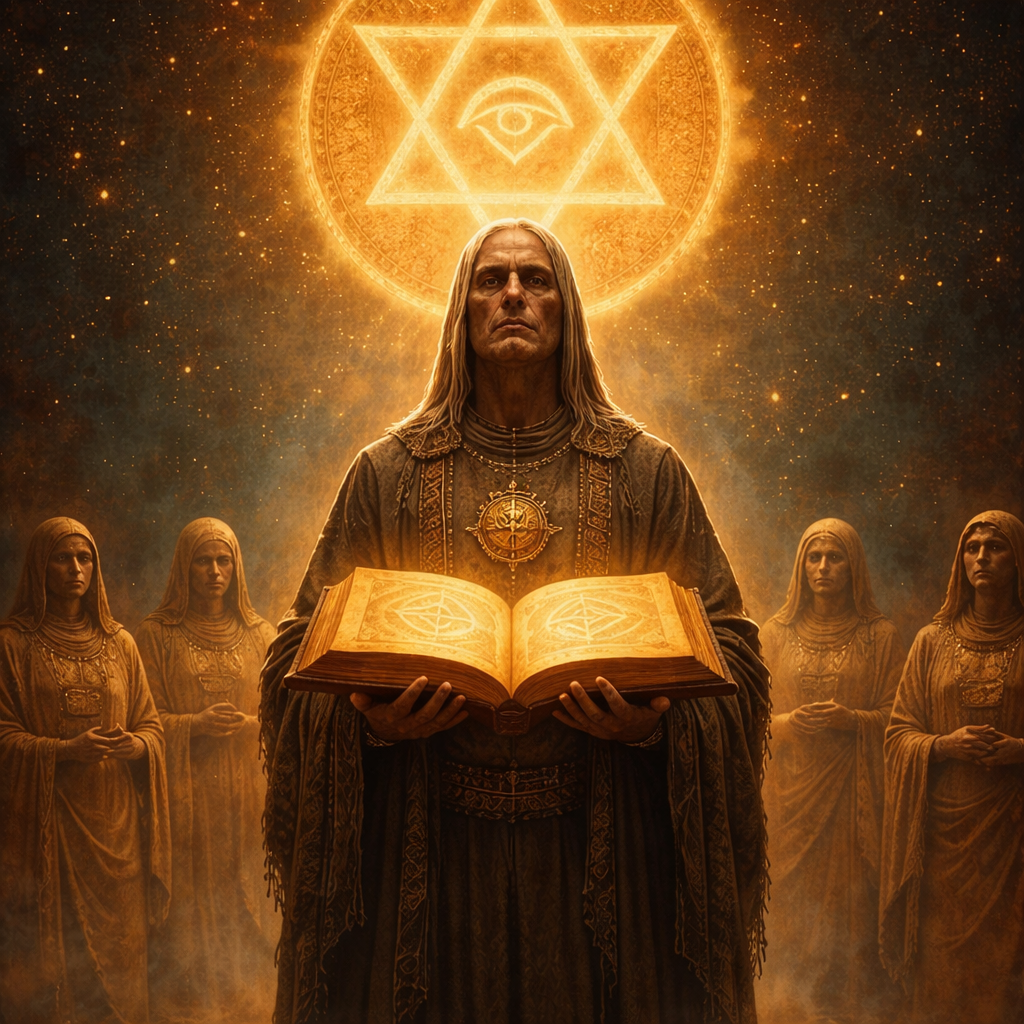

Celeste Moreau, Divination & Symbolism Reviewer: Alfred D. Byrd masterfully navigates the intricate currents of Kabbalistic thought, presenting its profound esoteric insights with clarity and reverence for the Evangelical Christian perspective. "Kabbalah for Evangelical Christians" offers a compelling synthesis, illuminating the shared spiritual DNA between these traditions. Byrd's scholarly yet accessible approach unpacks complex symbolism, such as the Sefirot, revealing their Christological implications. This work is an indispensable resource for any Christian seeking to deepen their theological understanding through the ancient wisdom of the Kabbalah, providing a unique pathway to divine communion.
📝 Description
61
Alfred D. Byrd's 2005 book connects Kabbalistic concepts to Evangelical theology.
Alfred D. Byrd's "Kabbalah for Evangelical Christians" examines the connections between Kabbalistic mysticism and Evangelical Christian beliefs. Published in 2005, the book aims to show how the ancient Hebrew mystical tradition resonates with core Christian doctrines. Byrd discusses key Kabbalistic ideas such as the Tree of Life, the divine emanations (sefirot), and symbolic interpretations of scripture. He argues these elements offer a unique perspective for understanding spiritual truths within a Christian framework.
The work is intended for readers interested in bridging these two spiritual traditions. It seeks to reveal underlying patterns in divine revelation and foster a deeper appreciation for what Byrd sees as a universal language of spiritual enlightenment. The book presents these complex ideas in a way designed to be accessible to those with an earnest desire for spiritual understanding, encouraging a more informed view of God's perceived design.
This book enters the tradition of Christian Kabbalah, a long-standing phenomenon dating back to the Renaissance. Christian thinkers have historically sought to find symbolic or allegorical meanings in Jewish mystical texts, believing they pointed towards Christian truths. Byrd's work continues this lineage by applying the interpretive methods and symbolic framework of Kabbalah to Evangelical theology, suggesting a shared esoteric understanding beneath the surface of distinct religious expressions.
💡 Why Read This Book?
This book is essential for Christian seekers yearning for a deeper, mystical understanding of their faith. Scholars will find a unique bridge between Jewish mysticism and Christian theology, while practitioners can unlock new dimensions of spiritual exploration. It offers a rare opportunity to engage with esoteric knowledge that illuminates scripture and spiritual growth, revealing the hidden unity in divine wisdom.
⭐ Reader Reviews
Honest opinions from readers who have explored this book.
❓ Frequently Asked Questions
Is this book about replacing Christian beliefs with Kabbalah?
Absolutely not. The book aims to enrich Christian faith by revealing the profound, often overlooked, esoteric connections and shared symbolic language between Kabbalah and Christian theology, fostering deeper spiritual insight.
Do I need prior knowledge of Kabbalah?
While some familiarity is beneficial, Alfred D. Byrd provides a thorough introduction, making complex Kabbalistic concepts accessible to beginners within a Christian context. The book guides readers gently into this ancient mystical tradition.
What is the 'Tree of Life' mentioned?
The Tree of Life (Etz Chaim) is a central diagram in Kabbalah representing the structure of the cosmos and the emanations of God. This book explores its symbolism and its potential interpretations within Christian esotericism.
How does Kabbalah relate to Jesus Christ?
The book explores how Kabbalistic concepts, such as divine wisdom and messianic prophecies, can be seen as prefiguring or resonating with the person and work of Jesus Christ, offering a unique theological perspective.
What makes this book unique?
Its unique value lies in its dedicated focus on bridging the gap between Kabbalistic mysticism and Evangelical Christianity, offering a harmonious synthesis of spiritual traditions rather than a divisive comparison.
🔮 Key Themes & Symbolism
The Tree of Life as a Christological Map
This theme studies the profound symbolic representation of the Kabbalistic Tree of Life (Etz Chaim) and its intricate connections to Christian theology. It explores how each Sefirah, or divine emanation, can be interpreted through the lens of Christ's life, teachings, and salvific work. The book elucidates how this ancient diagram serves not merely as a cosmological map but as a spiritual pathway that mirrors the journey of divine revelation and the path to spiritual perfection, offering a unique perspective on the interconnectedness of God's attributes and the divine nature of Christ.
Esoteric Symbolism in Scripture
Alfred D. Byrd meticulously unpacks the hidden layers of meaning within biblical texts, revealing how Kabbalistic principles offer a framework for understanding their deeper, esoteric dimensions. This theme focuses on the symbolic language used throughout scripture, from creation narratives to prophetic visions, and how these symbols resonate with Kabbalistic archetypes. The exploration aims to equip readers with the tools to perceive the divine mysteries encoded within the Word, fostering a richer appreciation for its spiritual depth and universal truths, inviting a more profound engagement with sacred texts.
Divine Emanations and the Godhead
This crucial theme examines the Kabbalistic concept of divine emanations (Sefirot) and their harmonious alignment with the Christian understanding of the Godhead. The book thoughtfully explores how these emanations—representing aspects of God's infinite nature, such as wisdom, understanding, and divine love—can illuminate the Trinity and the complex character of the divine. It provides a framework for comprehending the dynamic relationship between the transcendent God and His immanent presence in the world, offering a richer, more nuanced perception of God's relationship with creation.
💬 Memorable Quotes
Direct passages from the work, attributed to the author.
“Hidden in plain sight, the Hebrew alphabet whispers the secrets of creation.”
— This highlights the esoteric nature of language in Kabbalah, suggesting that the very structure of Hebrew letters holds profound cosmological and spiritual knowledge waiting to be deciphered.
“The path of the mystic is a journey of unveiled recognition.”
— This suggests that spiritual enlightenment is not about acquiring new knowledge, but about the gradual removal of veils that obscure our innate understanding of divine reality and truth.
“In the silence between the words, divine wisdom resides.”
— This emphasizes the importance of contemplation and intuition in understanding spiritual truths, suggesting that useful insights are often found not in explicit teachings, but in the contemplative space beyond literal interpretation.
💡 Key Ideas
Editorial paraphrase of the work's core concepts — not direct quotes.
The Tree of Life is not just a diagram; it is a divine blueprint for the soul's ascent.
This quote emphasizes the active, transformative nature of Kabbalistic symbolism, suggesting that the Tree of Life is a practical guide for spiritual growth and connection with the divine.
Through the Sefirot, we glimpse the complex nature of God's love.
This quote points to the Kabbalistic concept of divine emanations as a means to understand the diverse expressions of God's infinite love, making the divine more accessible and comprehensible.
🌙 Esoteric Significance
Tradition
This work sits at the confluence of two powerful esoteric traditions: Kabbalah, the mystical and esoteric system of Judaism, and Christian esotericism, which explores the hidden spiritual meanings within Christian scripture and practice. It draws heavily upon Kabbalistic concepts such as the Sefirot, the Hebrew alphabet's mystical properties, and gematria, reinterpreting them through a Christ-centered lens to reveal deeper theological insights and pathways to divine communion.
Symbolism
The book's esoteric significance lies in its detailed exploration of key Kabbalistic symbols, most notably the Tree of Life (Etz Chaim). It elucidates how these symbols, when understood through a Christian theological framework, reveal profound truths about the nature of God, creation, humanity's spiritual journey, and the salvific role of Christ. The symbolism functions as a divine language, offering a visual and conceptual map for navigating spiritual realities and fostering a more intimate connection with the transcendent.
Modern Relevance
In an age seeking deeper meaning and spiritual connection, "Kabbalah for Evangelical Christians" offers a unique and relevant pathway. It provides a sophisticated, yet accessible, framework for understanding the universe and one's place within it, enriching faith through esoteric wisdom. For modern seekers, it explains complex mystical traditions, demonstrating their potential to foster personal growth, deepen theological understanding, and reveal the underlying unity of spiritual truths across diverse traditions.
👥 Who Should Read This Book
This useful text is ideal for Evangelical Christians who possess a sincere desire to explore the mystical and symbolic dimensions of their faith. It will greatly benefit theological scholars and students seeking to understand the historical and philosophical intersections between Kabbalah and Christianity. Spiritual seekers of all backgrounds interested in comparative mysticism and the universal search for divine wisdom will find useful insights. Practitioners of contemplative prayer and spiritual disciplines can utilize its teachings to deepen their prayer life and understanding of God's intricate design.
📜 Historical Context
Published during a period of burgeoning interest in comparative religion and esoteric studies, "Kabbalah for Evangelical Christians" emerged as a significant bridge between traditional Christian theology and the ancient mystical traditions of Judaism. The late 20th and early 21st centuries witnessed a growing desire among many Christians to explore the deeper, symbolic, and mystical dimensions of their faith, moving beyond purely literal interpretations. This era saw a greater accessibility of Kabbalistic texts and scholarship, allowing authors like Alfred D. Byrd to synthesize these complex ideas with a Christian framework. The book reflects a broader movement seeking spiritual depth and universal truths across different religious and mystical lineages, fostering interfaith dialogue and personal spiritual growth.
📔 Journal Prompts
Reflect on the concept of divine emanations (Sefirot) and how they might illuminate your understanding of God's attributes in your personal faith.
Explore a specific biblical passage that has always resonated with you. How might Kabbalistic symbolism offer a new layer of interpretation?
Consider the Tree of Life as a spiritual map. What is your current position on this map, and what steps can you take to move closer to the divine?
How can the understanding of Hebrew letters as carriers of divine meaning influence your approach to prayer and scripture study?
What are the 'veils' that currently obscure your spiritual vision, and how can the insights from this book help you to unveil them?
🗂️ Glossary
Sefirot
The ten divine emanations or attributes through which Ein Sof (the Infinite) reveals itself and creates the universe. They form the structure of the Kabbalistic Tree of Life.
Ein Sof
The Kabbalistic term for the 'Infinite' or 'Without End,' representing God in His absolute, unknowable, and transcendent essence before any manifestation or emanation.
Etz Chaim
The Hebrew term for the 'Tree of Life,' a central symbolic diagram in Kabbalah representing the ten Sefirot and their interconnections, illustrating the structure of the cosmos and the path of spiritual ascent.
Gematria
A Kabbalistic interpretive method that assigns numerical values to Hebrew letters and words, seeking hidden meanings and connections between different concepts based on their numerical equivalencies.
Tzimtzum
The Kabbalistic concept of 'contraction' or 'withdrawal,' describing how Ein Sof 'emptied' a space to allow for the creation of the universe, a divine act of self-limitation.
This book appears in 1 collection
🔮 Readers Also Liked
Browse all →









From the “Kabbalah” Collection
View all →








More Free Kabbalah & Jewish Mysticism Books
View all →