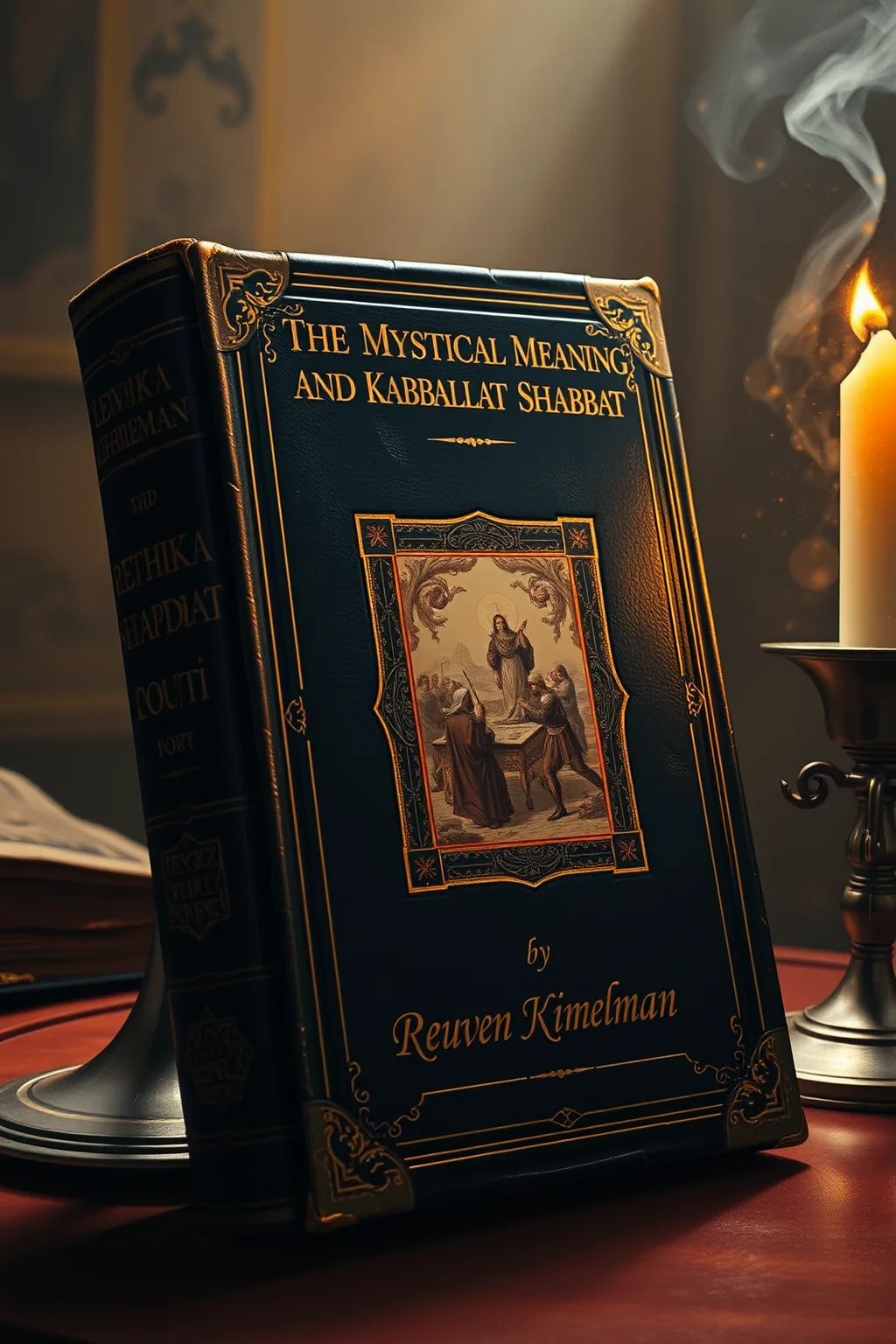
The Mystical Meaning of Lehka Dodi and Kabbalat Shabbat
 61
61

The Mystical Meaning of Lehka Dodi and Kabbalat Shabbat


Silas Hawthorne, Hermetic Studies Editor — Reuven Kimelman's exploration of 'Lehka Dodi' and 'Kabbalat Shabbat' is nothing short of revelatory. He excavates the profound Kabbalistic dimensions embedded within these foundational prayers, offering insights that resonate deeply with students of esoteric traditions. Kimelman's scholarship is both rigorous and accessible, making complex mystical concepts tangible. This volume is an indispensable resource for anyone seeking to understand the spiritual alchemy at play in Jewish prayer, particularly those interested in the divine feminine and the mystical reception of the Sabbath. A truly illuminating work for serious practitioners and scholars alike.
📝 Description
61
Reuven Kimelman's 2015 book deciphers the mystical meanings within Lehka Dodi and Kabbalat Shabbat.
This study examines the mystical dimensions of the Shabbat welcoming service, specifically the hymns 'Lehka Dodi' and 'Kabbalat Shabbat.' Kimelman analyzes the rich symbolism and Kabbalistic interpretations embedded within these liturgical texts. He shows how these prayers function as more than just recitation; they are understood as active conduits for spiritual connection. The book details the relationship between the divine and the human soul, the concept of union with the Shekhinah, and the role of focused intention in prayer.
Kimelman's work is intended for those interested in the contemplative aspects of Judaism. It aims to shed light on how these specific prayers can lead to spiritual insight and a broader comprehension of the cosmos. The analysis connects the textual content to broader themes of Jewish mysticism and spiritual practice.
The book sits within the tradition of Jewish mysticism, or Kabbalah, which seeks to understand the hidden nature of God and the universe. It focuses on the contemplative and devotional practices associated with Shabbat, particularly the poems recited upon its arrival. These texts are interpreted through the lens of Kabbalistic concepts, such as divine emanations (sefirot) and the divine presence (Shekhinah), illustrating how the liturgy can serve as a vehicle for spiritual experience and communion.
💡 Why Read This Book?
Uncover the veiled esoteric wisdom within the heart of Jewish prayer. This book is essential for understanding the Kabbalistic symbolism of welcoming the Sabbath and achieving mystical union. Ideal for seekers yearning for deeper spiritual connection, scholars of comparative mysticism, and practitioners looking to infuse their rituals with profound meaning. Discover a richer, more transformative approach to ancient liturgy.
⭐ Reader Reviews
Honest opinions from readers who have explored this book.
❓ Frequently Asked Questions
What is the primary focus of this book?
The book delves into the esoteric and mystical meanings of the prayers 'Lehka Dodi' and 'Kabbalat Shabbat,' exploring their Kabbalistic symbolism and spiritual significance within Jewish tradition.
Is prior knowledge of Kabbalah required to read this book?
While some familiarity with Jewish mysticism may enhance the experience, Kimelman's clear explanations make the concepts accessible to those new to Kabbalah, provided they possess an earnest desire to learn.
What is 'Lehka Dodi'?
'Lehka Dodi' is a central hymn in Kabbalat Shabbat, an Aramaic invitation to 'Come, my beloved,' metaphorically welcoming the Sabbath as a bride.
What is 'Kabbalat Shabbat'?
Kabbalat Shabbat, meaning 'Reception of the Sabbath,' is a liturgical service recited on Friday evening to usher in the holy day of Shabbat.
How does this book connect to broader esoteric traditions?
The book highlights universal mystical themes found in various traditions, such as divine union, the sacred feminine, and the transformative power of ritual, offering a bridge for interfaith spiritual exploration.
🔮 Key Themes & Symbolism
The Divine Feminine and the Shekhinah
This theme explores the personification of the Shekhinah, the divine feminine presence, as the 'beloved' or 'bride' welcomed in 'Lehka Dodi.' It studies the Kabbalistic concept of her descent and ascent, her longing for union with God, and the human role in facilitating this sacred embrace. The text illuminates how the liturgy acts as a mystical dialogue, drawing down divine grace and restoring cosmic balance through the prayerful reception of the Sabbath.
The Mystical Union of Sabbath
Central to this theme is the esoteric understanding of Shabbat not merely as a day of rest, but as a spiritual field of divine communion. Kimelman unpacks the symbolism of entering this elevated state, where the material world recedes and the soul can achieve profound connection with the Divine. The prayers are presented as keys to unlock this spiritual dimension, facilitating a mystical union between the individual, the community, and the divine essence of Shabbat.
Symbolism and Liturgical Alchemy
This theme focuses on the wide range of symbolism embedded within the liturgy of Lehka Dodi and Kabbalat Shabbat. It examines how each word, phrase, and stanza acts as an alchemical agent, transforming the consciousness of the worshipper. The text reveals the hidden meanings of specific Kabbalistic sefirot and divine names invoked, illustrating how the recitation of these prayers is a potent ritual designed to effect spiritual elevation and draw down divine blessings.
💬 Memorable Quotes
Direct passages from the work, attributed to the author.
“Sabbath is a realm, not merely a time.”
— This highlights the elevated, spiritual dimension of the Sabbath, portraying it as a distinct state of being accessible through consciousness and ritual, transcending linear time.
“To welcome the Shekhinah is to invite the Divine within.”
— This connects the mystical concept of the Shekhinah (divine presence) with personal spiritual transformation, suggesting that internalizing the divine feminine leads to a deeper connection with the sacred.
“Each word is a ladder to the celestial.”
— This metaphor illustrates the power of sacred language, implying that carefully chosen words in liturgy act as tools for spiritual ascent and communion with higher realms.
“The liturgy is an ancient map to the soul's homeland.”
— This evocative phrase suggests that traditional prayers offer guidance and a path back to our true spiritual essence, our 'homeland' in the divine.
💡 Key Ideas
Editorial paraphrase of the work's core concepts — not direct quotes.
The prayer is not merely a recitation, but an embrace.
This quote emphasizes the active, participatory nature of spiritual practice, suggesting that true prayer involves a deep, engaged connection rather than passive utterance.
🌙 Esoteric Significance
Tradition
This work is deeply rooted in the Kabbalistic tradition, a mystical interpretive system of Judaism that seeks to understand the nature of God, the universe, and humanity's place within it. It draws heavily on the Zohar and subsequent Kabbalistic literature, focusing on divine emanations (sefirot), divine names, and the concept of the Shekhinah as the indwelling divine presence. The liturgy is viewed as a conduit for spiritual transformation and a means to effect cosmic rectification.
Symbolism
Key symbols include the 'bride' representing the Shekhinah or the community of Israel, the 'beloved' representing God, and the 'King' also representing God. The act of welcoming the Sabbath is laden with symbolism of divine union, the restoration of cosmic harmony, and the anticipation of messianic redemption. The numerical and letter-based gematria of the Hebrew words also hold esoteric significance, revealing hidden connections and deeper spiritual truths within the text.
Modern Relevance
In an age often characterized by materialism and spiritual disconnect, the mystical insights offered here provide a potent antidote. The emphasis on intentional prayer, divine union, and the sacredness of time offers a pathway to deeper self-understanding and connection with the transcendent. For contemporary seekers, these ancient texts offer timeless wisdom for cultivating inner peace, spiritual resilience, and a profound sense of belonging within the cosmic order.
👥 Who Should Read This Book
This clear text is important for a wide spectrum of readers. **Beginners** seeking an accessible entry into the esoteric dimensions of Jewish prayer will find clarity and inspiration. **Scholars** of comparative religion and mysticism will appreciate the rigorous scholarship and deep analysis of liturgical texts. **Spiritual seekers** yearning for a more profound connection with the divine will discover powerful tools for personal transformation. **Practitioners** of Jewish contemplative arts will find rich material to deepen their understanding and enhance their ritual experiences, enriching their spiritual practice.
📜 Historical Context
The period surrounding the development and widespread adoption of 'Lehka Dodi' and 'Kabbalat Shabbat' was a rich era for Jewish mysticism, particularly following the efflorescence of Kabbalistic thought in medieval Spain and its subsequent spread. The influence of Kabbalistic texts like the Zohar, with its elaborate cosmologies and symbolic interpretations, permeated Jewish spiritual life. 'Lehka Dodi,' attributed to Rabbi Shlomo HaLevi Alkabetz, a prominent 16th-century Kabbalist, emerged during this time. Its integration into the Friday evening service, 'Kabbalat Shabbat,' reflects a growing desire among Jewish communities to imbue their weekly observance with deeper, mystical meaning. This movement sought to elevate the experience of Shabbat from a mere commandment to a profound spiritual encounter, a mystical union with the divine presence, mirroring broader esoteric trends seeking direct experience of the sacred.
📔 Journal Prompts
Reflect on the symbolism of the Sabbath as a 'bride.' What does this imagery evoke in your personal spiritual journey?
How does the concept of 'welcoming' the divine presence resonate with your own experiences of seeking connection?
Consider the idea of prayer as an 'embrace' rather than a mere recitation. How can you embody this active engagement in your spiritual practices?
What aspects of the liturgy's symbolism speak most strongly to your understanding of cosmic harmony and divine union?
Explore the concept of Shabbat as a 'realm.' How can you cultivate a sense of this elevated spiritual space in your daily life?
🗂️ Glossary
Shekhinah
The immanent presence of God, often personified as the divine feminine aspect of the Godhead in Kabbalistic thought. It represents God's dwelling among humanity and the spiritual connection between the divine and the created world.
Sefirot
The ten divine emanations or attributes through which God creates and sustains the universe, as described in Kabbalistic cosmology. They form a hierarchical structure of divine energy.
Kabbalah
A system of Jewish mysticism that seeks to understand the nature of God, the universe, and the hidden meanings of the Torah through esoteric interpretations and symbolic practices.
Liturgy
The prescribed form of public worship or religious ritual, consisting of prayers, readings, and other ceremonial acts, particularly within the context of Jewish prayer services.
Gematria
A system of Jewish numerology where Hebrew letters are assigned numerical values, used to find hidden meanings and connections between words and concepts in sacred texts.
This book appears in 1 collection
🔮 Readers Also Liked
Browse all →







From the “Kabbalah” Collection
View all →






More Free Kabbalah & Jewish Mysticism Books
View all →