Upanishads
 82
82

Upanishads
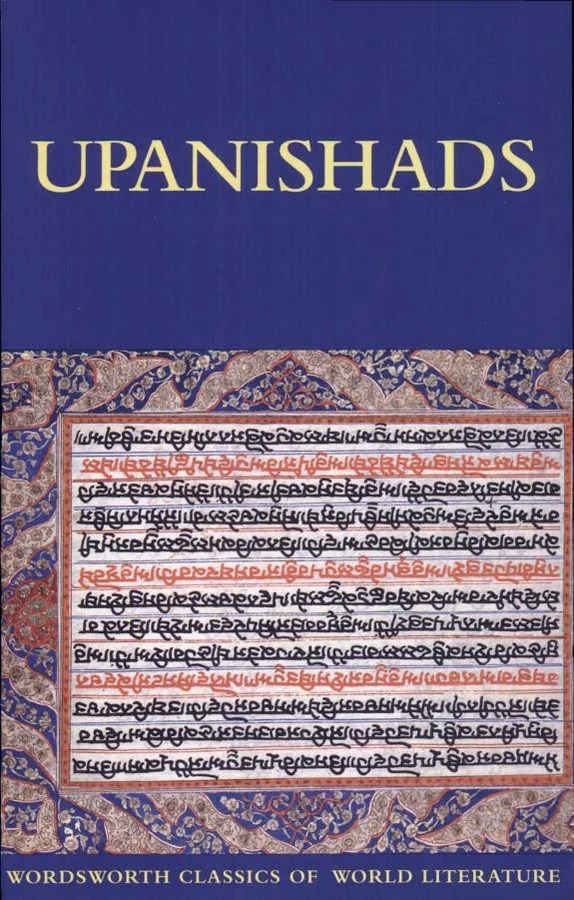
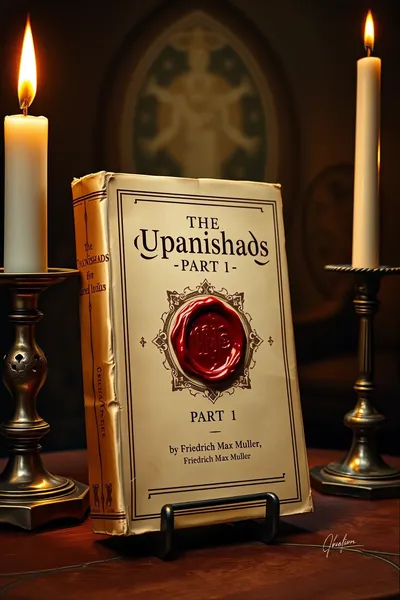
The Upanishads, presented here in their oldest and most significant translations, offer a direct conduit to the foundational inquiries of ancient Indian thought. The text's strength lies in its unadorned exploration of Brahman and Atman, presenting a radical monism that continues to challenge contemporary notions of self and reality. A specific passage detailing the subtle nature of the Self, beyond sensory perception, reveals the profound depth of these early philosophical explorations. However, the sheer density of the material, coupled with its aphoristic style, can present a steep learning curve for newcomers, demanding careful contemplation rather than passive reading. The absence of extensive commentary in this particular edition, while preserving authenticity, might leave some readers seeking further interpretative guidance. Ultimately, this is an indispensable primary source for anyone serious about understanding the bedrock of Eastern metaphysical traditions.
📝 Description
82
Composed between 900 and 600 BC, the Upanishads mark a shift from Vedic ritual to metaphysical speculation.
These Sanskrit philosophical texts represent the culmination of Vedic scripture. They originated in ancient India during the late Vedic period, emerging from a time of intense philosophical inquiry. The Upanishads moved beyond the earlier Brahmanas and Aranyakas, focusing on abstract contemplation about the nature of reality, the self, and the cosmos. Their ideas shaped Indian thought for millennia, influencing schools of philosophy like Vedanta and Yoga. The texts grapple with fundamental questions of existence, making them a significant source for understanding the intellectual underpinnings of Eastern traditions. This volume contains primary source material for those interested in the origins of consciousness studies and comparative philosophy.
The Upanishads emerged from the late Vedic period in India, predating figures like Buddha and Mahavira. They succeeded earlier ritualistic texts, moving towards abstract contemplation on existence. These writings are foundational to Hinduism, introducing concepts such as Brahman, the ultimate reality, and Atman, the individual soul, and their unity. They also discuss Karma, the law of cause and effect, and Moksha, liberation from the cycle of rebirth. The exploration of Maya, the concept of illusion, is another significant theme. These ideas laid the groundwork for subsequent Indian philosophical and spiritual traditions.
💡 Why Read This Book?
• Gain direct access to the philosophical bedrock of Hinduism, understanding the concepts of Brahman and Atman as they were first articulated in the ancient Vedic period, offering a unique perspective on ultimate reality. • Explore the early philosophical basis for Karma and Samsara, learning how these foundational ideas about cause, effect, and the cycle of rebirth were conceptualized thousands of years ago. • Engage with the concept of Maya, the illusory nature of the phenomenal world, and its implications for understanding consciousness and liberation, a concept pivotal to many later Indian philosophical schools.
⭐ Reader Reviews
Honest opinions from readers who have explored this book.
❓ Frequently Asked Questions
What is the historical period of the Upanishads?
The Upanishads were composed in Sanskrit between 900 and 600 BC, making them some of the oldest philosophical works known to humanity and a key part of the late Vedic period in ancient India.
What is the central theme of the Upanishads?
The central theme is the exploration of Brahman (ultimate reality) and Atman (the individual soul) and their essential unity, questioning the nature of existence and consciousness.
Are the Upanishads religious texts or philosophical texts?
They are considered both. While part of the Vedic tradition, they represent a shift from ritualistic focus to deep philosophical and metaphysical inquiry into the nature of the self and the universe.
Who authored the Upanishads?
The authorship is unknown; they are considered the work of ancient sages and seers, compiled over centuries during the late Vedic period in India.
What is the significance of Brahman in the Upanishads?
Brahman is the supreme, unchanging, infinite reality that is the source and substance of all existence. The Upanishads explore its nature and how it relates to the individual self (Atman).
How do the Upanishads discuss liberation?
They introduce the concept of Moksha, liberation from the cycle of birth and death (Samsara), often achieved through self-knowledge and understanding the identity of Atman with Brahman.
🔮 Key Themes & Symbolism
The Unity of Brahman and Atman
A core teaching is the identity of Brahman, the absolute, universal consciousness, and Atman, the individual self. Texts like the 'Mahavakyas' (Great Sayings) encapsulate this, such as 'Tat Tvam Asi' ('That Thou Art'). This concept suggests that the individual essence is not separate from the ultimate reality, a profound ontological claim that forms the basis of Advaita Vedanta and influences many mystical traditions seeking to realize this oneness.
The Nature of Maya
The Upanishads explore Maya, often translated as illusion, which describes the phenomenal world perceived by the senses. This perceived reality, though seemingly distinct, is ultimately a manifestation of Brahman. Understanding Maya is crucial for spiritual progress, as it involves seeing beyond the superficial appearance of multiplicity to the underlying unity, a concept that has parallels in Gnostic and Neoplatonic thought regarding the material world.
Karma and Rebirth (Samsara)
These texts lay the groundwork for the doctrines of Karma and Samsara. Karma refers to the principle of cause and effect governing actions and their consequences, influencing one's future lives. Samsara is the continuous cycle of birth, death, and rebirth from which liberation (Moksha) is sought. This ethical and cosmological framework profoundly shaped the moral and spiritual range of India.
The Path to Liberation (Moksha)
The ultimate goal presented is Moksha, liberation from Samsara. This is achieved not through external rituals but through inner realization, wisdom, and the eradication of ignorance. Practices like meditation, self-inquiry, and the study of these Upanishadic teachings are presented as means to attain this freedom and merge with Brahman.
💬 Memorable Quotes
Direct passages from the work, attributed to the author.
“That thou art.”
— This concise statement, 'Tat Tvam Asi', is an important Mahavakya. It asserts the direct identity between the individual soul (Atman) and the supreme reality (Brahman), implying that the divine is not external but inherent within oneself.
“Where there is darkness, I shall bring light.”
— This expresses the Upanishadic aspiration to overcome ignorance (darkness) with knowledge and self-realization (light). It signifies the transformative power of understanding the true nature of reality.
“The Self is to be heard of, contemplated, and meditated upon.”
— This highlights the Upanishadic method for realizing the Atman. It requires intellectual comprehension, reasoned reflection, and sustained contemplative practice to achieve direct experiential knowledge.
“The universe is Brahman.”
— This fundamental declaration underscores the Upanishadic worldview of non-duality. It posits that all existence, from the smallest particle to the grandest cosmos, is fundamentally a manifestation of the one ultimate reality, Brahman.
“He who knows the Supreme Brahman becomes Brahman.”
— This states the ultimate outcome of spiritual realization. Attaining knowledge of Brahman leads to becoming one with it, signifying the end of individual separation and the attainment of ultimate freedom.
🌙 Esoteric Significance
Tradition
The Upanishads are a central to the Vedic and subsequently Hindu spiritual traditions. Within esoteric studies, they are often viewed as a primary source for understanding Advaita Vedanta, a non-dualistic philosophy that emphasizes the oneness of the individual soul (Atman) and the ultimate reality (Brahman). They inform a vast lineage of mystical thought that seeks direct experiential knowledge of this unity, influencing esoteric practices across various Eastern and, by extension, some Western contemplative traditions.
Symbolism
Key symbols include the 'lotus' (often representing spiritual unfolding and purity, associated with Brahma and Vishnu), the 'sun' (Surya, symbolizing Brahman as the source of all light and knowledge, dispelling ignorance), and the 'chariot' (used in some texts to represent the body as a vehicle for the self, with the mind as reins, illustrating the need for control and discipline). These motifs serve as metaphors for understanding the journey of consciousness and the nature of the divine.
Modern Relevance
Contemporary thinkers and practitioners across various spiritual disciplines continue to draw heavily from the Upanishads. Western esotericists, particularly within Vedanta-influenced traditions like Transcendental Meditation and various yoga lineages, find in them a philosophical basis for non-dual awareness. Modern psychology and consciousness studies also engage with concepts like Atman and Maya when exploring the nature of self and reality, seeking to integrate ancient wisdom with contemporary scientific understanding.
👥 Who Should Read This Book
• Students of comparative religion and philosophy: To understand the foundational texts that shaped millennia of Indian spiritual and philosophical thought, offering early insights into monism and metaphysics. • Seekers of contemplative wisdom: For those interested in exploring core texts on consciousness, the nature of the self, and the pursuit of liberation through self-knowledge and meditation. • Scholars of ancient history and linguistics: To engage with some of the oldest surviving philosophical works in Sanskrit, providing direct access to the intellectual range of the late Vedic period.
📜 Historical Context
The Upanishads emerged during a period of intense intellectual ferment in ancient India, roughly between 900 and 600 BC, marking the final phase of Vedic literature. This era followed the Brahmanas and Aranyakas, shifting focus from elaborate sacrificial rituals to profound philosophical speculation. Key intellectual currents included early explorations of cosmology, the nature of the soul, and the concept of a universal principle. While figures like Buddha and Mahavira would emerge later, the Upanishads laid the philosophical groundwork for their teachings and for the development of major Indian philosophical schools such as Vedanta, Yoga, and Samkhya. They represented a move towards introspective inquiry, contrasting with the outward ritualism of earlier Vedic practices. The reception was gradual, with these texts becoming foundational over centuries, influencing generations of thinkers.
📔 Journal Prompts
The concept of Brahman as the ultimate reality: how does this differ from personal deities?
Reflecting on Atman: what aspects of your being feel most connected to a universal consciousness?
The nature of Maya: identify one instance where perceived reality might be an illusion.
Contemplating Moksha: what does liberation from the cycle of rebirth signify for you?
The practice of hearing, contemplating, and meditating upon the Self: how can these be integrated into daily life?
🗂️ Glossary
Brahman
The supreme, unchanging, infinite, and absolute reality that is the source and substance of all existence in Hindu philosophy. It is the ultimate ground of being.
Atman
The individual soul or self. In Upanishadic thought, Atman is ultimately identical with Brahman, representing the eternal, unchanging essence within each living being.
Maya
Often translated as 'illusion,' Maya refers to the power that conceals the true nature of reality (Brahman) and creates the appearance of a diverse, material world.
Samsara
The continuous cycle of birth, death, and rebirth, driven by Karma. It is the state of existence from which spiritual liberation is sought.
Moksha
Liberation or release from the cycle of Samsara. It is the ultimate spiritual goal, often achieved through self-knowledge and realization of the unity of Atman and Brahman.
Vedas
The oldest scriptures of Hinduism, composed in Sanskrit. The Upanishads are considered the concluding part of the Vedas, known as the Vedanta.
Karma
The universal law of cause and effect, where actions (physical, mental, or verbal) determine future consequences and influence the cycle of rebirth.
This book appears in 1 collection
🔮 Readers Also Liked
Browse all →![[The English physician] Culpeper's English physician; and complete herbal. To which are now first added, upwards of one hundred additional herbs, with a display of their medicinal and occult properties, physically applied to the cure of all disorders incident to banking. To which are annexed, rules for compounding medicine. 1789](/img/thumb/the-english-physician-culpeper-s-english-physician-and-complete-herbal-to-which-are-now-first-added-upwards-of-one-hundred-additional-herbs-with-a-display-of-their-medicinal-and-occult-properties-phys.webp)







From the “Upanishads” Collection
View all →






More Free Occult Philosophy Books
View all →