Yoga-Anatomie
 82
82

Yoga-Anatomie
Yoga-Anatomie offers a much-needed, pragmatic counterpoint to the often ethereal pronouncements surrounding yoga. Kaminoff and Matthews succeed admirably in translating the intricate landscape of human anatomy into a framework directly applicable to Asana. The book's strength lies in its exceptionally clear, detailed anatomical illustrations, which are far superior to generic textbook diagrams. They pinpoint precisely which muscles and joints are engaged, stretched, or stabilized in each pose. One particularly insightful passage details the complex mechanics of the shoulder girdle in inversions, a common area of injury that the book helps to demystify. However, its laser focus on the physical can, at times, feel a touch dry for those seeking the spiritual dimensions of yoga. While the information is invaluable for safe practice, the book could have benefited from more explicit connections to the energetic or philosophical underpinnings of Asana, perhaps referencing foundational texts like Hatha Yoga Pradipika. Despite this limitation, it remains an essential reference for serious practitioners and teachers.
📝 Description
82
Leslie Kaminoff and Amy Matthews published Yoga-Anatomie in 2013, detailing the physical mechanics of yoga postures.
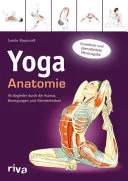
Yoga-Anatomie, by Leslie Kaminoff and Amy Matthews, published in 2013, examines the physical mechanics of yoga postures. It moves past the spiritual or philosophical aspects often found in yoga literature to provide a scientifically based understanding of body function during asana practice. The book breaks down the muscular, skeletal, and energetic systems, connecting specific poses with their physiological effects on organs, joints, and muscle groups. It acts as an anatomical guide for yogis, clarifying the internal processes that contribute to the practice's benefits.
This work is useful for yoga instructors who want to improve their knowledge and offer better guidance. It is also valuable for serious practitioners aiming for a more precise and safe asana practice, understanding the reasons behind alignment cues. Physical therapists, chiropractors, and other bodywork professionals interested in movement biomechanics and yoga's therapeutic uses will find its detailed charts and explanations helpful. Its clarity makes it accessible to anyone curious about how the body responds to yoga.
While yoga has ancient roots, the scientific study of its postures became more prominent in the late 20th and early 21st centuries. Yoga-Anatomie appeared during this period, reflecting a growing interest in empirically understanding ancient practices. It built on earlier anatomical guides for movement disciplines, specifically focusing on yoga's unique physical demands. Its release coincided with a trend towards evidence-based approaches in wellness, blending ancient teachings with modern understanding.
💡 Why Read This Book?
• Learn precisely which muscles and joints are activated or stretched in specific poses, enhancing your practice safety and efficacy, as detailed in the detailed anatomical charts for poses like Trikonasana. • Understand the biomechanical principles of alignment, allowing you to adapt poses to your unique skeletal structure, a concept explored extensively in the sections on joint articulation. • Gain a deeper appreciation for the 'why' behind common yoga cues, moving beyond rote memorization to an informed, embodied understanding of movement, exemplified by the chapter on the spine's complex movements.
⭐ Reader Reviews
Honest opinions from readers who have explored this book.
❓ Frequently Asked Questions
What is the primary focus of Yoga-Anatomie by Leslie Kaminoff and Amy Matthews?
The book's primary focus is on the applied anatomy of yoga postures (Asanas). It details the specific muscles, joints, and organs affected by each pose, offering a scientific understanding of how yoga impacts the body.
Who are the authors of Yoga-Anatomie?
The authors are Leslie Kaminoff, a recognized yoga expert, and Amy Matthews, an anatomy educator. The book was first published in September 2013.
Is Yoga-Anatomie suitable for beginners?
Yes, while detailed, the book's clear illustrations and explanations make it accessible to dedicated beginners seeking to understand the physical aspects of their practice more deeply.
Does the book cover the energetic aspects of yoga?
While primarily focused on gross anatomy, the book does touch upon the interplay between physical postures and subtle energetic flows, linking physical engagement to energetic effects.
What makes the anatomical illustrations in Yoga-Anatomie unique?
The illustrations are specifically designed to show the effects of yoga poses on the body, highlighting engaged muscles, stretched tissues, and joint movements in a way that generic anatomical texts do not.
When was Yoga-Anatomie first published?
Yoga-Anatomie was first published on September 6, 2013.
🔮 Key Themes & Symbolism
Applied Biomechanics
This theme examines the practical application of biomechanical principles to yoga postures. It moves beyond theoretical knowledge to illustrate how understanding leverage, force, and joint mechanics can directly inform safer and more effective Asana practice. The book meticulously breaks down complex movements, showing how specific muscle groups are activated or lengthened, and how joint stability is maintained or challenged, providing a scientific basis for alignment cues and modifications.
Skeletal and Muscular Engagement
A core concept is the detailed mapping of skeletal structures and muscular engagement during various yoga poses. The work systematically identifies which muscles are agonists, antagonists, and synergists in each posture, and how the skeletal frame supports and directs these actions. This granular approach allows practitioners to cultivate a deeper proprioceptive awareness, understanding the precise physical sensations associated with correct engagement and avoiding compensatory or harmful movements.
Organ and Systemic Effects
Beyond muscles and bones, the book explores how Asanas influence internal organs and physiological systems. It explains how certain poses can stimulate digestion, improve circulation, or affect respiration. This holistic view connects the external physical practice to internal bodily functions, demonstrating yoga's comprehensive impact on health and well-being, linking the gross anatomical changes to systemic physiological benefits.
Anatomical Variation
Recognizing that no two bodies are alike, a significant theme is the importance of anatomical variation. The book highlights differences in joint structure, bone length, and muscle insertion points, encouraging practitioners and teachers to approach yoga with an understanding of individual differences. This perspective shifts focus from achieving a perfect external form to cultivating internal awareness and adapting poses to suit one's unique physical landscape.
💬 Memorable Quotes
Direct passages from the work, attributed to the author.
“The body is the instrument of the mind.”
— This concise statement underscores the book's premise: that a deep understanding of the physical body is crucial for mastering the mind through yoga. It suggests that the physical form is not merely a vessel, but a sophisticated tool for spiritual and mental development.
“Alignment is about finding the most efficient way for your body to do the pose.”
— This interpretation highlights the book's focus on functional anatomy. It posits that optimal alignment isn't about rigid adherence to a universal form, but about discovering the most biomechanically sound and sustainable way for an individual's unique body to execute an Asana.
“Every pose affects the entire body.”
— This reflects the book's holistic anatomical perspective. It conveys the idea that Asanas rarely impact isolated parts; rather, they create a chain reaction of muscular engagement, joint stabilization, and energetic flow throughout the entire system.
“Breath is the bridge between the physical and the energetic.”
— While the book focuses on anatomy, this interpretation acknowledges the vital link between the physical body and subtler energies. It suggests that conscious breathing, facilitated by proper physical form, is key to integrating the mind-body-spirit connection in yoga.
💡 Key Ideas
Editorial paraphrase of the work's core concepts — not direct quotes.
Understanding anatomy allows for more conscious movement.
This paraphrased concept emphasizes the practical benefit of the book's teachings. It suggests that by knowing the mechanics of the body, practitioners can move with greater intention and awareness, leading to improved safety and deeper engagement in their practice.
🌙 Esoteric Significance
Tradition
While Yoga-Anatomie is primarily a work of applied anatomy and biomechanics, its grounding in the physical practice of yoga connects it to the broader Hatha Yoga tradition. This lineage, which aims to prepare the body for deeper meditative states, is itself a form of esoteric practice. The book serves as a bridge, translating the physical disciplines of Hatha Yoga into a language understood by modern science, thereby validating and deepening the understanding of these ancient somatic practices for contemporary practitioners.
Symbolism
The book's symbolism lies in its detailed depiction of the human body as a complex, interconnected system. The skeletal structure can be seen as representing the 'form' or 'container,' while the muscles represent the 'force' or 'energy' that animates it. The detailed illustrations of energetic pathways, even when described in anatomical terms, echo the yogic concept of Nadis and Chakras, suggesting that physical manipulation directly influences the body's subtle energetic matrix.
Modern Relevance
Contemporary yoga instructors, physical therapists, and somatic educators frequently reference Yoga-Anatomie. Its detailed approach informs evidence-based yoga instruction and therapeutic applications. Thinkers in fields like embodied cognition and trauma-informed movement practices often draw upon the book's principles to understand how physical postures and movements influence psychological states and nervous system regulation, bridging the gap between physical practice and mental well-being.
👥 Who Should Read This Book
['• Dedicated yoga practitioners seeking to refine their understanding of alignment and prevent injury, benefiting from the detailed pose breakdowns and explanations of joint mechanics.\n', '• Certified yoga instructors aiming to deepen their anatomical knowledge for more precise cueing and to confidently address student concerns about physical limitations or pain.\n', '• Healthcare professionals such as physical therapists or chiropractors interested in the biomechanics of yoga and its potential therapeutic applications for rehabilitation and functional movement.']
📜 Historical Context
Published in 2013, Yoga-Anatomie emerged during a period of intense integration between ancient yogic traditions and modern scientific inquiry. The early 21st century saw a surge in academic research into yoga's physiological effects, moving beyond anecdotal evidence. Kaminoff and Matthews’ work contributed to this trend by providing an unprecedentedly detailed anatomical atlas specifically for yoga practitioners. This era was marked by a dialogue between traditional yoga lineages, many originating from India, and Western scientific disciplines like biomechanics and kinesiology. While some traditionalists might have viewed such detailed anatomical dissection as overly clinical, the work resonated with a growing global audience seeking evidence-based approaches to wellness. It built upon the foundations laid by earlier anatomical guides for movement, such as those for dancers and athletes, but offered a uniquely yogic perspective, differentiating itself from broader physical culture texts.
📔 Journal Prompts
The relationship between the skeletal structure and muscle engagement in Trikonasana.
How the description of spinal flexion in the book informs your understanding of forward folds.
The precise muscle actions required for stability in Adho Mukha Svanasana.
Reflect on the concept of anatomical variation as presented in the book.
Consider the link between diaphragmatic breathing and the musculature of the torso.
🗂️ Glossary
Asana
A physical posture or pose practiced in yoga, intended to create stability, comfort, and awareness in the body as a preparation for meditation.
Kinesiology
The scientific study of human movement. It involves understanding the mechanical and neurological principles that govern motion.
Proprioception
The body's ability to sense its position, movement, and balance in space. It is the awareness of the relative position of one's own parts of the body and strength of effort being employed in movement.
Agonist Muscle
The primary muscle or muscle group responsible for a particular movement. It contracts to produce the desired action.
Antagonist Muscle
A muscle that opposes the action of the agonist. It lengthens or relaxes to allow the movement to occur smoothly.
Skeletal System
The framework of bones and cartilage that supports and protects the body's organs, provides attachment points for muscles, and allows for movement.
Muscular System
The system of muscles in the body that work with the skeletal system to enable movement, maintain posture, and generate heat.