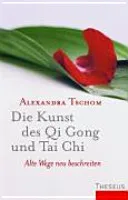
Die Kunst des Qi-Gong und Tai-Chi
 72
72

Die Kunst des Qi-Gong und Tai-Chi
Alexandra Tschom's "Die Kunst des Qi-Gong und Tai-Chi" offers a competent, if somewhat standard, introduction to these profound practices. The strength lies in its methodical approach, breaking down complex movements into digestible steps suitable for a novice. However, the text occasionally leans towards a descriptive rather than truly analytical tone, leaving the reader to infer deeper energetic mechanics. A passage detailing the "Eight Brocades" Qi Gong set, for instance, clearly outlines the postures but could benefit from more explicit commentary on the energetic pathways activated by each movement. While valuable for its clarity, it doesn't push the boundaries of existing literature on the subject. The work serves as a reliable primer for those new to the field.
📝 Description
72
Alexandra Tschom's 2008 book explains Qi Gong and Tai Chi's energy cultivation.
Alexandra Tschom's "Die Kunst des Qi-Gong und Tai-Chi" examines two ancient Chinese movement practices. The book details the core principles for developing vital energy, known as Qi, through specific postures, breathing exercises, and focused awareness. Tschom's aim is to give readers a clear grasp of how these disciplines can become part of daily life, promoting better physical and mental health.
This text is suitable for those new to Qi Gong and Tai Chi, especially those curious about the energetic and philosophical aspects. It offers clear instruction and basic knowledge for beginners. Intermediate practitioners can also use it to improve their understanding of the underlying ideas. People interested in body-centered practices, principles of traditional Chinese medicine, and mindful movement will find it beneficial.
Published in 2008, this book entered a Western sphere where interest in Eastern contemplative and movement arts was already significant. Qi Gong and Tai Chi, with origins spanning centuries, had begun to spread widely beyond China. Tschom's work connects to this ongoing engagement, linking these practices with martial arts history and traditional Chinese medical theories. It represents a contribution to the accessible explanation of these complex disciplines.
💡 Why Read This Book?
• Gain a foundational understanding of Qi, the vital energy central to Chinese practices, as explained through the specific postures detailed in Tschom's work. • Learn the practical application of mindful movement and breath control, as illustrated by the step-by-step instructions for various Qi Gong forms, enhancing personal well-being. • Understand the connection between physical posture and internal energy cultivation, as explored in the book's treatment of Tai Chi principles, offering a unique perspective on somatic health.
⭐ Reader Reviews
Honest opinions from readers who have explored this book.
❓ Frequently Asked Questions
When was "Die Kunst des Qi-Gong und Tai-Chi" first published?
The book "Die Kunst des Qi-Gong und Tai-Chi" by Alexandra Tschom was first published in 2008, making it a relatively recent entry into the discourse on these ancient Chinese practices.
What is the primary focus of Alexandra Tschom's book?
The primary focus is on explaining the theory and practice of Qi Gong and Tai Chi, emphasizing the cultivation of vital energy (Qi) through movement, breath, and mental focus.
Is "Die Kunst des Qi-Gong und Tai-Chi" suitable for complete beginners?
Yes, the book is structured to provide a clear introduction for beginners, detailing fundamental principles and offering step-by-step guidance on various exercises and forms.
Does the book discuss the historical origins of Qi Gong and Tai Chi?
While it places the practices within a historical context, the book's main emphasis is on the practical application and understanding of Qi Gong and Tai Chi as they were presented in 2008.
What are the key concepts explored in Tschom's work?
Key concepts include the nature of Qi (vital energy), the role of breath and intention, and the energetic pathways within the body as influenced by specific movements and postures.
Can this book be used to learn Tai Chi forms?
The book provides foundational knowledge and descriptions that can aid in learning Tai Chi forms, particularly for understanding the underlying principles and energetic intentions behind the movements.
🔮 Key Themes & Symbolism
Qi Cultivation
The central theme is the cultivation and harmonization of Qi, or vital life force. Tschom's work details how specific physical postures, coordinated breathing patterns, and focused intention in Qi Gong and Tai Chi are designed to influence the flow of Qi throughout the body's energetic channels. The book explores the practical application of these techniques for enhancing vitality, promoting balance, and fostering a connection between the practitioner's physical form and their internal energetic state, drawing parallels with concepts from Traditional Chinese Medicine.
Mind-Body Integration
A significant focus is placed on the profound interconnectedness of the mind and body within these practices. The text explains how the conscious direction of the mind, or Shen, plays an important role in guiding Qi and shaping the physical movements. By emphasizing relaxation, awareness, and deliberate intent, the book illustrates how Qi Gong and Tai Chi serve as methods for integrating mental states with physical expression, leading to a more cohesive and centered experience of self.
Somatic Awareness
The book examines developing heightened somatic awareness – a deep, intuitive understanding of one's own body. Through detailed descriptions of postures and movement sequences, readers are encouraged to pay close attention to subtle internal sensations, proprioception, and the physical sensations associated with energy flow. This cultivated awareness is presented not just as a means to perform the exercises correctly, but as a pathway to deeper self-knowledge and a more embodied existence.
Foundations of Chinese Energetics
"Die Kunst des Qi-Gong und Tai-Chi" provides an accessible entry point into the foundational energetic principles of Traditional Chinese culture. It explains concepts like Qi, meridians, and the balance of Yin and Yang as they relate to the practice of Qi Gong and Tai Chi. The work serves to explain these complex ideas for a Western audience, offering a practical framework for understanding how ancient Chinese philosophies of health and vitality are expressed through physical discipline.
💬 Memorable Quotes
Direct passages from the work, attributed to the author.
“The body is a vessel for Qi, and its movements can direct this energy.”
— This statement highlights the core principle that physical actions in Qi Gong and Tai Chi are not merely exercise, but intentional acts of energetic cultivation and redirection within the practitioner's body.
“Relaxation is the gateway to internal flow.”
— This emphasizes that achieving a state of physical and mental ease is paramount for allowing Qi to move freely through the body's energetic pathways, a fundamental tenet of these practices.
“Intent guides the form, and the form shapes the energy.”
— This captures the synergistic relationship between mental focus (intent) and physical execution (form) in these disciplines, illustrating how they work together to influence the body's energetic state.
“Each posture is a micro-practice of balance and harmony.”
— This suggests that even individual movements within Qi Gong and Tai Chi sequences are designed to embody and cultivate fundamental principles of equilibrium and energetic accord.
“Breathing anchors the mind and animates the Qi.”
— This interpretation underscores the vital role of breath in these arts, serving as a bridge between conscious awareness and the cultivation of life force energy.
🌙 Esoteric Significance
Tradition
The work aligns with the Taoist tradition, particularly its emphasis on cultivating internal energy (Qi) for health, longevity, and spiritual development. While not overtly religious, Qi Gong and Tai Chi are deeply rooted in Taoist cosmology and principles of natural harmony. Tschom's book fits within the broader lineage of texts that translate these ancient philosophical concepts into practical, embodied disciplines accessible to contemporary practitioners, acting as a bridge between classical Chinese thought and modern wellness paradigms.
Symbolism
A primary symbol is Qi itself, representing the invisible life force that animates all things. The flowing, circular movements characteristic of Tai Chi symbolize the Taoist concept of continuous transformation and the cyclical nature of existence. The postures, often named after natural elements or animals (e.g., 'White Crane Spreads Wings'), act as microcosmic representations of universal forces and patterns, intended to harmonize the practitioner with the natural world.
Modern Relevance
Contemporary somatic therapists, energy healers, and mindfulness coaches frequently draw upon the principles and techniques detailed in works like Tschom's. The book's focus on mind-body integration and stress reduction speaks to modern psychological approaches to well-being. Furthermore, practitioners of integrated martial arts and those exploring comparative philosophies of energy work find its structured explanation of Qi and its cultivation highly relevant to their ongoing development.
👥 Who Should Read This Book
• Individuals new to Qi Gong and Tai Chi seeking a structured, practical introduction to the core concepts and basic exercises. • Practitioners interested in understanding the energetic principles and philosophical underpinnings behind these movement arts, beyond mere physical technique. • Wellness enthusiasts looking for accessible methods to cultivate internal energy, improve physical coordination, and enhance mental calm through mindful movement.
📜 Historical Context
Published in 2008, Alexandra Tschom's "Die Kunst des Qi-Gong und Tai-Chi" entered a landscape already significantly shaped by the global dissemination of Chinese martial and contemplative arts. By this time, figures like Yang Luchan (founder of Yang-style Tai Chi in the 19th century) and earlier proponents of Qi Gong had established these practices as accessible disciplines in the West. Tschom's work contributes to a rich vein of literature that sought to explain these complex systems to non-Chinese audiences, often building upon the groundwork laid by pioneers in the field of Chinese medicine and philosophy in the mid-to-late 20th century. The book's emergence coincided with a continued academic and popular interest in mind-body practices, contrasting with earlier periods where such arts were more narrowly associated with martial prowess or seen as purely esoteric knowledge. Its publication date places it firmly within the era of accessible self-help and wellness literature.
📔 Journal Prompts
The cultivation of Qi as described in the text.
How the concept of Shen guides physical form.
Reflecting on the energetic pathways activated by specific Qi Gong postures.
The role of relaxation in achieving internal flow.
Balancing the physical and energetic aspects of Tai Chi movements.
🗂️ Glossary
Qi (Chi)
The fundamental vital life force or energy believed in Traditional Chinese culture to animate all living things and the universe.
Qi Gong
A system of ancient Chinese 'breathing exercises' involving mindful movement, meditation, and controlled breathing, practiced for health, spirituality, and martial arts training.
Tai Chi (Taijiquan)
A Chinese martial art practiced for both defense training and health benefits, characterized by slow, flowing, deliberate movements and deep breathing.
Shen
Often translated as 'spirit,' 'mind,' or 'consciousness,' Shen is considered the vital force that governs mental activity and intention within Chinese medicine and philosophy.
Meridians
In Traditional Chinese Medicine, these are pathways through which Qi is believed to flow throughout the body, connecting acupuncture points.
Eight Brocades
A set of eight simple, ancient Qi Gong exercises known for their effectiveness in strengthening the body and regulating Qi.
Somatic
Relating to the body, especially as distinct from the mind or soul; concerning the physical substance or structure of an organism.