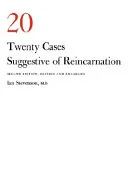
Twenty Cases Suggestive of Reincarnation
 84
84

Twenty Cases Suggestive of Reincarnation
Stevenson’s *Twenty Cases Suggestive of Reincarnation* offers a sober, almost clinical, presentation of twenty seemingly inexplicable accounts of past-life recall. The strength lies in Stevenson’s dogged pursuit of verifiable details; his methodical approach, particularly in cases involving xenoglossy, lends a weight that sensationalism would have undermined. One limitation, however, is the sheer volume of data presented, which can sometimes obscure the emotional impact on the individuals involved, a factor Stevenson acknowledges but doesn't always fully convey. The case of Jasbir Singh, who recalled details of his previous life as a barber named Dilip Kumar, including specific family members and locations, exemplifies the book’s compelling, albeit suggestive, evidence. The work remains a foundational text for anyone investigating the persistence of consciousness.
📝 Description
84
Ian Stevenson's 1980 book presents twenty cases of alleged past life recall.
Ian Stevenson, a psychiatrist, meticulously documented cases of individuals, primarily children, who reported memories of previous lives. Published in 1980, the book details twenty such instances, emphasizing verifiable information provided by the subjects that often proved unknown to their current families. Stevenson approached this research with scientific skepticism, aiming to collect empirical data on personality survival after death.
The cases included spontaneous statements about past existences, often accompanied by details that could be independently checked. Stevenson's methodology sought a level of rigor that could be examined scientifically, even as the subject matter remained outside mainstream scientific acceptance. This work is for researchers interested in consciousness, parapsychology, and identity, particularly those with an open yet critical perspective on phenomena that question materialist explanations of existence. While not offering definitive proof, the evidence suggests possibilities for those willing to consider them.
Stevenson's research emerged in 1980, a time when parapsychology was beginning to attract some academic interest but remained largely outside the scientific mainstream. His work built upon a long tradition of investigating psychic phenomena, with roots stretching back to 19th-century spiritualism and Theosophy. However, Stevenson distinguished his studies through a commitment to rigorous, empirical investigation, aiming for a level of validation that contrasted with earlier, less systematic inquiries into mediums and spiritual experiences.
💡 Why Read This Book?
• Learn about the rigorous methodology Ian Stevenson employed to investigate reincarnation claims, illustrated by his detailed documentation of birthmarks corresponding to fatal wounds in alleged past lives. • Understand the concept of xenoglossy through specific case studies, such as those presented in the book, which explore the ability to speak languages unlearned in the current lifetime. • Gain insight into the challenges of verifying past-life memories by examining the criteria Stevenson used to rule out fraud or cryptomnesia in the presented cases.
⭐ Reader Reviews
Honest opinions from readers who have explored this book.
❓ Frequently Asked Questions
What is the primary focus of Ian Stevenson's 'Twenty Cases Suggestive of Reincarnation'?
The book focuses on twenty meticulously documented cases, primarily involving children, who exhibit spontaneous memories of past lives. Stevenson investigated these cases to gather empirical evidence for the survival of personality after death.
What is xenoglossy as discussed in Stevenson's work?
Xenoglossy, as explored in the book, refers to the ability of a person to speak or understand a language that they have not learned in their current lifetime, often cited as evidence for past-life recall.
When was 'Twenty Cases Suggestive of Reincarnation' first published?
Ian Stevenson's seminal work, 'Twenty Cases Suggestive of Reincarnation,' was first published in 1980, presenting decades of his research.
Does Stevenson claim to prove reincarnation in this book?
No, Stevenson presents the cases as 'suggestive' of reincarnation. His aim was to collect and document phenomena that challenge conventional explanations, rather than to offer definitive proof.
What kind of evidence does Stevenson look for in his cases?
Stevenson sought verifiable details, such as specific names, locations, and relationships from the alleged past life, as well as birthmarks or birth defects that corresponded to wounds from the previous existence.
Who is Ian Stevenson?
Ian Stevenson (1918-2007) was a Canadian psychiatrist who dedicated much of his career to the scientific study of reincarnation and related phenomena, particularly focusing on cases of children's past-life memories.
🔮 Key Themes & Symbolism
Evidence of Past Lives
The core of Stevenson's work lies in presenting empirical data that appears to support the concept of reincarnation. This includes detailed accounts of children recalling specific events, people, and places from lives they seemingly never lived. The book focuses on the verifiable nature of these memories, often including details that could only have been known through direct experience, thereby challenging conventional explanations like cryptomnesia or deliberate fabrication.
Xenoglossy and Language Acquisition
A significant aspect explored is xenoglossy, the phenomenon of speaking or understanding a language unknown in the current life. Stevenson meticulously documents instances where individuals, particularly children, exhibit fluency in languages or dialects they had no opportunity to learn. These cases are presented as strong indicators of personality continuity, suggesting that linguistic abilities might somehow transfer from a previous existence.
Birthmarks and Past Life Trauma
Stevenson dedicates considerable attention to cases where birthmarks or birth defects correspond precisely to wounds, particularly fatal ones, described in the alleged previous life. He meticulously records medical examinations and autopsy reports from the past life when available, comparing them with the subject's birthmarks, arguing that such correlations provide compelling physical evidence linking the current individual to a specific past existence.
Methodology and Scientific Scrutiny
Crucially, the book emphasizes Stevenson's rigorous scientific methodology. He details his process of case selection, verification of statements through documentary evidence and witness testimony, and his efforts to rule out fraud, suggestion, or cryptomnesia. This commitment to empirical investigation within the framework of scientific inquiry is central to the book's significance and its controversial standing.
💬 Memorable Quotes
Direct passages from the work, attributed to the author.
“Cases of responsive xenoglossy thus add to the evidence concerning the survival of human personality after death.”
— This statement from the original blurb expresses Stevenson's view that the ability to use a language unknown in the current life, especially when it corresponds to a past life, offers significant support for the idea that consciousness or personality can persist beyond bodily demise.
“The work meticulously documents cases where birthmarks correspond to fatal wounds from alleged previous lives.”
— This interpretation emphasizes a key type of evidence Stevenson investigated: physical marks on the current body that seem to mirror injuries sustained in a past existence, suggesting a biological link across lifetimes.
“Stevenson sought to eliminate alternative explanations such as fraud or cryptomnesia.”
— This captures the essence of Stevenson's scientific rigor. He understood the need to disprove conventional explanations before seriously considering the extraordinary hypothesis of reincarnation.
“Children often provide spontaneous and detailed recall of past existence.”
— This points to a recurring pattern in Stevenson's research: young children are frequently the subjects who exhibit the most vivid and detailed memories of previous lives without prompting.
💡 Key Ideas
Editorial paraphrase of the work's core concepts — not direct quotes.
The author's objective is to present evidence that is suggestive of reincarnation.
This paraphrased concept highlights Stevenson's cautious, scientific approach. He avoids definitive pronouncements, instead presenting carefully documented cases that point towards reincarnation as a plausible explanation for the observed phenomena.
🌙 Esoteric Significance
Tradition
Stevenson's work, while framed scientifically, engages deeply with concepts central to Eastern esoteric traditions, particularly Hinduism and Buddhism, which widely accept reincarnation (samsara). It provides empirical, Western-scientific 'validation' for doctrines that have been central to billions of lives for millennia. It can be seen as an attempt to bridge the gap between empirical science and spiritual beliefs, offering a modern, secular interpretation of ancient wisdom concerning the transmigration of souls.
Symbolism
The birthmarks and birth defects serve as potent symbols, acting as physical 'seals' or 'echoes' of past traumas, linking the current physical form to a previous corporeal existence. They symbolize continuity and karmic imprints. Xenoglossy, the ability to speak unlearned languages, symbolizes the persistence of consciousness and memory beyond the physical brain, representing the 'soul's' retained knowledge or identity.
Modern Relevance
Stevenson’s research continues to influence contemporary discussions on consciousness, memory, and the nature of identity. Thinkers and practitioners in fields ranging from transpersonal psychology to New Age spirituality often cite his work. Researchers in quantum consciousness and those exploring near-death experiences also find resonance with his findings, suggesting that his meticulous documentation provides a foundation for exploring non-local consciousness and the persistence of self beyond physical death.
👥 Who Should Read This Book
• Students of comparative religion and Eastern philosophies: To examine empirical investigations that align with traditional doctrines of reincarnation and karma. • Researchers in parapsychology and consciousness studies: To engage with foundational, rigorously documented case studies challenging materialist explanations of mind and identity. • Skeptics open to evidence: To critically assess compelling, verifiable data that resists easy dismissal and encourages deeper inquiry into the nature of consciousness.
📜 Historical Context
Published in 1980, Ian Stevenson’s *Twenty Cases Suggestive of Reincarnation* arrived at a time when parapsychology was a fringe academic pursuit, often met with skepticism. Stevenson’s work followed decades of research into psychic phenomena, building on traditions influenced by 19th-century Spiritualism and figures like Helena Blavatsky of the Theosophical Society. However, Stevenson differentiated his approach through its rigorous, scientific methodology, aiming for empirical validation that contrasted with more anecdotal or spiritual accounts. His work was contemporary with other researchers exploring consciousness, but his focus on reincarnation, particularly the detailed case studies involving children, set him apart. While not widely accepted by mainstream science, his research was acknowledged by some, including figures in comparative religion and psychology, though often viewed with caution. The reception was largely one of fascination mixed with profound doubt regarding the interpretation of the data.
📔 Journal Prompts
Jasbir Singh's recall of Dilip Kumar's life: Analyze the specific verifiable details provided and their implications.
Birthmark correspondence: Reflect on the symbolic weight of physical marks appearing to echo past-life injuries.
The phenomenon of xenoglossy: Consider how speaking an unlearned language challenges current models of cognition and memory.
Stevenson's methodology: Evaluate the strengths and weaknesses of his approach to case investigation.
Personal resonance: Explore any unexplained memories or affinities you possess and how they might relate to these cases.
🗂️ Glossary
Xenoglossy
The ability of a person to speak or write a language that they have not learned in their current lifetime. Stevenson documented cases where this appeared to be linked to past-life memories.
Cryptomnesia
A form of amnesia where forgotten memories resurface without the person being aware that they are recalling something previously learned or experienced. Stevenson attempted to rule this out in his cases.
Personality Survival
The hypothesis that consciousness, memory, and individual characteristics can persist after the physical death of the body. Stevenson's research aimed to provide evidence for this concept.
Birthmark Correspondence
The phenomenon where birthmarks or birth defects on a person's body appear to correspond physically to wounds (often fatal) sustained by the individual in a previous life, as recalled.
Spontaneous Past-Life Memories
Memories of a previous existence that emerge naturally in a person, typically a child, without prompting or suggestion from others. This is a primary focus of Stevenson's research.
Case Verification
The process of confirming the factual accuracy of statements made by subjects, often involving historical records, witness interviews, and documentary evidence, crucial to Stevenson's methodology.
Samsara
A concept, central to several Eastern religions like Hinduism and Buddhism, referring to the cycle of death and rebirth (reincarnation). Stevenson's work provides empirical data considered by some to support this doctrine.
This book appears in 1 collection
🔮 Readers Also Liked
Browse all →









From the “Reincarnation” Collection
View all →








More Free Occult Philosophy Books
View all →