Teaching the I Ching (Book of Changes)
 79
79

Teaching the I Ching (Book of Changes)
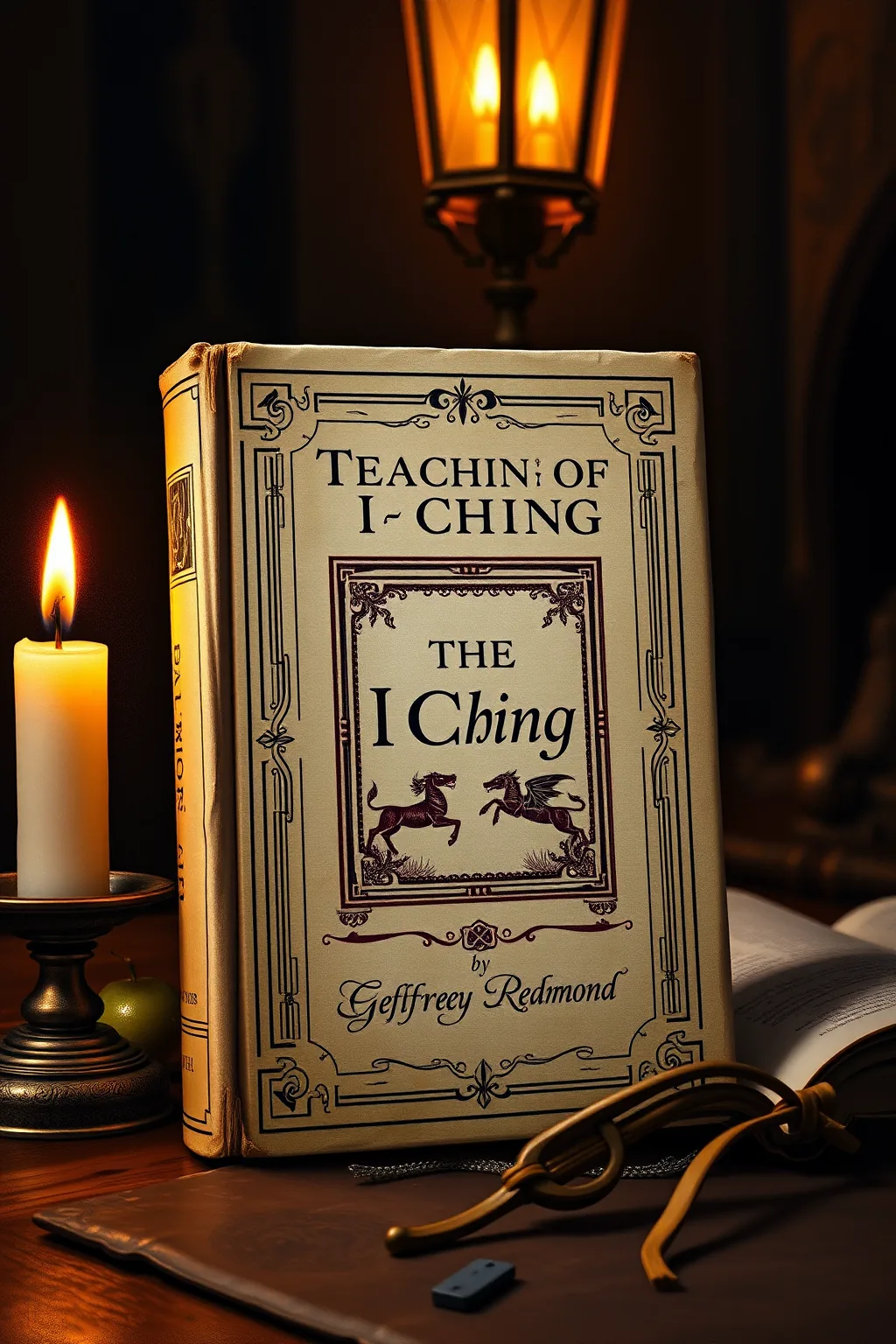
Geoffrey Redmond and Tze-Ki Hon's Teaching the I Ching (Book of Changes) attempts to demystify a foundational text of Chinese culture. Its strength lies in its systematic approach, untangling the layers of commentary and historical accretion that obscure the original meaning. The authors tackle the I Ching’s dual nature as both a divinatory manual and a philosophical guide with commendable rigor. A notable passage that illustrates this is the discussion of the trigram relationships, which moves beyond simple interpretation to explore their structural significance. However, the book occasionally suffers from an academic dryness that may alienate readers seeking a more immediate or experiential engagement with the text. While it provides excellent scholarly grounding, the practical application for personal study can feel secondary. Nevertheless, for those committed to a deep, analytical understanding of the I Ching, this volume offers a valuable, if demanding, resource.
📝 Description
79
Published in 2014, Teaching the I Ching analyzes a classical Chinese text compiled over millennia.
Geoffrey Redmond and Tze-Ki Hon's 2014 examination tackles the complexities of the I Ching, or Book of Changes. The authors address the difficulties readers face with a text that evolved over thousands of years and carries many interpretations. Their goal is to bring clarity to the I Ching's dense allusions and its often fragmented structure for a modern audience.
The book is for students of Chinese philosophy, comparative religion, and esoteric studies. It suits academics, researchers, and serious practitioners who want a thorough understanding of the I Ching, moving past simple divination. Anyone interested in the history of Chinese thought and the philosophical basis of East Asian culture will find this work useful. The authors approach the text with scholarly rigor, aiming to illuminate its philosophical depth and historical development.
The I Ching's history, possibly from the Western Zhou dynasty, shows its deep roots in Chinese intellectual life. Its influence grew through dynasties, shaping thinkers like Confucius and becoming a core text by the Han dynasty. This 2014 study appears as global interest in Eastern thought rises, providing a contemporary perspective on a work that has significantly impacted Chinese civilization for nearly three millennia. It sits within a tradition of sacred texts that blend divination, philosophy, and cosmology.
💡 Why Read This Book?
• Gain a structured understanding of the I Ching's development, tracing its journey from ancient oracular pronouncements to a cornerstone of Chinese philosophy, a narrative detailed within the historical context sections. • Grasp the complex interplay between the 64 hexagrams and their constituent trigrams, moving beyond simplistic divination to appreciate their symbolic and cosmological architecture, as explored in the 'Key Concepts' section. • Appreciate the scholarly endeavor to reconcile the I Ching's divinatory functions with its ethical and metaphysical teachings, offering a nuanced perspective not easily found in introductory guides, as highlighted by the book's comprehensive study approach.
⭐ Reader Reviews
Honest opinions from readers who have explored this book.
❓ Frequently Asked Questions
What is the primary challenge in studying the I Ching, according to Redmond and Hon?
The primary challenge lies in its fragmented assembly over nearly three thousand years, leading to numerous obscure allusions and conflicting interpretations. Teaching the I Ching addresses this by offering a comprehensive study to clarify its dense material for modern readers.
When was Teaching the I Ching (Book of Changes) first published?
The book was first published on September 1, 2014. This 2014 date places it within a contemporary resurgence of interest in Asian philosophy and Chinese culture.
Who are the authors of Teaching the I Ching?
The authors are Geoffrey Redmond and Tze-Ki Hon. Their collaboration aims to provide a rigorous academic examination of the ancient Chinese classic.
Is Teaching the I Ching suitable for beginners in divination?
While it touches upon divination, the book is primarily a scholarly study. It focuses on historical context, philosophical underpinnings, and complex interpretations, making it more suited for serious students than casual beginners.
What is the historical significance of the I Ching mentioned in the book?
The I Ching is presented as a foundational text of Chinese culture, influential since potentially the Western Zhou dynasty (c. 1046–771 BCE). It evolved from an oracular tool to a philosophical treatise, becoming one of the Five Classics by the Han dynasty.
Does the book discuss the trigrams and hexagrams of the I Ching?
Yes, the book delves into core I Ching concepts, including the hexagrams and their constituent trigrams. It explores their symbolic language, cosmological significance, and the philosophical principles they represent.
🔮 Key Themes & Symbolism
Textual Evolution
This volume meticulously traces the I Ching's long and complex history, acknowledging its compilation from fragmented sources over millennia. It addresses how the text evolved from an ancient divinatory tool, potentially linked to the Western Zhou dynasty (c. 1046–771 BCE), into a profound philosophical and ethical work. The authors highlight the challenges posed by this evolution, including the proliferation of ingenious yet conflicting interpretations that have accumulated over nearly three thousand years, making a clear understanding difficult without dedicated scholarship.
Hexagrammatic Structure
Central to the study is the examination of the I Ching's core structural elements: the 64 hexagrams, each formed by combining two trigrams. The book moves beyond superficial readings to explore the inherent symbolism and philosophical weight carried by these combinations. It discusses how the interplay of the eight trigrams (e.g., Heaven, Earth, Water, Fire) creates a complex symbolic language, reflecting cosmic principles and human situations, thereby providing a framework for understanding the text’s deeper meanings.
Divination vs. Philosophy
A key theme is the dual nature of the I Ching as both a practical divinatory instrument and a source of deep philosophical wisdom. Redmond and Hon explore how these two aspects are intertwined and how interpretations have shifted over time, from its early use for prognostication to its later status as one of the Five Classics by the Han dynasty (206 BCE – 220 CE). The work seeks to provide a balanced perspective, respecting its divinatory roots while emphasizing its enduring philosophical relevance.
Obscurity and Interpretation
The book directly confronts the inherent difficulty of the I Ching, often described as one of the world's most challenging ancient classics. It acknowledges the dense network of obscure allusions and the sheer volume of scholarly and philosophical commentary that has accrued over centuries. By presenting a comprehensive study, the authors aim to offer a guide through this labyrinth of interpretation, making the text more accessible to contemporary scholars and practitioners interested in Chinese traditional culture.
💬 Memorable Quotes
Direct passages from the work, attributed to the author.
“Chinese traditional culture cannot be understood without some familiarity with the I Ching.”
— This statement underscores the I Ching's foundational role in Chinese civilization. It posits that to truly grasp the nuances of Chinese thought, art, and societal structures, an engagement with this ancient text is not merely beneficial but essential.
“it is one of the most difficult of the world's ancient classics.”
— This highlights the significant scholarly and intellectual barrier presented by the I Ching. Its complexity stems from its fragmented origins, layered commentaries, and symbolic density, requiring dedicated study to decipher.
“Assembled from fragments with many obscure allusions...”
— This description points to the text's composite nature. Its compilation process over vast periods resulted in a work rich with implicit references and layered meanings, often making direct comprehension a formidable task.
“...it was the subject of ingenious, but often conflicting, interpretations over nearly three thousand years.”
— This emphasizes the dynamic and contested history of the I Ching's reception. Scholars and practitioners across dynasties have offered diverse, sometimes contradictory, explanations, reflecting the text's many-sided nature and its adaptability to different contexts.
“offers a comprehensive study at a time when interest in Asian philosophy and the culture of China is on the rise.”
— This positions the book as a timely intervention. In an era of increasing global engagement with Eastern thought, the work provides a needed scholarly resource to navigate a key text of Chinese heritage.
🌙 Esoteric Significance
Tradition
While not strictly aligned with Western esoteric lineages like Hermeticism or Kabbalah, the I Ching functions as a foundational text within the broader umbrella of East Asian esoteric thought. Its emphasis on cosmic patterns, cyclical change, and the interconnectedness of macrocosm and microcosm places it within a philosophical framework that informs many Taoist and Buddhist practices. It serves as a primary source for understanding Chinese geomancy (Feng Shui) and certain forms of meditative and divinatory arts that seek alignment with universal principles.
Symbolism
Key symbols include the trigrams (e.g., ☷ Kūn/Earth, ☰ Qián/Heaven) and the 64 hexagrams derived from their combinations. The trigrams represent fundamental forces and elements of nature and human experience. The hexagrams, formed by stacking two trigrams, depict specific situations or processes, often described through poetic imagery and line statements. These symbols are not merely abstract representations but are seen as dynamic patterns reflecting the flow of the Tao, guiding practitioners toward understanding and harmony.
Modern Relevance
Contemporary thinkers and practitioners across various disciplines continue to draw from the I Ching. In psychology, Carl Jung famously explored its archetypal symbolism and synchronicity. In comparative philosophy and religious studies, it remains a vital text for understanding East Asian worldviews. Furthermore, modern practitioners of Taoism, Neo-Confucianism, and even secular individuals interested in wisdom literature utilize its hexagrammatic system for self-reflection, decision-making, and cultivating a deeper connection to natural cycles.
👥 Who Should Read This Book
• Academic researchers in East Asian Studies, comparative religion, and philosophy seeking a rigorous, historically grounded analysis of the I Ching's textual development and interpretive traditions. • Dedicated students of Chinese philosophy aiming to move beyond introductory guides and engage with the complexities of the text's structure, symbolism, and historical context. • Practitioners of esoteric arts or comparative mysticism interested in understanding a foundational text that has shaped a significant portion of global esoteric thought and practice.
📜 Historical Context
The I Ching, or Book of Changes, boasts a lineage stretching back potentially to the Western Zhou dynasty (c. 1046–771 BCE), solidifying its position as a central to Chinese civilization. Its philosophical weight grew significantly through the Spring and Autumn period and the Warring States period, profoundly influencing thinkers like Confucius and his disciples. By the Han dynasty (206 BCE – 220 CE), it was formally recognized as one of the Five Classics, cementing its canonical status. This 2014 publication, Teaching the I Ching, arrives during a period of heightened global interest in Asian philosophy, a trend accelerated by figures like Lin Yutang who popularized Chinese thought in the West earlier in the 20th century. While rival schools of thought existed, the I Ching's mix of cosmology, ethics, and divination gave it outstanding longevity. Its reception has been consistently strong, though scholarly debates, such as those concerning the authenticity of later commentaries, have persisted.
📔 Journal Prompts
The hexagrammatic structure: how do the interactions of trigrams map onto personal challenges?
Reflecting on the I Ching's dual role as divination and philosophy, consider its implications for decision-making.
The historical layering of interpretations: which ancient commentary resonates most with your current understanding?
Symbolic language of the trigrams: what fundamental forces do Kūn and Qián represent in your life?
Obscure allusions: identify a passage that initially confused you and explore its potential meanings.
🗂️ Glossary
I Ching
Literally 'Book of Changes,' an ancient Chinese classic text used for divination and philosophical study. It comprises 64 hexagrams, each formed by combining two trigrams.
Hexagram
A figure composed of six stacked horizontal lines, each line being either solid (yang) or broken (yin). There are 64 unique hexagrams in the I Ching.
Trigram
A figure composed of three stacked horizontal lines, each either solid (yang) or broken (yin). There are eight basic trigrams (e.g., Heaven, Earth, Fire, Water), which combine to form hexagrams.
Yang
In I Ching and Taoist philosophy, the active, masculine, bright, and assertive principle, often represented by a solid line (—).
Yin
In I Ching and Taoist philosophy, the passive, feminine, dark, and receptive principle, often represented by a broken line (- -).
Five Classics
A group of Chinese books considered by Confucius to be the essential formative works of Chinese culture. The I Ching is one of these classics.
Taoism
A philosophical and religious tradition of China, emphasizing living in harmony with the Tao (the 'way' or 'path'), the fundamental nature of the universe.