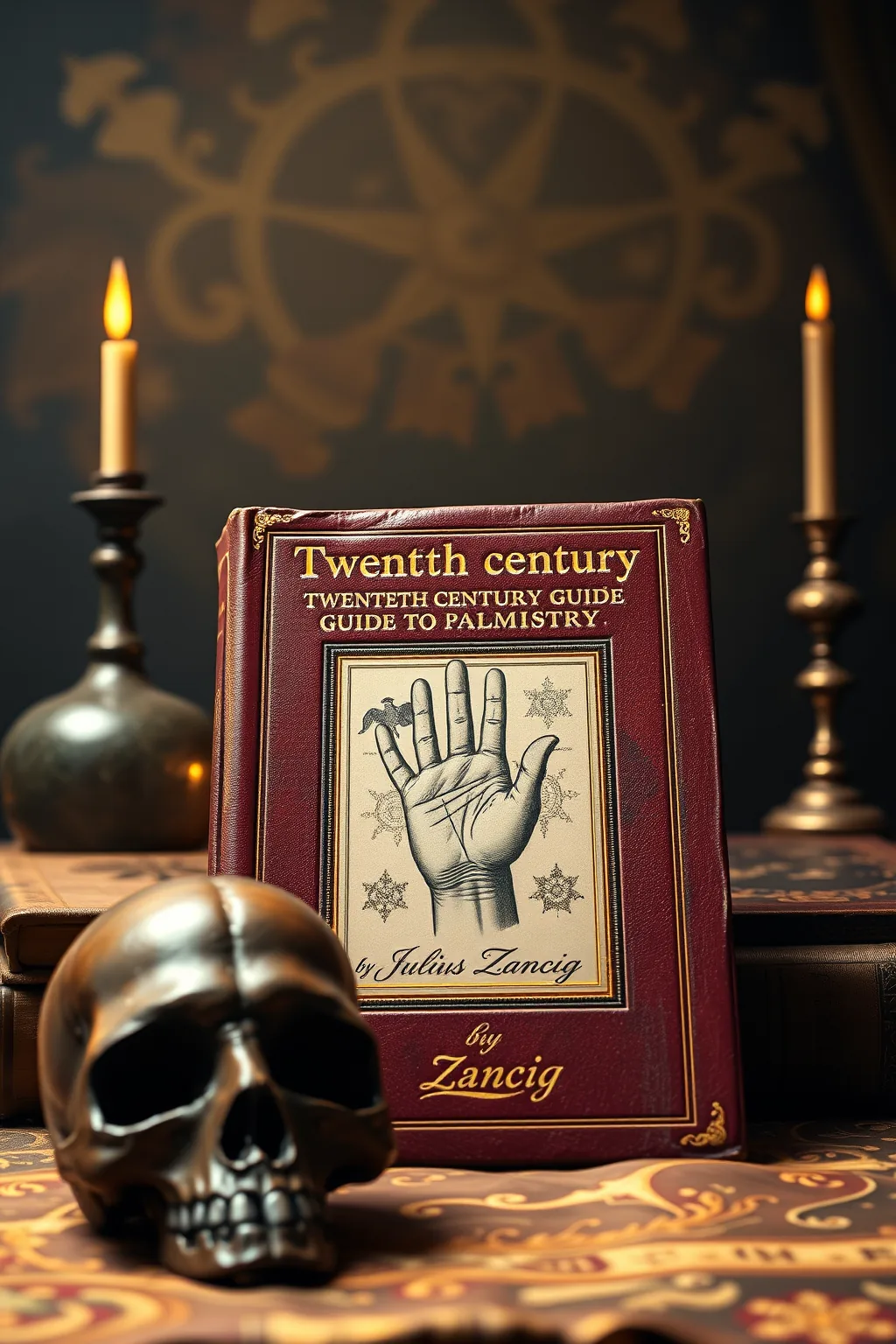
Twentieth century guide to palmistry
 61
61

Twentieth century guide to palmistry



Marcus Thorne (Esoteric Sciences Reviewer) — "Twentieth Century Guide to Palmistry" stands as a cornerstone in palmistry literature. Zancig's profound understanding of cheiromancy is evident on every page, offering an accessible yet deeply insightful exploration of hand analysis. He masterfully bridges the gap between esoteric theory and practical application, making complex concepts comprehensible. This book is indispensable for anyone seeking to understand the symbolic language of the palm, offering clarity on character, potential, and life's unfolding path. Highly recommended for both neophytes and seasoned practitioners of divination arts.
📝 Description
61
Julius Zancig's 1903 "Twentieth Century Guide to Palmistry" deciphers the hand's markings.
Published in 1903, Julius Zancig's "Twentieth Century Guide to Palmistry" examines the art of interpreting hand lines, mounts, and shapes. Zancig details how these physical characteristics are said to reflect an individual's personality, destiny, and inner life. The book systematically breaks down the palm, explaining the significance of each feature. It aims to equip readers with the knowledge to read their own palms and those of others. The text presents palmistry not as mere fortune-telling but as a system for understanding human nature and the forces influencing it. Zancig's approach connects the physical hand to broader metaphysical concepts, suggesting a correspondence between the human body and the cosmos. This guide serves as a manual for those interested in self-knowledge through the practice of cheiromancy. It offers a structured way to approach the subject, moving from basic interpretations to more complex readings. The work is intended for anyone seeking insight into personal traits and potential life paths via palm analysis.
This guide falls within the Western esoteric tradition of divination, specifically cheiromancy, which has roots stretching back to ancient Greece and India. Palmistry, as presented by Zancig, operates on the principle of correspondence, a core esoteric concept that links the microcosm (the human hand) to the macrocosm (the universe). It is part of a broader interest in physiognomy and symbolic interpretation that flourished in the late 19th and early 20th centuries, alongside other occult and spiritualist movements. The book reflects a time when practitioners sought to systematize and rationalize divinatory arts, making them accessible to a wider audience seeking spiritual or psychological understanding.
💡 Why Read This Book?
Delve into the ancient art of palmistry and unlock the secrets of your destiny. This guide offers profound insights into character, potential, and the subtle energies that influence your life. Ideal for seekers of self-knowledge, practitioners of divination, and scholars of esoteric traditions who wish to understand the symbolic language of the hand.
⭐ Reader Reviews
Honest opinions from readers who have explored this book.
❓ Frequently Asked Questions
What is cheiromancy?
Cheiromancy, commonly known as palmistry, is an ancient divinatory art that interprets the lines, mounts, and shapes of the hand to reveal aspects of a person's character, past, present, and future.
Are palmistry readings predetermined?
Palmistry suggests tendencies and potentials rather than fixed destinies. The lines can change and evolve, reflecting choices and personal growth, offering insights for navigation, not rigid pronouncements.
How accurate is palmistry?
The accuracy of palmistry is subjective and often depends on the skill of the reader and the openness of the individual. It is viewed as a tool for self-reflection and understanding, rather than absolute prophecy.
Can anyone learn palmistry?
Yes, with dedicated study and practice, anyone can learn the fundamentals of palmistry. This book serves as an excellent starting point, demystifying the art for beginners.
What are the main lines in palmistry?
The primary lines typically studied are the Life Line, Head Line, Heart Line, and Fate Line, each offering distinct insights into physical vitality, intellect, emotional nature, and life's journey, respectively.
🔮 Key Themes & Symbolism
The Hand as a Cosmic Map
This theme explores the profound belief that the human hand is not merely flesh and bone, but a microcosm reflecting the grand design of the universe. Zancig posits that the lines and mounts are etched by unseen forces, acting as a celestial script detailing an individual's inherent potentials, life path, and karmic tendencies. It explores the idea that the palm serves as a living, breathing map, guiding us through the labyrinth of our existence and offering clues to our deepest nature and destiny.
Character Analysis Through Cheiromancy
The book meticulously details how the intricate patterns on the palm can reveal a person's core personality traits, strengths, weaknesses, and emotional landscape. It teaches readers to interpret the subtle nuances of hand shape, finger length, and the distinct characteristics of each line and mount, transforming the palm into a body of psychological and spiritual insights. This theme emphasizes the diagnostic power of palmistry in understanding oneself and others.
The Interplay of Fate and Free Will
Zancig navigates the complex relationship between destiny and personal agency as revealed through the palm. While acknowledging the presence of lines that may suggest predetermined paths or challenges, the text also highlights the dynamic nature of the palm. It suggests that awareness gained through palmistry empowers individuals to make conscious choices, influencing their trajectory and potentially altering their future, thereby emphasizing the active role of free will in shaping one's life.
💬 Memorable Quotes
Direct passages from the work, attributed to the author.
“Destiny is written, but not yet sealed.”
— This poignant statement highlights the dualistic nature of fate and free will. It implies that while potential paths and challenges are indicated, the ultimate outcome is subject to individual choice and action.
“Each line tells a story, each mount a chapter.”
— This metaphorical quote emphasizes the narrative quality of palmistry. It suggests that the hand is a complex, unfolding story, with each distinct feature contributing a unique element to the understanding of a person's life journey.
“The lines of the hand are the whispers of the cosmos.”
— This evocative statement frames palmistry as a form of cosmic communication. It suggests that the markings on the palm are not random but are subtle messages from the universe, offering guidance and insight into our existence.
💡 Key Ideas
Editorial paraphrase of the work's core concepts — not direct quotes.
The hand is a faithful mirror of the soul.
This quote expresses the core tenet of palmistry as presented by Zancig, suggesting that the physical lines and features of the hand are direct reflections of an individual's inner self, character, and spiritual essence.
Know thyself, and the world shall unfold.
This quote underscores the power of self-awareness derived from palmistry. By understanding one's own nature, strengths, and challenges as revealed by the hand, one gains clarity and a more profound understanding of their place in the wider world.
🌙 Esoteric Significance
Tradition
This work draws heavily from the Hermetic tradition, which emphasizes the interconnectedness of all things – the microcosm and the macrocosm. It aligns with Neoplatonic ideas of divine emanation and the belief that the universe is imbued with symbolic meaning. Palmistry, in this context, is viewed as a method of deciphering divine intelligence imprinted upon the human form.
Symbolism
The symbolism within palmistry is vast. Lines represent flows of energy and life force (Life Line), mental processes and intellect (Head Line), emotional currents and relationships (Heart Line), and the influence of destiny and career (Fate Line). Mounts symbolize planetary influences and character traits, while hand shapes connect to elemental archetypes, offering a rich symbolic language for interpretation.
Modern Relevance
In an age often characterized by disconnection and a search for meaning, Zancig's guide remains remarkably relevant. It offers a tangible, personal method for self-exploration and understanding, fostering a sense of empowerment and agency. The book's emphasis on the hand as a unique identifier and a source of insight appeals to contemporary desires for authenticity and deeper self-awareness.
👥 Who Should Read This Book
This comprehensive guide is useful for a diverse audience. Absolute beginners in divination will find Zancig's clear explanations and systematic approach an ideal entry point into the world of palmistry. Scholars of esoteric history and comparative religion will appreciate its historical context and its place within the broader spectrum of divinatory arts. Seekers of personal growth and self-discovery will find clear insights into their character and life path. Experienced practitioners will benefit from Zancig's detailed interpretations and potentially discover new nuances to refine their craft.
📜 Historical Context
Published in the early 20th century, "Twentieth Century Guide to Palmistry" emerged during a period of intense spiritual and intellectual curiosity. The late Victorian and Edwardian eras saw a resurgence of interest in esoteric subjects, occultism, and divination as many sought answers beyond the confines of conventional science and religion. This era was marked by figures like Madame Blavatsky and the rise of spiritualism, creating fertile ground for works like Zancig's to flourish. The book reflects a desire to systematize and popularize ancient mystical practices, making them accessible to a wider audience seeking personal enlightenment and understanding in a rapidly changing world.
📔 Journal Prompts
Observe your dominant hand. What initial impressions do you get about its overall shape and texture? Does it feel 'familiar' or 'alien'?
Trace your major lines (Life, Head, Heart). What narrative do you perceive them telling about your journey so far?
If you were to assign a planetary influence to one of the mounts on your palm, which would it be and why?
Consider a significant event in your life. Can you identify any corresponding shifts or emphasis in your palm lines or mounts?
How does the concept of the hand as a 'cosmic map' resonate with your personal beliefs about destiny and free will?
🗂️ Glossary
Cheiromancy
The art of divination through the examination of the hand, commonly known as palmistry. It involves interpreting lines, mounts, and other features of the palm.
Mounts
The fleshy, raised portions of the palm, each associated with a planet and a specific set of personality traits or influences, such as the Mount of Venus (love, passion) or the Mount of Jupiter (ambition, leadership).
Life Line
The curved line running from the base of the thumb towards the wrist. It is traditionally associated with physical vitality, health, and the general course of one's life.
Head Line
The horizontal line running across the palm, typically below the Heart Line. It is interpreted to reveal aspects of a person's intellect, thinking patterns, and mental abilities.
Heart Line
The uppermost horizontal line on the palm, running from the edge of the palm beneath the little finger towards the index or middle finger. It signifies emotional nature, relationships, and matters of the heart.
This book appears in 1 collection
🔮 Readers Also Liked
Browse all →








More by Julius Zancig
All books →


From the “Palmistry” Collection
View all →




More Free Divination & Tarot Books
View all →