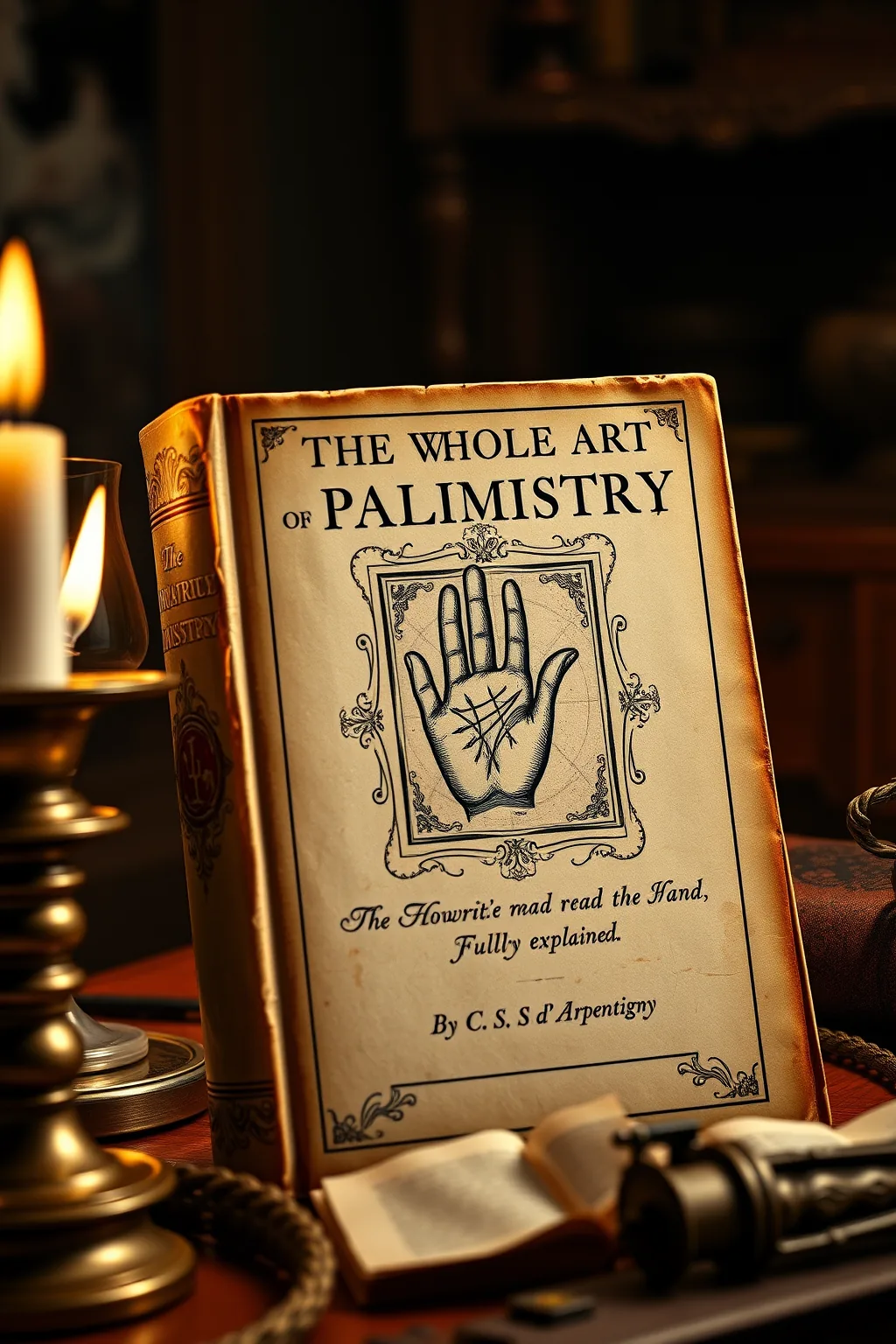
The whole art of palmistry, or, How to read the hand, fully explained
 61
61

The whole art of palmistry, or, How to read the hand, fully explained



Silas Hawthorne (Hermetic Studies Editor) — 'The Whole Art of Palmistry' by C. S. d' Arpentigny stands as a cornerstone in the study of chiromantic divination. Arpentigny’s meticulous approach unravels the symbolic language of the hand with unparalleled clarity, moving beyond superficial interpretations to the deeper esoteric currents. This text is a treasure trove for those seeking to understand the inherent potentials and challenges inscribed within one’s palm. Its strength lies in its comprehensive nature, offering a holistic view that resonates with practitioners of occult arts and serious students of esoteric philosophy alike. A truly indispensable resource for anyone committed to the ancient art of reading the hand.
📝 Description
61
C. S. d' Arpentigny's 1860 book explains palmistry as a system of understanding human nature and cosmic influence.
First published in 1860, 'The Whole Art of Palmistry' by C. S. d' Arpentigny presents a detailed system for interpreting the hand. Arpentigny uses illustrations to show how the hand's features, including mounts, lines, and markings, correspond to character traits, life events, and personal potential. He argues that palmistry is more than simple prediction; it is a method for self-knowledge and understanding one's place within larger universal patterns. The book breaks down the analysis into specific components, explaining the significance of the major lines like the life, head, and heart lines, as well as the significance of the thumb, fingers, and the palm's fleshy mounds. Arpentigny's approach seeks to connect the physical hand to underlying energies and influences that shape human experience. It is intended for those interested in divination and the study of ancient arts, offering a philosophical perspective on human destiny.
This work belongs to the tradition of Western esoteric palmistry, which gained traction in the 19th century. It follows in a lineage that sought to systematize and legitimize chiromancy, moving beyond folk practices towards a more structured interpretive framework. Arpentigny's approach connects the physical form of the hand to broader concepts of character, destiny, and cosmic influence, aligning with a period where occult sciences were being reexamined. It stands as an example of esoteric literature aiming to reveal hidden correspondences between the microcosm (the human hand) and the macrocosm (the universe).
💡 Why Read This Book?
Embark on a journey of self-discovery by learning the ancient art of palmistry. This book unlocks the symbolic language of your hands, revealing insights into your character, destiny, and hidden potentials. Ideal for spiritual seekers, practitioners of divination, and those curious about the esoteric wisdom encoded within us. Discover a profound connection to yourself and the universe.
⭐ Reader Reviews
Honest opinions from readers who have explored this book.
❓ Frequently Asked Questions
What is palmistry fundamentally?
Palmistry, or chiromancy, is the art of divining character and predicting future events by the study of the palm of the hand, particularly its lines, mounts, and shape.
Who was C. S. d' Arpentigny?
C. S. d' Arpentigny was a significant 19th-century French occultist and author, renowned for his extensive research and contributions to the field of palmistry.
Does palmistry claim to be an exact science?
While offering profound insights into character and tendencies, palmistry is understood as an interpretive art, a tool for self-understanding rather than a rigid, deterministic science.
Are the lines on the hand the only aspect of palmistry?
No, palmistry considers the shape of the hand, the length and flexibility of fingers, the prominence of mounts (fleshy areas), and various markings in addition to the major lines.
Can palmistry be learned by beginners?
Absolutely. This book is structured to guide even those new to the subject, providing a comprehensive foundation and clear explanations to begin learning the art of reading the hand.
🔮 Key Themes & Symbolism
The Hand as a Cosmic Mirror
This theme explores the profound esoteric belief that the human hand is a microcosm of the universe, reflecting celestial influences and karmic patterns. Arpentigny posits that the lines, mounts, and shapes are not random but are etched by cosmic forces, acting as a divine script. Understanding these markings allows one to decipher their unique spiritual blueprint, inherent talents, and potential life lessons. It's a journey into seeing the macrocosm within the palm, connecting personal destiny to universal energies and the subtle interplay of fate and free will.
The Language of Lines and Mounts
At the heart of palmistry lies the deciphering of a complex symbolic language. This theme studies the specific meanings of the major lines—Life, Head, Heart, Fate—and their variations, as well as the significance of the various mounts, such as Venus, Jupiter, Saturn, and the Moon. Arpentigny meticulously details how the prominence, depth, and intersections of these features reveal aspects of personality, emotional landscape, mental acuity, and life's trajectory. It’s an exploration of the intricate grammar of the hand, teaching readers to interpret the narrative written in their palms.
Chiromancy as a Tool for Self-Mastery
Beyond mere prediction, this theme highlights palmistry's role as a powerful instrument for self-awareness and personal growth. By understanding the strengths and challenges indicated in the hand, individuals can cultivate self-knowledge, make informed choices, and consciously shape their destiny. Arpentigny’s work encourages a proactive approach, suggesting that awareness of one's inherent tendencies empowers them to navigate life's complexities with greater wisdom and intention. It's about using the insights from the palm to achieve greater harmony and fulfillment in life.
💬 Memorable Quotes
Direct passages from the work, attributed to the author.
“Lines are not immutable decrees, but rather tendencies and potentials.”
— This emphasizes that palmistry reveals predispositions, not fixed outcomes, highlighting the role of free will in shaping one's destiny.
“Each mount speaks of a specific faculty or force within us.”
— This points to the symbolic representation of different psychological and energetic centers of the body, as reflected in the fleshy mounds of the palm.
“The study of the hand is the study of man himself.”
— This highlights the profound connection between the physical form and the inner self, suggesting that understanding the hand is key to understanding human nature.
“Wisdom is written not only in books, but in the very flesh.”
— This evokes the idea that ancient knowledge and spiritual truths are imprinted within our physical being, waiting to be deciphered.
💡 Key Ideas
Editorial paraphrase of the work's core concepts — not direct quotes.
The hand is a veritable map of the soul.
This quote captures the core esoteric philosophy that the physical hand is a direct manifestation of one's inner spiritual essence and psychological makeup.
🌙 Esoteric Significance
Tradition
This work firmly sits within the Western Esoteric Tradition, drawing heavily on Hermeticism, ancient chiromancy, and astrological correspondences. It aligns with the Hermetic principle of 'As Above, So Below,' suggesting a divine order reflected in the human form. It also connects to Neoplatonic ideas about the soul's journey and the influence of celestial bodies on earthly existence.
Symbolism
The symbolism is rich and multi-layered. Lines represent the flow of energy and time (Life, Fate), mental processes (Head), emotional currents (Heart), and character traits (various mounts). Mounts symbolize specific planetary energies and human faculties – Venus for love and passion, Jupiter for ambition and leadership, Saturn for discipline and wisdom, the Moon for imagination and intuition.
Modern Relevance
In an age often characterized by spiritual seeking and a desire for self-understanding, Arpentigny's work remains remarkably relevant. Palmistry offers a tangible, visual method for exploring one's inner landscape. It provides a framework for introspection, self-acceptance, and personal empowerment, resonating with contemporary interests in mindfulness, personal development, and the search for authentic living.
👥 Who Should Read This Book
This important work is essential for aspiring palmists seeking a comprehensive and authoritative guide. Scholars of esoteric history and divination will find it important for its historical context and detailed methodology. Spiritual seekers and practitioners looking to deepen their understanding of self and the unseen forces at play in life will discover useful insights. Beginners will appreciate the clear explanations, while seasoned practitioners will benefit from the depth and nuance of Arpentigny's analysis.
📜 Historical Context
Published in the mid-19th century, 'The Whole Art of Palmistry' emerges from a vibrant era of occult revival and spiritualism in Europe. This period saw a renewed interest in ancient wisdom traditions, esoteric philosophies, and mystical practices that had been largely suppressed during earlier rationalist movements. Authors like Arpentigny sought to systematize and legitimize practices like palmistry, drawing upon historical texts and their own observations. The book reflects a growing desire among intellectuals and the public alike to find deeper meaning and connection beyond the material world, often fueled by discoveries in science that paradoxically seemed to point towards unseen forces and intricate universal laws.
📔 Journal Prompts
Reflect on the most prominent line in your palm. What does its depth and shape suggest about your core energies?
Consider the mount of Venus. How does its prominence relate to your experiences of love, passion, and self-worth?
Examine your Heart Line. What story does its path and any breaks tell about your emotional journey and capacity for connection?
How does the shape of your hand and fingers correlate with your perceived personality traits?
If your palm is a map, what is one area of your life you feel is clearly indicated, and how can you consciously engage with that potential?
🗂️ Glossary
Chiromancy
The practice of fortune-telling and character analysis through the examination of the palm of the hand.
Mounts
The fleshy, raised areas on the palm, each associated with a planet and specific human faculties or characteristics.
Lines
The creases on the palm, which are interpreted to represent various aspects of life, character, and destiny.
Traces
Smaller markings on the palm, such as crosses, stars, or squares, which modify the interpretation of the major lines and mounts.
Quadrangle
The space between the Life, Head, and Heart lines, often interpreted as an indicator of the individual's free will and ability to act independently.
This book appears in 1 collection
🔮 Readers Also Liked
Browse all →









From the “Palmistry” Collection
View all →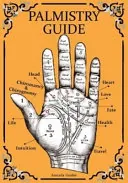







More Free Divination & Tarot Books
View all →