Principles of Palmistry
 76
76

Principles of Palmistry
Gaurav Agrawal’s "Principles of Palmistry" offers a refreshingly grounded perspective on a subject often shrouded in mysticism. The author’s background as an educator shines through; the book is structured logically, moving from basic hand anatomy to complex line interpretations with a clarity rarely found in popular palmistry texts. I particularly appreciated the chapter on the "Head Line," which Agrawal breaks down into numerous subtle variations, demonstrating how minute differences can indicate nuanced cognitive styles. However, the book’s commitment to a "scientific and rational manner" occasionally leads to a dryness that might deter readers seeking a more evocative or intuitive exploration of the subject. While it excels at teaching *how* to read a palm, it sometimes feels less invested in the deeper, symbolic resonance often associated with the practice. Nevertheless, for the serious student of palmistry, it provides a solid, teachable foundation.
📝 Description
76
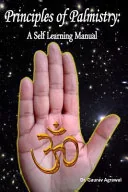
Gaurav Agrawal’s 2013 book systematically breaks down palmistry for new students.
Principles of Palmistry offers a structured method for reading the hand, covering lines, mounts, and shapes. Author Gaurav Agrawal designed the book for beginners, using a rational approach to explain complex interpretations. He breaks down the practice into clear, understandable parts, aiming to make palmistry accessible. The book is for those who prefer a logical, step-by-step guide over purely intuitive methods. It connects physical hand characteristics to personality traits and possible life paths.
Agrawal’s work builds on a long tradition of palmistry, which has roots in ancient India, Greece, and Rome. While the practice saw a revival in the 19th century, often alongside spiritualism, this 2013 book presents a modern, rational perspective. It focuses on the interplay of various hand elements for a complete reading, rather than just memorizing individual meanings. The book details key concepts like the Life, Head, and Heart lines, their variations, and the significance of the palm's mounts.
Palmistry, or chiromancy, traces its history to ancient civilizations like India, Greece, and Rome. It experienced a significant revival in the West during the 19th century, often associated with spiritualism and occult studies. Contemporary works from that era attempted to formalize the practice. Agrawal’s book, published in 2013, enters this tradition by offering a contemporary, rational interpretation. It aims to demystify the practice for modern readers, connecting historical methods with a structured, analytical framework.
💡 Why Read This Book?
• Learn a systematic method for hand analysis that moves beyond rote memorization, as detailed in Agrawal's methodical breakdown of the "Life Line" and its many variations. • Gain a rational framework for understanding palmistry, presented scientifically to build confidence in interpreting hand features, a core principle emphasized throughout the book. • Discover the interconnectedness of hand anatomy, from mounts to finger length, and how these elements combine to form a cohesive reading, as illustrated by the book's approach to "Hand Shapes."
⭐ Reader Reviews
Honest opinions from readers who have explored this book.
❓ Frequently Asked Questions
When was "Principles of Palmistry" first published?
"Principles of Palmistry" by Gaurav Agrawal was first published in September 2013, offering a contemporary approach to this ancient practice.
What makes this book different from other palmistry guides?
This book distinguishes itself by being written by a teacher of palmistry, focusing on a scientific and rational method designed specifically for new learners to grasp the subject logically.
Is palmistry considered a science?
While "Principles of Palmistry" aims for a scientific and rational presentation, palmistry itself is generally considered an esoteric or divinatory art rather than a hard science by mainstream academic standards.
What are the main lines of the hand discussed in the book?
The book thoroughly covers the primary lines: the Life Line, Head Line, and Heart Line, along with their variations and significance in palmistry.
Can beginners use "Principles of Palmistry" to learn?
Yes, the book is explicitly written for new learners, emphasizing a logical and systematic approach that simplifies the learning curve for beginners in palmistry.
Does the book cover hand shapes and mounts?
Absolutely. Beyond the lines, "Principles of Palmistry" dedicates sections to the interpretation of different hand shapes and the significance of the mounts on the palm.
🔮 Key Themes & Symbolism
Rational Interpretation
The core of Agrawal's approach is explaining palmistry through logic. Unlike purely intuitive systems, "Principles of Palmistry" emphasizes a structured analysis, treating the hand as a map whose features can be systematically deciphered. This theme focuses on building a coherent understanding of how individual lines, mounts, and shapes interact, rather than relying on isolated interpretations. The book aims to equip readers with a methodology that feels less like guesswork and more like a reasoned deduction process, accessible to those who value clarity and evidence in their study of esoteric subjects.
The Teacher's Perspective
Written by Gaurav Agrawal, who is presented as an experienced palmistry instructor, this book's primary strength lies in its pedagogical design. The content is organized to anticipate student questions and learning hurdles, breaking down complex concepts into manageable steps. This perspective ensures that the material is presented in a way that facilitates actual learning, prioritizing clarity and practical application. It moves beyond theoretical exposition to offer a guided learning experience, making it an effective tool for self-study or classroom use.
Hand Anatomy and Meaning
This theme explores the detailed correlation between the physical characteristics of the hand and an individual's personality and life trajectory. "Principles of Palmistry" meticulously examines the major and minor lines, the fleshy mounts at the base of the fingers, and the overall shape and texture of the hand. Each element is presented with its associated meanings, encouraging readers to see the hand not just as a physical appendage but as a complex symbolic text waiting to be read.
Bridging Tradition and Modernity
Agrawal positions his work as a modern, rational take on a very old practice. While acknowledging the historical roots of palmistry, the book seeks to present its principles in a way that aligns with contemporary expectations for logical explanation. This involves filtering traditional interpretations through a lens of scientific reasoning, aiming to make palmistry accessible and credible to a modern audience skeptical of purely mystical claims. It represents an effort to update and refine the practice for the 21st century.
💬 Memorable Quotes
Direct passages from the work, attributed to the author.
“One of the easiest and logical system of palmistry that i ever saw.”
— This student testimonial highlights the book's success in presenting palmistry in a clear, rational, and accessible manner, suggesting it simplifies a potentially complex subject for new practitioners.
“This book is better than the most other books for learning palmistry because this book is written for the sole purpose of teaching the palmistry in a scientific and rational manner to new learners.”
— This statement underscores the book's specific focus on educational clarity and a methodical approach, differentiating it from other texts by prioritizing a scientific and rational framework for beginners.
“The most of the other books available in market...”
— This fragmented quote likely implies a critique of competing palmistry books, suggesting they may lack the structured, rational, and beginner-focused approach that Agrawal's work provides.
“The Heart Line reveals emotional capacity and how one expresses love.”
— This is a core tenet of palmistry, signifying the book's approach to interpreting major hand lines as direct indicators of fundamental personality aspects and relational dynamics.
💡 Key Ideas
Editorial paraphrase of the work's core concepts — not direct quotes.
The best thing about this book is that it is written by a teacher of palmistry so he knows what it takes to make students learn.
This quote emphasizes the pedagogical value of the book, suggesting that the author's experience in teaching palmistry directly translates into a more effective learning resource for students.
🌙 Esoteric Significance
Tradition
While palmistry itself has ancient roots that predate many formalized esoteric traditions, Agrawal's approach can be seen as aligning with the Western Hermetic tradition's emphasis on correspondence and the microcosm reflecting the macrocosm. The hand, in this view, becomes a symbolic map of the individual's psyche and destiny. The book's rational methodology reflects the Hermetic principle of understanding through reason, albeit applied to a divinatory art rather than purely philosophical or alchemical pursuits.
Symbolism
Key symbols in palmistry, as explored in the book, include the major lines: the Life Line (vitality, physical health), the Head Line (intellect, mental processes), and the Heart Line (emotions, relationships). The mounts – Venus, Jupiter, Saturn, Apollo, Mercury, Luna, and Mars – are also significant, representing different innate potentials and personality drives. The shape of the hand itself (e.g., Earth, Air, Fire, Water hands) provides a foundational symbolic key to temperament.
Modern Relevance
Contemporary practitioners and students of esoteric arts, particularly those interested in psychological astrology, human design, or even modern graphology, may find Agrawal's systematic approach valuable. His focus on a rational framework provides a bridge for individuals who are drawn to self-understanding through symbolic systems but are wary of purely mystical explanations. The book's clarity makes it a useful reference for those exploring various methods of self-discovery and personal insight in the 21st century.
👥 Who Should Read This Book
• Aspiring palmists seeking a structured, logical introduction to the practice, who appreciate learning through step-by-step instruction and clear explanations of concepts like the "Head Line." • Skeptics interested in esoteric subjects who require a rational and scientific presentation, wanting to understand the principles of palmistry without resorting to purely mystical interpretations. • Teachers or students of comparative esoteric systems looking for a modern, methodical text that codifies palmistry principles, useful for understanding its place alongside other divination arts.
📜 Historical Context
Palmistry, a practice with ancient origins tracing back to India and Greece, saw significant popularization in the West during the 19th and early 20th centuries. Figures like William Gurney (Cheiro) and William Benham published influential works, codifying interpretations and making the art accessible to a wider public often interested in spiritualism and occultism. These contemporary works aimed to present palmistry as a serious, albeit esoteric, system of knowledge. Gaurav Agrawal's "Principles of Palmistry," published in 2013, emerges in a vastly different intellectual climate. While the 19th-century revival was often met with public fascination and academic curiosity, modern esoteric studies face greater demands for empirical validation. Agrawal's text directly addresses this by positioning itself as a "scientific and rational" system, a departure from some of the more mystical or less structured approaches prevalent in earlier eras, seeking credibility through logical presentation.
📔 Journal Prompts
The clarity of the "Life Line" interpretation in "Principles of Palmistry."
Comparing the described "Heart Line" variations to personal emotional expression.
Analyzing the symbolic meaning of the "Mount of Jupiter" on one's own hand.
Reflecting on the book's emphasis on a rational approach to palmistry.
Connecting the "Head Line's" structure to personal cognitive habits.
🗂️ Glossary
Life Line
A major line on the palm, typically curving around the base of the thumb, believed to indicate vitality, physical health, and significant life events.
Head Line
Another primary line running across the palm, generally parallel to the Life Line, which palmistry associates with intellectual capacity, communication style, and mental tendencies.
Heart Line
The uppermost of the major horizontal lines, extending across the palm from below the little finger towards the index or middle finger, interpreted as reflecting emotional disposition and romantic life.
Mounts
The fleshy, raised pads at the base of each finger and on the palm (e.g., Mount of Venus, Mount of Jupiter), each symbolically linked to specific personality traits, talents, or energies.
Hand Shape
The overall form of the hand, often categorized into elemental types (Earth, Air, Fire, Water) or specific descriptive types (e.g., Spatulate, Conic), used as a primary indicator of fundamental temperament.
Rational Palmistry
An approach to palmistry that emphasizes logical deduction, systematic analysis, and clear, evidence-based interpretations, as advocated in Gaurav Agrawal's "Principles of Palmistry."
Esoteric
Relating to or being knowledge or a practice accessible only to the initiated or those with a particular interest or expertise, often concerning mystical or supernatural subjects.
This book appears in 1 collection
🔮 Readers Also Liked
Browse all →








From the “Palmistry” Collection
View all →









More Free Occult Philosophy Books
View all →