Vedic Palmistry
 83
83

Vedic Palmistry
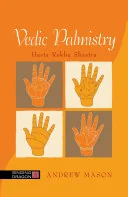
Andrew Mason's Vedic Palmistry presents a streamlined entry into a complex system. The book’s primary strength lies in its clarity, demystifying the connection between the lines on one's palm and the broader astrological framework of Vedic tradition. Mason avoids overly arcane jargon, making the principles of Hast rekha shastra approachable for the uninitiated. A notable passage discusses the interplay between the Mercury line and potential communication challenges, grounding abstract astrological influences in tangible hand markings. However, the conciseness, while beneficial for beginners, occasionally sacrifices depth; experienced practitioners might desire more nuanced interpretations or extensive case studies. The integration with introductory astrology is competent but remains introductory. Nevertheless, for its stated purpose of providing a foundational understanding, Vedic Palmistry succeeds.
📝 Description
83
Andrew Mason's 2017 book, Vedic Palmistry, translates Hast rekha shastra for modern readers.
Vedic Palmistry by Andrew Mason explains the Indian practice of Hast rekha shastra, or palmistry. The book breaks down how to read hand lines, mounts, and shapes to understand potential health issues and major life events. It connects the physical hand to astrological influences, offering a method that beginners can follow even without prior astrology knowledge. This work is suitable for those interested in Vedic traditions, particularly those involved with Ayurveda or yoga, who want to grasp the energetic and temporal aspects of their lives. It provides a practical guide for beginners seeking self-discovery through palmistry. Readers interested in comparing different esoteric systems will find its combination of hand analysis and astrological ideas valuable.
The text covers basic Vedic astrological ideas as they relate to the hand, including how planetary energies affect specific lines and mounts. It explains how to interpret the 'life line,' 'head line,' and 'heart line,' noting how their characteristics correspond to health concerns and life stages. The book also discusses the meaning of mounts, such as Jupiter or Venus, and their links to personality and fate.
This book engages with the ancient Indian tradition of palmistry, known as Hast rekha shastra, which has roots in texts like the *Samudrika Shastra*. Mason places this practice within a modern framework, acknowledging a long global history of physiognomy and divination. The book's specific approach of linking palmistry directly to Vedic astrology aligns with contemporary efforts to integrate various branches of Indian occult sciences, creating a cohesive system of esoteric knowledge.
💡 Why Read This Book?
• Learn to interpret the primary lines of the palm—life, head, and heart—and their correlation with significant life events and health implications, as detailed in Mason's explanations of Hast rekha shastra. • Understand how basic Vedic astrological principles, such as planetary influences on hand mounts, offer an additional layer of insight beyond simple line readings, as explored in the introductory astrology section. • Discover the practical application of Vedic palmistry for personal development and self-awareness, drawing connections between hand analysis and concepts found in Ayurveda and yoga, as Mason suggests for holistic understanding.
⭐ Reader Reviews
Honest opinions from readers who have explored this book.
❓ Frequently Asked Questions
What is Vedic Palmistry and how does it differ from Western palmistry?
Vedic Palmistry, or Hast rekha shastra, is the Indian system of palmistry deeply integrated with Vedic astrology. It emphasizes planetary influences on hand lines and mounts, aiming to predict life events and health, aligning with the holistic philosophy of Ayurveda and yoga.
Does Vedic Palmistry require knowledge of astrology?
No, Andrew Mason's Vedic Palmistry is designed for beginners. It includes introductory-level astrology concepts, explaining how they integrate with hand interpretation without requiring prior astrological study.
What kind of health implications can Vedic Palmistry reveal?
The book explains how specific formations, breaks, or depths in palm lines, such as the life line or head line, can indicate predispositions or potential challenges related to health and vitality.
Can Vedic Palmistry predict specific life events?
Yes, Vedic Palmistry, as presented by Mason, uses the lines, mounts, and overall hand structure to interpret potential major life events, career shifts, and relationship dynamics throughout a person's life.
Is Vedic Palmistry suitable for practitioners of yoga or Ayurveda?
Absolutely. The book explicitly states its relevance for those interested in Vedic wisdom, Ayurveda, or yoga, offering insights into the body-mind connection and life's unfolding from a traditional Indian perspective.
When was Vedic Palmistry first published?
Andrew Mason's Vedic Palmistry was first published on July 21, 2017, making it a contemporary guide to this ancient practice.
🔮 Key Themes & Symbolism
Hand as Cosmic Map
Vedic Palmistry posits the hand as a microcosm reflecting the macrocosm of the universe. Each line and mount is not merely a crease but a conduit for planetary energies and karmic imprints. The book details how the placement and characteristics of mounts, such as the Mount of Jupiter signifying ambition and leadership, are directly influenced by astrological forces active at the time of birth. This perspective transforms the hand into a dynamic chart, offering insights into one's destiny and the energetic currents shaping their life journey.
Ayurveda and Health Predispositions
A significant aspect of Vedic Palmistry is its connection to Ayurvedic principles of health. The book explores how the physical structure of the hand, particularly the clarity and condition of lines like the 'health line' (often linked to the Mercury line), can indicate imbalances in the doshas or potential health vulnerabilities. This approach integrates the traditional Indian system of medicine with divination, suggesting that the lines on the palm can act as early warning signs or indicators of one's constitutional makeup and energetic state.
Integrating Astrology with Palmistry
Unlike many Western palmistry approaches, Vedic Palmistry, as presented by Mason, foregrounds its integration with Vedic astrology. It explains how the planetary positions and influences, even if not explicitly mapped on the hand, inform the interpretation of palm features. For example, a well-defined Mount of Saturn might be interpreted in conjunction with Saturn's astrological placement to understand challenges related to discipline, responsibility, or longevity. This synthesis provides a richer, multi-layered interpretation of the hand's markings.
Destiny and Life Events
The core utility of Vedic Palmistry lies in its capacity to delineate the unfolding of life events. By analyzing the length, depth, and continuity of major lines like the life line and fate line, the book guides readers to identify periods of significant change, opportunity, or challenge. This includes understanding potential career trajectories, relationship milestones, and periods of fortune or hardship, all viewed through the lens of karma and astrological timing.
💬 Memorable Quotes
Direct passages from the work, attributed to the author.
“The lines on your palm are a reflection of your karma and the planetary influences at play.”
— This statement expresses the Vedic perspective, suggesting that the physical markings of the hand are not arbitrary but are a tangible manifestation of past actions (karma) and the celestial energies that shape our destiny.
“A clear head line indicates a logical and analytical mind, while a broken one may suggest scattered thought processes.”
— This offers a direct correlation between a specific palm feature (the head line) and a psychological trait (mental clarity), illustrating the practical diagnostic aspect of palmistry for understanding cognitive functions.
“The mounts of the hand are influenced by the planets, affecting personality and life circumstances.”
— This highlights the astrological underpinnings of Vedic Palmistry, explaining that the raised areas on the palm (mounts) are not static but are imbued with planetary energies that influence an individual's character and their experiences.
“Health line formations can provide clues to physical well-being and vitality.”
— This points to the diagnostic capabilities of palmistry concerning health, suggesting that the 'health line' can offer insights into an individual's physical constitution and potential health challenges.
“Introductory astrology aids in understanding the deeper meaning behind palmistry's symbols.”
— This emphasizes the book's approach to blending two esoteric systems, indicating that basic astrological knowledge enhances the interpretation of palmistry, providing a more comprehensive understanding of the hand's message.
🌙 Esoteric Significance
Tradition
Vedic Palmistry firmly belongs to the lineage of Indian esoteric sciences, specifically within the domain of Jyotisha (Vedic astrology) and its related Shastras like Samudrika Shastra. It operates on the principle of correspondence between the human body and the cosmos, viewing the hand as a living map of an individual's karma and destiny. Unlike Hermetic or Kabbalistic traditions that might focus on symbolic correspondences through numbers or Hebrew letters, Vedic Palmistry uses the physical form of the hand as its primary text, informed by the unique astrological cosmology of ancient India.
Symbolism
Key symbols include the major palm lines: the Life Line (representing vitality and duration), the Head Line (intellect and mental state), and the Heart Line (emotional life and relationships). The mounts—such as the Mount of Venus (love, passion) and Mount of Mars (courage, aggression)—are also crucial, representing planetary influences. For instance, a prominent Mount of Jupiter is associated with ambition and leadership qualities, directly linking a physical feature to an archetypal astrological energy.
Modern Relevance
Contemporary practitioners of Vedic astrology and Ayurveda often incorporate palmistry into their readings, seeing it as a complementary diagnostic tool. Modern spiritual seekers interested in holistic wellness and self-understanding find value in its ability to connect physical traits with psychological and karmic patterns. Thinkers and practitioners within the mindfulness and self-help movements who explore Eastern philosophies also draw upon its insights for personal growth and understanding life's unfolding.
👥 Who Should Read This Book
• Aspiring practitioners of Vedic astrology seeking to broaden their interpretive toolkit by understanding the physical manifestations of astrological influences. • Individuals interested in Ayurveda and yoga who wish to explore the energetic and karmic dimensions of health and well-being beyond traditional medical frameworks. • Beginners curious about self-divination and personal insight who are looking for a structured, accessible introduction to palmistry grounded in ancient Indian wisdom.
📜 Historical Context
Andrew Mason's Vedic Palmistry, published in 2017, enters a field with a long and varied history. While the book focuses on the Indian tradition of Hast rekha shastra, its dissemination occurs in an era where Western palmistry, popularized by figures like Cheiro in the late 19th and early 20th centuries, already held significant public recognition. Mason's work distinguishes itself by explicitly linking palmistry to the framework of Vedic astrology, a synthesis that aligns with contemporary spiritual seeking and the integration of various Indian traditions like Ayurveda and yoga. This approach diverges from purely Western physiognomic interpretations and seeks to reconnect palmistry with its astrological roots, a current often explored by practitioners within the broader Vedic sciences umbrella. The book's accessibility to those unfamiliar with astrology reflects a modern trend towards making complex esoteric systems digestible for a wider audience, moving beyond the more specialized circles that might have engaged with earlier, more technical texts on the subject.
📔 Journal Prompts
The Jupiter mount's characteristics and your personal drive.
Reflect on the clarity of your head line and its relation to decision-making.
Analyze the formation of your life line and periods of significant vitality.
Consider how the Mount of Venus influences your relationships.
Explore the connection between the Mercury line and communication patterns.
🗂️ Glossary
Hast rekha shastra
The Sanskrit term for Vedic Palmistry, referring to the science of interpreting the lines and features of the hand.
Jyotisha
The traditional Indian system of astrology, which provides the astrological framework for Vedic Palmistry.
Samudrika Shastra
An ancient Indian text that deals with the science of physiognomy, including palmistry, and the interpretation of bodily marks.
Mounts
The fleshy, raised areas on the palm, each associated with a planet and specific character traits or life influences (e.g., Mount of Jupiter, Mount of Saturn).
Life Line
A major line on the palm, typically curving around the Mount of Venus, interpreted to indicate vitality, physical health, and the general course of life.
Head Line
A horizontal line running across the palm, interpreted to reflect mental faculties, intellect, and learning styles.
Heart Line
The uppermost horizontal line on the palm, interpreted to signify emotional nature, romantic relationships, and heart health.
This book appears in 1 collection
🔮 Readers Also Liked
Browse all →









From the “Palmistry” Collection
View all →








More Free Occult Philosophy Books
View all →