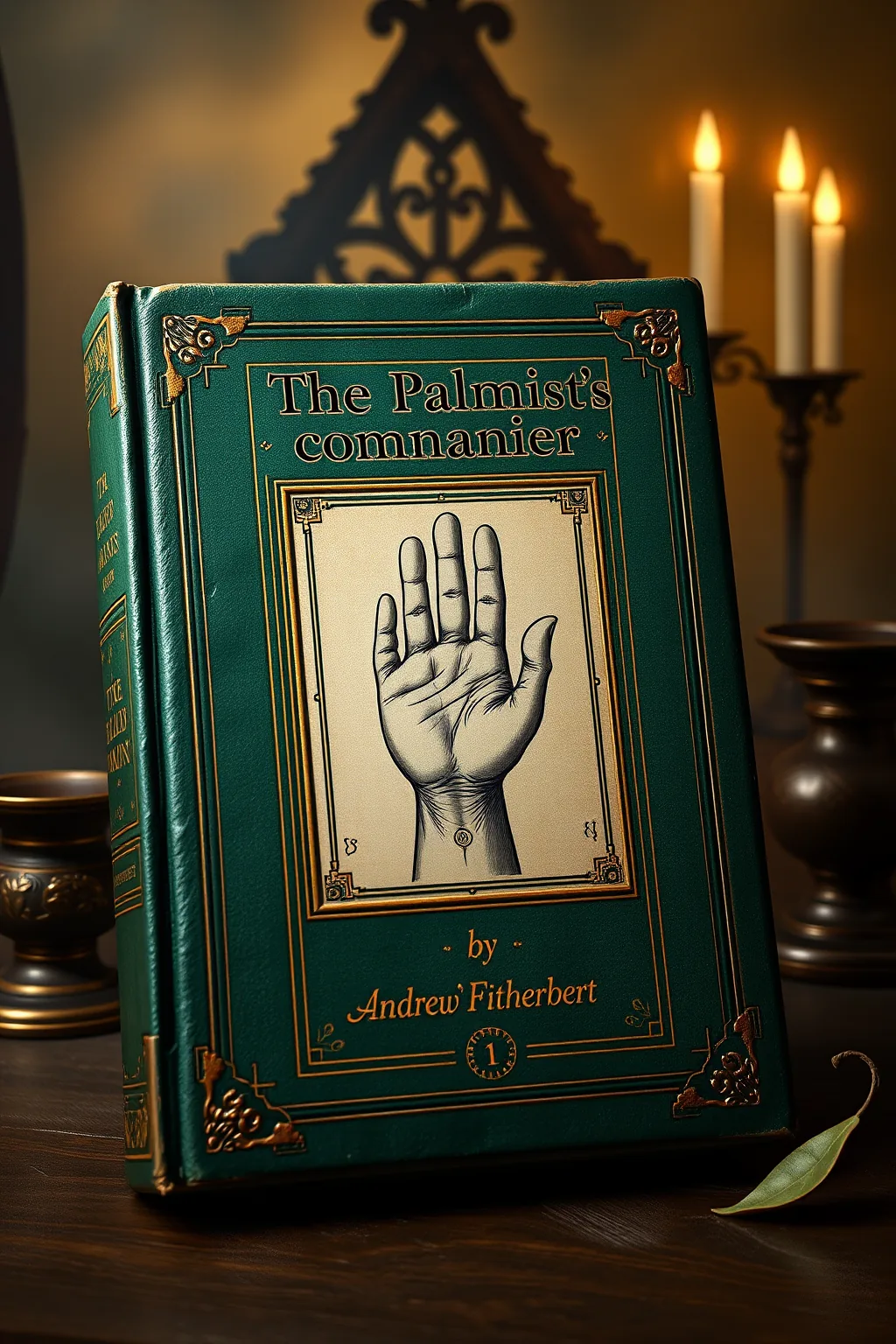
The palmist's companion
 61
61

The palmist's companion



Aurelia Blackwood (Occult Philosophy Critic) — Andrew Fitzherbert's 'The Palmist's Companion' stands as a monumental achievement in the study of cheiromancy. Fitzherbert masterfully synthesizes historical accounts with profound esoteric insights, presenting palmistry not as parlor trickery, but as a legitimate system of symbolic interpretation. His meticulous research and evocative prose illuminate the deepest mysteries held within the hand's geography. This work is an indispensable resource for serious students of divination, offering a rare blend of scholarly rigor and spiritual depth. It challenges conventional thinking, inviting readers to explore the handshake between the physical and the metaphysical.
📝 Description
61
Andrew Fitzherbert's 'The Palmist's Companion' was published in 1978.
This book offers a comprehensive look at the practice of palmistry. Fitzherbert details how palm lines are interpreted to understand a person's character and potential future. He explains the meanings of various mounts, lines, and marks found on the hand, connecting them to astrological influences and broader universal energies.
The text moves beyond simple interpretation, framing palmistry as a method for self-reflection and understanding one's place in the cosmos. It addresses the philosophical questions surrounding fate versus free will, suggesting that the hand reflects possibilities rather than fixed destinies. Fitzherbert aims to provide a practical guide for those interested in the divinatory arts.
Cheiromancy, the art of reading palms, has roots stretching back to ancient Greece and India, often intertwined with astrology and other forms of divination. It was a common practice throughout Europe during the Renaissance and later periods, frequently appearing in grimoires and esoteric manuals. 'The Palmist's Companion' fits within this tradition, aiming to codify and explain the symbolic language of the hand for a modern audience interested in occult knowledge and personal insight.
💡 Why Read This Book?
Unlock the ancient secrets of self-discovery etched into your very palms. 'The Palmist's Companion' offers a profound exploration of destiny, character, and the mystical connections of the universe through the art of cheiromancy. Ideal for seekers of hidden knowledge, dedicated practitioners, and curious scholars of esoteric traditions.
⭐ Reader Reviews
Honest opinions from readers who have explored this book.
❓ Frequently Asked Questions
What is cheiromancy?
Cheiromancy, commonly known as palmistry, is an ancient divinatory art that interprets the lines, mounts, and shapes of the hand to understand an individual's character, potential, and future.
Is this book suitable for beginners?
Yes, while rich in depth, Fitzherbert's clear explanations and methodical approach make it accessible to those new to palmistry, while still offering profound insights for experienced practitioners.
Does the book cover different hand types?
Absolutely. The text delves into the classification of various hand shapes and their associated elemental and personality traits, providing a comprehensive understanding of hand morphology.
What historical periods does this book cover?
The book draws upon centuries of knowledge, tracing the evolution of palmistry from ancient civilizations through its development across various cultures and esoteric traditions.
Can palmistry truly predict the future?
While often framed as predictive, palmistry is more accurately understood as a tool for self-awareness and understanding potential life paths, offering guidance rather than rigid prophecy.
🔮 Key Themes & Symbolism
The Hand as a Microcosm
This theme explores the profound concept of the hand as a 'map of the soul,' reflecting not only individual destiny but also the interconnectedness of the human being with the cosmos. Fitzherbert posits that the unique patterns on each palm are not random but orchestrated symbols, offering a visual language to decipher life's intricate design and one's inherent nature.
Historical Roots of Cheiromancy
Looking at the wide range of palmistry's past, this section examines its origins in ancient Egypt, Greece, and Rome, and its evolution through medieval Europe and the Renaissance. It highlights how cheiromancy was once a respected art, often intertwined with astrology and other occult sciences, shedding light on its enduring legacy and the wisdom passed down through generations.
Symbolism of the Palm Lines
The core of the book lies in deciphering the complex symbolic language of the palm lines. Fitzherbert meticulously explains the meanings of major and minor lines, mounts, and finger shapes, revealing how they communicate aspects of personality, health, relationships, and life's significant events, offering a profound tool for self-understanding and insight.
💬 Memorable Quotes
Direct passages from the work, attributed to the author.
“Within these lines, we find elements of the stars.”
— This suggests a deep connection between cheiromancy and astrology, positing that the patterns on the hand reflect celestial influences and cosmic energies.
“To read the hand is to read the soul.”
— This highlights the profound introspective power of palmistry, asserting that by understanding the hand, one can gain clear insights into their inner self and true nature.
“Each ridge and furrow tells a story, a chapter of our unfolding journey.”
— This metaphorical statement portrays the palm's details as narrative elements, each contributing to the ongoing story of an individual's life and experiences.
💡 Key Ideas
Editorial paraphrase of the work's core concepts — not direct quotes.
The hand is a living manuscript, penned by the hand of fate.
This quote emphasizes the belief that the lines and features of the palm are not arbitrary but hold significant meaning, akin to a written text revealing an individual's destiny and character.
The wisdom of ages is held within these finite lines.
This quote points to the ancient and enduring nature of palmistry, suggesting that the art itself expresses a vast amount of accumulated knowledge and universal truths.
🌙 Esoteric Significance
Tradition
This work is deeply rooted in the Western Esoteric Tradition, drawing from Hermeticism, Kabbalah, and ancient divinatory practices. It views cheiromancy as a symbolic language mirroring cosmic principles and the divine order, a means to align the individual with universal energies and understand their place within the grand set of existence.
Symbolism
The symbolism in 'The Palmist's Companion' is rich and complex. Lines represent life paths, emotional currents, and mental faculties. Mounts symbolize planetary influences and character traits. Finger lengths and shapes denote specific aptitudes and temperaments. The entire hand is seen as a microcosm of the universe, with each element holding profound, often multi-layered, esoteric meanings.
Modern Relevance
In an age often characterized by disconnection and existential searching, 'The Palmist's Companion' offers a potent tool for self-discovery and empowerment. Its emphasis on understanding one's inherent patterns and potentials provides a framework for navigating life's challenges. The book's insights into character and destiny remain relevant for those seeking deeper self-awareness and a more meaningful connection to their life's journey.
👥 Who Should Read This Book
This comprehensive guide is essential for aspiring palmists seeking a foundational understanding and experienced practitioners looking to refine their skills. It will captivate scholars of divination and occult history, offering historical context and in-depth analysis. Spiritual seekers will find a unique path to self-exploration and a deeper connection to universal wisdom, making it a valuable addition to any esoteric library.
📜 Historical Context
Published during a period of renewed interest in esoteric studies, 'The Palmist's Companion' emerged from a fertile ground of Victorian occultism and spiritualism. This era saw a fascination with ancient wisdom, divination, and the hidden forces of the universe. Fitzherbert's work aligns with a tradition of scholars and mystics who sought to bridge the gap between empirical observation and metaphysical understanding. It reflects a desire to systematize and legitimize practices that had been relegated to folklore, drawing upon historical texts and a growing corpus of occult literature to present palmistry as a serious, albeit arcane, discipline.
📔 Journal Prompts
Analyze the dominant lines on your dominant hand. What narrative do they suggest about your life's path?
Explore the meaning of one of the mounts on your palm. How does its associated planetary influence manifest in your personality or life experiences?
Consider a significant life event and try to locate any corresponding markings or patterns on your palm. What insights does this correlation offer?
Compare the lines on your dominant hand with your non-dominant hand. What differences do you observe, and what might they signify about conscious versus subconscious inclinations?
Reflect on a perceived 'challenge line' or 'fate line' in your palm. How can understanding its symbolism empower you to navigate this aspect of your life?
🗂️ Glossary
Cheiromancy
The art and practice of divination through the examination of the palm of the hand; commonly known as palmistry.
Mounts
The fleshy, raised areas on the palm, typically corresponding to the seven classical planets, each symbolizing specific traits and energies.
Line of Life
The curve from the base of the thumb to the wrist, often interpreted as indicating vitality, physical health, and significant life events.
Line of Heart
The horizontal line across the upper palm, generally believed to represent emotional disposition, romantic relationships, and the state of the heart.
Line of Head
The line extending across the middle of the palm, typically interpreted as relating to mental faculties, intellect, and approach to learning.
This book appears in 1 collection
🔮 Readers Also Liked
Browse all →









More by Andrew Fitzherbert
All books →
From the “Palmistry” Collection
View all →






More Free Divination & Tarot Books
View all →