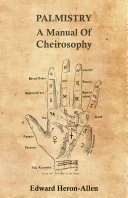
Palmistry - A Manual of Cheirosophy
 72
72

Palmistry - A Manual of Cheirosophy
Edward Heron-Allen’s "Palmistry: A Manual of Cheirosophy" functions less as a beginner’s primer and more as a scholarly digest of a practice often relegated to the parlor. Its strength lies in its encyclopedic ambition, attempting to synthesize centuries of chiromantic lore into a systematic framework. Heron-Allen's detailed descriptions of hand mounts and lines, particularly his careful categorization of formations like "crosses" and "stars" on the Mount of Saturn, demonstrate a rigorous engagement with the subject. However, the text’s sheer density can be a hurdle. While aiming for comprehensive explanation, it occasionally risks overwhelming the uninitiated reader with terminology and cross-references. The section discussing "lines of separation" on the Life Line, for instance, while informative, requires a focused effort to fully grasp its implications. This is a text for the dedicated student, not the casual dabbler. It is a valuable resource for understanding the historical academic approach to palmistry.
📝 Description
72
Edward Heron-Allen published 'Palmistry - A Manual of Cheirosophy' in 1902, codifying hand-reading practices.
Edward Heron-Allen's 1902 work, 'Palmistry - A Manual of Cheirosophy,' systematically details the practice of reading hands. Heron-Allen, a dedicated scholar of esoteric subjects, gathered and organized the lore and methods of chiromancy. This edition faithfully reproduces earlier texts and their illustrations, aiming to maintain the original's accuracy. The manual instructs readers on how to interpret the lines, mounts, and overall form of the hand, presenting palmistry as a structured system of knowledge rather than simple fortune-telling.
This book is for serious students of occult traditions, particularly those interested in practical divination and physiognomy. It appeals to individuals keen on understanding the historical development and philosophical basis of occult sciences. Readers engaged with comparative occultism or seeking primary source material from the turn of the 20th century will find this text valuable. It is suited for the careful student who values thorough explanation and historical background over superficial methods.
Heron-Allen's manual appeared during a surge of interest in spiritualism and occultism in late Victorian and Edwardian Britain. This period saw movements like Theosophy and the Hermetic Order of the Golden Dawn revive and reinterpret ancient esoteric practices. Palmistry, alongside astrology and Tarot, experienced a significant revival. Heron-Allen's approach, characterized by diligent research and compilation, reflects a scholarly effort to legitimize and systematize the study of hand-reading within the broader context of esoteric traditions.
💡 Why Read This Book?
• Gain insight into the planetary associations of hand mounts, such as the Mount of Venus, and understand how they are interpreted to reveal desires and emotional capacities. • Learn the specific meanings attributed to various "lines of separation" on the palm, like those found on the Life Line, and how they might indicate significant life changes or challenges. • Explore the detailed analysis of finger shapes and the thumb's "will" and "logic" indicators, offering a nuanced perspective on personality assessment beyond simple line readings.
⭐ Reader Reviews
Honest opinions from readers who have explored this book.
❓ Frequently Asked Questions
What is cheirosophy according to Heron-Allen?
Cheirosophy, as presented by Heron-Allen, is the scientific and systematic study of the hand for the purpose of understanding character and predicting future tendencies. It emphasizes a methodical approach, distinguishing it from more intuitive or speculative forms of palmistry.
When was Edward Heron-Allen's original Palmistry manual first published?
While this edition is from 2024, Edward Heron-Allen's original work on palmistry was first published in the late 19th century, with key editions appearing around the 1880s and later revisions.
Does the book cover the interpretation of "islands" on palm lines?
Yes, "Palmistry: A Manual of Cheirosophy" details the interpretation of various markings on the palm, including "islands" (chains of small lines) which are typically associated with periods of weakness or difficulty along the path of the line they appear on.
What is the significance of the Mount of Jupiter in palmistry?
In Heron-Allen's manual, the Mount of Jupiter, located at the base of the index finger, is associated with ambition, leadership, pride, and nobility. Its development indicates the degree to which these qualities are present in an individual's character.
How does Heron-Allen differentiate palmistry from other divination methods?
Heron-Allen aims to present palmistry as a reasoned art based on observable physical characteristics of the hand, correlating them with planetary influences and psychological traits, thereby distinguishing it from methods relying solely on abstract symbolism or spiritualistic phenomena.
Are there specific diagrams or illustrations in the book?
Yes, the manual includes numerous detailed illustrations and diagrams showing the hand, its mounts, lines, and various markings, crucial for students to accurately identify and interpret the features discussed.
🔮 Key Themes & Symbolism
The Science of Cheirosophy
Heron-Allen frames palmistry not as fortune-telling but as a systematic study of the hand's physical characteristics to understand human psychology and destiny. The work meticulously details the mapping of the palm, assigning specific meanings to the mounts (e.g., Mount of Venus, Mount of Mars) and lines (e.g., Life Line, Head Line). This approach elevates the practice to a form of physiognomy, correlating observable traits with inherent potentials and tendencies, reflecting the era's scientific aspirations applied to esoteric subjects.
Planetary Correspondences
A core element of the manual is the detailed correlation between specific areas of the hand and the seven classical planets: Sun, Moon, Mercury, Venus, Mars, Jupiter, and Saturn. Each mount and line is linked to a planetary influence, suggesting how these celestial energies manifest in an individual's personality, talents, and life path. Understanding these correspondences is presented as fundamental to deciphering the complex language of the hand.
Line Formations and Anomalies
Beyond the primary lines, Heron-Allen dedicates significant attention to the interpretation of secondary markings, such as crosses, stars, islands, and squares, found on the palm. These anomalies are presented as critical modifiers of the primary line meanings, indicating specific challenges, opportunities, or periods of intensity. The detailed cataloging of these formations underscores the manual's aim for precision and comprehensive analysis in cheirosophy.
Characterology Through the Hand
The manual posits that the hand is a mirror of the individual's inner character and potential. Heron-Allen explores how the shape of the hand (e.g., spatulate, square, philosophical), the length and proportions of the fingers, and the flexibility of the thumb all contribute to a holistic understanding of personality. This detailed characterology is a primary objective of the cheirosophical study presented.
💬 Memorable Quotes
Direct passages from the work, attributed to the author.
“The mounts are the fleshy portions of the palm, and their prominence or depression indicates the development of the qualities attributed to the planets.”
— This statement captures Heron-Allen's systematic approach, linking physical hand features (mounts) directly to astrological influences (planets) as a basis for character analysis.
“A deep and clear Life Line denotes a strong constitution and a long life.”
— This is a foundational principle in palmistry, illustrating the direct correlation Heron-Allen draws between the appearance of a major line and a significant aspect of life, in this case, vitality and longevity.
“The thumb is of the utmost importance, as it represents the will and the power of the individual.”
— This highlights the significance Heron-Allen places on the thumb, particularly its base and articulation, as a key indicator of personal agency, determination, and self-control.
“Islands on the Head Line signify periods of mental confusion or indecision.”
— This interpretation of a specific marking (islands) on a major line (Head Line) demonstrates the manual's detailed approach to identifying and explaining potential difficulties or states of mind.
“Cheirognomy is the study of the shape of the hand and fingers, which relates to the fundamental character.”
— This defines a specific branch of cheirosophy covered in the book, emphasizing that even the basic form and proportions of the hand offer insights into innate personality types.
🌙 Esoteric Significance
Tradition
This work firmly sits within the Western Esoteric Tradition, specifically drawing from Hermeticism and Neoplatonism, which historically influenced the interpretation of microcosm (man) reflecting macrocosm (the universe). Palmistry, as presented by Heron-Allen, is seen as a divinatory art that aligns the physical form of the hand with celestial influences (planets) and inherent human psychology. It represents an attempt to codify and systematize knowledge that was often passed down orally or through fragmented texts, fitting into the broader Hermetic aim of understanding the hidden correspondences in nature.
Symbolism
Key symbols in the manual include the "mounts" of the hand, named after classical planets (e.g., Mount of Jupiter, Mount of Venus), each representing specific character traits and potentials linked to those celestial bodies. The "lines" (Life, Head, Heart) are also potent symbols, their formations and clarity interpreted as pathways of destiny, intellect, and emotion. Furthermore, the thumb's "will" and "logic" indicators symbolize the individual's capacity for agency and rational thought, crucial elements in the symbolic language of cheirosophy.
Modern Relevance
Contemporary practitioners of Western Esotericism, particularly those engaged with psychological astrology and modern occultism, continue to draw upon the foundational principles outlined by Heron-Allen. His systematic approach to hand analysis informs modern psychological palmistry, where hand features are interpreted through the lens of archetypes and subconscious patterns. Thinkers and schools exploring embodied knowledge and the idea of the body as a text for understanding the self find value in his detailed correlations between physical form and psychological disposition.
👥 Who Should Read This Book
• Aspiring practitioners of divination seeking a structured, historical approach to palmistry, who will benefit from Heron-Allen's detailed categorization of lines and mounts. • Students of Western Esotericism interested in the evolution of occult sciences during the late 19th and early 20th centuries, appreciating the scholarly compilation of historical texts. • Individuals curious about physiognomy and character analysis, who can explore how ancient traditions sought to understand personality through observable physical traits.
📜 Historical Context
Edward Heron-Allen's "Palmistry: A Manual of Cheirosophy" emerged in the late 19th century, a period characterized by a fervent revival of esoteric and occult studies in Britain. Following the spiritualist movement and the rise of Theosophy under Helena Blavatsky in the 1870s, there was a widespread interest in ancient wisdom traditions. Hermeticism and Kabbalah saw renewed scholarly and popular attention, with organizations like the Hermetic Order of the Golden Dawn (founded 1888) actively exploring ceremonial magic and divination. Palmistry, alongside astrology and tarot, was re-examined and systematized by scholars seeking to present these arts in a more rigorous, almost scientific, manner. Heron-Allen's work contributed to this effort by compiling and organizing existing chiromantic knowledge, distinguishing his approach from more sensationalist or purely intuitive interpretations prevalent at the time. His meticulous scholarship aimed to provide a comprehensive and authoritative text within this burgeoning field of occult research.
📔 Journal Prompts
The Mount of Venus and its relation to desire.
Formations on the Head Line and mental clarity.
The meaning of a pronounced thumb in relation to personal will.
Interpreting the "lines of separation" on the Life Line.
The symbolic significance of the Mount of Saturn.
🗂️ Glossary
Cheirosophy
The art and science of discerning character and predicting future events through the examination of the hand, as systematically presented by Heron-Allen.
Mounts
The fleshy, raised portions of the palm, named after the seven classical planets, believed to indicate specific character traits and potentials.
Lines
The creases on the palm, most notably the Life Line, Head Line, and Heart Line, whose appearance and formations are interpreted to reveal aspects of health, intellect, and emotion.
Line of Separation
A marking on a major palm line that appears as a break or chain of small lines, often interpreted as indicating periods of difficulty, weakness, or disruption.
Cheirognomy
The study of the shape of the hand and fingers, which Heron-Allen correlates with fundamental personality types and innate characteristics.
Islands
A marking on a palm line consisting of a series of small lines forming a chain-like or island-like pattern, typically signifying periods of weakness or confusion.
Will Line
A less commonly discussed line, sometimes associated with the thumb's base, believed to indicate the strength of an individual's determination and energy.
This book appears in 1 collection
🔮 Readers Also Liked
Browse all →









From the “Palmistry” Collection
View all →








More Free Occult Philosophy Books
View all →