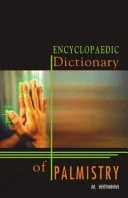
Encyclopaedic Dictionary of Palmistry
 81
81

Encyclopaedic Dictionary of Palmistry
Dr. M. Katakkar's "Encyclopaedic Dictionary of Palmistry" offers a structured approach to a practice often relegated to the mystical fringe. Its primary strength lies in its ambitious attempt to bridge palmistry with concrete fields like medicine and vocational guidance, presenting information across three distinct alphabetical indices. This methodical organization, particularly the dedicated sections for Medical Palmistry and Vocational Guidance, sets it apart from more generalized texts. However, the book's limitation is its dense, encyclopedic format, which, while thorough, can feel less like an engaging read and more like a reference manual. A passage detailing the correlation between specific hand lines and potential physiological ailments, for instance, showcases the work's utility but also its academic dryness. Ultimately, Katakkar provides a valuable, if somewhat dry, resource for those seeking a systematic understanding of chiromancy's practical dimensions.
📝 Description
81
Dr. M. Katakkar's 1989 Encyclopaedic Dictionary of Palmistry presents palmistry as a practical tool.
Published in 1989, the Encyclopaedic Dictionary of Palmistry by Dr. M. Katakkar is a reference work arranged alphabetically. It aims to show how palmistry can be applied to daily life, acting as a lexicon for the practice of reading palms. The dictionary is for people interested in palmistry's practical uses, especially those looking for links between hand analysis, medical diagnoses, and career advice. It is suitable for dedicated students of chiromancy and anyone curious about its relevance in everyday situations. Katakkar's book comes from a period in the late 20th century when esoteric practices saw a rise in academic and public attention. His work attempts to give palmistry credibility by connecting it to fields such as medicine and job counseling, a method many occult scholars used in the late 1900s to seek wider acceptance.
The book organizes palmistry's components systematically. It divides the subject into three alphabetical sections: General palmistry, Vocational Guidance, and Medical Palmistry. This organization groups all pertinent signs and lines for a specific subject together, simplifying reference and study. The work is structured to be a functional guide, not just a theoretical text.
This dictionary belongs to a late 20th-century trend that sought to integrate esoteric practices with conventional disciplines. Authors like Katakkar aimed to provide a structured, almost scientific, framework for subjects often considered fringe. By aligning chiromancy with medical diagnostics and vocational guidance, Katakkar positioned palmistry as a system with tangible, everyday utility. This approach reflects a broader effort within occult scholarship of the time to legitimize these practices for a wider audience, moving beyond purely mystical interpretations.
💡 Why Read This Book?
• Gain practical insights into vocational guidance through hand analysis, as explored in the specific 'Vocational Guidance' index, offering concrete links between palm features and career aptitudes. • Understand potential medical correlations, learning how certain palm signs might relate to physical health based on the 'Medical Palmistry' section, a unique approach for its time. • Access a structured, alphabetical reference for palmistry, making it easier to find specific information on lines and signs than in less organized texts, as exemplified by its unique dictionary format.
⭐ Reader Reviews
Honest opinions from readers who have explored this book.
❓ Frequently Asked Questions
What is the primary goal of Encyclopaedic Dictionary of Palmistry?
The primary goal is to demonstrate the practical utility of palmistry in everyday life and professional contexts by linking it to medicine and vocational guidance, presented in an encyclopedic format.
When was Encyclopaedic Dictionary of Palmistry first published?
The book was first published on January 1, 1989.
How is the Encyclopaedic Dictionary of Palmistry organized?
It is organized into three alphabetical indices: General Palmistry, Vocational Guidance, and Medical Palmistry, grouping related signs and lines together.
What unique approach does this book take towards palmistry?
It uniquely integrates palmistry with medical diagnostics and vocational guidance, presenting it as a practical science rather than solely a divinatory art.
Who is the author of Encyclopaedic Dictionary of Palmistry?
The author is Dr. M. Katakkar, whose work first appeared in 1989.
What kind of information can be found in the Medical Palmistry section?
The Medical Palmistry section gathers all signs and lines pertaining to physical health and potential medical correlations, as interpreted through palm analysis.
🔮 Key Themes & Symbolism
Palmistry as Practical Science
This work champions palmistry not as mere fortune-telling, but as a diagnostic and advisory tool applicable to modern life. Katakkar meticulously links hand features to medical conditions and career aptitudes, challenging the perception of chiromancy as purely esoteric. The book's structure, with dedicated sections for Medical Palmistry and Vocational Guidance, underscores this pragmatic perspective, aiming to prove its utility in everyday decision-making and self-understanding.
Systematic Classification of Chiromancy
A core theme is the rigorous organization of palmistry's vast knowledge. By employing an encyclopedic, alphabetical structure, Katakkar provides an unprecedented level of accessibility. The division into three indices ensures that practitioners and students can efficiently locate information on specific signs, lines, and their interpretations, facilitating systematic study and application of chiromantic principles.
Integration with Medicine and Careers
The book's innovative approach lies in its explicit attempt to correlate palmistry with established fields like medicine and vocational guidance. Katakkar explores how hand analysis might offer insights into physical well-being and professional inclinations. This interdisciplinary perspective aims to lend credibility to palmistry, positioning it as a complementary field for health professionals and career counselors.
The Dictionary Format
The unique adoption of a dictionary format is central to the book's purpose. It transforms palmistry from a narrative tradition into a structured lexicon. This allows for precise definitions and cross-referencing of terms, signs, and lines, offering a reference point for students and practitioners that is both comprehensive and easily navigable, unlike traditional, less codified texts.
💬 Memorable Quotes
Direct passages from the work, attributed to the author.
“The Encyclopaedia is divided into 3 alphabetical indices; General, Vocational Guidance and Medical Palmistry.”
— This statement highlights the book's structural innovation, presenting palmistry in a systematic, reference-based format distinct from typical esoteric literature, emphasizing practicality and accessibility.
“An attempt to prove the utility of Palmistry in our day-to-day and practical life.”
— This conveys the author's core intention: to move palmistry beyond superstition and demonstrate its concrete value in everyday decision-making and understanding personal potential.
“Establishing the relation of palmistry with medicine and vocational guidance.”
— This points to the book's groundbreaking approach of seeking scientific and practical correlations, integrating hand analysis with established fields for diagnostic and advisory purposes.
“The first authentic work on the science of palm reading in the form of a dictionary.”
— This asserts the book's unique position as a pioneering, authoritative reference text in palmistry, characterized by its comprehensive and organized dictionary structure.
“All the signs and lines pertaining to any one are gathered together.”
— This describes the book's user-friendly organization, ensuring that related information within each section (General, Vocational, Medical) is consolidated for ease of study and quick reference.
🌙 Esoteric Significance
Tradition
While palmistry itself has ancient roots across various cultures, Katakkar's approach aligns with Western Hermetic traditions that seek to systematize and rationalize esoteric knowledge. The emphasis on practical application and correlation with empirical fields reflects the Hermetic principle of 'as above, so below' when applied to the human form and its potential. It departs from purely divinatory or spiritualist interpretations by grounding its claims in observable phenomena and practical outcomes.
Symbolism
The book systematically analyzes the symbolism inherent in palm lines and mounts. Key symbols include the Heart Line, often interpreted in relation to emotional health and relationships; the Head Line, linked to mental faculties and intellect; and the Life Line, associated with vitality and physical constitution. These lines, along with various mounts (e.g., Mount of Venus, Mount of Jupiter), are presented not just as fate indicators but as markers of potential and predisposition.
Modern Relevance
Katakkar's work remains relevant for contemporary practitioners and researchers interested in the applied aspects of chiromancy. It informs modern approaches that integrate hand analysis with psychology, coaching, and even certain therapeutic modalities. Thinkers and practitioners exploring holistic health, personal development, and self-understanding through symbolic systems can find value in its structured methodology and its attempt to bridge the esoteric with the empirical.
👥 Who Should Read This Book
• Aspiring palmists seeking a structured, reference-based education in chiromancy, moving beyond anecdotal learning. • Professionals in vocational guidance and human resources interested in exploring alternative frameworks for understanding individual aptitudes and potential. • Medical practitioners or health enthusiasts curious about the historical and theoretical links between physiological signs on the hand and bodily well-being.
📜 Historical Context
Published in 1989, Dr. M. Katakkar's "Encyclopaedic Dictionary of Palmistry" emerged during a period of resurgence for esoteric studies, often fueled by New Age movements and a growing academic interest in comparative religion and occult traditions. The late 20th century saw various attempts to legitimize practices like astrology and palmistry by grounding them in psychological or scientific frameworks. Katakkar's work fits this trend by explicitly aiming to link chiromancy with medicine and vocational guidance, seeking to establish its utility beyond mere divination. This contrasted with more traditional, spiritualist interpretations prevalent earlier in the century. While figures like Dane Rudhyar were exploring psychological astrology, Katakkar focused on a more applied, almost quasi-scientific, application of palm reading, positioning it as a practical tool rather than a mystical pathway.
📔 Journal Prompts
The specific correlations between the 'Head Line' and cognitive functions.
The practical applications of 'Medical Palmistry' for self-awareness.
Interpreting the 'Vocational Guidance' indices for personal career reflection.
The systematic approach to palm reading presented in the dictionary format.
How the 'Heart Line' symbolism connects to emotional well-being.
🗂️ Glossary
Chiromancy
The practice of divination and analysis through the study of the hand, particularly the palm and fingers. It encompasses reading lines, mounts, and other markings.
Mounts (of the hand)
Fleshy, raised areas on the palm, named after planets (e.g., Mount of Venus, Mount of Jupiter), believed to indicate specific personality traits and potentials.
Lines (of the palm)
The major and minor creases on the palm, such as the Life Line, Head Line, and Heart Line, each interpreted to signify aspects of health, intellect, emotion, and destiny.
General Palmistry
The foundational section of the dictionary covering basic principles, common signs, and general interpretations applicable to hand reading.
Vocational Guidance Palmistry
A specialized index focusing on palmistry's application to understanding career aptitudes, professional inclinations, and work-related potentials.
Medical Palmistry
A section dedicated to exploring potential correlations between hand markings and physical health conditions, offering insights into bodily well-being.
Authentic Work
Referring to the book's claim of being a genuine and authoritative compilation of knowledge within the field of palm reading.
This book appears in 1 collection
🔮 Readers Also Liked
Browse all →









From the “Palmistry” Collection
View all →







More Free Occult Philosophy Books
View all →