The Scarecrow of Oz
 71
71

The Scarecrow of Oz
L. Frank Baum's "The Scarecrow of Oz" continues his exploration of the Emerald City's peculiar inhabitants, this time placing the titular straw man at the center of a rather convoluted plot involving a rebellion by the Pon people. The novel's strength lies in its imaginative world-building, a hallmark of Baum's work, and the persistent, albeit simple, philosophical musings of the Scarecrow himself regarding his sentience. However, the narrative pacing can feel uneven, particularly in the middle sections where the journey to the land of the Pon and the subsequent political machinations become somewhat protracted. A notable passage involves the Scarecrow’s internal debate about his own efficacy as a leader, questioning whether his straw-filled head can truly govern. While this internal conflict is engaging, the external plot sometimes struggles to maintain momentum. Ultimately, "The Scarecrow of Oz" offers a familiar, yet slightly less cohesive, entry into the Oz canon, best appreciated for its character's introspective moments.
📝 Description
71
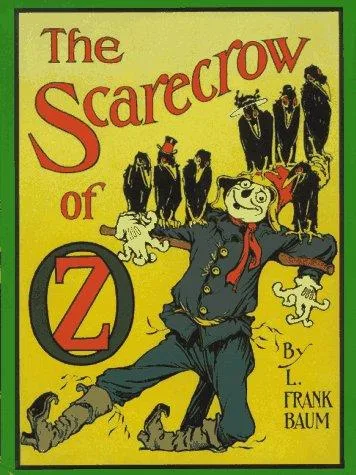
Published in 1915, The Scarecrow of Oz is L. Frank Baum's ninth Oz book.
The Scarecrow of Oz, published in 1915, continues L. Frank Baum's Oz series. The story centers on the Scarecrow, who is blown by a hurricane to the land of the Pon. These people intend to use him as a symbol for their rebellion against the Wizard. The narrative introduces new characters and situations, examining leadership and how reality is shaped.
This book suits readers who enjoy early 20th-century children's literature with deeper meanings. It appeals to those who like allegorical stories and philosophical ideas presented accessibly. Fans of Baum's other Oz books will recognize familiar elements, and new readers might find it a good starting point for a world that, despite its whimsy, tackles complex questions of power and selfhood. It is for readers who look beneath the surface of a story.
The book appeared in 1915, a time of cultural shifts in the United States during the Progressive Era. Philosophical ideas like Pragmatism questioned traditional views on truth and reality. Baum's Oz books often touched on these concepts of constructed realities and leadership, especially during the transition from the Wizard's rule to Ozma's. The world was also on the verge of World War I, a conflict that would alter views on order and chaos. Baum's Oz, in contrast, often depicted a more ordered, if sometimes strange, world.
While not overtly occult, Baum's Oz books, including The Scarecrow of Oz, engage with themes that resonate with esoteric thought. The exploration of consciousness, the nature of reality as a construct, and the questioning of established authority figures echo spiritual and philosophical traditions that examine inner worlds and subjective experience. The books play with the idea of what constitutes 'real' within the magical land of Oz, mirroring esoteric inquiries into perception and the manifestation of thought.
💡 Why Read This Book?
• Gain insight into the philosophical underpinnings of artificial consciousness through the Scarecrow's journey, a concept explored in the book's early chapters concerning his self-awareness. • Understand early 20th-century allegorical storytelling by examining the Pon rebellion against the Wizard, reflecting societal anxieties of the 1915 era. • Appreciate the unique symbolic representation of leadership and identity within the fantastical geography of Oz, as depicted when the Scarecrow is positioned as a figurehead.
⭐ Reader Reviews
Honest opinions from readers who have explored this book.
❓ Frequently Asked Questions
When was The Scarecrow of Oz first published?
The Scarecrow of Oz was first published in 1915, making it the ninth book in L. Frank Baum's Oz series.
Who are the main characters in The Scarecrow of Oz?
The primary characters include the Scarecrow, the Wizard of Oz, and the Pon people, who instigate a rebellion. Other familiar Oz characters may make appearances.
What is the central conflict in The Scarecrow of Oz?
The central conflict revolves around the Scarecrow being used as a figurehead by the Pon people in their rebellion against the Wizard of Oz, forcing him to confront his own capabilities.
Does L. Frank Baum’s The Scarecrow of Oz contain esoteric themes?
While primarily a children's fantasy, The Scarecrow of Oz explores themes of identity, consciousness, and the nature of leadership, which can be interpreted through an esoteric lens.
What makes the land of Oz unique in Baum's work?
The land of Oz is unique for its magical properties, distinct geographical regions, and inhabitants, often serving as a backdrop for exploring societal structures and individual agency in a whimsical yet meaningful way.
What is the significance of the Pon people in the story?
The Pon people are significant as they represent a faction seeking to overthrow the established order of Oz, using the Scarecrow as a symbolic leader for their cause.
🔮 Key Themes & Symbolism
Sentience and Identity
The Scarecrow, a being of straw, constantly grapples with his own consciousness and the nature of his existence. This theme invites contemplation on what constitutes genuine awareness and identity, particularly relevant in early 20th-century philosophical discussions. Is his sentience inherent, or a product of his environment and the beliefs of others? His journey questions the essence of selfhood beyond physical form, a concept that speaks to esoteric traditions exploring the soul and its manifestation.
Symbolic Leadership and Rebellion
The narrative features the Pon people using the Scarecrow as a figurehead for their rebellion against the Wizard. This highlights the power of symbolism in political movements and the manipulation of perception. The Scarecrow's reluctant role underscores the difference between being a leader and being a symbol of leadership. It explores how authority can be projected onto an individual, regardless of their actual capacity or desire for power, a common trope in allegorical literature and political commentary.
Constructed Realities
Oz itself functions as a constructed reality, a magical land with its own unique rules and inhabitants. The story plays with the idea of what is 'real' within this fantastical context. The Scarecrow's journey, propelled by external forces like a hurricane and the machinations of the Pon, suggests that even within a magical world, individual agency can be challenged by the prevailing narratives and power structures. This mirrors esoteric explorations of illusion (maya) and the perceived nature of the manifest world.
The Nature of Power
The book examines different forms of power: the subtle influence of the Wizard, the forceful ambition of the Pon, and the potential for leadership residing within the seemingly simple Scarecrow. His internal conflict about whether he is capable of ruling or merely a puppet of circumstance examines the responsibilities and burdens of power. This contrasts with the more overt displays of magical power, suggesting that true influence may stem from understanding and self-awareness rather than force or illusion.
💬 Memorable Quotes
Direct passages from the work, attributed to the author.
“The Pon believed the Scarecrow’s painted smile was a sign of authority.”
— This reflects the theme of symbolic leadership. The Pon project their desired image of power onto the Scarecrow, highlighting how external appearances and perceived authority can be manipulated to serve a political agenda, irrespective of the individual's true capabilities.
“A hurricane can change more than just the landscape.”
— This observation speaks to the disruptive power of external forces and how unforeseen events can alter an individual's circumstances and perceived destiny, as the Scarecrow is literally blown into a new, perilous situation.
“The Wizard’s magic was often a matter of clever illusion.”
— This highlights the theme of constructed realities and the nature of power. It suggests that much of the Wizard's authority was based on trickery and perception rather than genuine omnipotence, a concept explored throughout Baum's Oz narratives.
“Even a straw man can feel the weight of responsibility.”
— This captures the internal struggle of the Scarecrow when faced with the prospect of leadership, emphasizing that the burden of responsibility is not tied to one's physical composition but to one's internal state and the demands placed upon them.
💡 Key Ideas
Editorial paraphrase of the work's core concepts — not direct quotes.
The Scarecrow often pondered if his thoughts were truly his own.
This paraphrased concept captures the Scarecrow's recurring introspection about his own consciousness and agency. It questions the origin of his thoughts and feelings, hinting at a deeper philosophical inquiry into the nature of being and self-awareness, a core theme of the book.
🌙 Esoteric Significance
Tradition
While L. Frank Baum was not explicitly affiliated with any formal esoteric tradition, "The Scarecrow of Oz" can be viewed through a lens informed by Western Esotericism's interest in consciousness and the nature of the self. The Scarecrow's existential questioning aligns with Gnostic concerns about the spark of divinity within an apparently material form and the journey of self-discovery. The exploration of constructed realities and symbolic power also echoes Hermetic principles regarding the correspondence between the microcosm and macrocosm.
Symbolism
The Scarecrow himself is a potent symbol of the artificial or 'constructed' being, questioning the boundaries of sentience and the soul. His straw-filled body can represent the vessel or the physical form, while his nascent consciousness represents the animating principle or spirit. The hurricane that displaces him symbolizes chaotic forces that disrupt the established order and can lead to profound change or revelation. The Pon, as a rebellious faction using a symbol, represent the manipulation of collective belief for political ends.
Modern Relevance
Contemporary discussions around artificial intelligence and the definition of consciousness find echoes in the Scarecrow's internal struggles. The book's exploration of symbolic power and manufactured consent remains relevant in understanding modern political discourse and media manipulation. Furthermore, the notion of finding agency and selfhood within seemingly predetermined or constructed circumstances speaks to modern self-help and personal development philosophies that encourage individuals to define their own reality.
👥 Who Should Read This Book
• Beginning students of comparative mythology and folklore: to analyze archetypal characters like the Scarecrow and understand their function within a narrative. • Enthusiasts of early 20th-century American literature: to appreciate Baum's distinct narrative voice and its place within the literary range of 1915. • Readers interested in philosophical allegories for children: to explore themes of identity, consciousness, and leadership presented in an accessible, fantastical setting.
📜 Historical Context
Published in 1915, "The Scarecrow of Oz" emerged from L. Frank Baum's prolific career, solidifying his position as a preeminent voice in American children's literature. This period saw the rise of Theosophy, with figures like Helena Blavatsky influencing a generation interested in spiritualism and esoteric knowledge, though Baum's work remained largely secular. Pragmatism, a distinctly American philosophical movement championed by John Dewey, was gaining traction, emphasizing experience and practical consequences over abstract truths. Baum's Oz books, with their often-absurd logic and exploration of constructed realities, can be seen as a whimsical engagement with these shifting intellectual currents. While not overtly controversial, the Oz series generally enjoyed widespread popularity, though some critics of the era preferred more didactic children's literature. Baum faced no significant censorship or public backlash for this particular installment, which continued the established tone of the series.
📔 Journal Prompts
The Scarecrow's questioning of his own thoughts.
The Pon's use of the Scarecrow as a figurehead.
The nature of Oz's magical laws.
The Wizard's reliance on illusion.
The impact of the hurricane on the Scarecrow's journey.
🗂️ Glossary
The Pon
A group of people within the Land of Oz who, in "The Scarecrow of Oz," initiate a rebellion against the Wizard, seeking to use the Scarecrow as their symbolic leader.
Figurehead
A person or thing depicted in a position of leadership or authority, but without any real power or influence. The Pon attempt to make the Scarecrow a figurehead for their rebellion.
Northwest Oz
A specific geographical region within the Land of Oz, designated as the home of the Scarecrow and his palace prior to the events of this book.
Wizard of Oz
The ruler of the Emerald City for a period, known for his use of clever tricks and illusions rather than genuine magic. He is the target of the Pon's rebellion.
Sentience
The capacity to feel, perceive, or be conscious. The Scarecrow's journey often involves grappling with his own sentience and the nature of his awareness.
Agency
The capacity of individuals to act independently and make their own free choices. The story explores the Scarecrow's agency amidst external pressures.
Allegory
A story, poem, or picture that can be interpreted to reveal a hidden meaning, typically a moral or political one. Baum's Oz books are often read allegorically.
🔮 Readers Also Liked
Browse all →








More by L. Frank Baum
All books →





More Free Occult Philosophy Books
View all →



![Collected Short Stories [51 stories]](/img/thumb/collected-short-stories-51-stories-roald-dahl-593005.webp)