The seventh sense
 75
75

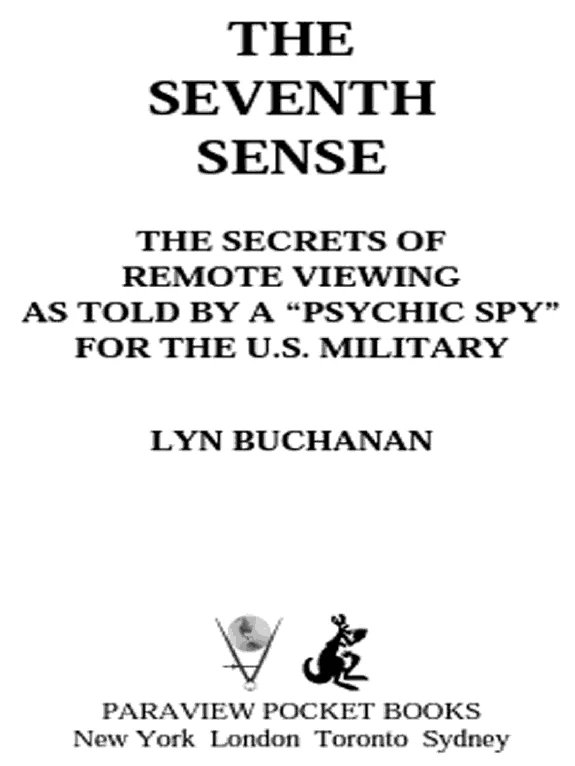
The seventh sense
Lyn Buchanan’s ‘The Seventh Sense’ attempts to demystify what many consider paranormal abilities, framing them as extensions of human perception. The author, drawing on his background in intelligence and remote viewing, offers a structured approach. A notable strength is Buchanan's effort to ground these concepts in observable phenomena and training protocols, moving away from purely speculative mysticism. He provides specific exercises, particularly in the early chapters, that aim to hone intuitive faculties. However, the work occasionally falters by relying on anecdotal evidence without rigorously addressing potential psychological biases or alternative explanations, a common pitfall in this field. The section discussing the 'target' in remote viewing, while illustrative of the methodology, could benefit from more critical self-examination regarding signal versus noise. Despite these limitations, Buchanan’s methodical presentation makes ‘The Seventh Sense’ a valuable, albeit not definitive, exploration for those seeking to understand and develop their own intuitive capacities.
📝 Description
75
Lyn Buchanan published 'The Seventh Sense' in 2009, detailing human perception beyond the usual five senses.
Buchanan's 2009 book examines human perception, arguing that abilities beyond the common five senses are extensions of our natural faculties. He contends these latent capacities, like intuition and precognition, are not supernatural but can be developed through focused training. The work aims to demystify these abilities, presenting them as accessible skills rather than innate gifts.
This book is for anyone interested in exploring heightened awareness. It appeals to individuals who feel a deeper reality exists or who wish to better understand their own intuition. Readers interested in consciousness studies, parapsychology, or the philosophical basis of extrasensory perception will find relevant material. Buchanan provides practical methods for those questioning the limits of material reality.
Published in 2009, 'The Seventh Sense' emerges from a period of renewed public and academic interest in psychic phenomena. Following Cold War era government research into psi abilities, the focus shifted toward individual development. Buchanan's work fits into this trend, making concepts previously confined to classified projects or select groups available to a broader audience. It connects to traditions that explore consciousness and perception outside conventional scientific frameworks.
💡 Why Read This Book?
• You will learn practical, step-by-step exercises for cultivating intuitive awareness and potentially developing remote viewing skills, as outlined in Buchanan’s training methodologies. • You will gain a structured understanding of how concepts like precognition and intuition are presented as trainable faculties, distinct from inherent psychic gifts, referencing the book's exploration of the subconscious. • You will encounter a perspective that seeks to bridge the gap between esoteric concepts and a more systematic, observable approach to perception, drawing from Buchanan's background in applied intelligence.
⭐ Reader Reviews
Honest opinions from readers who have explored this book.
❓ Frequently Asked Questions
What is the core concept of 'The Seventh Sense' by Lyn Buchanan?
'The Seventh Sense' posits that humans possess perceptual abilities beyond the standard five senses, often termed intuition or extrasensory perception. Buchanan frames these as trainable faculties rather than innate psychic gifts, accessible through systematic development.
What is Lyn Buchanan's background relevant to this book?
Lyn Buchanan is known for his extensive involvement in the U.S. military's remote viewing program during the Cold War, particularly at organizations like SRI International and SAIC. This background informs his structured, practical approach in 'The Seventh Sense'.
Does the book provide actual exercises for developing these senses?
Yes, 'The Seventh Sense' includes specific exercises and training protocols designed to help readers cultivate their intuitive abilities and explore concepts like remote viewing and precognition.
What is remote viewing as discussed in the book?
Remote viewing, as explained by Buchanan, is a protocol for gathering information about distant or unseen targets using mental faculties, bypassing conventional sensory channels. The book details methods for its practice.
When was 'The Seventh Sense' first published?
'The Seventh Sense' by Lyn Buchanan was first published in 2009, reflecting a period of increased public interest in consciousness studies and psi phenomena.
Is the book based on scientific research?
While Buchanan aims for a systematic and practical approach, drawing from his experience in research programs, the book delves into areas that are generally considered on the fringes of mainstream science. It bridges practical application with esoteric exploration.
🔮 Key Themes & Symbolism
Intuition as a Trainable Skill
Buchanan argues that intuition is not an ethereal gift but a latent human faculty that can be systematically developed. The book breaks down the process into manageable steps, emphasizing mental discipline, focused attention, and the interpretation of subtle impressions. It moves away from the idea of inherent psychic talent, suggesting that anyone can enhance their intuitive reception through dedicated practice, much like learning a new skill. This approach is central to understanding the 'seventh sense' as an extension of conscious awareness accessible to all.
Remote Viewing Protocols
A significant portion of the book is dedicated to the methodology of remote viewing, a practice Buchanan himself engaged in during government-sponsored research. He details specific protocols, the importance of accurate data collection, and the process of distinguishing genuine psychic impressions from imagination or bias. The work clarifies remote viewing, presenting it as a structured observational technique rather than a mystical phenomenon, thus providing readers with a framework for potentially practicing it themselves.
The Nature of Perception
Beyond specific techniques, 'The Seventh Sense' prompts a fundamental re-evaluation of human perception. It challenges the conventional reliance on the five physical senses, proposing that a broader spectrum of awareness is possible. Buchanan explores how the subconscious mind plays an important role in processing information that bypasses ordinary sensory input. This theme encourages readers to consider the limitations of their current perceptual framework and to explore the potential for expanding their conscious experience of reality.
Subtle Energy and Consciousness
The book touches upon the concept of subtle energies and their role in consciousness and perception. While not looking at highly technical esoteric theories, Buchanan suggests that these energies are integral to the functioning of the 'seventh sense.' Understanding how to perceive and interact with these subtle fields is presented as key to unlocking deeper levels of awareness and intuitive insight, linking the personal development of perception to a wider energetic reality.
💬 Memorable Quotes
Direct passages from the work, attributed to the author.
“The mind is a powerful tool, and its capabilities extend far beyond what we typically acknowledge.”
— This statement underscores Buchanan's central thesis: that human consciousness possesses latent abilities, particularly in perception, that are often underestimated or ignored in conventional understanding.
“Intuition isn't magic; it's information processing happening below the threshold of conscious awareness.”
— This interpretation reframes intuition not as a supernatural gift but as a sophisticated cognitive function. It suggests that by understanding its mechanisms, we can learn to access and utilize this 'information processing' more effectively.
“Focus and intention are the keys that unlock the doors of perception.”
— This highlights the practical, actionable element of Buchanan's work. It emphasizes that developing the 'seventh sense' requires deliberate mental effort and directed will, rather than passive reception.
“We train our bodies for physical tasks; we must learn to train our minds for perceptual ones.”
— This analogy emphasizes the need for dedicated practice and discipline in developing mental and intuitive faculties, paralleling the rigorous training undertaken for physical activities.
💡 Key Ideas
Editorial paraphrase of the work's core concepts — not direct quotes.
The data is there if you know how to access it.
This quote speaks to the existence of hidden information or insights that are not readily apparent through ordinary senses, suggesting that the 'seventh sense' provides a method for accessing this 'data'.
🌙 Esoteric Significance
Tradition
Buchanan's work does not strictly adhere to a single established esoteric lineage like Hermeticism or Theosophy. Instead, it draws pragmatically from various fields, including parapsychology, consciousness studies, and practical psychology, to construct a system for developing extrasensory perception. It departs from traditional esoteric systems by emphasizing empirical observation and training protocols derived from applied research, aiming for a more secular and accessible understanding of abilities often discussed in mystical terms.
Symbolism
While not heavily reliant on traditional symbolic language, the concept of the 'seventh sense' itself acts as a potent symbol for expanded awareness and the potential for human consciousness to transcend ordinary sensory limitations. The book implicitly uses the idea of 'channels' or 'pathways' of perception as symbolic of deeper, less understood modes of information acquisition, representing a journey from the known five senses to the unknown potentials of the mind.
Modern Relevance
Buchanan's structured approach to developing intuition and remote viewing continues to influence contemporary self-help, consciousness exploration, and even some circles within the broader mindfulness and personal development movements. Thinkers and practitioners interested in practical psi research, applied intuition, and the science of consciousness often reference his methodologies. His work provides a foundational text for those seeking systematic methods to explore subjective experiences that lie beyond conventional scientific explanation.
👥 Who Should Read This Book
• Individuals interested in developing their intuitive faculties and exploring extrasensory perception beyond a purely theoretical level. • Researchers and practitioners in parapsychology seeking structured methodologies and practical training exercises for psi phenomena. • Skeptics and open-minded inquirers curious about the potential of human consciousness and perception, wanting to understand systematic approaches to exploring subjective states.
📜 Historical Context
Published in 2009, Lyn Buchanan's 'The Seventh Sense' emerged during a period of renewed public and academic interest in consciousness studies and parapsychology. This era saw a continued diffusion of concepts once confined to classified research, such as remote viewing, which had seen significant funding and exploration by U.S. intelligence agencies throughout the late 20th century, notably through programs at SRI International and SAIC. Buchanan's work can be situated alongside other popularizations of psi phenomena, offering a more structured, less overtly mystical approach compared to earlier esoteric literature. While figures like Joseph McMoneagle were also publishing accounts of their remote viewing experiences, Buchanan’s contribution focused on a systematic training methodology. This period also saw increased dialogue between scientific inquiry and anomalous experiences, though the field remained largely on the fringes of mainstream academia, often contrasted with more established psychological theories of perception and cognition.
📔 Journal Prompts
The concept of the 'seventh sense' as presented by Buchanan, how does it differ from your current understanding of intuition?
Analyze a specific remote viewing protocol described in the book and outline your personal approach to its application.
Reflect on the role of 'information processing' in developing intuitive abilities, as suggested by Buchanan.
Consider the limitations of the five physical senses and how developing a 'seventh sense' might enhance your perception of reality.
How can the emphasis on 'focus and intention' from 'The Seventh Sense' be applied to non-perceptual goals?
🗂️ Glossary
Seventh Sense
A term used by Buchanan to describe human perceptual abilities that extend beyond the commonly recognized five senses, such as intuition, precognition, and remote viewing, which are presented as trainable faculties.
Remote Viewing
A protocol for gathering information about a distant or unseen target using mental faculties, developed and utilized in research settings, which Buchanan details methods for practicing.
Intuition
The capacity to understand or know something immediately, without conscious reasoning. Buchanan frames this as a form of information processing accessible through training.
Precognition
The ability to see or know future events. The book explores this as one aspect of the broader 'seventh sense' that can potentially be developed.
Subconscious Mind
The part of the mind of which we are not directly aware but which influences our thoughts and behavior. Buchanan highlights its role in processing information for the 'seventh sense'.
Target
In the context of remote viewing, this refers to the specific person, place, object, or event that the viewer is attempting to perceive information about.
Data
Information gathered through the process of remote viewing or other intuitive means, which requires careful analysis to discern genuine impressions from mental noise.
🔮 Readers Also Liked
Browse all →









More by Lyn Buchanan
All books →
More Free Occult Philosophy Books
View all →