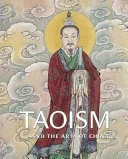
Taoism and the Arts of China
 73
73

Taoism and the Arts of China
Stephen Little and his co-authors offer a rigorous examination of Taoism's pervasive influence on Chinese visual culture. The book’s strength lies in its detailed analysis, connecting specific philosophical tenets to artistic execution. For instance, the discussion on how the concept of *qi* (vital energy) informs brushwork in calligraphy is particularly insightful. However, the academic tone, while commendable for its depth, occasionally makes the text dense for a casual reader. The section detailing the transformation of landscape painting during the Song Dynasty, illustrating the Taoist ideal of merging with nature, is a high point, showcasing the authors' deep scholarship. This is an essential reference for serious students of Chinese art and philosophy, though it demands focused attention.
📝 Description
73
Published in 2000, Taoism and the Arts of China examines how Taoist philosophy shaped Chinese visual art.
This volume explores the deep connections between Taoist thought and Chinese visual arts. It looks at how Taoist ideas, like Wu Wei (effortless action) and the balance of Yin and Yang, appear in paintings, calligraphy, ceramics, and sculpture. The book goes beyond simply listing artworks, analyzing the philosophical currents behind their creation. It traces the historical growth of Taoism and its artistic forms through various Chinese dynasties. Key influences come from texts like the Tao Te Ching and figures such as Zhuang Zhou, covering periods up to the Song Dynasty. The work focuses on visual representations of concepts such as Ziran (naturalness), the flow of Qi, and the balance of opposing forces. It discusses aesthetic principles like simplicity, spontaneity, and harmony with nature that shaped Chinese art.
This book situates Taoist principles within the context of Chinese artistic production, a tradition often viewed through a lens of mysticism and contemplation. It connects philosophical concepts like the Tao, the Great Ultimate, and the flow of natural forces to the tangible world of art. By examining how these ideas inform aesthetics, the work illuminates the spiritual underpinnings of visual expression in China, linking the pursuit of harmony and naturalness to the creation of beauty and meaning. It offers a scholarly look at how esoteric thought manifests in material culture.
💡 Why Read This Book?
• Understand the aesthetic principles of Taoism, such as *Ziran* (naturalness) and the balance of Yin and Yang, directly impacting how classical Chinese art was created and perceived. • Gain insight into the specific artistic innovations during the Song Dynasty (960-1279 CE), a period heavily influenced by Taoist and Neo-Confucian thought, as detailed in the book. • Learn to identify the visual manifestations of Taoist philosophy, such as the representation of *qi* (vital energy) in brushstrokes and the emphasis on harmony with nature in landscape paintings.
⭐ Reader Reviews
Honest opinions from readers who have explored this book.
❓ Frequently Asked Questions
What is the primary focus of Taoism and the Arts of China?
The book's primary focus is to demonstrate the deep and pervasive influence of Taoist philosophy on the development and characteristics of visual arts in China, spanning painting, calligraphy, and sculpture.
Who are the main authors of Taoism and the Arts of China?
The book is authored by Stephen Little, Shawn Eichman, and Kristofer Shipper. It was first published in 2000.
What key Taoist concepts are explored in relation to Chinese art?
Key concepts explored include Wu Wei (non-action), Yin and Yang duality, Ziran (naturalness), and the flow of Qi (vital energy), showing how these philosophical ideas are visually represented in art.
Which periods of Chinese history are covered in the book?
The book covers a broad historical span, tracing influences from ancient times through to significant periods like the Song Dynasty (960-1279 CE).
Is this book suitable for beginners interested in Taoism?
While academically rigorous, the book provides foundational explanations of Taoist concepts and their artistic implications, making it accessible to dedicated beginners willing to engage with scholarly material.
What types of art does the book analyze?
The book analyzes a range of visual arts, including painting, calligraphy, ceramics, and sculpture, examining how Taoist principles are embedded within these diverse forms.
🔮 Key Themes & Symbolism
Wu Wei and Artistic Spontaneity
The principle of Wu Wei, or effortless action, is examined as a foundational element in Chinese artistic creation. This concept encourages a natural, unforced approach to art, emphasizing spontaneity and intuitive expression over rigid planning. The book illustrates how artists sought to embody this ideal, leading to works that appear organically formed and free from artificial constraints, reflecting a deep understanding of Taoist principles in practice.
Yin and Yang in Composition
The eternal interplay of Yin (passive, dark, feminine) and Yang (active, light, masculine) is presented as a crucial organizing principle in Chinese art influenced by Taoism. This duality is explored not just as a philosophical concept but as a visual strategy, evident in the balance of empty space and solid form, light and shadow, and contrasting elements within a composition. The book shows how artists used this dynamic tension to create harmony and visual interest.
Qi and the Vital Breath
The book investigates how the Taoist concept of Qi, or vital life force, is integral to understanding Chinese artistic expression, particularly in painting and calligraphy. It explores how artists aimed to capture the flow and energy of Qi through their brushwork, ink modulation, and composition. The presence of Qi is often seen as what gives a work its life and dynamism, connecting the viewer to the natural world and the spiritual essence of the subject.
Harmony with Nature
A central theme is the Taoist pursuit of living in accordance with nature (Ziran). The book details how this philosophical stance translated into a profound reverence for the natural world within Chinese art. Landscape painting, in particular, is analyzed as a means of expressing this harmony, with artists seeking to represent not just the physical appearance of mountains and rivers, but their underlying spiritual essence and interconnectedness.
💬 Memorable Quotes
Direct passages from the work, attributed to the author.
“The Taoist emphasis on naturalness and simplicity profoundly shaped the aesthetic values of Chinese art.”
— This interpretation highlights how core Taoist tenets like *Ziran* (naturalness) directly influenced the preferred style and underlying philosophy of Chinese artistic creation, moving away from ornate or overly structured forms.
“The balance of empty space in a painting was as significant as the depicted elements, reflecting Yin and Yang.”
— This interpretation points to the deliberate use of negative space in Chinese art, demonstrating its an important role in achieving aesthetic harmony and embodying the Taoist principle of complementary opposites, Yin and Yang.
“Wu Wei, or non-action, informed an artistic process valuing intuition and spontaneous creation.”
— This concept explains how the Taoist ideal of acting without forced effort translated into an artistic methodology that prioritized instinct and unplanned execution, leading to art that felt natural and alive.
“Landscape art became a vehicle for expressing the Taoist ideal of human integration with the cosmos.”
— This interpretation underscores the function of landscape painting within a Taoist framework, serving as a visual means for contemplating humanity's place within the vastness and interconnectedness of the universe.
💡 Key Ideas
Editorial paraphrase of the work's core concepts — not direct quotes.
Calligraphy's execution often mirrored the flow of vital energy, or Qi, central to Taoist cosmology.
This paraphrased concept suggests that the dynamic brushstrokes and ink control in Chinese calligraphy were viewed as a visual representation of *Qi*, the fundamental life force in Taoist thought, imbuing the art with spiritual energy.
🌙 Esoteric Significance
Tradition
This work engages with the philosophical underpinnings of Taoism, a tradition often considered esoteric due to its emphasis on direct experience, naturalness, and the ineffable nature of the Tao. While not strictly a text within Western esoteric lineages like Hermeticism or Kabbalah, it explores concepts such as the flow of Qi and the balance of Yin and Yang, which have parallels in various mystical traditions and have been integrated into contemporary esoteric practices.
Symbolism
Key symbols explored include the *bagua* (eight trigrams) representing fundamental cosmic principles, the Yin-Yang symbol (Taijitu) signifying duality and balance, and the dragon and phoenix, often representing the dynamic interplay of Yang and Yin forces. These symbols are not merely decorative but are understood as visual manifestations of the Taoist cosmology, conveying complex philosophical ideas about the universe's structure and operation.
Modern Relevance
Contemporary practitioners of mindfulness, energy work (like Tai Chi and Qigong), and various forms of holistic wellness draw upon the principles of Qi and harmony with nature discussed in this book. Furthermore, artists and designers continue to be inspired by the aesthetic principles derived from Taoism, such as simplicity, balance, and the integration of nature, finding in these ancient ideas a framework for modern creative expression and spiritual exploration.
👥 Who Should Read This Book
• Students of East Asian art history seeking to understand the philosophical and spiritual foundations of Chinese visual culture, particularly the influence of Taoist thought. • Individuals interested in comparative religion and philosophy who wish to explore the practical and aesthetic manifestations of a major world religion. • Art collectors and enthusiasts looking to deepen their appreciation of Chinese art by understanding the underlying Taoist principles that guided its creation and symbolism.
📜 Historical Context
Published in 2000, *Taoism and the Arts of China* emerged during a period of increased global interest in Asian art and philosophy. The book arrived decades after scholars like Lin Yutang had popularized aspects of Taoism for Western audiences in the mid-20th century, yet it offered a more focused, art-historical analysis. The intellectual currents it engaged with included ongoing debates in art history regarding authenticity, spiritual influence, and the relationship between philosophy and visual culture. While not facing overt censorship, the book contributed to a scholarly discourse that sought to refine the understanding of Taoism beyond popular misconceptions, distinguishing it from the more established focus on Confucianism in certain academic circles. Its publication followed major exhibitions that brought Chinese art to international prominence, making the integration of its philosophical underpinnings a timely scholarly pursuit.
📔 Journal Prompts
The representation of *Qi* in calligraphy and painting.
Visual interpretations of the Yin and Yang duality.
The artistic embodiment of *Wu Wei*.
How *Ziran* (naturalness) is depicted in Chinese landscapes.
The symbolic meaning of dragons and phoenixes in Taoist art.
🗂️ Glossary
Tao (or Dao)
The fundamental, ineffable principle of the universe in Taoism, often translated as 'The Way'. It represents the natural order and source of all existence.
Wu Wei
A core Taoist principle meaning 'non-action' or 'effortless action'. It involves acting in accordance with the natural flow of things, without force or excessive striving.
Yin and Yang
Two complementary, opposing forces whose dynamic interaction is believed to shape all aspects of the universe. Yin is typically associated with passivity, darkness, and the feminine; Yang with activity, light, and the masculine.
Qi (or Chi)
The vital life force or energy that permeates all things in the universe according to Taoist belief. It is central to practices like acupuncture, Tai Chi, and Qigong.
Ziran
A Taoist concept meaning 'naturalness' or 'spontaneity'. It emphasizes living in accordance with one's true nature and the inherent patterns of the universe.
Bagua
The 'eight trigrams,' composed of three stacked lines (either solid Yang or broken Yin), used in Taoist cosmology to represent fundamental principles of reality and their interrelationships.
Lao Tzu
The semi-legendary founder of Taoism and author of the *Tao Te Ching*. His teachings form the basis of philosophical Taoism.
This book appears in 1 collection
🔮 Readers Also Liked
Browse all →








From the “Taoism” Collection
View all →





More Free Occult Philosophy Books
View all →