The Works Of Jacob Behmen The Teutonic Theosopher Vol 2 1764

 73
73

The Works Of Jacob Behmen The Teutonic Theosopher Vol 2 1764

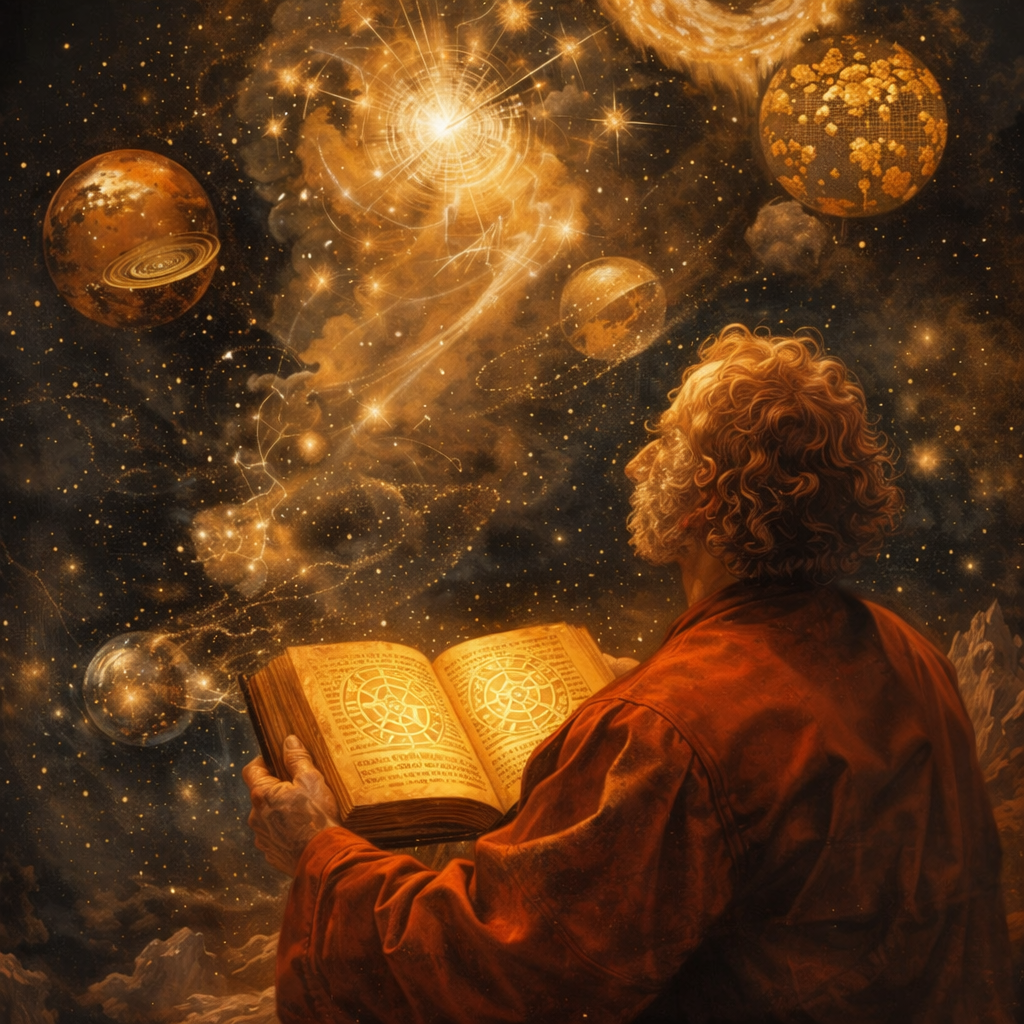

Balthazar Finch (Senior Critic, Occult Philosophy) — This second volume of Boehme's prodigious output continues its compelling exploration of the divine mechanics. The 1764 translation renders Boehme's complex vision with a venerable, accessible clarity. Readers will find themselves immersed in an unparalleled exposition of the 'Ungrund,' the primal abyss from which all manifestation arises. The work’s strength lies in its unwavering commitment to uncovering the hidden unity within apparent dualities. Essential for serious students of Western esotericism, occult philosophy, and Christian mysticism seeking to understand the roots of theosophical thought.
📝 Description
73
The 1764 English translation of Jacob Boehme's collected works, Volume II, details his unique spiritual system.
This volume presents the second part of Jacob Boehme's writings in English, translated in 1764. It contains his complex ideas on the nature of God, the origin of evil, and the process of spiritual transformation. Boehme, a 17th-century German mystic and shoemaker, developed a system that drew from Christian theology, Neoplatonism, and early alchemy. He described a divine essence that existed prior to creation, a concept that involved a necessary interplay of opposing forces like light and darkness. The writings detail how the soul can undergo an alchemical process, moving from a fallen state toward divine union.
This collection offers direct access to Boehme's original formulations, allowing readers to examine his distinctive terminology and symbolic language. The text focuses on the mechanics of creation and the inherent divine spark within all existence. It is intended for those seriously pursuing an understanding of Boehme's thought and its implications for spiritual development. The work provides a challenging but rewarding look into a singular vision of the cosmos.
Jacob Boehme stands as a significant figure in the history of Western esotericism, often categorized as a theosopher. His work emerged from a Protestant Christian background but incorporated elements from Hermeticism, Neoplatonism, and Kabbalistic ideas, though often in his own distinct manner. Boehme's concepts, particularly his understanding of the 'Ungrund' or primal abyss from which all existence arises through a dialectical process of opposing forces, influenced later esoteric traditions like Rosicrucianism, Freemasonry, and various forms of spiritual alchemy. His writings were a source for figures across the spiritual spectrum, from mystics to early scientists.
💡 Why Read This Book?
This volume is indispensable for anyone seeking to understand the foundational texts of Western esotericism. It offers a direct encounter with Jacob Boehme's unique mystical insights, providing a profound exploration of creation, divine will, and the soul's journey. Ideal for scholars of comparative religion, seekers of spiritual wisdom, and practitioners of contemplative prayer.
⭐ Reader Reviews
Honest opinions from readers who have explored this book.
❓ Frequently Asked Questions
Who was Jacob Boehme?
Jacob Boehme (1575-1624) was a German mystic and Christian theosopher whose writings profoundly influenced later esoteric traditions. He claimed direct spiritual revelation, exploring complex theological and philosophical ideas.
What is "Teutonic Theosophy"?
It refers to the specific brand of spiritual philosophy developed by Jacob Boehme, characterized by its unique vocabulary and allegorical exploration of God, nature, and the human soul, deeply rooted in German mystical traditions.
Is this volume suitable for beginners?
While Boehme's work is profound and can be challenging, this translation offers a valuable entry point for dedicated beginners interested in deep spiritual exploration and historical esoteric thought.
What is the 'Ungrund'?
The 'Ungrund' (or 'Ungrund') is Boehme's term for the primordial, unmanifest abyss or ground of being, preceding all creation and duality, from which God's will eternally emerges.
What makes this 1764 edition significant?
This 1764 English translation is historically important for disseminating Boehme's complex ideas to a wider audience, preserving a significant period in the reception and study of his works.
🔮 Key Themes & Symbolism
The Divine Will and Creation
This volume meticulously unravels Boehme's intricate doctrine of the Divine Will as the active principle behind all creation. He posits a dynamic, evolving God, moving from the silent, unknowable Ungrund to manifest existence through a series of 'qualities' or 'energies.' The text explores how this divine outflow shapes the cosmos, examining the interplay of opposites and the birth of form from the formless. It's a profound contemplation of divine causality and the inherent purpose woven into the fabric of reality, offering a unique perspective on theological ontology.
The Alchemical Transformation of the Soul
Central to Boehme's teachings is the concept of the soul's spiritual alchemy. This volume illuminates his view of human existence as a crucible where divine and earthly energies interact. Through contemplation of the 'Seven Properties' and the 'Great Mystery,' readers are guided towards understanding the process of inner purification and re-integration with the divine source. Boehme's allegorical language describes the soul's journey through darkness and light, mirroring the alchemical processes of dissolution and coagulation, ultimately leading to spiritual rebirth and union with God.
Symbolism of Light and Darkness
Boehme's cosmology is deeply rooted in the symbolic interplay of light and darkness, not as mere opposites, but as co-eternal principles within the divine nature. This volume dissects his complex symbolic language, revealing how darkness represents the primal, unmanifest potential and the 'wrath' of God, while light signifies the divine love, revelation, and manifest existence. He uses this dualistic framework to explain the origin of evil, the fall of Lucifer, and the subsequent redemptive process, offering a wide range of allegorical meaning that invites deep meditative study.
💬 Memorable Quotes
Direct passages from the work, attributed to the author.
“Nature is a living book, written with the finger of God.”
— Boehme sees the natural world as a direct manifestation of divine thought and will, a sacred text to be read and understood.
“Every creature is a living, breathing word of God.”
— This highlights the inherent divinity and significance of all beings, positing them as expressions of the divine essence.
“The fire of God's love burns in the heart.”
— This points to the internal experience of divine connection and spiritual illumination as the transformative power within the individual.
“To know God is to know oneself.”
— Boehme emphasizes the reciprocal relationship between understanding the divine and achieving self-awareness, suggesting the divine spark resides within.
💡 Key Ideas
Editorial paraphrase of the work's core concepts — not direct quotes.
The deepest depth of God is the Ungrund.
This quote expresses Boehme's foundational concept of the primordial, unknowable source of all existence, preceding any form or attribute.
🌙 Esoteric Significance
Tradition
Jacob Boehme is a towering figure in the Western esoteric tradition, particularly within Christian Theosophy. His work bridges the gap between medieval mysticism and later occult philosophies, influencing figures like William Blake and Carl Jung. His unique conceptual framework for understanding God, nature, and the soul laid the foundation for subsequent mystical and alchemical interpretations, emphasizing divine immanence and the transformative power of inner gnosis.
Symbolism
Boehme's writings are replete with rich, layered symbolism. Key symbols include the 'Ungrund' (primal abyss), the 'Seven Properties' (manifestations of divine will), 'light' and 'darkness' (co-eternal principles), and alchemical imagery of fire, sulphur, and mercury. These symbols are not merely decorative but are integral to his philosophical system, representing complex theological and cosmological concepts that require deep contemplation to fully apprehend.
Modern Relevance
Boehme's exploration of the interconnectedness of all things, the inherent divinity within creation, and the process of spiritual transformation remains remarkably relevant today. His ideas offer clear insights for those seeking a deeper understanding of consciousness, the nature of reality, and the human condition. In an era often characterized by materialism, Boehme's visionary cosmology provides a powerful counterpoint, encouraging a search for meaning and spiritual authenticity.
👥 Who Should Read This Book
This volume is essential for serious students of Western esotericism, comparative religion, and Christian mysticism. Scholars of philosophy and theology will find Boehme's unique conceptual framework useful for understanding the evolution of spiritual thought. Seekers of profound spiritual wisdom and practitioners of contemplative disciplines will discover a rich source of inspiration and guidance. While challenging, dedicated beginners eager to study foundational esoteric texts will also benefit from its clear insights.
📜 Historical Context
The early 17th century, when Jacob Boehme penned his original works, was a period of immense intellectual and spiritual ferment in Europe. The Reformation had fractured religious unity, leading to intense theological debate and a resurgence of mystical inquiry. Science was beginning to challenge established Aristotelian views, and alchemy was still widely regarded as a path to both material and spiritual transformation. Boehme, a shoemaker from Görlitz, emerged from this milieu, synthesizing Christian orthodoxy with Neoplatonic, Hermetic, and alchemical ideas. His writings, initially controversial and even suppressed, gained significant traction among mystics and philosophers, laying the groundwork for later esoteric movements. The 1764 English translation of his works represents a crucial moment in their dissemination and influence on Anglo-American esoteric thought.
📔 Journal Prompts
Reflect on the concept of the 'Ungrund' and its implications for your understanding of potentiality.
How do the symbols of light and darkness resonate within your own inner experiences?
Consider the 'alchemical transformation' of your own life's challenges.
What 'living book' of nature can you observe more closely today?
Meditate on the idea of 'knowing God' through 'knowing yourself'.
🗂️ Glossary
Ungrund
The primordial, unmanifest, silent abyss or ground of being from which all existence arises according to Boehme's cosmology. It is the eternal, unknowable source of God's will.
Theosophy
Literally 'divine wisdom,' a system of mystical or spiritual philosophy seeking direct knowledge of God and the universe through intuition and revelation, often blending elements of various religious and philosophical traditions.
Seven Properties
Boehme's term for the seven fundamental qualities or forces that manifest from the Ungrund, forming the basis of all creation, including divine love, wrath, and the material world.
Alchemical Transmutation
In a spiritual context, the process of purifying and transforming the soul, akin to the alchemical process of refining base metals into gold, leading to spiritual perfection and union with the divine.
Angelic World
The area of divine intelligences and spiritual beings, distinct from the material world, often described in Boehme's work as part of the hierarchical order of creation.
This book appears in 2 collections
🔮 Readers Also Liked
Browse all →





From the “Theosophy” Collection
View all →

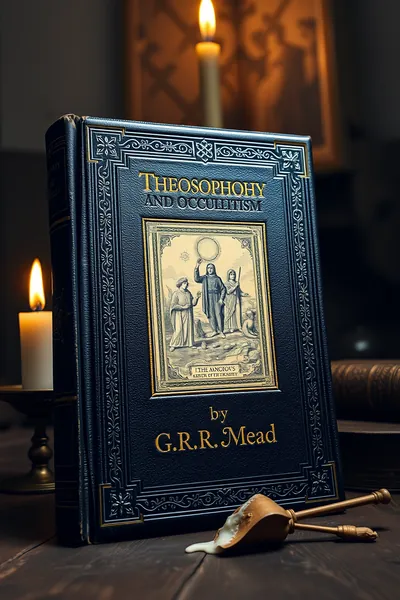




More Free Theosophy & Anthroposophy Books
View all →