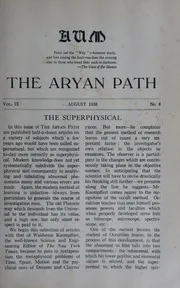
The Kingdom of Childhood
 73
73

The Kingdom of Childhood
Steiner's "The Kingdom of Childhood" offers a potent, if undiluted, glimpse into the pedagogical philosophy that underpins the Waldorf movement. Delivered in 1922 to a group of aspiring Waldorf educators, these talks eschew grand pronouncements for a direct, almost conversational tone that nonetheless carries significant weight. The emphasis on the teacher's personal development as the primary tool for educating children is particularly striking, a concept that remains challenging and relevant. While the aphoristic style can sometimes feel abrupt, it forces the reader to pause and consider each point carefully. A limitation, perhaps, is the assumed familiarity with Steiner's broader anthroposophical framework, which might leave newcomers somewhat adrift. However, the passages on the creative use of humor and the cultivation of inner vitality in teaching are exceptionally clear and practical. This is less a manual and more a spiritual charge for educators.
📝 Description
73
Rudolf Steiner delivered seven talks on pedagogy in England in 1924, during his final visit.
The Kingdom of Childhood contains seven lectures Rudolf Steiner gave in England in 1924, his last visit to the country. These talks were directed at a specific audience committed to starting a Waldorf school. Steiner addresses the inner development teachers need, stressing that self-cultivation is vital for effective teaching. The book's style is aphoristic, making direct statements about pedagogical principles.
Individuals interested in the philosophy behind Waldorf education will find this work particularly relevant. It speaks to educators and parents seeking to understand the teacher's personal transformation as a core requirement for guiding children. Those looking into alternative educational approaches will find Steiner's ideas illuminating. The lectures focus on the teacher's inner work, the use of imagination and humor in teaching, and understanding child development from an anthroposophical viewpoint.
These lectures stem from Rudolf Steiner's anthroposophy, a philosophical movement he founded. Steiner was initially associated with the Theosophical Society before developing his own distinct path. His work often addressed spiritual science and its application to human life, including education. The Waldorf method, which emerged from his ideas, proposes a holistic approach to learning that considers the child's spiritual, emotional, and intellectual development. This contrasts with purely materialistic or mechanistic views of education prevalent at the time.
💡 Why Read This Book?
• Understand the necessity of a teacher's inner development, a core principle articulated in these talks, which suggests personal growth is paramount before effective teaching can occur. • Gain insight into the use of humor and imagination in the classroom, as stressed by Steiner in his specific guidance to Waldorf pioneers in 1922. • Grasp the anthroposophical perspective on childhood development, presented through Steiner's aphoristic style, offering a unique view of the child's spiritual and psychological needs.
⭐ Reader Reviews
Honest opinions from readers who have explored this book.
❓ Frequently Asked Questions
When were the talks that make up "The Kingdom of Childhood" originally given?
The seven talks were delivered by Rudolf Steiner in England during his final visit, specifically in 1922, to a group dedicated to establishing a new Waldorf school.
What is the main focus of "The Kingdom of Childhood"?
The book primarily focuses on the necessity for teachers to engage in their own inner development and self-transformation to effectively educate children, emphasizing imagination and humor.
Who is Rudolf Steiner and what is his connection to Waldorf education?
Rudolf Steiner (1861-1925) was an Austrian esoteric philosopher and the founder of anthroposophy, a spiritual philosophy. He developed the principles of Waldorf education, which are explored in this book.
What is the historical significance of these talks?
These talks are considered a vital introduction to Waldorf education, directly addressing the 'pioneers' tasked with opening the first Waldorf school, making them historically significant for the movement's early days.
Is "The Kingdom of Childhood" suitable for someone new to Steiner's ideas?
While it offers foundational ideas, the book's aphoristic nature and reliance on anthroposophical concepts might be best approached after some initial familiarity with Steiner's work or Waldorf principles.
What does Steiner mean by 'working on oneself' for teachers?
Steiner implies that teachers must cultivate their own spiritual, emotional, and intellectual capacities, transforming their inherent gifts and developing inner vitality to inspire and guide children effectively.
🔮 Key Themes & Symbolism
Teacher as Cultivator
Steiner emphasizes that the teacher is not merely an instructor but a cultivator of the child's developing being. This requires the teacher to undertake significant inner work, transforming their own capacities and understanding. The book stresses that a teacher’s capacity for imaginative thinking and spiritual insight directly influences the learning environment. This concept is central to the Waldorf approach, viewing the teacher's personal development as intrinsically linked to the educational process.
The Role of Imagination and Humor
Central to Steiner's pedagogy, as presented in "The Kingdom of Childhood," is the vital role of imagination and humor in the classroom. He argues that lively, engaging teaching stems from the teacher's ability to work imaginatively and to use humor appropriately. This isn't about superficial jokes but about fostering an atmosphere of creative joy and resilience, which he believed was essential for children's healthy development and for keeping the educational process vibrant and responsive.
Anthroposophical View of Childhood
The book offers glimpses into an anthroposophical understanding of childhood, viewing the child not just as a physical or intellectual being, but as a developing spiritual entity. Steiner's aphoristic style suggests that each stage of childhood possesses unique spiritual and psychological needs that educators must perceive and support. This perspective informs the Waldorf curriculum and teaching methods, aiming to nurture the whole child—body, soul, and spirit.
Foundations of Waldorf Education
These talks served as foundational guidance for the pioneers establishing the first Waldorf school. Steiner outlines core principles, stressing self-awareness and personal transformation for educators. The book acts as an early articulation of the pedagogical philosophy that would differentiate Waldorf education, focusing on the teacher's inner life as the wellspring of effective and inspiring teaching.
💬 Memorable Quotes
Direct passages from the work, attributed to the author.
“Teachers must work on themselves first.”
— This aphorism expresses Steiner's view that a teacher's own inner development—their spiritual, emotional, and intellectual cultivation—is the prerequisite for effective pedagogy. It implies that outward teaching effectiveness originates from inward self-mastery and transformation.
“Humor keeps teaching lively and imaginative.”
— Steiner suggests that appropriate humor is not a distraction but an essential element for maintaining an engaging and creative classroom atmosphere. It reflects the teacher's inner vitality and ability to approach learning with joy and flexibility.
“The talks were given to 'pioneers' dedicated to opening a new Waldorf school.”
— This phrase highlights the specific audience and purpose of these lectures: individuals actively involved in the groundbreaking effort to establish the first Waldorf school. It underscores the practical, foundational nature of the guidance provided.
“Teachers must transform their own inherent gifts.”
— This concept points to the active role teachers must play in developing their natural talents and capacities. It's not enough to possess gifts; they must be consciously refined and directed through inner work to serve the educational mission.
“Childhood requires understanding beyond the purely material.”
— An interpretation of Steiner's anthroposophical perspective, suggesting that the needs and nature of a child extend beyond the physical and intellectual, encompassing spiritual and soul dimensions that educators must recognize and nurture.
🌙 Esoteric Significance
Tradition
Steiner's work belongs to the Western Esoteric Tradition, specifically Anthroposophy, which he developed from his earlier engagement with Theosophy and his own spiritual research. It draws upon Hermetic principles of "as above, so below," applying them to human development and education. Unlike purely intellectual philosophies, Anthroposophy posits a spiritual reality accessible through specific meditative and contemplative practices, aiming to bridge the gap between the material and spiritual worlds.
Symbolism
While "The Kingdom of Childhood" is aphoristic rather than overtly symbolic, the "Kingdom of Childhood" itself can be seen as a metaphor for the protected, spiritually potent field of early human development. The emphasis on the teacher's inner "work" and the transformation of "gifts" points to alchemical symbolism, where raw materials (the teacher's self) are refined into a higher form (an effective educator) through conscious effort and spiritual insight.
Modern Relevance
Contemporary educational theorists and practitioners, particularly within the Waldorf and Steiner-inspired movements, continue to draw heavily on Steiner's principles. His ideas on holistic child development, the importance of arts and practical skills, and the teacher's role as a spiritual guide remain influential. Thinkers exploring consciousness studies, integral education, and child psychology often engage with Steiner's work as a precursor or complement to modern research.
👥 Who Should Read This Book
• Aspiring and practicing Waldorf educators seeking to deepen their understanding of the philosophical underpinnings of their craft and the crucial role of self-cultivation. • Parents interested in alternative educational philosophies who wish to grasp the foundational principles of a system focused on the holistic development of the child. • Students of esoteric philosophy and spiritual science looking for primary source material on Rudolf Steiner's application of anthroposophy to pedagogy and child development.
📜 Historical Context
Rudolf Steiner delivered the talks collected in "The Kingdom of Childhood" in 1922, a period when the seeds of his unique educational philosophy were actively being sown. As the founder of anthroposophy, Steiner's work emerged in an era rich with spiritual and philosophical exploration, influenced by movements like Theosophy, of which he was briefly a prominent member before forging his own path. His ideas on education, particularly the Waldorf method, offered a distinct alternative to the prevailing, often mechanistic, approaches to schooling prevalent in post-World War I Europe. While figures like Maria Montessori were also developing child-centered educational theories, Steiner's approach was deeply rooted in his spiritual science, emphasizing the developmental stages of the child from a holistic, anthroposophical viewpoint. The reception of his ideas was significant, leading to the establishment of schools worldwide, though they also faced criticism from materialist perspectives common in academic circles at the time.
📔 Journal Prompts
The teacher's inner work as a foundation for pedagogy.
Cultivating humor and imagination in the classroom.
Understanding the spiritual dimensions of childhood development.
The concept of 'inherent gifts' and their transformation.
Reflecting on the 'Kingdom of Childhood' as a pedagogical ideal.
🗂️ Glossary
Anthroposophy
A spiritual philosophy founded by Rudolf Steiner, seeking to understand the spiritual nature of the human being and the universe through a combination of intellectual inquiry and spiritual perception.
Waldorf Education
A holistic educational approach based on Rudolf Steiner's spiritual philosophy, emphasizing the development of the whole child—intellect, emotion, and will—through imaginative learning and a curriculum that aligns with developmental stages.
Aphoristic Style
A style of writing characterized by concise, pithy statements or maxims that express a general truth or principle, often requiring deeper reflection to fully grasp.
Pioneers
In the context of this book, refers to the individuals who were instrumental in establishing the first Waldorf school, facing the challenges of implementing new educational ideas.
Inherent Gifts
The natural talents, capacities, and predispositions that an individual, particularly a teacher, possesses. Steiner emphasizes the need for conscious work to transform and apply these gifts effectively in education.
Inner Work
The process of self-cultivation, spiritual development, and conscious transformation that Steiner advocated for individuals, especially teachers, as essential for their personal growth and effectiveness.
Spiritual Science
Steiner's term for Anthroposophy, referring to a path of knowledge that investigates the spiritual realms and their connection to the physical world and human existence.
This book appears in 1 collection
🔮 Readers Also Liked
Browse all →





From the “Anthroposophy” Collection
View all →





More Free Theosophy & Anthroposophy Books
View all →