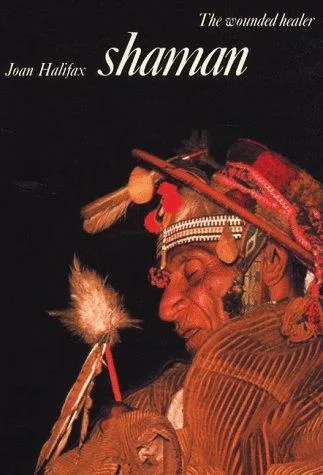
Shaman
 74
74

Shaman
Joan Halifax's "Shaman" offers a crucial, sober perspective on a topic frequently obscured by myth and misinterpretation. The strength of the book lies in its unflinching ethnographic detail, particularly in its depiction of the psychological demands placed upon individuals undertaking shamanic roles. Halifax avoids the common pitfall of presenting shamanism as a universally uniform practice, instead highlighting its diverse manifestations across cultures. A passage discussing the intense, often physically taxing, initiations faced by nascent shamans underscores the book's commitment to realism over romanticism. However, for readers entirely new to the subject, the density of anthropological terminology might present a slight barrier. Nevertheless, "Shaman" remains a vital, grounded exploration of a profound human endeavor.
📝 Description
74
Joan Halifax's 1988 book 'Shaman' examines shamanic practices beyond romanticized views.
Joan Halifax's 'Shaman' offers a detailed examination of shamanic practices, moving beyond popular or romanticized notions. Halifax grounds her analysis in extensive fieldwork and scholarly research, presenting shamanism as a complex system of healing and spiritual engagement tied to specific cultural contexts. She illuminates the roles shamans fulfill within their communities, serving as intermediaries between the visible and invisible realms.
This work is valuable for anthropologists, religious scholars, and those studying comparative spiritual practices. It will also interest individuals curious about the historical development of healing methods and the diverse cross-cultural expressions of altered states of consciousness. Halifax's approach avoids simplistic ethnographies and New Age interpretations, engaging with consciousness studies while maintaining anthropological rigor. The book stands as a counterpoint to more idealized or sensationalized portrayals of shamanism that were common.
The text systematically covers core shamanic concepts. These include the function of altered states of consciousness, the utilization of spirit helpers, and the connection between a shaman's work and their community's well-being. Halifax emphasizes the demanding training and psychological strength required of shamans, portraying their role as a vital, functional element of societal structure, not simply ritual.
Published in 1988, 'Shaman' entered a discourse increasingly interested in indigenous cultures and alternative spiritualities. However, Halifax's work distinguished itself by adhering to anthropological methods rather than succumbing to simplistic ethnographies or New Age appropriations. It engaged with the developing field of consciousness studies, maintaining a foundation in empirical research. The book provided a more grounded perspective compared to the often idealized or sensationalized depictions of shamanism found in popular culture at the time.
💡 Why Read This Book?
• Understand the rigorous training and psychological resilience required of shamans, moving beyond simplistic portrayals, as detailed in chapters exploring shamanic initiation. • Gain insight into the functional role of shamans within their communities, as Halifax elaborates on their responsibilities as healers and spiritual intermediaries. • Appreciate the cultural specificity of shamanic practices, recognizing that they are not monolithic but deeply embedded in distinct societal structures and belief systems.
⭐ Reader Reviews
Honest opinions from readers who have explored this book.
❓ Frequently Asked Questions
When was Joan Halifax's "Shaman" first published?
Joan Halifax's seminal work "Shaman" was first published in 1988, positioning it within a critical period of anthropological and spiritual inquiry.
What is the primary focus of Joan Halifax's book "Shaman"?
The book focuses on the complex realities of shamanic practices, emphasizing their role as healing systems and spiritual disciplines deeply integrated into specific cultural contexts.
Does "Shaman" by Joan Halifax present a romanticized view of shamanism?
No, Halifax deliberately avoids romanticization, presenting a grounded, ethnographic account that highlights the rigorous training, psychological demands, and community functions of shamans.
Who would benefit most from reading "Shaman"?
Anthropologists, religious scholars, students of consciousness, and anyone seeking an unvarnished, scholarly understanding of shamanic traditions would find the book highly beneficial.
What key concepts are explored in Halifax's "Shaman"?
Key concepts include altered states of consciousness, the role of spirit helpers, and the intricate relationship between shamanic practice and community well-being.
Is "Shaman" an ethnographic study?
Yes, "Shaman" is largely an ethnographic study, drawing on Halifax's extensive fieldwork and research to provide a detailed and nuanced exploration of shamanic traditions.
🔮 Key Themes & Symbolism
Shamanic Healing Modalities
Halifax's work meticulously details the various forms shamanic healing takes across different cultures. It moves beyond superficial notions to explore the intricate processes shamans employ, often involving altered states of consciousness and communication with spirit allies. The book emphasizes that these healing practices are not mere rituals but functional systems designed to restore balance and well-being within both the individual and the community, often addressing ailments that conventional medicine of the time might overlook or misinterpret.
Altered States of Consciousness
A central theme is the shaman's capacity to enter and navigate altered states of consciousness. Halifax examines the techniques used to induce these states, such as drumming, chanting, and fasting, and the profound psychological and spiritual experiences that result. The book positions these states not as pathology but as essential tools for shamanic work, enabling communication with the spirit world, retrieval of lost soul parts, and diagnosis of illness. The 1988 publication context highlights its contribution to understanding consciousness beyond Western psychological frameworks.
Community and Intermediary Role
The book underscores the vital role of the shaman as an intermediary between the human community and the spirit world. This function extends beyond healing to encompass divination, guidance, and the maintenance of cosmic order. Halifax illustrates how shamanic practices are intrinsically linked to the social, political, and spiritual fabric of indigenous societies. The shaman's authority and efficacy are often derived from their recognized position within the community and their ability to maintain relationships with spiritual entities on behalf of the group.
Rigorous Training and Psychology
Contrary to popular depictions, Halifax emphasizes the demanding nature of shamanic training and practice. This involves intense psychological fortitude, often through arduous initiations and apprenticeships. The work details the personal sacrifices and the psychological resilience required to withstand the often-frightening experiences encountered in the spirit world. This aspect challenges romantic notions, presenting shamanism as a serious, demanding vocation requiring profound dedication and inner strength.
💬 Memorable Quotes
Direct passages from the work, attributed to the author.
“The shaman is not necessarily a mystic, but a healer.”
— This statement challenges the common perception of shamans as solely otherworldly visionaries. Halifax emphasizes their practical, community-focused role as practitioners of healing arts within their specific cultural contexts.
“States of consciousness are tools.”
— This highlights the functional view of altered states in shamanism. They are not experiences for their own sake but are utilized deliberately by the shaman to achieve specific therapeutic or divinatory outcomes.
“Training is arduous and often frightening.”
— This interpretation points to the intense psychological and physical demands placed upon individuals undergoing shamanic initiation, underscoring the seriousness and difficulty of the path.
“The shaman mediates between worlds.”
— This succinctly captures the essential intermediary function of the shaman, acting as a bridge between the everyday human realm and the often-unseen spiritual dimensions.
“Shamanism is a specific tradition, not a universal archetype.”
— This emphasizes the importance of cultural context. Halifax argues against viewing shamanism as a single, monolithic practice, stressing its diverse manifestations tied to unique societal structures and beliefs.
🌙 Esoteric Significance
Tradition
While not strictly belonging to a single Western esoteric lineage like Hermeticism or Kabbalah, "Shaman" engages with the universal human exploration of consciousness and healing. It serves as a foundational text for understanding indigenous spiritual technologies that have influenced modern neoshamanism and transpersonal psychology. Its significance lies in grounding esoteric concepts of spiritual travel and healing within empirical observation and cultural context, bridging the gap between mystical experience and anthropological study.
Symbolism
Key symbols explored include the spirit helper, often depicted as an animal or guide, representing the shaman's connection to the non-physical realm and their source of power. The journey itself, whether to the Upper, Middle, or Lower Worlds, symbolizes the shaman's ability to traverse different planes of existence for healing and insight. The tree of life or world axis, a recurring motif in many shamanic cosmologies, represents the connection between these realms and the shaman's central role in maintaining cosmic balance.
Modern Relevance
Contemporary practitioners of neoshamanism, ecopsychology, and somatic experiencing often draw upon the detailed ethnographic accounts found in "Shaman." Thinkers in transpersonal psychology continue to reference Halifax's work when discussing altered states of consciousness and healing modalities beyond conventional Western models. The book remains a touchstone for anyone seeking to understand the roots of modern spiritual healing practices and their connection to ancient, indigenous traditions.
👥 Who Should Read This Book
• Anthropologists and religious studies scholars: To gain a nuanced, ethnographically-grounded understanding of shamanic traditions and their cultural functions. • Students of consciousness and altered states: To explore the practical application and diverse manifestations of non-ordinary consciousness in healing and spiritual contexts. • Individuals interested in indigenous healing practices: To move beyond romanticized notions and appreciate the rigorous training, psychological depth, and community role of shamans.
📜 Historical Context
Published in 1988, Joan Halifax's "Shaman" entered a landscape increasingly interested in non-Western spiritual traditions, partly fueled by figures like Carlos Castaneda, though Halifax's approach was distinctly anthropological and critical of sensationalism. The late 20th century saw a rise in comparative religion studies and consciousness research, with scholars like Michael Harner developing distinct shamanic practice models (Core Shamanism). Halifax's work offered a more grounded, ethnographic counterpoint to both academic trends and popular New Age interpretations. It engaged with the growing body of cross-cultural psychological studies, situating shamanic experiences within rigorous ethnographic observation rather than purely psychological speculation. The book's careful documentation provided a vital resource for understanding indigenous healing systems amidst increasing globalization and cultural assimilation.
📔 Journal Prompts
The shaman's role as mediator: Reflect on instances where bridging different perspectives is crucial for community well-being.
Analysis of spirit helpers: Consider what forms guidance or intuition might take in your own life, beyond literal interpretations.
The arduous nature of training: Explore the personal sacrifices or intense challenges one might face when committing to a demanding path.
Community health and spiritual practice: How can spiritual or contemplative practices contribute to collective well-being in contemporary society?
Navigating altered states: Journal about experiences of heightened awareness or intuition and their potential meaning.
🗂️ Glossary
Shaman
An individual believed to have the ability to interact with the spirit world, often acting as a healer, diviner, and intermediary for their community.
Spirit Helper
A spiritual entity, often an animal or ancestral figure, that assists the shaman in their work, providing guidance, power, and knowledge.
Altered State of Consciousness (ASC)
A state of awareness that deviates significantly from the normal waking state, often induced by techniques like drumming, chanting, or fasting, used by shamans for spiritual purposes.
Initiation
A ritual process of transition and transformation through which an individual becomes a shaman, often involving severe trials and spiritual encounters.
Cosmology
A framework of beliefs concerning the origin, structure, and nature of the universe, often including multiple spiritual realms accessible to the shaman.
Ethnography
The scientific description of the customs of individual peoples and cultures, based on fieldwork and direct observation.
Mediator
An intermediary between people or groups, especially one who attempts to resolve disputes or facilitate communication.
🔮 Readers Also Liked
Browse all →









More by Joan Halifax
All books →

More Free Occult Philosophy Books
View all →