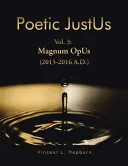
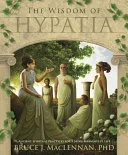
The Wisdom of Hypatia
 76
76

The Wisdom of Hypatia
Bruce J. MacLennan's "The Wisdom of Hypatia" attempts to bridge the gap between a pivotal historical figure and contemporary spiritual seekers. The book's primary strength lies in its ambitious nine-month program, which aims to offer a practical, step-by-step engagement with Hypatia's philosophical milieu. The historical context provided is adequate, grounding the reader in the intellectual currents of 4th-century Alexandria. However, the work occasionally falters in its exposition of complex Neoplatonic ideas, sometimes presenting them with a generality that may not satisfy seasoned scholars of ancient philosophy. The section on the nature of the One, while aiming for accessibility, could benefit from deeper engagement with primary sources or more nuanced interpretations. Despite this limitation, the book serves as a commendable introductory guide for those unfamiliar with Hypatia's legacy and its foundational role in Western esoteric thought. It successfully makes a case for her continued relevance. The verdict: a useful, if occasionally superficial, modern interpretation of an ancient sage's teachings.
📝 Description
76
Bruce J. MacLennan's 1996 book offers a nine-month curriculum based on Hypatia of Alexandria's philosophy.
This work presents a structured nine-month curriculum designed to convey the spiritual and philosophical teachings attributed to Hypatia of Alexandria. The program synthesizes classical philosophies, integrating practical exercises and techniques intended to foster inner peace and spiritual depth. It draws from the intellectual environment of 4th-century Alexandria, a time marked by significant syncretism and intellectual activity.
The book is for individuals seeking to apply ancient wisdom to modern life. It will appeal to students of Western esotericism, philosophy, and comparative religion interested in the core elements of magical and mystical traditions. Those who feel alienated from conventional spiritual paths and desire a more intellectually demanding, yet personally relevant, system may find this book valuable.
MacLennan situates Hypatia within her historical context: Alexandria in the late 4th and early 5th centuries CE. This was a dynamic, often turbulent, era where Pagan, Jewish, and Christian intellectual traditions coexisted and sometimes conflicted. Hypatia, a notable educator, lectured on mathematics, astronomy, and philosophy, representing a zenith of Hellenistic thought before the eventual decline of classical paganism in the region.
The book connects to the Neoplatonic tradition, a philosophical school that significantly influenced Western esotericism. Hypatia, though a historical figure, is presented through a lens that emphasizes her role in a lineage of thought seeking understanding of the cosmos and the soul's journey toward the divine. The curriculum draws on concepts central to this tradition, such as the pursuit of virtue and the contemplation of cosmic order. It reflects the ancient philosophical schools' methods for intellectual and spiritual development, placing Hypatia as a key, albeit historical, figure within this ongoing esoteric current.
💡 Why Read This Book?
• Gain a structured, nine-month program for spiritual development inspired directly by Hypatia's synthesis of classical philosophies, offering a unique pathway not found in generalized self-help texts. • Understand the foundational role Hypatia's teachings played in the development of Western magic and mysticism, a crucial historical and esoteric connection illuminated by the book's specific focus on the 4th century CE. • Learn practical exercises and contemplative techniques derived from Neoplatonic principles, providing tangible methods for cultivating purpose and spiritual depth, directly referencing the program’s divided exercises.
⭐ Reader Reviews
Honest opinions from readers who have explored this book.
❓ Frequently Asked Questions
What specific philosophical traditions did Hypatia integrate, as explored in this book?
The book highlights Hypatia's synthesis of Neoplatonism, Stoicism, and Pythagoreanism. This fusion formed the basis of her teachings in 4th-century Alexandria, influencing later Western esoteric traditions.
How does "The Wisdom of Hypatia" differ from other books on ancient philosophy?
Unlike purely academic texts, this book offers a practical, nine-month program with exercises. It focuses specifically on Hypatia's unique blend of philosophy and its application for contemporary spiritual growth.
Is this book suitable for beginners in esoteric studies?
Yes, the progressive nine-month structure is designed for accessibility. It introduces foundational concepts of classical philosophy and their esoteric applications, making it a good starting point.
What is the historical significance of Hypatia of Alexandria?
Hypatia was a prominent female philosopher and mathematician in 4th-5th century CE Alexandria, a leading intellectual figure of her time. Her teachings laid groundwork for Western magic and mysticism.
Does the book provide historical context for Hypatia's teachings?
Absolutely. It situates Hypatia within the intellectual and religious landscape of 4th-century Alexandria, detailing the coexistence and interaction of Pagan, Jewish, and Christian thought.
What kind of spiritual depth can one expect to cultivate through this program?
Readers can expect to cultivate a deeper sense of purpose and inner tranquility by engaging with exercises based on ancient philosophical principles of virtue and cosmic order.
🔮 Key Themes & Symbolism
Neoplatonic Ascent
The book explores the Neoplatonic concept of the soul's journey towards the divine, a core tenet of Hypatia's philosophy. This theme is presented through a structured program designed to guide the reader through progressive stages of spiritual awareness. It emphasizes the cultivation of intellect and virtue as means to achieve higher states of consciousness, reflecting the philosophical schools of 4th-century Alexandria.
Integration of Traditions
A significant theme is the synthesis of diverse intellectual currents—Pagan, Jewish, and Christian—that characterized Alexandria in Hypatia's era. The work highlights how Hypatia's teachings drew from classical philosophies like Platonism and Stoicism, forming a basis for later esoteric traditions. This integration is presented as a model for reconciling different belief systems and finding common spiritual ground.
Practical Philosophy
The Wisdom of Hypatia focuses on the practical application of philosophical principles for daily life. The nine-month program includes exercises and techniques aimed at achieving purpose, tranquility, and spiritual depth. This approach emphasizes that philosophy is not merely theoretical but a lived discipline that can transform one's existence, mirroring ancient philosophical pedagogy.
Foundations of Western Esotericism
The book positions Hypatia's work as a crucial, often overlooked, foundation for Western magic and mysticism. It traces the lineage from her teachings to later occult and spiritual movements, demonstrating how her philosophical framework contributed to the development of these fields. Understanding this lineage offers context for contemporary esoteric practices.
💬 Memorable Quotes
Direct passages from the work, attributed to the author.
“Hypatia taught Pagans, Jews, and Christians in 4th century CE Alexandria.”
— This statement underscores Hypatia's unique position as an intellectual bridge between diverse religious and philosophical communities during a key era in Western history.
“Her teachings form the foundation of Western magic and mysticism.”
— This highlights the profound, yet often unacknowledged, influence of Hypatia's synthesis of classical philosophies on subsequent esoteric traditions and practices.
“A progressive, nine-month program based on Hypatia's teachings.”
— This describes the book's structure as a practical curriculum, offering a structured path for modern individuals to engage with and apply ancient wisdom.
“Discover techniques to bring purpose and tranquillity to your life.”
— This points to the tangible benefits and practical outcomes promised by the book's program, focusing on personal growth and spiritual well-being.
“The mix of classical philosophies she taught.”
— This phrase emphasizes the eclectic and syncretic nature of Hypatia's philosophical system, drawing from multiple ancient schools of thought.
🌙 Esoteric Significance
Tradition
This work engages with the Hermetic and Neoplatonic traditions, particularly highlighting the philosophical underpinnings that informed later Western esoteric practices. It positions Hypatia's teachings as a crucial bridge, synthesizing classical philosophy with a mystical outlook that became foundational for subsequent magical and Gnostic-influenced systems.
Symbolism
The book explores motifs common in Hellenistic philosophy and early esotericism, such as the ascent of the soul and the contemplation of the cosmos. While not overtly symbolic in a ritualistic sense, the emphasis on mathematical harmony and philosophical purity reflects underlying symbolic understandings of order and divine intelligence.
Modern Relevance
Contemporary practitioners of Western esotericism, particularly those interested in philosophical magic and Neoplatonic meditation, often reference Hypatia's legacy. Schools focusing on classical philosophy as a spiritual path draw inspiration from her ability to integrate intellectual rigor with spiritual pursuit, making her teachings relevant to modern seekers.
👥 Who Should Read This Book
• Students of Western Esotericism: Those seeking to understand the roots of magical and mystical traditions will find this book informative, tracing influences from 4th-century Alexandria. • Philosophy Enthusiasts: Individuals interested in the practical application of classical philosophies like Neoplatonism and Stoicism for personal growth and inner peace. • Seekers of Structured Spiritual Programs: Readers looking for a guided, progressive approach to spiritual development over a defined period, moving beyond abstract concepts to actionable techniques.
📜 Historical Context
Bruce J. MacLennan's "The Wisdom of Hypatia" emerges from the intellectual milieu of 4th and early 5th-century Alexandria, a city teeming with diverse philosophical and religious discourse. This era saw intense interaction between Neoplatonism, Stoicism, Pythagoreanism, Judaism, and nascent Christianity. Hypatia, a celebrated philosopher and mathematician, taught publicly, synthesizing these streams into a coherent worldview that influenced many students from various backgrounds. Her prominence challenged societal norms, making her a significant figure. The work is situated against the backdrop of increasing religious tension and the eventual suppression of classical pagan traditions. Key contemporaries included figures like Synesius of Cyrene, one of her pupils who later became a bishop, showcasing the intellectual reach of her school. The intellectual currents she represented were part of the broader Hellenistic philosophical tradition, which was facing pressure from rising Christian hegemony.
📔 Journal Prompts
Reflect on the synthesis of Pagan, Jewish, and Christian thought in 4th-century Alexandria.
Consider the role of mathematics and astronomy in Hypatia's philosophical system.
Explore the concept of the soul's ascent as presented in the program.
Identify exercises from the nine-month plan that foster personal tranquillity.
Analyze the foundational elements of Western magic potentially derived from Hypatia's teachings.
🗂️ Glossary
Neoplatonism
A philosophical system originating with Plotinus in the 3rd century CE, heavily influencing Hypatia. It emphasizes the existence of an ultimate, transcendent 'One' and the emanation of all reality from it, with the soul seeking to return to this source.
Stoicism
An ancient Greek philosophy emphasizing virtue, reason, and living in accordance with nature. It teaches control over one's emotions and acceptance of what cannot be changed, principles often integrated into spiritual disciplines.
Pythagoreanism
A school of thought associated with Pythagoras, focusing on the importance of numbers, mathematics, and music in understanding the cosmos and achieving spiritual harmony. Hypatia incorporated its principles.
4th Century CE Alexandria
The historical setting for Hypatia's life and teachings. It was a major intellectual and cultural center where diverse philosophical and religious traditions, including Hellenistic Paganism, Judaism, and Christianity, coexisted and interacted.
Western Magic
A broad category of esoteric traditions and practices aimed at understanding and influencing the natural and supernatural worlds, often drawing on philosophical, religious, and symbolic systems developed over centuries.
Mysticism
A range of traditions focused on direct experience of the divine or ultimate reality through contemplation, intuition, and spiritual practices, often seeking unity with the sacred.
Hellenistic Philosophy
The philosophical traditions that flourished in the Hellenistic period (roughly 323 BCE to 31 BCE) and into the Roman Empire, including Stoicism, Epicureanism, and Neoplatonism, which deeply influenced Hypatia.
This book appears in 1 collection
🔮 Readers Also Liked
Browse all →








From the “Neoplatonism” Collection
View all →








More Free Occult Philosophy Books
View all →