Poetic Justus
 73
73

Poetic Justus
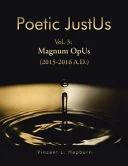
Vincent L. Hepburn's Poetic Justus offers a refreshing departure from the didactic nature of much esoteric literature. Instead of direct instruction, Hepburn employs verse to articulate complex ideas, a strategy that, when successful, allows for a more immersive understanding. The strength of the work lies in its evocative imagery, particularly in passages that describe the subtle shifts in consciousness. For example, the recurring motif of light and shadow in "The Weaver's Thread" chapter effectively conveys the interplay between perception and objective reality. However, the book's poetic form can also be its limitation; at times, the ambiguity inherent in verse risks obscuring the very concepts it aims to illuminate, leaving the reader searching for a more concrete anchor. The work's commitment to exploring consciousness through metaphor is commendable, though the lack of explicit engagement with specific philosophical traditions or historical figures might leave some readers wanting a deeper academic context. Ultimately, Poetic Justus succeeds as a mood piece and an invitation to contemplation, offering a unique artistic rendering of metaphysical inquiry.
📝 Description
73
Vincent L. Hepburn's 2016 work, Poetic Justus, uses lyrical language to explore metaphysical concepts.
Poetic Justus is not a traditional philosophical text; instead, it uses poetic expression to examine ideas about consciousness, reality, and the human condition. The book employs evocative language and imagery, aiming for readers to experience its themes rather than simply analyze them. Its structure is designed to encourage contemplation and personal insight.
This book suits individuals interested in the connection between art and esotericism. Those who appreciate poetry as a means of philosophical inquiry will find it particularly resonant. It offers alternative perspectives on spiritual and metaphysical subjects, moving beyond standard academic or religious viewpoints. Readers familiar with symbolist literature or those wanting to enhance their intuitive grasp of arcane subjects may also find it valuable.
Published in 2016, Poetic Justus reflects a contemporary interest in artistically presented esoteric material. While not aligned with specific historical groups like the Golden Dawn, it shares a spirit with earlier periods where poets and mystics merged creative work and spiritual exploration. The book's themes also draw on the influence of Jungian psychology and Eastern philosophies that have shaped Western esoteric thought.
💡 Why Read This Book?
• Gain a unique perspective on consciousness as explored through poetic metaphor, offering insights not found in standard philosophical texts. Hepburn's specific use of "the liminal space" as a concept for transitional states of awareness provides a concrete example. • Experience metaphysical concepts presented through art, fostering intuitive understanding rather than purely intellectual comprehension. The exploration of "echoes in the void" illustrates this approach. • Discover a style of esoteric writing that prioritizes aesthetic experience and symbolic resonance, distinct from the analytical methods prevalent in many spiritual guides. The book's 2016 publication date positions it as a modern artistic interpretation.
⭐ Reader Reviews
Honest opinions from readers who have explored this book.
❓ Frequently Asked Questions
What is the primary focus of Poetic Justus by Vincent L. Hepburn?
Poetic Justus focuses on exploring metaphysical and consciousness-related themes through poetic expression. It uses evocative language and imagery to invite contemplation on reality, perception, and the inner world, rather than presenting a direct philosophical argument.
Who is the intended audience for Poetic Justus?
The book is intended for readers interested in the intersection of art and esotericism, those who appreciate poetry as a medium for philosophical inquiry, and individuals seeking alternative perspectives on spiritual and metaphysical topics beyond conventional frameworks.
When was Poetic Justus first published?
Poetic Justus was first published on March 25, 2016. This places it within a contemporary context of esoteric thought dissemination, distinct from earlier historical movements.
Does Poetic Justus offer practical guidance or exercises?
While not offering explicit step-by-step guidance, the book's poetic nature encourages introspection and personal reflection. The concepts explored, such as the "inner landscape," can serve as prompts for self-discovery.
How does Poetic Justus differ from traditional esoteric texts?
It differs by employing a lyrical, artistic style rather than a didactic or academic approach. Instead of direct explanations, it uses metaphor and suggestion to explore themes of consciousness and reality, inviting a more subjective engagement.
What kind of themes are explored in Poetic Justus?
Themes include the nature of perception, the subjective experience of reality, the interconnectedness of existence, the symbolic language of the universe, and the potential for inner transformation through heightened awareness.
🔮 Key Themes & Symbolism
The Inner Landscape
This theme explores the subjective terrain of consciousness, positing that our internal world shapes our perception of external reality. Hepburn uses imagery of shifting geographies and veiled vistas to represent the fluid and often uncharted nature of the mind. The work suggests that understanding this inner landscape is paramount to comprehending one's place in the cosmos. It invites readers to recognize that the 'real' world is as much a construct of perception as it is an objective phenomenon, challenging readers to map their own internal territories.
Symbolic Resonance
Poetic Justus operates on the principle that the universe communicates through symbols and subtle correspondences. Hepburn employs motifs like light, shadow, water, and celestial bodies not merely as descriptive elements, but as carriers of deeper meaning. This theme suggests that these symbols act as a universal language, accessible through intuition and aesthetic appreciation. The text encourages a decoding of these signs, positing that they offer pathways to understanding hidden truths about existence and the self, moving beyond literal interpretation.
Perception and Reality
Central to the work is the exploration of how human perception constructs our experience of reality. Hepburn's verses often question the solidity of the external world, highlighting the subjective filters through which we apprehend it. The book suggests that our perceived reality is a dynamic interplay between external stimuli and internal interpretive frameworks. This theme challenges the reader to consider the limitations and potentials of their own sensory and cognitive apparatus, opening the door to alternative ways of experiencing the world.
The Transformative Power of Awareness
This theme posits that heightened consciousness and self-awareness can lead to profound personal transformation. Hepburn implies that by consciously engaging with one's inner life and the symbolic language of existence, individuals can transcend ordinary limitations. The text hints at a potential for inner alchemy, where understanding and acceptance of the self's complexities lead to a more expansive and integrated state of being. This is presented not as a sudden event, but as a gradual unfolding facilitated by sustained inner work.
💬 Memorable Quotes
Direct passages from the work, attributed to the author.
“The veil thins where the mind stills.”
— This suggests that moments of deep mental quietude or meditative focus can lead to a heightened perception of subtle realities or spiritual truths. It implies that external noise and internal chatter obscure deeper layers of existence.
“Echoes in the void, a whisper of what was.”
— This phrase evokes the idea that past events, energies, or consciousness persist in a subtle, non-physical realm. It hints at a continuity of experience beyond the immediate present and the limitations of linear time.
“Light fractured, truth revealed in shards.”
— This concept suggests that absolute truth is not a monolithic entity but is perceived through fragmented perspectives. Each 'shard' represents a partial understanding, and by piecing them together, one gains a more complete, albeit complex, view.
“The map is not the territory explored.”
— This directly addresses the limitations of conceptual understanding. It implies that any model, theory, or description (the map) is fundamentally different from the direct experience of reality itself (the territory).
“We build our worlds from dust and dream.”
— This expresses the idea that reality is a co-creation of material substance and subjective imagination. It highlights the profound influence of our thoughts, beliefs, and aspirations in shaping our lived experience.
🌙 Esoteric Significance
Tradition
Poetic Justus draws implicitly from Hermetic and Gnostic traditions by emphasizing inner knowledge, the subjective construction of reality, and the symbolic nature of the cosmos. It aligns with a Neoplatonic view that reality emanates from a higher source and is accessible through contemplation and intuitive understanding. While not explicitly referencing Kabbalistic or Theosophical doctrines, its exploration of interconnectedness and symbolic language touches upon themes common to these lineages, offering a modern, poetic interpretation of perennial wisdom.
Symbolism
Key symbols include 'light' and 'shadow,' representing consciousness and its obscurations, or the known and unknown aspects of reality. 'Water' often signifies the subconscious, intuition, or the flow of cosmic energy, while 'dust' can represent the material plane or the raw elements of creation from which consciousness shapes experience. These symbols function as archetypal anchors, inviting readers to connect with universal patterns of meaning found across various esoteric traditions.
Modern Relevance
The work's emphasis on subjective experience, perception, and the inner landscape finds resonance with contemporary trends in mindfulness, consciousness research, and integral spirituality. Thinkers and practitioners exploring non-dual philosophies, quantum mysticism, and the role of art in spiritual development may find Hepburn's poetic approach a valuable complement to more analytical texts. Its focus on individual perception and inner exploration speaks to a modern desire for personalized spiritual growth outside of dogmatic structures.
👥 Who Should Read This Book
• Individuals interested in contemplative poetry that explores metaphysical themes, offering a unique artistic lens on consciousness and reality. • Seekers of spiritual or philosophical insights who prefer symbolic and striking prose over direct instruction, appreciating the exploration of concepts like the 'inner landscape'. • Readers familiar with modern esoteric thought who are looking for works that bridge artistic expression with metaphysical inquiry, particularly those published in the 2010s.
📜 Historical Context
Vincent L. Hepburn's Poetic Justus, published in 2016, arrived in a literary landscape where esoteric thought continued to evolve, often drawing from earlier 20th-century movements like Theosophy and Jungian psychology. While not directly engaging with the public fervor surrounding figures like Helena Blavatsky or Annie Besant, it reflects a contemporary interest in personalized spiritual paths and the integration of consciousness studies with artistic expression. The work emerged decades after the decline of more organized occult revival groups but resonated with a growing audience seeking introspective and symbolic explorations of existence. Its poetic form can be seen as a modern echo of earlier traditions where poets like W.B. Yeats engaged deeply with mystical and occult symbolism, though Hepburn's work is less overtly tied to specific historical magical orders and more focused on subjective experience. The reception of such works in the digital age often bypasses traditional critical outlets, finding audiences through online communities and independent publishing platforms.
📔 Journal Prompts
Reflect on the concept of 'light fractured, truth revealed in shards' in relation to your own understanding.
Consider the 'inner landscape' as described in the text; what are its dominant features for you?
Explore the idea of 'echoes in the void' and its potential meaning in your personal experience.
How does the phrase 'We build our worlds from dust and dream' apply to your daily life?
Analyze the significance of stillness in achieving clarity, as suggested by 'The veil thins where the mind stills'.
🗂️ Glossary
Inner Landscape
Refers to the subjective, internal world of consciousness, including thoughts, emotions, memories, and subconscious patterns. It is presented as a formative element in shaping one's perception of external reality.
Veil
A metaphor for the obscuring layers that separate ordinary consciousness from deeper spiritual truths or subtle realities. Thinning the veil implies achieving greater clarity and awareness.
Echoes in the Void
Suggests residual energies, memories, or influences that persist in a non-physical or subconscious realm, hinting at a continuity of experience beyond linear time and physical presence.
Shards
Metaphorical fragments or partial perspectives through which truth is perceived. It implies that understanding is often piecemeal and requires integration of multiple viewpoints.
Dust and Dream
Represents the interplay between the material (dust) and the imaginative or conceptual (dream) in the construction of reality. It highlights the co-creative role of consciousness and substance.
Perception
The process by which sensory information is organized, interpreted, and given meaning. The book emphasizes that perception is an active, subjective construction of reality.
Symbolic Language
A mode of communication that uses symbols, images, and metaphors to convey deeper meanings beyond their literal interpretation, often used in esoteric and spiritual traditions.
This book appears in 1 collection
🔮 Readers Also Liked
Browse all →









From the “Magnum Opus” Collection
View all →






More Free Occult Philosophy Books
View all →