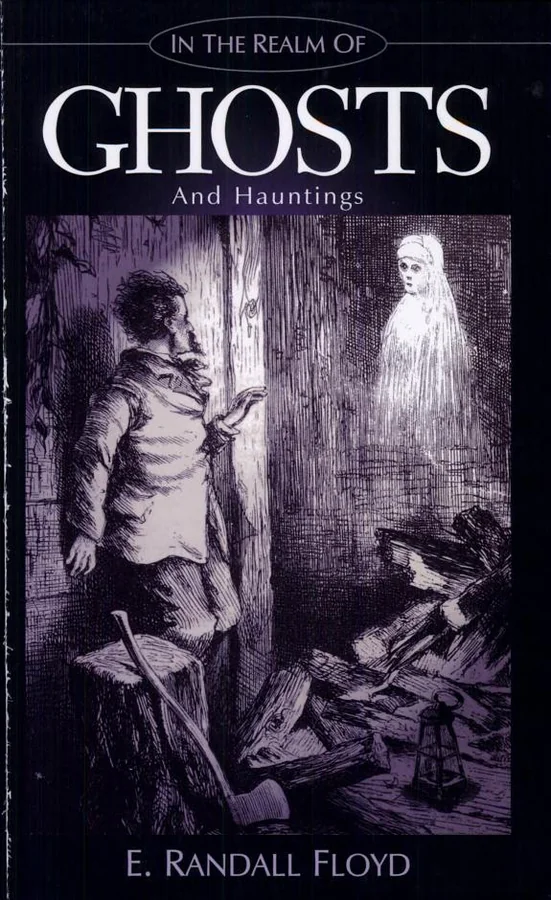
In the Realm of Ghosts and Hauntings
 80
80

In the Realm of Ghosts and Hauntings
E. Randall Floyd’s *In the Realm of Ghosts and Hauntings* offers a commendable effort to ground the ethereal in factual inquiry. The strength of this 2002 collection lies in its systematic approach, dissecting forty distinct paranormal cases with a journalist's precision. Floyd doesn’t shy away from debunking, but he also respects the persistent mystery in many accounts. His examination of the 1947 “Phantom Plane” incident, for instance, highlights how mundane explanations can be obscured by rumor and fear. However, the book occasionally feels constrained by its own methodology; the sheer volume of cases can lead to a somewhat detached, encyclopedic feel, at times sacrificing deeper psychological exploration for a catalog of evidence. The consistent focus on verifiable facts, while admirable, sometimes leaves the visceral impact of these reported hauntings understated. Ultimately, Floyd provides a valuable, if somewhat cool, examination of the world’s most persistent spectral tales.
📝 Description
80
E. Randall Floyd's 2002 book examines forty documented supernatural occurrences worldwide.
Published in 2002, E. Randall Floyd's *In the Realm of Ghosts and Hauntings* scrutinizes forty documented supernatural events from across the globe. Floyd moves past sensationalism to investigate the facts and lingering questions surrounding these phenomena. Each case is examined critically, using historical records, eyewitness testimonies, and skeptical analyses. This approach builds a thorough picture of events often mythologized or disregarded. The book considers the persistent human interest in the spectral and the unexplained, situating these accounts within a larger cultural and psychological framework.
This work is for readers interested in the empirical study of paranormal claims. It suits those who prefer reasoned analysis over pure speculation and who appreciate a structured method for examining historical mysteries. Individuals curious about folklore, unexplained phenomena, and the history of ghost beliefs will find Floyd's methodical presentation particularly useful. It appeals to skeptics open to evidence and believers seeking to understand the documented basis for reported hauntings.
Emerging in the early 21st century, *In the Realm of Ghosts and Hauntings* reflects a period where paranormal research continued to bridge academic interest and popular fascination. This era built upon the foundations laid by late 19th and early 20th-century spiritualism and parapsychology. While some investigations of the time favored equipment-driven methods, Floyd's work aligns with earlier traditions by emphasizing critical review of historical accounts. It connects to a lineage of thought that seeks to understand reported hauntings through careful examination of evidence and human perception, rather than solely through empirical measurement.
💡 Why Read This Book?
• Gain insight into the investigative techniques used to scrutinize paranormal claims, as demonstrated in Floyd's analysis of the **Amityville Horror** case, revealing how historical context shapes our understanding of hauntings. • Understand the psychological factors influencing ghost stories, exemplified by the discussion of **mass hysteria** and its role in perpetuating urban legends, offering a critical lens on collective belief. • Explore specific historical hauntings, such as the reported phenomena at **Borley Rectory**, and learn how to differentiate between documented evidence and embellishment in supernatural narratives.
⭐ Reader Reviews
Honest opinions from readers who have explored this book.
❓ Frequently Asked Questions
What specific types of supernatural occurrences does E. Randall Floyd investigate in 'In the Realm of Ghosts and Hauntings'?
The book examines a wide array of phenomena, including poltergeist activity, apparitions, phantom animals, and unexplained noises. Floyd covers famous cases like the haunting of Borley Rectory and less-known regional legends, analyzing each through a critical, evidence-based lens.
How does Floyd approach the 'truth' behind these ghost stories?
Floyd endeavors to uncover the factual basis or plausible explanations behind reported supernatural events. He meticulously sifts through historical records, eyewitness testimonies, and skeptical analyses, aiming to separate verifiable facts from folklore and misinterpretation.
What makes this book different from other ghost story collections?
Unlike purely sensationalist accounts, Floyd's work prioritizes critical analysis and historical research. Published in 2002, it reflects an early 21st-century approach to paranormal investigation that emphasizes documentation and logical assessment over anecdotal evidence alone.
Does Floyd offer definitive proof of ghosts?
No, Floyd's objective is not to prove the existence of ghosts but to investigate the claims surrounding them. He presents the evidence and analyses the possibilities, often concluding that many reported hauntings can be attributed to psychological, environmental, or misidentified phenomena.
Which famous hauntings are covered in the book?
The book features well-known cases such as the Amityville Horror, the haunting of Borley Rectory, and the mysterious occurrences surrounding the Lizzie Borden house. Floyd provides detailed examinations of the histories and investigations associated with these sites.
When was 'In the Realm of Ghosts and Hauntings' first published?
The book was first published in 2002. This allows its analysis to draw upon a significant body of research and investigative techniques that had developed up to the turn of the 21st century.
🔮 Key Themes & Symbolism
Investigating the Unexplained
Floyd's work centers on the systematic investigation of paranormal claims, moving beyond mere storytelling. The book details how phenomena like unexplained sounds or apparitions at the **Lizzie Borden House** are approached through documentation and critical review. It highlights the methodology of sifting through conflicting accounts and historical records to find kernels of truth or plausible explanations. This theme underscores the importance of rigorous inquiry when confronting mysteries that defy easy categorization, essential for understanding the historical context of paranormal research.
The Psychology of Fear
A significant aspect explored is the human psychological response to the unknown and the construction of fear. Floyd examines how environmental factors, suggestion, and collective belief can contribute to reported hauntings. The analysis of cases often touches upon the **fallibility of memory** and the tendency to interpret ambiguous events through a supernatural lens. This theme is crucial for understanding why certain locations become synonymous with spectral activity and how narratives of fear can endure and evolve over generations.
Folklore vs. Fact
The core of *In the Field of Ghosts and Hauntings* lies in distinguishing between verifiable facts and the embellishments of folklore. Floyd scrutinizes numerous accounts, including those surrounding **Borley Rectory**, to demonstrate how stories grow and transform. He analyzes the role of media, popular culture, and local legend in shaping perceptions of hauntings. This theme provides readers with tools to critically assess paranormal claims, encouraging a discernment between anecdotal evidence and historically grounded information.
The Enduring Appeal of the Supernatural
Floyd implicitly explores why humanity remains captivated by ghosts and the afterlife. By presenting a diverse range of phenomena and the investigative efforts behind them, the book touches upon a deep-seated human curiosity about death, consciousness, and what lies beyond. The enduring nature of these stories, even when debunked, speaks to a fundamental aspect of the human condition. The work suggests that these narratives serve psychological and cultural purposes that transcend simple belief or disbelief.
💬 Memorable Quotes
Direct passages from the work, attributed to the author.
“The line between the genuinely inexplicable and the misconstrued natural event is often blurred by time and repetition.”
— This statement captures Floyd's central thesis: many ghost stories lose their factual basis through retelling. It highlights how the passage of time, coupled with human tendency to embellish, can transform mundane occurrences into legendary hauntings, making objective investigation challenging.
“Eyewitness accounts, while compelling, are susceptible to the potent influence of suggestion and pre-existing belief systems.”
— Floyd emphasizes that personal testimony, though often the foundation of ghost stories, is not infallible. This interpretation points to the psychological phenomena that can shape what people perceive and report, suggesting that a critical approach must account for the observer's mental state and cultural conditioning.
“The persistence of certain haunting narratives suggests a cultural need to grapple with the unknown, particularly the mysteries of death.”
— This interpretation posits that ghost stories are not just about individual experiences but also about collective human anxieties. The recurring themes in hauntings, according to this view, fulfill a societal role in confronting mortality and the limits of human understanding.
💡 Key Ideas
Editorial paraphrase of the work's core concepts — not direct quotes.
Many phenomena attributed to spirits possess plausible explanations rooted in acoustics, structural dynamics, or psychological suggestion.
This paraphrased concept reflects Floyd's investigative method. It suggests that by applying principles from physics, engineering, and psychology, many reported hauntings can be understood without resorting to supernatural entities. The focus is on finding rational causes for seemingly paranormal events.
Skepticism, when grounded in factual inquiry rather than outright dismissal, serves as a vital tool in paranormal investigation.
Floyd advocates for a balanced approach. This quote suggests that a critical mindset, focused on evidence and logic, is essential for dissecting paranormal claims. It differentiates between closing one's mind and rigorously examining evidence to reach a conclusion.
🌙 Esoteric Significance
Tradition
While not explicitly tied to a single esoteric lineage, Floyd's work engages with themes common in occult studies: the nature of consciousness, the persistence of identity after death, and the interpretation of anomalous phenomena. It shares a critical spirit with Hermeticism's emphasis on understanding the underlying principles of reality, even if it approaches these through empirical investigation rather than mystical attainment. The book can be seen as a bridge, examining phenomena that often form the anecdotal basis for more esoteric beliefs, without necessarily endorsing those beliefs.
Symbolism
The primary 'symbol' explored is the ghost itself, representing the boundary between life and death, the known and the unknown. Floyd examines how the *idea* of the ghost functions as a symbol of unresolved issues, lingering trauma, or spiritual unrest. Other recurring motifs include spectral lights, disembodied voices, and unexplained cold spots, which, within esoteric traditions, often symbolize transitional states, ethereal presences, or spiritual imprints left on a location. The book analyzes these not as definitive spiritual signs, but as recurring patterns in human experience.
Modern Relevance
In contemporary discourse, Floyd's work remains relevant for anyone seeking to critically assess paranormal claims, a skill vital in an age of widespread misinformation online. Thinkers and practitioners in fields like **critical paranormal studies** and **skeptical inquiry** often draw on the methodologies demonstrated in his book. His approach provides a foundation for understanding the historical evolution of ghost beliefs and the psychological underpinnings of reported hauntings, informing discussions on everything from virtual reality experiences to the neuroscience of perception.
👥 Who Should Read This Book
• **Skeptical investigators**: Those who approach paranormal claims with a critical mindset will appreciate Floyd's methodical deconstruction of forty diverse hauntings, offering tools for analyzing evidence. • **Folklore enthusiasts**: Readers interested in how legends and myths surrounding ghosts develop over time will find detailed case studies illustrating the interplay of fact and embellishment. • **Students of history and culture**: Individuals examining the societal fascination with the supernatural will gain insights into how ghost stories reflect cultural anxieties and beliefs across different eras.
📜 Historical Context
Published in 2002, *In the Field of Ghosts and Hauntings* emerged at a time when paranormal investigation was undergoing a significant shift. The late 20th century saw the rise of organized paranormal research groups, often employing electronic equipment and scientific methodologies, a trend that contrasted with earlier spiritualist or folkloric approaches. Floyd's work, however, distinguished itself by focusing on historical accounts and critical analysis rather than on contemporary field investigations. This period also saw a resurgence of interest in skeptical inquiry, partly as a reaction to the proliferation of pseudoscientific claims in popular culture. While figures like Carl Sagan championed scientific skepticism, Floyd applied a similar critical lens specifically to ghost lore. The book's methodical approach offered an alternative to more sensationalist paranormal literature, positioning itself as a serious examination of documented mysteries, engaging with a tradition of critical ghost-lore study that dates back to the early 20th century.
📔 Journal Prompts
The concept of the 'veridical hallucination' as applied to the **Amityville Horror**.
The role of suggestion in the reported phenomena at **Borley Rectory**.
How memory's fallibility shapes the narrative of the Lizzie Borden house hauntings.
The cultural persistence of spectral apparitions.
Analyzing a personal experience of the unexplained through Floyd's critical lens.
🗂️ Glossary
Poltergeist
A type of ghost or spirit believed to be responsible for physical disturbances, such as loud noises, objects being moved or destroyed, and physical assaults.
Apparition
A ghost or ghostlike image of a person, often seen suddenly and unexpectedly. This term is used for visual manifestations of spirits.
Veridical Hallucination
A hallucination that corresponds to an actual external event or object, leading the percipient to believe they are witnessing something real, though their perception is not directly caused by the event itself.
Suggestion
The psychological process by which one person's ideas, beliefs, or actions can influence another's, particularly in the context of perception and interpretation of events.
Folklore
The traditions, customs, and beliefs of a community, often passed down orally, which can include stories, legends, and myths about supernatural phenomena.
Skepticism
An attitude of doubt or a disposition to incredulity either in general or toward a particular object. In paranormal contexts, it involves questioning extraordinary claims and seeking natural explanations.
Anecdotal Evidence
Evidence based on personal accounts rather than on observable, repeatable scientific data. Often used in ghost stories but considered less reliable for factual determination.
This book appears in 1 collection
🔮 Readers Also Liked
Browse all →








From the “Apparitions” Collection
View all →
![The secrets of black arts!: A key note to witchcraft, devination [sic], omens, forwarnings, apparitions, sorcery, dæmonology, dreams, predictions, visions, and the Devil's legacy to earth mortals, compacts with the Devil! With the most authentic history of Salem witchcraft](/img/thumb/the-secrets-of-black-arts-b-a-key-note-to-witchcraft-devination-sic-omens-forwarnings-apparitions-sorcery-d-monology-dreams-predictions-visions-and-the-devil-s-legacy-to-earth-mortals-compacts-with-th.webp)


More Free Occult Philosophy Books
View all →