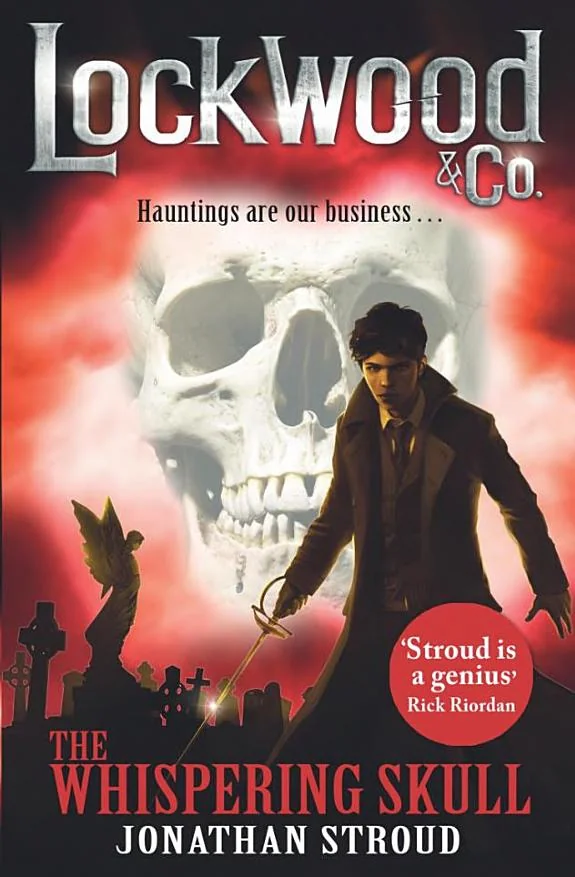
The Whispering Skull
 73
73

The Whispering Skull
Jonathan Stroud’s The Whispering Skull continues the thrilling adventures of Lockwood & Co., presenting a London where the dead cast a long, dangerous shadow. The novel excels in its atmospheric depiction of spectral encounters and the unique, often perilous, tools used by the psychic investigators. The central mystery of the talking skull, a disembodied entity with a disturbing awareness, is compelling. Stroud’s greatest strength lies in his ability to imbue even the most spectral of beings with a palpable presence and a compelling, often unsettling, backstory. However, the pacing occasionally falters under the weight of exposition, particularly concerning the mechanics of the ghost-hunting industry. A particularly memorable sequence involves the team's investigation in the Kensal Green Cemetery, which vividly showcases the inherent dangers of their profession. The verdict is clear: for those seeking spectral intrigue with a British flair, this installment delivers.
📝 Description
73
The third Lockwood & Co. novel, The Whispering Skull, was published in 2015.
In Jonathan Stroud's The Whispering Skull, London remains a city haunted by spectral activity, a phenomenon known as the Problem. Young agents from Lockwood & Co. find themselves investigating a particularly unsettling case centered on a disembodied, talking skull. This skull, contained within a ghost-jar, exhibits a disturbing awareness and holds a vital secret that the agents must uncover.
The narrative follows Lucy Carlyle and her colleagues as they confront this unique entity. The book delves into the nature of psychic sensitivity and the risks involved when dealing with intelligent hauntings. Stroud builds upon the established world of the series, where a specialized industry has developed to combat the pervasive supernatural occurrences. The story balances its darker, macabre elements with the camaraderie and wit of its young protagonists.
The Lockwood & Co. series, including The Whispering Skull, positions itself within a modern tradition of supernatural fiction for young adults. It grounds its paranormal elements in a structured, almost procedural, approach to ghost detection and containment. This framework distinguishes it from more purely fantastical narratives by creating a specific, almost bureaucratic, system for dealing with the spectral 'Problem' affecting England. The 2015 publication date places it within a period of continued interest in urban fantasy and ghost lore.
💡 Why Read This Book?
• You will learn about the operational challenges of a psychic detection agency in a ghost-infested London, specifically how Lockwood & Co. manages its spectral containment using ghost-jars, as depicted in their ongoing efforts to understand the whispering skull. • You will experience the unique blend of adolescent agency and existential dread when confronting intelligent spectral entities, particularly through the ethical dilemmas presented by interrogating the sentient skull. • You will gain insight into the societal impact of a widespread paranormal phenomenon, illustrated by the established industry and governmental departments dedicated to ghost control since the Problem began.
⭐ Reader Reviews
Honest opinions from readers who have explored this book.
❓ Frequently Asked Questions
What is the main mystery in The Whispering Skull?
The central mystery involves a talking skull trapped in a ghost-jar by Lockwood & Co. This disembodied entity possesses an unnerving sentience and holds vital information about a sinister event at Kensal Green Cemetery.
Who are the main characters in Lockwood & Co. series?
The core trio consists of Lucy Carlyle, a talented Listener; George Cubbins, the researcher; and Anthony Lockwood, the charismatic but impulsive leader of the agency.
What is 'The Problem' in Stroud's series?
'The Problem' refers to the widespread and dangerous presence of ghosts and spectral phenomena that have plagued England for decades, necessitating specialized agencies like Lockwood & Co. to manage the threat.
Where is Kensal Green Cemetery featured in the book?
Kensal Green Cemetery serves as a significant location in The Whispering Skull, where the team is called to investigate a grave connected to the mystery surrounding the talking skull.
Is The Whispering Skull suitable for younger readers?
Yes, while it deals with ghosts and unsettling themes, the series is categorized as young adult fiction, balancing suspense with character-driven narrative and adventure.
What makes the talking skull unique?
The skull is unique because it is not merely a residual haunting but an intelligent, sentient entity capable of speech and thought, making it a valuable but dangerous source of information.
🔮 Key Themes & Symbolism
The Nature of Sentience
The whispering skull itself is a primary focus, challenging the conventional understanding of ghosts as mere echoes. Its ability to converse, retain memories, and express intent raises profound questions about consciousness after death. The book explores the ethical quandaries of interacting with such an entity, particularly when it possesses knowledge crucial to solving crimes. This challenges the established protocols of ghost containment and interrogation, suggesting that some spectral manifestations possess a will and awareness far beyond what is typically assumed in the world of 2015 London's paranormal investigators.
The Business of the Supernatural
Stroud meticulously details the commercial and governmental infrastructure built around combating 'The Problem' in England. Agencies like Lockwood & Co. operate on the fringes, competing with larger, more established firms and facing bureaucratic hurdles. The narrative highlights the practical, often dangerous, realities of this industry, from specialized equipment like ghost-jars and iron filings to the high mortality rate among young agents. This grounded approach to the supernatural industry, evident in the book’s 2015 setting, makes the extraordinary circumstances feel almost mundane and routine.
Memory and Identity
The spectral entities, including the whispering skull, are often intrinsically linked to their past lives and the circumstances of their demise. Unraveling a haunting frequently involves piecing together fragmented memories and understanding the identity of the deceased. The book suggests that a ghost's power and persistence are tied to unresolved issues or significant memories. This exploration of how lingering memories shape spectral phenomena is a recurring motif, prompting reflection on what constitutes a person’s essence and how it persists beyond physical death.
The Perils of Psychic Gifts
Lucy Carlyle’s 'Listening' ability, the talent to perceive elements of past events from objects or locations, is central to the investigation. However, her gift is also a source of profound psychological strain and physical danger. The book emphasizes that these psychic abilities are not always controllable or benign; they can overwhelm the user and expose them to intense psychic energy. The narrative consistently portrays the high personal cost of possessing such sensitivities in a world grappling with pervasive spectral activity since the early 20th century.
💬 Memorable Quotes
Direct passages from the work, attributed to the author.
“The skull's voice, a dry rustle, spoke of secrets and dread.”
— This captures the unsettling nature of the talking skull, highlighting its spectral quality and the ominous information it possesses. It sets a tone of mystery and danger surrounding this unique entity.
“Iron filings could disrupt a ghost's concentration.”
— This refers to a specific, practical method used by the agents to combat spectral entities. It showcases the tangible, almost scientific, approach Stroud employs in his fictional world of ghost hunting.
“Lucy felt the echo of sorrow from the grave.”
— This highlights Lucy's psychic ability as a 'Listener.' It demonstrates how characters can perceive residual emotions and events tied to locations or objects, a key investigative tool.
“Lockwood needed a case that burned bright.”
— This reflects Lockwood's personal drive and ambition. It reveals his desire for challenging and significant cases, underscoring his personality and the agency's need for compelling work.
💡 Key Ideas
Editorial paraphrase of the work's core concepts — not direct quotes.
London was a city built on layers of the dead.
This line emphasizes the pervasive presence of the supernatural in the novel's setting. It suggests that the city itself is imbued with history and spectral energy, making it a fertile ground for hauntings.
🌙 Esoteric Significance
Tradition
While not strictly adhering to a single esoteric lineage, Stroud's work draws upon modern spiritualist and occult tropes that became popular in the late 19th and early 20th centuries. The concept of 'Listeners' and psychic sensitivity echoes phenomena described in early parapsychology and mediumistic practices. The careful cataloging of ghost types and their properties aligns with a more systematic, almost scientific, approach to the occult that characterized some Theosophical and early paranormal investigation movements, seeking to codify and understand spectral manifestations.
Symbolism
The 'ghost-jar' serves as a potent symbol of containment and control over the spectral realm, representing humanity’s attempt to impose order on the chaotic and the unknown. The 'talking skull' itself is a classic memento mori, but imbued with an unusual sentience, it symbolizes not just death but the persistence of consciousness and memory beyond the corporeal form. The pervasive 'Problem' of hauntings symbolizes societal anxieties and the unseen forces that can disrupt everyday life, a reflection of collective fears.
Modern Relevance
Stroud's depiction of a society grappling with pervasive, inexplicable phenomena and the specialized industries that arise to manage it appeals to contemporary discussions on existential threats and societal adaptation. Modern paranormal investigators and urban fantasy authors continue to explore themes of psychic sensitivity and the ethical implications of interacting with non-human consciousness, building on the foundations laid by Stroud’s meticulously constructed world. The series remains a touchstone for those interested in grounded supernatural narratives.
👥 Who Should Read This Book
• Young adult readers interested in supernatural mysteries with a British sensibility will find engaging characters and atmospheric settings that explore the perils of ghost hunting. • Aspiring paranormal investigators or fans of detective fiction who appreciate a structured approach to the occult will enjoy the detailed mechanics of Stroud's ghost-hunting world. • Readers seeking stories that balance genuine scares and suspense with humor and strong character dynamics will appreciate the camaraderie and unique abilities of the Lockwood & Co. team.
📜 Historical Context
Published in 2015, The Whispering Skull emerged during a robust period for supernatural young adult fiction, building upon the groundwork laid by earlier paranormal sagas. Jonathan Stroud’s Lockwood & Co. series distinguished itself by presenting a unique socio-economic response to widespread spectral phenomena in England, a concept that gained traction following the initial 'Problem' in the early 20th century. Unlike the more mythologically driven fantasy of authors like Rick Riordan, Stroud grounded his world in a near-future Britain grappling with the practicalities and perils of ghost containment. This era saw a continued interest in urban fantasy and gothic elements within children’s literature, with Stroud’s work offering a distinctive blend of detective procedural and spectral horror. The series received notable attention, with its world-building and character dynamics frequently cited as strengths, setting it apart from contemporaries who often focused on broader magical systems rather than specific societal impacts.
📔 Journal Prompts
The talking skull's fragmented memories and its resistance to interrogation.
Lucy’s experience as a Listener and the emotional toll of psychic echoes.
The business model of Lockwood & Co. versus larger paranormal agencies.
The societal impact of 'The Problem' on daily life in London.
Lockwood's ambition and the risks he takes for a significant case.
🗂️ Glossary
The Problem
The widespread, ongoing phenomenon of hauntings and spectral manifestations that plague England, necessitating specialized agencies to combat the threat.
Listener
A rare psychic talent allowing individuals to perceive auditory elements of past events or the presence of ghosts, a key ability possessed by Lucy Carlyle.
Ghost-jar
A specially designed containment vessel used to trap and hold spectral entities, often filled with substances like iron filings to suppress their power.
Residual Haunting
A spectral manifestation that replays past events without consciousness or interaction, distinct from intelligent hauntings.
Intelligent Haunting
A ghost that possesses awareness, consciousness, and the ability to interact with the living world, such as the talking skull.
Kensal Green Cemetery
A real historic cemetery in London that serves as a significant plot location in The Whispering Skull, tied to a mysterious death.
The O.S.I. (Official Substances Inspectorate)
A governmental body that regulates and inspects the substances used in ghost containment and detection, representing the bureaucratic side of paranormal control.
This book appears in 1 collection
🔮 Readers Also Liked
Browse all →









From the “Haunted Places” Collection
View all →





More Free Occult Philosophy Books
View all →