Illuminating Angels and Demons

 83
83

Illuminating Angels and Demons
Simon Cox’s "Illuminating Angels and Demons" attempts a comprehensive mapping of spiritual hierarchies, a task fraught with the peril of endless lists. Cox navigates this by framing the entities not just as external powers but as potential internal psychological states, a perspective that adds depth beyond mere cataloging. His discussion of the Tree of Life as a framework for these beings is particularly useful, offering a coherent structure where chaos might otherwise reign. However, the sheer volume of names and classifications can, at times, feel overwhelming, occasionally obscuring the practical application for the reader seeking direct engagement. The book’s strength lies in its systematic approach, offering a valuable reference point for those already steeped in occult lore. The exploration of the demoness Lilith, for example, provides a nuanced perspective on a figure often reduced to simplistic interpretations. "Illuminating Angels and Demons" serves as a detailed compendium for the dedicated occultist.
📝 Description
83
Simon Cox's 2007 book, Illuminating Angels and Demons, maps spiritual hierarchies within occult lore.
This book examines the spiritual hierarchies found in occult traditions, moving beyond simple good-versus-evil ideas. It details various classifications of angelic and demonic beings, discussing their characteristics and supposed influences. Cox structures this information, presenting a framework for understanding these entities. The work suggests that angels and demons can represent aspects of the human psyche. It uses the Qabalistic Tree of Life and other symbolic systems as organizational principles. The book proposes that comprehending these entities can lead to self-understanding and spiritual growth through ritual. It is written for serious students of Western esotericism, magic, and comparative religion. Readers should already be familiar with basic occult concepts and desire a more structured examination of spiritual beings. It is not a starting point for complete beginners, but for those prepared to engage with complex symbolic frameworks. The book comes from a tradition of occult scholarship that aims to organize the vast array of spiritual entities. It follows in the path of figures like Aleister Crowley and Eliphas Levi, who classified and integrated angelic and demonic forces into their magical practices. Cox's work adds to the ongoing effort to codify these traditions, appearing during a period of renewed interest in ceremonial magic and grimoire studies in the early 21st century.
Illuminating Angels and Demons follows a line of occult scholarship focused on systematizing spiritual hierarchies. Authors like Eliphas Levi and Aleister Crowley previously cataloged and integrated angelic and demonic forces into their magical systems. Cox's work contributes to this ongoing codification of esoteric traditions. It emerged during the early 21st century, a time when ceremonial magic and grimoire studies saw renewed attention, providing a receptive context for such research.
💡 Why Read This Book?
• Gain a structured understanding of angelic and demonic hierarchies, moving beyond simplistic good/evil binaries, as presented through Cox's systematic approach to Qabalistic frameworks. • Explore the concept of spiritual entities as reflections of the human psyche, offering a path for self-knowledge and personal transformation as detailed in the book's symbolic interpretations. • Utilize the work as a reference for specific entities and their attributes, aiding in the practical application of esoteric knowledge for those familiar with ceremonial magic traditions.
⭐ Reader Reviews
Honest opinions from readers who have explored this book.
❓ Frequently Asked Questions
What is the primary focus of Simon Cox's "Illuminating Angels and Demons"?
The book's primary focus is on systematically cataloging and understanding the hierarchies of angels and demons within Western esoteric traditions, exploring their attributes and symbolic meanings.
Does the book present angels and demons as literal beings or psychological archetypes?
Cox presents both perspectives, suggesting that these entities can be viewed as external forces as well as symbolic representations of aspects of the human psyche.
What esoteric framework does "Illuminating Angels and Demons" utilize?
The work frequently employs the Qabalistic Tree of Life as a primary structure for organizing and understanding the relationships between various angelic and demonic orders.
Is "Illuminating Angels and Demons" suitable for beginners in occult studies?
The book is generally better suited for intermediate to advanced students of esotericism due to its detailed and systematic approach to complex hierarchies and symbolic systems.
When was "Illuminating Angels and Demons" first published?
The first publication of Simon Cox's "Illuminating Angels and Demons" was in 2004.
What kind of knowledge can a reader expect to gain from this book?
Readers can expect to gain a deeper, more organized knowledge of spiritual hierarchies, their symbolic roles, and potential applications in self-understanding and esoteric practice.
🔮 Key Themes & Symbolism
Angelic and Demonic Hierarchies
The book meticulously details the structured orders of celestial and infernal beings, moving beyond simplistic good versus evil paradigms. It explores various classifications found in grimoires and occult traditions, presenting them within coherent frameworks. This systematic approach allows readers to grasp the intricate relationships and perceived functions of these entities, understanding them as integral parts of a larger spiritual cosmology rather than isolated phenomena.
The Tree of Life as a Cosmic Map
Cox employs the Qabalistic Tree of Life as a foundational structure for mapping spiritual entities. This ancient esoteric diagram becomes a lens through which angelic and demonic realms are organized, showing their interconnections and positions within a divine plan. The work demonstrates how this symbolic map can illuminate the perceived attributes, correspondences, and influences of various spiritual beings, offering a method for understanding their roles.
Spiritual Beings as Psychological Aspects
A significant theme is the interpretation of angels and demons not solely as external entities but as potent symbols of the human psyche. Cox suggests that engaging with these figures can lead to profound self-knowledge, as they represent internal states, potentials, and shadow aspects. This psycho-spiritual approach offers a practical application for esoteric study, transforming the understanding of these beings into a tool for personal growth and inner exploration.
Symbolism and Correspondences
The book examines the strong symbolism associated with various angels and demons, exploring their specific attributes, planetary correspondences, and elemental affiliations. Understanding these connections is presented as crucial for their invocation or comprehension within magical practice. Cox highlights how these symbolic languages provide insights into the nature of reality and the forces that shape human experience, offering a deeper appreciation for the occult tradition's symbolic depth.
💬 Memorable Quotes
Direct passages from the work, attributed to the author.
“Angels and demons represent the totality of existence, both within and without.”
— This statement captures the book's core argument: that these spiritual entities are not merely external forces to be feared or revered, but also symbolic representations of the diverse aspects of the human psyche and the cosmos.
“The Tree of Life provides a necessary structure for comprehending spiritual hierarchies.”
— This highlights the methodological approach of the book, emphasizing the Qabalistic Tree of Life as a vital tool for organizing and understanding the complex relationships between various angelic and demonic orders.
“Invocation is a process of internal recognition as much as external engagement.”
— This interpretation suggests the book views magical practices like invocation not as simple commands to external spirits, but as a means of internal dialogue and self-discovery, aligning external actions with inner psychological states.
“Demonic forces can illuminate the shadow self, essential for wholeness.”
— This concept underscores the book's perspective that even seemingly negative entities have a role in spiritual development, acting as catalysts for confronting and integrating the less desirable aspects of one's personality.
💡 Key Ideas
Editorial paraphrase of the work's core concepts — not direct quotes.
Understanding Lilith offers insight into the primal feminine and the shadow.
This paraphrase points to the book's nuanced treatment of specific figures, suggesting that figures like Lilith are examined not just for their traditional roles but also for their deeper psychological and symbolic meanings concerning feminine power and the unconscious.
🌙 Esoteric Significance
Tradition
This work firmly sits within the Western Esoteric Tradition, drawing heavily on Qabalistic principles and ceremonial magic. It seeks to systematize the understanding of spiritual hierarchies, a common endeavor within Hermeticism and magical orders that aim to map the cosmos and its inhabitants. Cox's approach integrates various grimoire traditions and occult classifications, offering a comprehensive view that departs from purely theological or folkloric interpretations, instead focusing on their potential application in magical practice and self-development.
Symbolism
Central symbols include the Qabalistic Tree of Life, which serves as a cosmological map for organizing angels and demons, and the Goetic demons themselves, often understood as archetypal forces. The book likely explores specific sigils or symbols associated with these entities, interpreting their meaning within the broader context of spiritual warfare, psychological integration, or cosmic order. The concept of the Abyss, a key feature of the Tree of Life, is implicitly relevant as the boundary between the manifest world and higher or lower spiritual states.
Modern Relevance
Contemporary practitioners of ceremonial magic, Qabalists, and those interested in comparative occultism find Cox's systematic approach valuable. Modern psychospiritual movements that explore archetypes and the shadow self may also draw inspiration from the book's interpretation of spiritual entities as psychological aspects. Thinkers exploring the intersection of consciousness studies and esoteric traditions could find the book’s framework useful for understanding symbolic systems and their potential impact on the psyche.
👥 Who Should Read This Book
• Students of Western Esotericism seeking a structured overview of angelic and demonic classifications used in magical traditions. • Practitioners of ceremonial magic looking for a reference to understand the attributes and correspondences of various spiritual entities for ritual work. • Comparative religion scholars interested in the historical development and symbolic interpretation of spiritual hierarchies within occult literature.
📜 Historical Context
Published in 2004, Simon Cox's "Clear Angels and Demons" emerged during a period of significant resurgence in occult and esoteric studies, building upon foundational work from figures like Aleister Crowley and Eliphas Levi in the late 19th and early 20th centuries. These earlier occultists had extensively cataloged and integrated angelic and demonic lore into Western magical systems, particularly within ceremonial magic. Cox's work can be seen as a continuation and systematization of these efforts, aiming to provide a more organized framework for understanding these complex spiritual hierarchies. The early 2000s saw a growing interest in comparative religion and the practical application of esoteric knowledge, with authors like Lon Milo DuQuette also exploring complex symbolic systems. Cox’s book offered a detailed reference point for practitioners and scholars seeking to navigate this intricate aspect of Western esotericism, engaging with traditions that often competed for influence, such as theosophy and various forms of Qabalistic interpretation.
📔 Journal Prompts
The Qabalistic Tree of Life as a map for spiritual entities: how does this structure influence your perception?
Reflect on the concept of angels and demons as aspects of the psyche.
Consider the symbolism associated with a specific demon or angel discussed in the book.
What parallels can you draw between Cox's classifications and other spiritual systems you are familiar with?
Explore the potential for self-knowledge through engagement with the 'shadow' aspects represented by demonic figures.
🗂️ Glossary
Qabalah/Kabbalah
An esoteric system of mystical interpretation of the Hebrew scriptures, often represented by the Tree of Life, which maps divine emanations and spiritual pathways.
Tree of Life
A diagram central to Kabbalistic cosmology, consisting of ten interconnected spheres (Sephiroth) and twenty-two paths, used to understand the divine, the universe, and the human soul.
Grimoire
A textbook of magic, typically containing instructions on how to create magical tools, perform rituals, and invoke spirits, particularly associated with the Renaissance and early modern periods.
Ceremonial Magic
A system of ritualistic magic focused on the use of elaborate ceremonies, symbolic tools, and invocations/evocations of spiritual beings, often drawing from Hermetic and Kabbalistic traditions.
Goetia
A term referring to a specific branch of ceremonial magic focused on the evocation of demons, particularly those listed in the Ars Goetia, the first book of the Lesser Key of Solomon.
Sigil
A symbol or sign, often believed to have magical significance, created for the purpose of representing a specific intention, spirit, or concept within esoteric practices.
Archetype
In psychology and mythology, a primordial, universal pattern or image that recurs across cultures and time, often representing fundamental human experiences or psychological structures.
🔮 Readers Also Liked
Browse all →






More by Simon Cox, Simon Cox
All books →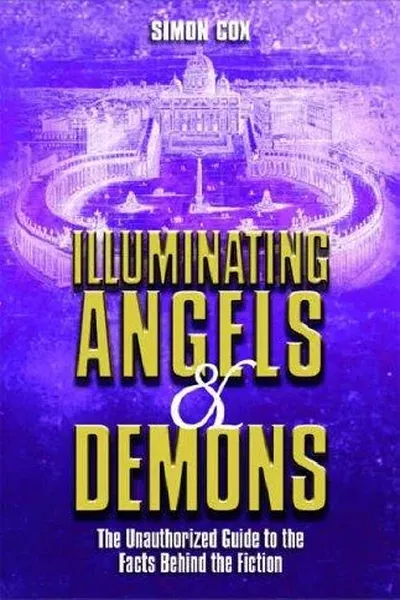
More Free Occult Philosophy Books
View all →