Hell House
 72
72

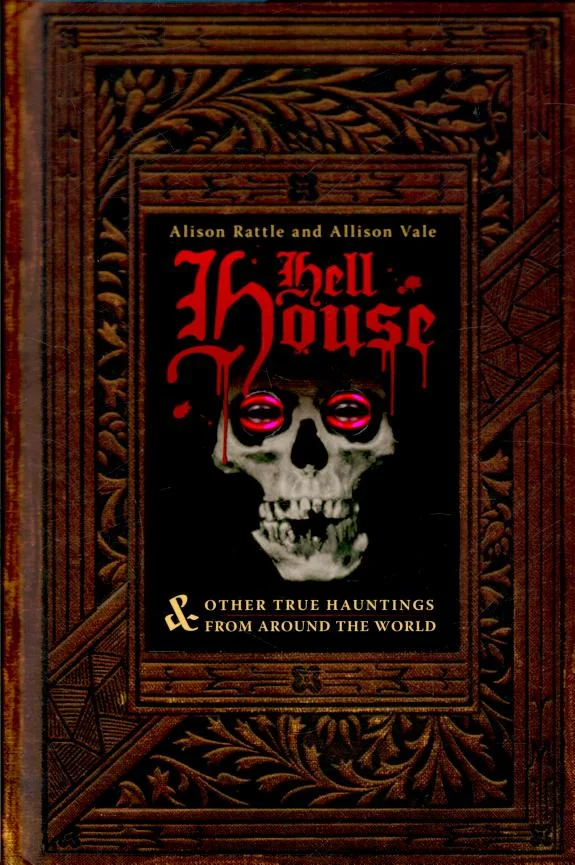
Hell House
Alison Rattle and Allison Vale's *Hell House* arrives not with a spectral whisper but a critical inquiry into the enduring allure of the paranormal. The book’s strength lies in its determined effort to move past sensationalism, attempting instead to map the psychological and cultural terrain that ghost stories inhabit. The authors are particularly adept at dissecting how narrative framing influences our perception of hauntings, a point driven home when discussing the case studies that form the book’s backbone. For instance, their analysis of the enduring mythos surrounding certain 'haunted' locations, attributing their persistence to cultural repetition rather than direct evidence, is commendable. However, the work occasionally falters by staying too far within the realm of academic observation, sometimes lacking the visceral, experiential depth that many readers of esoteric literature crave. The exploration of psychic residue, while intellectually sound, could have benefited from more direct engagement with practitioners' lived experiences. Ultimately, *Hell House* offers a valuable, albeit sometimes detached, examination of spectral fascination.
📝 Description
72
Published in 2008, Hell House examines spectral phenomena beyond simple ghost stories.
Alison Rattle and Allison Vale's 2008 book, Hell House, moves past typical ghost narratives to analyze the psychological and metaphysical underpinnings of paranormal belief. The authors scrutinize accounts of hauntings, searching for consistent patterns that suggest a deeper reality. The work is aimed at readers who approach the subject with either skepticism requiring proof or a desire to strengthen existing beliefs. It will appeal to those fascinated by ghost stories not merely as entertainment, but as a lens into how the human mind interacts with the unknown. Those interested in the confluence of folklore, psychology, and esoteric thought will find this text offers substantial material.
The book emerged in the early 21st century, a time marked by rapid technological change alongside a renewed interest in spiritual and occult subjects. As digital information proliferated, so did the need for critical assessments of esoteric topics. This environment saw increased paranormal investigation and a reawakening of academic interest in folk beliefs, situating Rattle and Vale's contribution within a larger cultural discourse on belief and evidence.
Hell House engages with traditions that explore the persistent human fascination with the afterlife and unexplained presences. It touches upon ideas like psychic imprints left on locations, a concept explored in various occult and parapsychological circles. The book also considers how shared cultural narratives and expectations contribute to the perception of hauntings. This approach connects it to broader discussions within spiritualism and folklore studies concerning the nature of subjective experience and collective consciousness.
💡 Why Read This Book?
• Gain a critical framework for understanding ghost stories, learning how narrative structure and collective belief, as explored in the book's analysis of early 21st-century paranormal interest, shape perceived hauntings. • Explore the concept of 'psychic residue' and its proposed role in spectral phenomena, a core idea presented by Rattle and Vale's examination of folklore. • Understand how skeptical inquiry and evidence-based approaches can be applied to esoteric subjects, offering a method for evaluating paranormal claims beyond mere anecdotal accounts.
⭐ Reader Reviews
Honest opinions from readers who have explored this book.
❓ Frequently Asked Questions
When was Hell House originally published?
Hell House by Alison Rattle and Allison Vale was first published in August 2008, positioning it within the early 21st-century resurgence of interest in paranormal and esoteric subjects.
What is the main focus of Hell House?
The book focuses on the enduring fascination with ghost stories, examining them from psychological, cultural, and metaphysical perspectives rather than just recounting tales.
Does Hell House provide proof of ghosts?
Hell House aims to explore the *reasons* for belief and the patterns in ghost stories, rather than definitively proving or disproving the existence of ghosts.
Who are the authors of Hell House?
The authors are Alison Rattle and Allison Vale, who collaborated on this exploration of spectral phenomena and folklore.
What kind of audience would appreciate Hell House?
Readers interested in the psychology of belief, folklore studies, comparative mythology, and those who approach paranormal topics with a critical yet open mind would find this book engaging.
What is the concept of 'psychic residue' as discussed in Hell House?
'Psychic residue' is a concept explored in the book suggesting that intense emotions or events can leave an energetic imprint on locations, potentially causing hauntings.
🔮 Key Themes & Symbolism
The Psychology of Belief
Hell House critically examines why humans are so drawn to ghost stories, dissecting the psychological underpinnings of belief. It moves beyond simple narratives to explore how our minds construct meaning from anomalous experiences. The work suggests that the appeal of the spectral is deeply rooted in our need to understand mortality, consciousness, and the unknown, often reflecting societal anxieties and hopes.
Folklore and Narrative Structures
The book analyzes ghost stories as a form of folklore, identifying recurring motifs and narrative structures that transcend cultural boundaries. Rattle and Vale investigate how these archetypal patterns are perpetuated and evolve, arguing that the very act of storytelling shapes our perception of the paranormal. This theme highlights how shared cultural narratives contribute to the persistence of belief in hauntings.
Metaphysical Frameworks
Beyond psychology and folklore, Hell House explores the metaphysical frameworks people employ to explain spectral phenomena. Concepts like 'psychic residue' are explored as attempts to provide a theoretical basis for hauntings. The work questions whether these frameworks are merely explanatory devices or if they point towards an underlying reality that science has yet to fully grasp.
Evidence and Skepticism
A significant theme is the ongoing tension between belief and skepticism in the context of paranormal investigation. Hell House approaches its subject matter with a critical eye, evaluating the nature of evidence presented in ghost stories and the methodologies used by both believers and skeptics. It encourages readers to consider how evidence is interpreted and the biases that can influence conclusions.
💬 Memorable Quotes
Direct passages from the work, attributed to the author.
“Ghost stories are a constant source of fascination.”
— This foundational statement underscores the book's premise: that the enduring appeal of spectral accounts is a phenomenon worthy of serious study, not just dismissal.
“Whether you are a skeptic looking for proof or a believer steadily collating evidence...”
— This highlights the dual audience the book aims to address, suggesting it offers valuable perspectives for those on both sides of the belief spectrum regarding paranormal phenomena.
“Examining the narrative structures of hauntings.”
— This interpretation of the book's method emphasizes its analytical approach, focusing on how stories are told and how these structures influence our understanding of alleged paranormal events.
“The intersection of folklore and psychological interpretation.”
— This highlights a central analytical axis of the book, suggesting it bridges traditional storytelling with modern psychological theories to explain spectral beliefs.
💡 Key Ideas
Editorial paraphrase of the work's core concepts — not direct quotes.
The work explores the concept of 'psychic residue'.
This paraphrased concept points to a key theoretical idea within the book, suggesting that locations can retain energetic imprints from past events or inhabitants.
🌙 Esoteric Significance
Tradition
While not strictly adhering to a single lineage, *Hell House* engages with themes common in Western esoteric traditions, particularly those concerned with the nature of consciousness, the afterlife, and subtle energies. It shares an investigative spirit with Hermeticism's pursuit of hidden knowledge and Gnosticism's exploration of perception and reality. The book's focus on 'psychic residue' echoes concepts found in Spiritualism and certain schools of occultism that posit non-physical imprints on the material world.
Symbolism
The 'Hell House' itself serves as a powerful symbol, representing a locus of intense negative energy, trauma, or unresolved spiritual activity. Beyond the titular concept, the book implicitly engages with symbols of thresholds and liminal spaces – the boundaries between life and death, sanity and madness, the known and the unknown. These are recurring motifs in many esoteric systems, representing points of transition and potential revelation.
Modern Relevance
In contemporary discourse, *Hell House* remains relevant for its critical approach to paranormal claims, a valuable counterpoint to the often uncritical acceptance seen in some online communities and popular media. Thinkers exploring the psychology of belief, the sociology of paranormal phenomena, and even contemporary witchcraft practices that engage with place-based energies can find its analytical framework useful for understanding their subject matter.
👥 Who Should Read This Book
• Skeptical investigators of the paranormal seeking analytical frameworks to understand anecdotal evidence and folklore surrounding hauntings. • Students of comparative mythology and folklore interested in the cross-cultural patterns and narrative functions of ghost stories. • Individuals exploring the intersection of psychology and belief, who wish to understand the human tendency to perceive and interpret spectral phenomena.
📜 Historical Context
Published in 2008, *Hell House* emerged during a period of renewed global interest in the paranormal, fueled by increased media exposure and accessible digital platforms. This era saw a proliferation of ghost-hunting shows and online forums dedicated to spectral encounters, creating a cultural landscape ripe for critical examination. The book arrived amidst a broader intellectual current where skepticism often clashed with a growing desire for spiritual or metaphysical exploration. While academic circles debated the validity of parapsychology, popular culture embraced narratives of the uncanny. Rattle and Vale’s work can be seen as a response to this cultural moment, attempting to ground discussions of hauntings in analytical frameworks rather than pure sensationalism. Its publication predates the widespread adoption of social media's current form, yet taps into the burgeoning online communities sharing anecdotal evidence, offering a more structured perspective compared to the often unfiltered content found online.
📔 Journal Prompts
The persistence of ghost stories and collective belief.
Interpreting anomalous experiences through narrative structures.
The concept of 'psychic residue' in haunted locations.
Balancing skepticism with an openness to the unexplained.
The role of intense emotions in creating spectral phenomena.
🗂️ Glossary
Psychic Residue
A concept explored in Hell House suggesting that locations can retain energetic imprints or 'memories' from intense emotional events or the presence of certain individuals, potentially manifesting as hauntings.
Folklore
The traditional beliefs, customs, and stories of a community, passed through the generations by word of mouth. In Hell House, it refers to the body of ghost stories and associated legends.
Narrative Structures
The underlying patterns and frameworks used in storytelling. The book examines how these structures shape the way ghost stories are told, perceived, and believed.
Skepticism
An attitude of doubt or a disposition to incredulity, either in general or toward a particular object. In Hell House, it refers to the critical approach applied to paranormal claims.
Metaphysical Frameworks
Systems of thought that attempt to explain reality beyond the scope of empirical science. The book discusses these as ways people conceptualize paranormal events.
Anecdotal Evidence
Evidence based on personal accounts rather than on investigation or research. The book analyzes this common form of evidence in ghost stories.
Esoteric
Intended for or likely to be understood by only a small number of people with a specialized knowledge or interest. The book itself falls under this category.
This book appears in 1 collection
🔮 Readers Also Liked
Browse all →









From the “Haunted Places” Collection
View all →





More Free Occult Philosophy Books
View all →