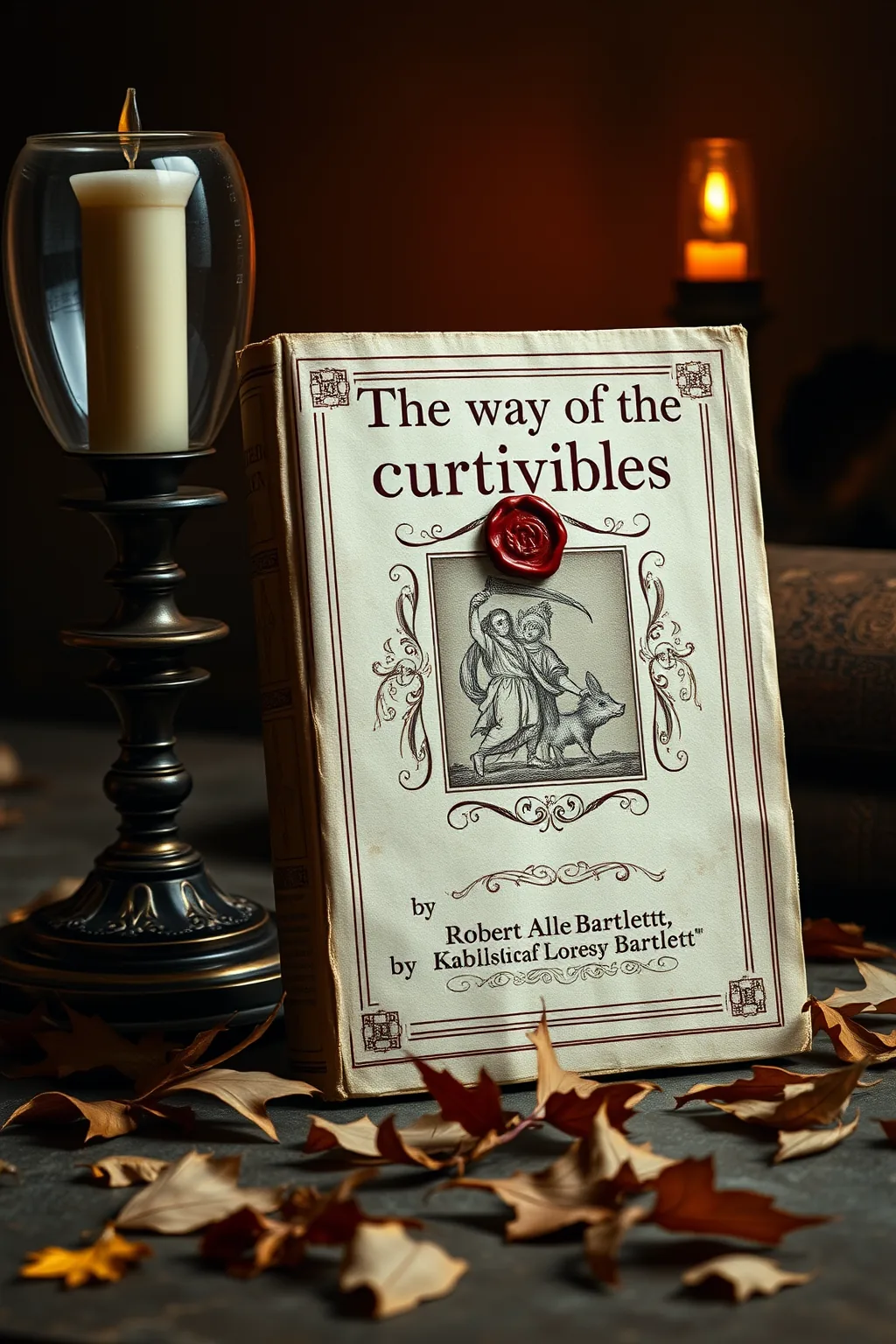
The way of the crucible
 63
63

The way of the crucible



Robert Allen Bartlett's 'The Way of the Crucible' is a monumental achievement in the field of Kabbalistic Alchemy. With scholarly rigor and profound intuitive insight, Bartlett demystifies the complex symbolic language of alchemical texts, grounding them firmly within the rich soil of Jewish mysticism. He doesn't just present theories; he offers a practical roadmap for the inner transformation that the alchemical process represents. The book's strength lies in its ability to bridge ancient wisdom with contemporary understanding, making the Great Work accessible to serious students of esotericism. This is essential reading for anyone seeking to understand the spiritual dimensions of alchemy and its profound implications for personal growth.
📝 Description
63
Robert Allen Bartlett's 'The Way of the Crucible' details Kabbalistic Alchemy's spiritual dimension.
Robert Allen Bartlett's 'The Way of the Crucible' examines Kabbalistic Alchemy, moving beyond its metallurgical focus to its role as a spiritual discipline. The book connects this practice to Jewish mystical traditions. Bartlett interprets ancient symbols and allegories, showing how they represent a path from the ego's limitations to divine essence. The text guides readers through stages of purification, dissolution, and reintegration. It fosters an atmosphere of sacred inquiry, linking matter and spirit, the individual and the cosmos.
This book serves as a guide for those interested in the Western Esoteric Tradition, aiming to understand alchemy as a model for spiritual growth and enlightenment. It seeks to alter perceptions and awaken an understanding of alchemical principles as passed down through history.
This work is situated within the Western Esoteric Tradition, specifically focusing on the alchemical interpretations found within Kabbalah. It draws from Jewish mystical thought, presenting alchemy not as mere physical transmutation but as a symbolic process for spiritual development. The book aligns with traditions that view the Great Work as an internal, psychological, and spiritual endeavor, aiming for union with the divine.
💡 Why Read This Book?
Delve into the alchemical path as a profound spiritual discipline. 'The Way of the Crucible' reveals the hidden wisdom connecting Kabbalah and Alchemy, offering a transformative journey of self-discovery and purification. Ideal for seekers of esoteric knowledge, students of mysticism, and practitioners of spiritual alchemy.
⭐ Reader Reviews
Honest opinions from readers who have explored this book.
❓ Frequently Asked Questions
What is Kabbalistic Alchemy?
Kabbalistic Alchemy is the esoteric practice that integrates the symbolic and philosophical principles of Kabbalah with the transformative processes of alchemy, viewing the alchemical 'Great Work' as a metaphor for spiritual purification and union with the Divine.
Is this book about literal gold-making?
While drawing on alchemical symbolism, the primary focus is on the spiritual and psychological transformation of the individual, rather than literal material transmutation.
What prior knowledge is recommended?
A basic familiarity with Kabbalistic concepts or general esoteric principles would be beneficial, though the book is written to guide earnest readers from various backgrounds.
How does this book relate to Jewish mysticism?
It deeply explores the Jewish mystical roots of alchemy, drawing parallels between alchemical stages and concepts found within Kabbalistic texts and traditions.
What is the 'Crucible' in the title?
The crucible represents the vessel of transformation, symbolizing the challenges, purifications, and intense processes the alchemist (or spiritual seeker) must undergo to achieve spiritual refinement.
🔮 Key Themes & Symbolism
The Alchemical Process as Spiritual Transformation
This book reinterprets the classical alchemical stages – Nigredo, Albedo, Citrinitas, and Rubedo – not as chemical reactions, but as profound psychological and spiritual processes. It maps the journey from the dissolution of the ego and the confronting of the shadow (Nigredo) through purification and illumination (Albedo and Citrinitas) to the realization of the unified Self and divine consciousness (Rubedo). The crucible itself becomes a metaphor for the trials and intense inner work required to shed impurities and achieve spiritual gold.
Kabbalah as the Blueprint for the Great Work
Bartlett masterfully demonstrates how the Tree of Life, the Sefirot, and other Kabbalistic concepts provide the essential framework and symbolic language for understanding the alchemical quest. He reveals how the descent and ascent through the Sefirot mirror the alchemist's journey of transmutation. This theme emphasizes the deep-seated connection between Jewish mysticism and the Western Esoteric Tradition of alchemy, presenting Kabbalah as the indigenous spiritual doctrine from which alchemical symbolism often draws its deepest meaning and purpose.
The Union of Opposites and Divine Androgyny
A central tenet explored is the alchemical concept of the union of opposites – male and female, spirit and matter, divine and human. Bartlett connects this to Kabbalistic ideas of divine balance and the reintegration of the divine spark within the human soul. The ultimate goal of the Great Work, as presented here, is the realization of divine wholeness and the achievement of a state of spiritual androgyny, reflecting the primordial unity that existed before separation.
💬 Memorable Quotes
Direct passages from the work, attributed to the author.
“The crucible is not merely a vessel of fire, but a mirror of the soul.”
— This highlights the internal nature of alchemical work, suggesting that the challenges and transformations faced are reflections of one's inner state and spiritual journey.
“From the ashes of the old, the golden seed of the new is born.”
— This expresses the alchemical principle of destruction preceding creation, symbolizing the necessary breakdown of the old self to allow for profound spiritual rebirth and higher consciousness.
“The Tree of Life whispers the secrets of the alchemical art.”
— This emphasizes the integral connection between Kabbalah and alchemy, suggesting that the structured wisdom of the Tree of Life holds the keys to understanding alchemical symbolism and process.
“To purify matter is to purify the self.”
— This succinctly states the core tenet of spiritual alchemy: that the external work of transmutation is inseparable from the internal work of spiritual refinement and self-knowledge.
“The Philosopher's Stone is not found, but forged within.”
— This powerful statement refutes the idea of an external magical object, asserting that the ultimate alchemical prize – spiritual enlightenment and wholeness – is achieved through inner transformation.
🌙 Esoteric Significance
Tradition
This work is deeply rooted in the esoteric tradition of Kabbalah, specifically its mystical and contemplative branches, and its synthesis with Western Alchemy. It presents alchemy not as a protoscience, but as a symbolic language and a practical discipline for spiritual development, drawing parallels between the stages of the Great Work and the Kabbalistic Tree of Life, and the journey of the soul towards divine unification.
Symbolism
The book meticulously deciphers the strong symbolism of alchemy, including the four elements, metals, stages of transformation (Nigredo, Albedo, Citrinitas, Rubedo), and archetypal figures. These symbols are interpreted through a Kabbalistic lens, revealing their correspondence to the Sefirot, the paths of the Tree of Life, and the process of spiritual purification, individuation, and the ultimate realization of the divine within the human microcosm.
Modern Relevance
In an age often characterized by materialism and spiritual seeking, 'The Way of the Crucible' offers a profound framework for personal transformation and inner alchemy. Its teachings on purification, integration, and the union of opposites remain profoundly relevant for anyone on a path of self-discovery, psychological healing, and the pursuit of higher consciousness and spiritual wholeness.
👥 Who Should Read This Book
This book is an essential read for students and practitioners of Kabbalah seeking to understand its alchemical dimensions, and for those interested in Western Esoteric Alchemy who wish to ground their practice in a coherent spiritual and philosophical system. Beginners to esoteric studies will find it an useful introduction to the interconnectedness of these ancient disciplines, while advanced scholars will appreciate Bartlett's insightful interpretations and synthesis of complex material. It is particularly recommended for seekers on a path of inner transformation who are drawn to the symbolic language of alchemy as a tool for spiritual growth.
📜 Historical Context
Robert Allen Bartlett's 'The Way of the Crucible' emerges from the body of Western Esotericism, particularly during a period of renewed interest in ancient mystical traditions. The late 20th and early 21st centuries saw a significant scholarly and popular resurgence in Kabbalah, Hermeticism, and Alchemy, often viewed through the lens of psychology and comparative religion. Bartlett's work stands as a proof of this intellectual climate, bridging the gap between historical alchemical practices and their profound spiritual interpretations. It draws heavily on the lineage of alchemical authors and Kabbalistic masters, reinterpreting their often cryptic writings for a modern audience seeking deeper meaning and practical application of these ancient arts. The book is a product of an era that increasingly recognized the symbolic and psychological dimensions of these esoteric pursuits, moving beyond literal interpretations to uncover the transformative potential within.
📔 Journal Prompts
Reflect on a personal 'crucible' experience and how it led to transformation.
How do the stages of Nigredo, Albedo, Citrinitas, and Rubedo manifest in your own life's journey?
Map a specific alchemical symbol to a Sefirah on the Kabbalistic Tree of Life and explain the connection.
Consider the 'union of opposites' within yourself. What are the key dualities you are working to integrate?
What does 'spiritual gold' mean to you, and what is one small step you can take today to forge it within?
🗂️ Glossary
Nigredo
The Blackening stage in alchemy, symbolizing dissolution, putrefaction, and confronting the darkness or shadow aspects of the self. It represents the necessary breakdown of the old form before new creation can occur.
Albedo
The Whitening stage, following Nigredo. It represents purification, washing away impurities, and the emergence of spiritual light and clarity after the initial dissolution.
Citrinitas
The Yellowing stage, often seen as a transition between Albedo and Rubedo. It signifies dawning illumination and the beginning of the solar or golden phase.
Rubedo
The Reddening stage, the culmination of the alchemical process. It represents the achievement of the Philosopher's Stone, spiritual perfection, and the union of opposites or divine integration.
Great Work
The overarching alchemical process, referring to the complete transformation of matter and spirit, leading to the creation of the Philosopher's Stone and spiritual enlightenment or immortality.
This book appears in 1 collection
🔮 Readers Also Liked
Browse all →








More by Robert Allen Bartlett
All books →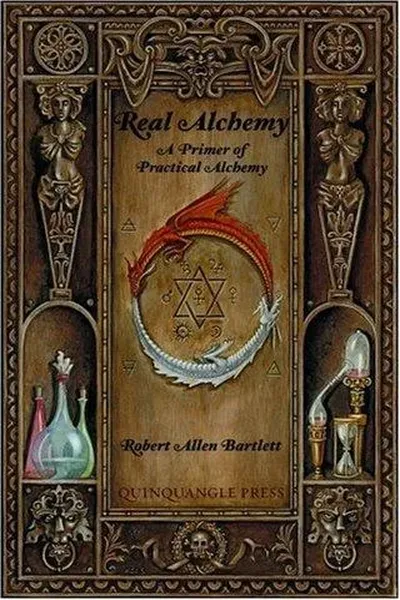

From the “Kabbalah” Collection
View all →
![Kabbalah Dictionary [Hebrew To English].pdf (PDFy mirror)](/img/thumb/kabbalah-dictionary-hebrew-to-english-pdf-pdfy-mirror.webp)







More Free Kabbalah & Jewish Mysticism Books
View all →