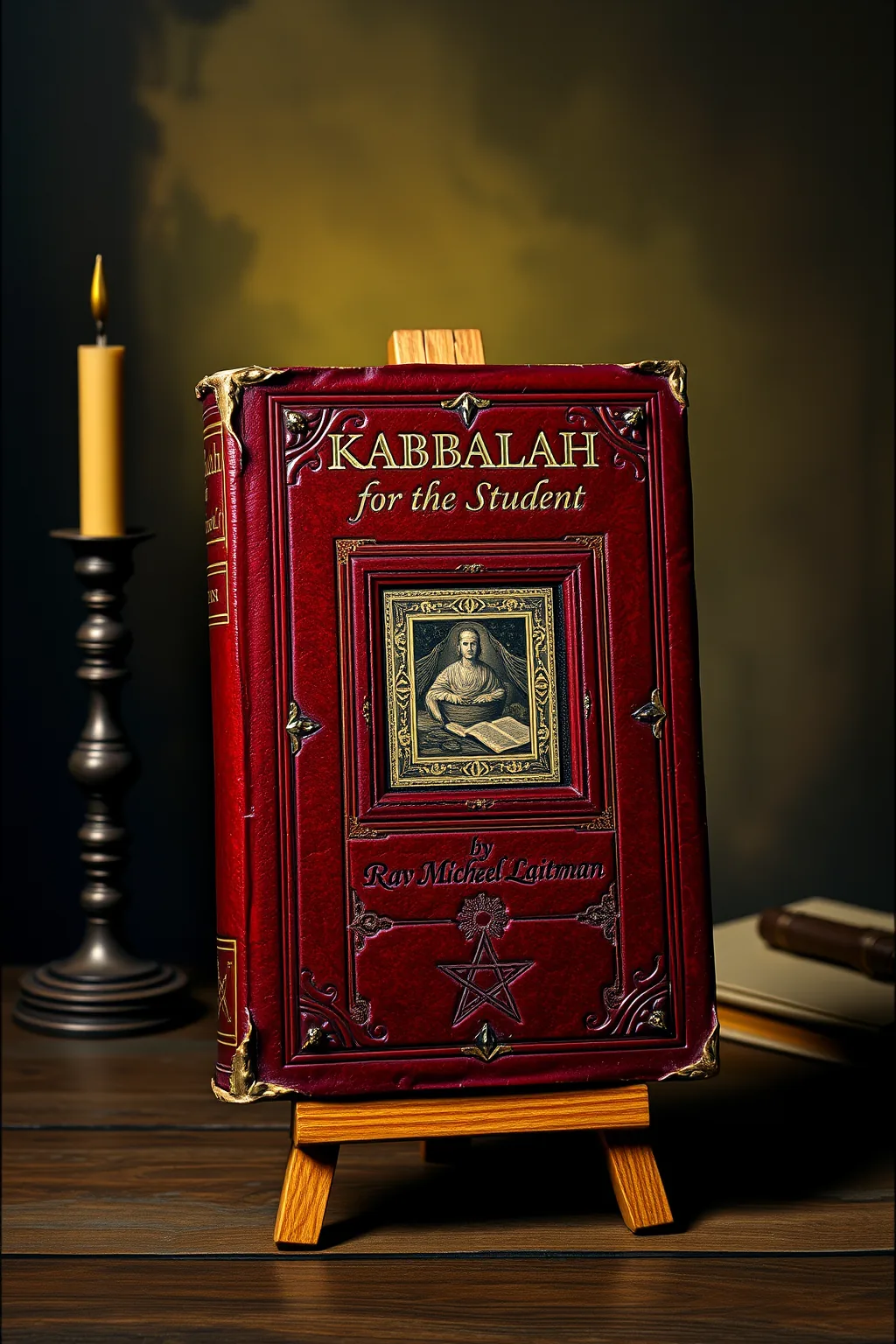
Kabbalah for the Student
 61
61

Kabbalah for the Student



Rav Michael Laitman's "Kabbalah for the Student" is an exceptionally lucid and accessible entry point into the profound depths of Jewish mysticism. Isolde Whitaker, Sacred Texts Editor, finds Laitman's ability to distill complex esoteric concepts into digestible wisdom truly remarkable. The text eschews arcane jargon, instead fostering an intuitive grasp of Kabbalistic principles, focusing on the interconnectedness of creation and the path to spiritual fulfillment. This book is a treasure for sincere seekers yearning for authentic understanding, offering a balanced approach that honors both the theoretical and practical aspects of this ancient science. It is an essential read for anyone drawn to the hidden currents of existence.
📝 Description
61
Rav Michael Laitman's "Kabbalah for the Student" explains the core tenets of this mystical tradition.
Published by Rav Michael Laitman, "Kabbalah for the Student" aims to clarify the principles of Kabbalah for those beginning their study. The book addresses the fundamental concepts of this esoteric system, including the structure of creation and the nature of the soul. Laitman breaks down complex ideas into accessible language, intending to guide the reader toward a greater comprehension of spiritual realities.
The text focuses on the interconnectedness of all existence and the path toward spiritual growth. It discusses how understanding these connections can lead to personal development and a sense of unity with the wider cosmos. The author's approach is designed to encourage contemplation and a shift in perception, moving beyond ordinary awareness to a more meaningful perspective.
Kabbalah is a mystical tradition originating in medieval Judaism, though its roots are often traced to earlier texts and interpretations. It deals with the divine nature, the creation of the universe, and the relationship between the infinite Creator and the finite creation. Kabbalistic texts, such as the Zohar, use allegory and symbolism to describe hidden spiritual worlds and the path of human spiritual elevation. The tradition seeks to reveal the underlying unity and purpose of existence, often through methods of meditation, prayer, and study.
💡 Why Read This Book?
Unlock the secrets of creation and your place within it. "Kabbalah for the Student" offers a clear path to understanding the universe's underlying spiritual forces. Ideal for spiritual seekers, aspiring Kabbalists, and scholars of mysticism, this book provides foundational knowledge and practical insights into the wisdom of Kabbalah, guiding you toward inner harmony and a profound connection with the divine.
⭐ Reader Reviews
Honest opinions from readers who have explored this book.
❓ Frequently Asked Questions
What is the primary aim of Kabbalah?
The primary aim of Kabbalah is to understand the spiritual reality behind our physical world, revealing the interconnectedness of all things and humanity's role in the grand design of creation, ultimately leading to spiritual attainment and closeness to the Creator.
Is this book suitable for absolute beginners?
Yes, "Kabbalah for the Student" is specifically designed to introduce complex Kabbalistic concepts in a clear and progressive manner, making it an excellent starting point for those with no prior knowledge.
Does Kabbalah require specific religious adherence?
While Kabbalah originates from Jewish tradition, its core principles of spiritual development and understanding the nature of reality are universal and can be studied by individuals of any background seeking deeper wisdom.
What are the practical applications of Kabbalah?
Kabbalah offers practical applications for personal growth, improving relationships, understanding life's challenges, and developing a sense of purpose. It guides one towards inner peace and a more harmonious existence.
How does Kabbalah differ from other mystical traditions?
Kabbalah is unique in its systematic approach to understanding the divine, its emphasis on the Tree of Life as a symbolic map of creation and consciousness, and its focus on the collective correction and elevation of humanity.
🔮 Key Themes & Symbolism
The Tree of Life: A Cosmic Blueprint
The central symbolic diagram of Kabbalah, the Tree of Life, serves as a profound map of creation, consciousness, and spiritual ascent. This book studies its ten Sefirot (divine emanations) and 22 paths, illustrating how they represent the stages of divine manifestation and the journey of the soul. Understanding this intricate structure is key to grasping the interconnectedness of all existence and the mechanisms of spiritual growth, providing a framework for comprehending the universe's hidden order.
The Nature of Reality and Divine Emanation
This theme explores the Kabbalistic understanding of how the infinite, unknowable Creator manifests into the multiplicity of the physical world. The book elucidates concepts such as Ein Sof (The Infinite), the process of Tzimtzum (contraction), and the various spiritual worlds or dimensions. It reveals the underlying unity that pervades all apparent diversity, offering insights into the purposeful unfolding of creation and the divine spark present in every element of existence.
The Path of Spiritual Ascent and Correction
"Kabbalah for the Student" illuminates the practical path for individuals to elevate their consciousness and align with the divine will. It discusses the importance of intention, selfless love, and the concept of 'correction' (Tikkun) for both the individual and the collective. The book guides readers on how to transform their desires, overcome egoistic tendencies, and work towards achieving spiritual perfection and unity with the Creator through dedicated study and practice.
💬 Memorable Quotes
Direct passages from the work, attributed to the author.
“True wisdom is the ability to see the Creator in all things.”
— This highlights the ultimate goal of Kabbalistic study: to perceive the divine presence and intention that underlies all aspects of creation, transforming mundane reality into a sacred experience.
“The desire to receive is the engine of creation.”
— This profound statement points to the fundamental drive within all existence, a divine desire that propels creation forward and shapes the spiritual and physical realms.
“The hidden is revealed through the study of the revealed.”
— This paradox suggests that by deeply engaging with the exoteric aspects of existence and wisdom, one can unlock profound esoteric truths and gain deeper understanding of the unseen forces at play.
💡 Key Ideas
Editorial paraphrase of the work's core concepts — not direct quotes.
The world is like a vast ocean, and we are but drops.
This quote emphasizes the interconnectedness of all beings and the universe, suggesting that individual existence is part of a larger, unified whole, reflecting the core Kabbalistic principle of unity.
Love your neighbor as yourself, for in unity, we find the divine.
This quote captures a core ethical and spiritual teaching, emphasizing that genuine connection and selfless love for others are essential steps on the path to spiritual realization and experiencing divine unity.
🌙 Esoteric Significance
Tradition
Kabbalah represents a profound esoteric tradition within Judaism, offering a mystical interpretation of the Torah and the universe. It is a system of divine wisdom aimed at understanding the hidden nature of God, the structure of reality, and the purpose of human existence. Unlike exoteric religious practice, Kabbalah studies symbolic language, numerology, and contemplative techniques to access higher spiritual realms and achieve direct experience of the divine.
Symbolism
The symbolism in Kabbalah is rich and multi-layered, with the Tree of Life, Hebrew letters, and divine names serving as central motifs. The Tree of Life, with its ten Sefirot, acts as a map of divine emanation and the human psyche. Each Hebrew letter is imbued with mystical significance, representing cosmic forces and spiritual concepts. These symbols are not merely decorative but are keys to unlocking deeper spiritual understanding and facilitating a connection with the divine, acting as conduits for esoteric knowledge.
Modern Relevance
In the contemporary world, Kabbalah offers a compelling framework for understanding life's complexities and seeking spiritual meaning. Its emphasis on interconnectedness, inner transformation, and the pursuit of a higher purpose resonates deeply with individuals searching for answers beyond material pursuits. The teachings provide tools for navigating personal challenges, fostering empathy, and contributing to a more harmonious world, making its ancient wisdom profoundly relevant to the modern seeker's journey.
👥 Who Should Read This Book
This book is a vital resource for anyone drawn to the profound mysteries of existence. Beginners will find a clear and encouraging introduction to the foundational principles of Kabbalah, explaining its complex terminology and concepts. Scholars of comparative religion and mysticism will appreciate its scholarly approach and insightful interpretations. Spiritual seekers yearning for a deeper connection with the divine and a greater understanding of their purpose will discover a roadmap for personal growth and enlightenment. Practitioners seeking to integrate esoteric wisdom into their daily lives will find practical guidance and inspiration.
📜 Historical Context
The Kabbalah, originating in medieval Spain and Provence, emerged as a vibrant and complex mystical interpretation of Jewish scripture and tradition. Flourishing in the 12th and 13th centuries, it offered a deeply symbolic and allegorical understanding of God, creation, and the human soul, seeking to reveal the hidden dimensions of divine immanence within the perceived order of the cosmos. Influenced by Neoplatonism and Gnosticism, Kabbalistic thought developed intricate cosmologies, angelology, and eschatological visions. The Zohar, its foundational text, attributed to Rabbi Shimon bar Yochai, became a central to Kabbalistic study for centuries. Later movements, such as Lurianic Kabbalah in the 16th century, introduced concepts of cosmic repair and messianic redemption, further shaping its spiritual and mystical trajectory into the modern era.
📔 Journal Prompts
Reflect on a time you felt a profound sense of interconnectedness with others or the universe. What might Kabbalah teach about this experience?
Consider the concept of 'desire' in your life. How does your desire to receive shape your actions and perceptions?
Explore the symbolism of light and darkness in your personal journey. How do you navigate periods of challenge and seek inner illumination?
Meditate on the idea of divine emanation. How might the Creator's presence be felt in the seemingly ordinary aspects of your day?
What does the concept of 'correction' (Tikkun) mean to you in the context of your personal growth and your interactions with the world?
🗂️ Glossary
Sefirot
The ten divine emanations or attributes through which the infinite Creator reveals Himself and governs the universe, forming the structure of the Tree of Life.
Ein Sof
The Kabbalistic term for the 'Infinite' or 'Without End,' referring to God in His absolute, unknowable essence, beyond all conceptualization or limitation.
Tzimtzum
The Kabbalistic concept of 'contraction' or 'withdrawal,' describing the divine act of making 'space' for creation by condensing the infinite light.
Tree of Life (Etz Chaim)
A central diagram in Kabbalah representing the structure of the spiritual worlds, the process of creation, and the pathways of divine consciousness and human ascent.
Tikkun
The Kabbalistic concept of 'correction' or 'rectification,' referring to the process of repairing the spiritual damage in the world and elevating creation back to its divine source.
This book appears in 1 collection
🔮 Readers Also Liked
Browse all →








More by Rav Michael Laitman
All books →




From the “Kabbalah” Collection
View all →







More Free Kabbalah & Jewish Mysticism Books
View all →