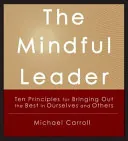
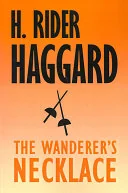
The Wanderer's Necklace
 83
83

The Wanderer's Necklace
Haggard’s 1932 offering, The Wanderer’s Necklace, presents a curious blend of his signature adventure style with a more pronounced esoteric bent than some of his earlier works. The narrative’s strength lies in its imaginative premise: a necklace acting as a key to past lives and karmic entanglements. This concept offers a compelling framework for exploring reincarnation and destiny. However, the novel falters slightly in its character development, which at times feels secondary to the plot's machinations. The depiction of the protagonist’s spiritual awakening, particularly his engagement with the necklace’s influence, is handled with a certain earnestness that may feel dated to contemporary readers. A specific passage describing the protagonist’s visions, while central to the plot, could have benefited from deeper psychological exploration rather than straightforward exposition. Despite these limitations, the book remains an interesting artifact of its time, showcasing Haggard’s enduring ability to craft tales of mystery and consequence. The Wanderer's Necklace offers a unique, albeit uneven, exploration of spiritual continuity.
📝 Description
83
H. Rider Haggard published 'The Wanderer's Necklace' in 1932, a story blending adventure with occult themes.
This 1932 novel by H. Rider Haggard follows a man's encounter with a mysterious necklace, triggering a series of supernatural events. The narrative unfolds through adventures that are deeply connected to ancient mysteries and the protagonist's past lives. Haggard weaves a tale where destiny, reincarnation, and the enduring impact of former existences are central to the plot.
The story appeals to readers who enjoy early 20th-century adventure fiction infused with spiritualist and esoteric ideas. It is particularly suited for those interested in how historical settings can be combined with fantastical elements, especially those concerning reincarnation and the potent influence of ancient artifacts. Readers familiar with Haggard's typical adventure style will find a more metaphysical depth here, moving beyond pure exploration into realms of spiritual consequence.
The titular necklace functions as a focal point, acting as a channel for accessing memories from previous lives and understanding karmic links. The concept of reincarnation is a primary element, showing how characters are affected by echoes and repercussions from their earlier existences. The narrative also examines fate and destiny, suggesting characters follow paths that seem unavoidable within a cosmic framework.
Published in 1932, 'The Wanderer's Necklace' appeared during a time of significant public interest in spiritualism and occultism, movements that drew from sources like Helena Blavatsky's Theosophy. While Haggard primarily focused on adventure, he was aware of these contemporary currents. The era saw many writers engaging with psychic phenomena and ancient civilizations, reflecting a wider cultural shift toward exploring non-material realities. This novel participates in that dialogue, filtered through Haggard's distinct style of action and exotic settings.
💡 Why Read This Book?
• Gain insight into early 20th-century literary explorations of reincarnation, particularly how H. Rider Haggard, known for adventure, approached this theme in "The Wanderer's Necklace" (1932). • Understand the symbolic function of ancient artifacts in narrative, specifically how the "Wanderer's Necklace" itself acts as a catalyst for unlocking past-life memories and karmic threads. • Examine the concept of destiny as presented through Haggard's narrative style, observing how characters' lives are shaped by perceived preordained paths and spiritual inheritance.
⭐ Reader Reviews
Honest opinions from readers who have explored this book.
❓ Frequently Asked Questions
What is the central theme of H. Rider Haggard's The Wanderer's Necklace?
The central theme revolves around reincarnation and the enduring impact of past lives on present existence, often facilitated by a mystical artifact, the "Wanderer's Necklace".
When was The Wanderer's Necklace first published?
The novel "The Wanderer's Necklace" by H. Rider Haggard was first published in 1932.
Does The Wanderer's Necklace involve supernatural elements?
Yes, the book prominently features supernatural elements, including visions, psychic connections, and the influence of ancient spiritual forces tied to reincarnation.
Is The Wanderer's Necklace part of a series?
No, "The Wanderer's Necklace" is generally considered a standalone novel by H. Rider Haggard, focusing on a unique set of characters and a self-contained mystical plot.
What kind of writing style can I expect from H. Rider Haggard in this book?
Readers can expect Haggard's characteristic adventure-driven prose, but with a more pronounced focus on spiritual and metaphysical concepts than in some of his earlier, more purely action-oriented works.
Who were some contemporary authors exploring similar themes around the time of its publication?
Around 1932, authors like Aldous Huxley were exploring spiritual themes, and within the esoteric community, figures associated with Theosophy were active, though Haggard’s approach remained distinct.
🔮 Key Themes & Symbolism
Reincarnation and Past Lives
The narrative hinges on the concept of reincarnation, positing that individuals carry echoes and karmic imprints from previous existences. The "Wanderer's Necklace" serves as a tangible link to these forgotten lives, triggering memories and influencing present actions. Haggard explores how past deeds and relationships continue to shape destinies across lifetimes, suggesting a cyclical nature of existence. This theme aligns with spiritualist ideas prevalent in the early 20th century, wherein the soul’s journey through multiple incarnations was a subject of considerable interest and speculation in esoteric circles.
The Power of Artifacts
The titular "Wanderer's Necklace" is more than just a plot device; it functions as a potent esoteric artifact. It embodies the idea that objects can absorb and transmit spiritual energy, historical memory, or karmic residue. Its discovery initiates the protagonist's journey into self-discovery and spiritual awareness, highlighting the belief that certain objects hold significant power and can act as keys to unlocking hidden potentials or truths. This appeals to traditions that imbue relics and talismans with mystical properties.
Destiny and Spiritual Inheritance
The novel frequently touches upon the notion of destiny, suggesting that characters are often bound by paths set in motion by their past actions or by a larger cosmic plan. This spiritual inheritance dictates their present circumstances and future trajectories. Haggard portrays a universe where spiritual connections persist beyond death, and individuals are intrinsically linked to their ancestral and past-life legacies. The protagonist's struggle often involves understanding and aligning with this predetermined spiritual lineage rather than fighting against it.
Spiritual Awakening
Central to the plot is the protagonist's journey towards spiritual awakening, spurred by his encounter with the necklace and its associated phenomena. This awakening involves a confrontation with the limitations of material existence and an embrace of metaphysical realities. The process is depicted as one of uncovering latent spiritual faculties and recognizing a deeper, non-physical aspect of the self. It reflects the esoteric pursuit of gnosis or higher knowledge through internal revelation and connection to spiritual planes.
💬 Memorable Quotes
Direct passages from the work, attributed to the author.
“He felt the weight of lives lived before his own, a burden and a guide.”
— This interpretation highlights the dual nature of spiritual inheritance. The concept implies that past lives can present challenges (burden) but also offer wisdom and direction (guide) in the present existence.
“The world of spirit was as real, and perhaps more enduring, than the world of flesh.”
— This concept posits the primacy of the spiritual realm over the material, reflecting an esoteric viewpoint that emphasizes the soul's eternal nature and the ultimate reality of non-physical existence.
💡 Key Ideas
Editorial paraphrase of the work's core concepts — not direct quotes.
The necklace seemed to hold a power over him, drawing his thoughts to events long past.
This line expresses the artifact's function as a conduit for forgotten memories, suggesting that physical objects can possess spiritual or psychic resonance, linking the present wearer to ancestral or past-life experiences.
Destiny, he mused, was not a sudden decree but a slow unfolding of ancient patterns.
This paraphrase suggests that fate is not arbitrary but rather a consequence of ingrained karmic cycles and spiritual predispositions, unfolding gradually based on established patterns from previous existences.
He recognized faces from dreams, now solid in memory, tied to the necklace's gleam.
This paraphrased idea connects the subconscious or dream state with the tangible unlocking of past-life memories, implying that the artifact bridges the gap between ethereal impressions and concrete recollection.
🌙 Esoteric Significance
Tradition
The Wanderer's Necklace draws implicitly from the Theosophical tradition, which gained significant traction in the late 19th and early 20th centuries. This tradition emphasizes reincarnation, karma, and the existence of hidden spiritual laws governing the universe. Haggard's narrative aligns with this by presenting a protagonist whose present life is demonstrably shaped by past incarnations and karmic debts. While not a direct exposition of Blavatskyan doctrine, the novel reflects the era's widespread fascination with these concepts, integrating them into a more accessible adventure format.
Symbolism
The primary symbol is the "Wanderer's Necklace" itself, representing the unbroken chain of existence across lifetimes and the karmic ties that bind souls. Its ancient origins suggest a deep, perhaps primordial, spiritual lineage. Another motif is the recurring dream or vision, symbolizing the subconscious mind's connection to past-life memories and the spiritual realm, serving as a bridge between the tangible and intangible aspects of reality.
Modern Relevance
Contemporary interest in past-life regression therapy and the exploration of ancestral memory echoes themes present in The Wanderer's Necklace. Modern practitioners of esoteric studies, particularly those within New Age spirituality or those researching the historical development of occult thought, may find Haggard's narrative a useful, albeit fictionalized, representation of prevalent early 20th-century esoteric ideas. It offers a lens through which to view how concepts like karma and reincarnation were being integrated into popular culture.
👥 Who Should Read This Book
• Readers interested in the intersection of adventure fiction and esoteric themes, particularly those exploring reincarnation and past-life connections. • Students of early 20th-century literature who wish to examine how authors like H. Rider Haggard engaged with popular spiritualist and occult ideas of their time. • Enthusiasts of narratives featuring mystical artifacts and their power to unlock hidden aspects of the self and one's spiritual history.
📜 Historical Context
H. Rider Haggard’s The Wanderer’s Necklace, published in 1932, emerged at a time when the veil between the material and spiritual worlds seemed particularly permeable in popular imagination. The early 20th century was a fertile ground for esoteric thought, heavily influenced by Theosophy and the burgeoning interest in psychic phenomena. Helena Blavatsky’s foundational texts had already popularized concepts like reincarnation and karma, making them accessible to a wider audience. Haggard, while primarily an adventure novelist, was not immune to these cultural currents. His contemporaries included authors like Arthur Conan Doyle, who actively promoted Spiritualism, and G.K. Chesterton, who engaged with metaphysical questions in his fiction. The reception of The Wanderer's Necklace was likely within the context of a readership already primed for tales blending exotic adventure with mystical undertones. Unlike more academic explorations of occult philosophy, Haggard’s work offered these ideas within a narrative framework of thrilling discovery, making esoteric concepts palatable through engaging storytelling.
📔 Journal Prompts
The protagonist's reaction to the "Wanderer's Necklace" and its revelations.
Reflect on the concept of spiritual inheritance as depicted in the novel.
Analyze the symbolic role of ancient artifacts in shaping destiny.
Consider the connection between dreams and past-life memories presented.
Explore the narrative's portrayal of the relationship between the physical and spiritual realms.
🗂️ Glossary
Reincarnation
The philosophical or religious concept that the non-physical essence of a living being begins a new life in a different physical form or body after biological death.
Karmic
Relating to karma, the spiritual principle of cause and effect where intent and actions of an individual influence the future of that individual. Good intent and good deeds contribute to good karma and future happiness, while bad intent and bad deeds contribute to bad karma and future suffering.
Spiritualism
A religious movement based on the belief that the spirits of the dead can communicate with the living. It gained considerable popularity in the 19th and early 20th centuries.
Esoteric
Intended for or likely to be understood by only a small number of people with a specialized knowledge or interest; intended for the initiated.
Artifact
An object made by a human being, typically an item of cultural or historical interest. In esoteric contexts, it may also possess spiritual or magical significance.
Theosophy
A mystical philosophy based on the teachings of Helena Blavatsky, which seeks to understand the underlying truth in all religions and philosophies, emphasizing concepts like karma and reincarnation.
Gnosis
Knowledge of spiritual mysteries. In esoteric traditions, it often refers to a direct, intuitive understanding of divine truths, distinct from intellectual knowledge.
🔮 Readers Also Liked
Browse all →







More by H. Rider Haggard
All books →


More Free Occult Philosophy Books
View all →