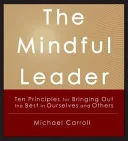
The Mindful Leader
 73
73

The Mindful Leader
Michael Carroll's 'The Mindful Leader' presents a series of ten principles intended to elevate one's leadership capacity through focused self-awareness. The audio format, spread across four CDs, is indeed convenient for on-the-go listening, though the abridged nature means some depth is sacrificed for conciseness. Carroll's strength lies in distilling complex ideas into digestible tenets, such as the principle of "active listening" not just to words, but to underlying emotions and unspoken needs, a concept he revisits throughout the work. However, the presentation sometimes leans towards generalized advice, and the lack of deeper exploration on certain principles might leave seasoned practitioners wanting more. The initial publication year of 2007 positions it within a burgeoning field of applied mindfulness, yet some of its practical applications feel slightly dated without more contemporary framing. Despite these limitations, the core message remains relevant for anyone seeking a structured, principle-driven path to more conscious leadership.
📝 Description
73
Michael Carroll released 'The Mindful Leader' in 2007, detailing ten principles for self-awareness.
This audio program, originally published in 2007, presents ten core principles designed to improve self-awareness and leadership skills. Carroll structures the material across four CDs, making it accessible for listeners who want to absorb the content during commutes or other dedicated listening times. The target audience includes current leaders, those aspiring to leadership positions, and individuals pursuing personal growth through a method based on clear principles. It is particularly suited for those who learn best through audio and want practical tactics for both their professional and personal lives.
The work came out in 2007, a time when mindfulness was gaining traction beyond its traditional spiritual applications. This release aligned with a wider trend in business and self-help literature that began to examine contemplative practices for professional benefit. The central ideas in Carroll's presentation focus on practical leadership philosophies. It stresses the cultivation of presence, the development of emotional intelligence, and the adoption of a more conscious method for making decisions and managing relationships. The ten principles intend to connect internal awareness with effective outward leadership.
While 'The Mindful Leader' emerged in 2007, its focus on mindfulness and conscious leadership connects it to a lineage of contemplative practices that have been integrated into Western thought. This includes influences from Buddhist psychology and meditation traditions, particularly as popularized in secular contexts by figures like Jon Kabat-Zinn. The emphasis on inner states influencing outer effectiveness echoes perennial philosophies that posit a link between personal cultivation and societal or professional impact.
💡 Why Read This Book?
• Learn ten distinct principles for improving leadership presence, directly applicable from the "active listening" concepts presented in Carroll's framework, offering a structured approach to interpersonal dynamics. • Gain practical strategies for self-awareness during commutes or downtime, drawing from the audio-first design and the focus on specific leadership techniques outlined in the ten principles. • Understand how cultivating emotional intelligence, a concept Carroll emphasizes, can be practically integrated into daily leadership tasks, as detailed within the CD structure.
⭐ Reader Reviews
Honest opinions from readers who have explored this book.
❓ Frequently Asked Questions
What are the main leadership principles discussed in Michael Carroll's 'The Mindful Leader'?
The book outlines ten core principles for effective leadership, focusing on self-awareness, emotional intelligence, and conscious decision-making. These are presented across four CDs for accessible learning.
Is 'The Mindful Leader' by Michael Carroll suitable for beginners in leadership?
Yes, the work is designed with accessibility in mind, offering practical strategies that can benefit both aspiring and experienced leaders by providing a structured approach to personal development.
What is the historical context of 'The Mindful Leader'?
Published in 2007, the book emerged during a growing interest in applying mindfulness and contemplative practices to professional and leadership contexts, reflecting broader trends in self-help and business literature of the era.
What is the format of Michael Carroll's 'The Mindful Leader'?
The original presentation is an abridged audio version, released on 4 CDs, making it convenient for listeners who prefer auditory learning, especially during commutes.
Who is Michael Carroll, the author of 'The Mindful Leader'?
Michael Carroll is an author and speaker known for his work on consciousness, leadership, and practical applications of awareness. His 2007 publication is part of his broader exploration of these themes.
Does 'The Mindful Leader' offer specific techniques for stress reduction in leadership?
While not solely focused on stress reduction, the principles encourage greater self-awareness and presence, which are foundational elements for managing stress effectively in leadership roles.
🔮 Key Themes & Symbolism
Conscious Leadership Principles
Carroll posits ten principles aimed at fostering a more aware and effective leadership style. These principles move beyond traditional command-and-control models, encouraging leaders to cultivate internal states that positively influence their external actions. The focus is on self-mastery as the foundation for guiding others, emphasizing practices that enhance presence and clarity in decision-making.
Applied Self-Awareness
A central theme is the practical application of self-awareness in leadership. This involves understanding one's own emotional responses, biases, and thought patterns. Carroll suggests that by becoming more attuned to internal dynamics, leaders can respond more skillfully to external challenges and build stronger relationships with their teams.
Emotional Intelligence in Practice
The work looks at the components of emotional intelligence, framing them as essential tools for effective leadership. This includes empathy, self-regulation, and social skills. Carroll provides frameworks for developing these capacities, suggesting that they are not innate traits but learnable skills crucial for navigating complex interpersonal dynamics.
Audio-First Learning Format
The original presentation's format across four CDs highlights a commitment to making leadership development accessible. This approach caters to individuals who learn best through auditory means or have limited time for traditional study, positioning the content as practical guidance for busy professionals.
💬 Memorable Quotes
Direct passages from the work, attributed to the author.
“The ten principles for bringing out the best in ourselves and others.”
— This expresses the core structure of Carroll's work, presenting a numbered system designed for practical application. It suggests a dual benefit: personal growth alongside improved interpersonal effectiveness in a leadership capacity.
“Valuable leadership strategies perfect for listening during commute time.”
— This highlights the intended audience and consumption method – busy professionals seeking actionable advice they can absorb during periods of travel or downtime, emphasizing the work's practicality and convenience.
“Understanding emotional responses enhances interpersonal connection.”
— This interpretation points to the emphasis on emotional intelligence. It implies that recognizing and managing one's own emotions, as well as understanding those of others, is fundamental to building rapport and trust.
“The work offers principles for enhancing self-awareness.”
— This highlights a fundamental goal of the presentation. It suggests that the core offering is not just external strategies, but an internal cultivation process aimed at deepening one's understanding of self.
💡 Key Ideas
Editorial paraphrase of the work's core concepts — not direct quotes.
Cultivating presence is key to effective decision-making.
This paraphrased concept underscores the importance of mindfulness. It suggests that being fully present, rather than distracted or rushed, allows for clearer perception and more considered choices in leadership scenarios.
🌙 Esoteric Significance
Tradition
While not explicitly tied to a single named esoteric lineage like Kabbalah or Hermeticism, Carroll's work draws heavily from contemplative traditions that emphasize inner awareness and ethical conduct. It aligns with the broader Western esoteric interest in consciousness studies and practical psychology, echoing themes found in depth psychology and humanistic psychology movements that often intersect with esoteric thought.
Symbolism
The work itself, presented in an audio format across CDs, can be seen as a modern iteration of oral transmission traditions found in many esoteric schools. The number 'ten' (for the principles) is significant across various mystical systems, often representing completion or a foundational structure. The concept of 'presence' itself functions as a key motif, symbolizing a state of heightened awareness akin to meditative focus.
Modern Relevance
Contemporary thought leaders and organizations focused on 'conscious leadership,' 'mindful work,' and 'organizational well-being' directly build upon the foundations laid by works like Carroll's. Thinkers exploring the integration of mindfulness into daily life and professional settings, as well as corporate wellness programs, continue to find value in the principles articulated here.
👥 Who Should Read This Book
• Mid-career professionals seeking to enhance their leadership effectiveness through practical, principle-based strategies, particularly those who appreciate audio learning formats for busy schedules. • Aspiring leaders interested in developing a foundation in self-awareness and emotional intelligence, gaining actionable insights applicable from the outset of their leadership journey. • Individuals exploring the intersection of personal development and professional conduct, looking for structured guidance on how inner states influence outward leadership actions.
📜 Historical Context
Michael Carroll's 'The Mindful Leader,' first published in 2007, arrived at an important moment for the integration of contemplative practices into secular domains. The late 1990s and early 2000s saw a surge in interest in mindfulness, largely propelled by figures like Jon Kabat-Zinn and his Mindfulness-Based Stress Reduction (MBSR) program, which had been gaining traction since the late 1970s. Carroll's work tapped into this growing awareness, positioning mindfulness not just as a spiritual discipline but as a pragmatic tool for professional development and leadership efficacy. This period also saw a proliferation of business books exploring emotional intelligence and soft skills, influenced by seminal works like Daniel Goleman's 1995 bestseller. 'The Mindful Leader' offered a specific articulation of these trends, focusing on a principle-based, audio-delivered format that distinguished it from more academic or purely theoretical texts. Its reception contributed to the broader acceptance of mindfulness techniques within corporate and leadership training circles.
📔 Journal Prompts
Reflect on the principle of cultivating presence: how does it manifest or fail to manifest in your typical leadership interactions?
Analyze the 'ten principles' framework: which specific principle do you find most challenging to implement, and why?
Consider the concept of emotional intelligence as presented: identify one situation where enhancing your emotional response could have yielded a different outcome.
Explore the audio-first learning approach: how does absorbing information via CDs influence your understanding compared to reading?
Evaluate the strategy of bringing out the best in others: what specific action can you take this week to apply this principle more consciously?
🗂️ Glossary
Active Listening
A communication technique emphasizing not just hearing words, but fully concentrating on, understanding, responding to, and remembering what is being said, including the underlying emotional context.
Self-Awareness
The conscious knowledge of one's own character, feelings, motives, and desires, particularly as they relate to leadership effectiveness and interpersonal interactions.
Emotional Intelligence (EI)
The capacity to be aware of, control, and express one's emotions, and to handle interpersonal relationships judiciously and empathetically. Carroll applies this to leadership.
Presence
A state of being fully attentive and engaged in the current moment, free from distraction, which Carroll identifies as crucial for effective leadership and decision-making.
Leadership Principles
The core tenets or fundamental rules outlined by Carroll, designed to guide behavior and foster effectiveness in a leadership capacity, presented as a set of ten actionable concepts.
Abridged Format
A shortened version of a larger work, in this case, the audio presentation on 4 CDs, which has been condensed for practical listening, often during commutes.
Commute Time Listening
The practice of utilizing time spent traveling to and from work for educational or self-improvement purposes, a key consideration for the design of this audio work.
This book appears in 1 collection
🔮 Readers Also Liked
Browse all →








From the “Mindfulness” Collection
View all →









More Free Occult Philosophy Books
View all →