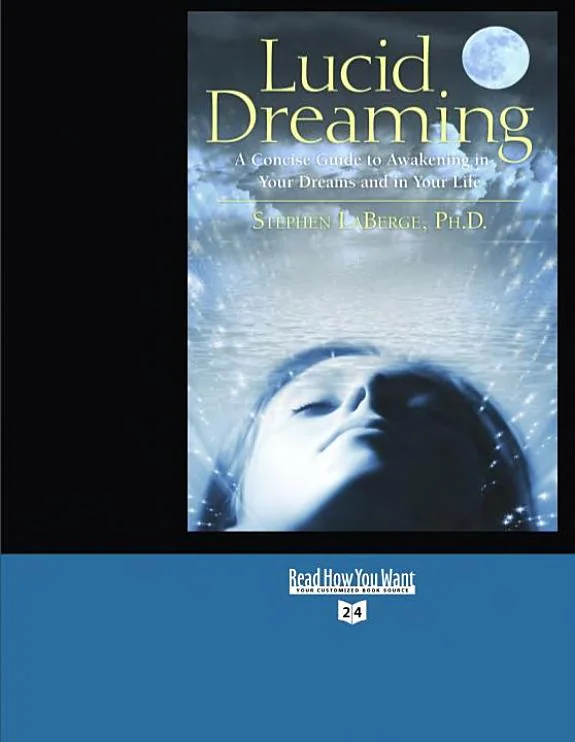
Lucid Dreaming (EasyRead Super Large 24pt Edition)
 74
74

Lucid Dreaming (EasyRead Super Large 24pt Edition)
The "EasyRead Super Large 24pt Edition" of Lucid Dreaming offers a straightforward approach to a complex subject. Its primary strength lies in its clear, unadorned presentation of techniques, making the often-intimidating prospect of conscious dreaming feel manageable. The large font is indeed a boon for readability, a practical consideration often overlooked in esoteric texts. However, the "Unknown" authorship leaves a void in historical grounding; without context, it's difficult to ascertain the lineage or specific philosophical underpinnings guiding these methods. One particularly effective passage describes the "finger-through-palm" reality check, illustrating the core principle of testing the dream's physical laws with simple, repeatable actions. While the book provides a solid entry point, it lacks the deeper theoretical or philosophical discourse found in more established works on the subject. It serves well as an accessible manual, but less so as a comprehensive exploration of oneirology's broader implications.
📝 Description
74
This 24pt edition presents techniques for conscious awareness within the dream state.
This volume details methods for recognizing the dream state as non-physical and influencing its content. It focuses on practical exercises to improve dream recall and achieve lucidity. The book is for individuals curious about altered states of consciousness, using dreams for self-discovery or spiritual growth. It offers clear, actionable steps for beginners interested in inducing and maintaining conscious dreaming.
The "EasyRead Super Large 24pt Edition" is designed for accessibility. It aims to help a broader audience connect with their subconscious minds. The text outlines specific approaches to cultivate dream recall and the ability to become aware while dreaming. It provides a primer for those new to the practice.
Readers will find guidance on identifying 'dream signs,' which are anomalies that signal one is dreaming. The methods often include prospective memory exercises, where a specific intention is set to remember one's dreaming state. The book aligns with a tradition of inquiry into the dream state.
The practice of conscious dreaming has historical ties to ancient traditions and shamanic practices. While systematic investigation gained traction in the 20th century, this book aligns with that lineage of esoteric inquiry. It focuses on practical application for self-discovery and spiritual growth within the dream state, echoing a long-standing human interest in the nature and potential of dreams.
💡 Why Read This Book?
• Gain practical, step-by-step instructions for inducing lucid dreams, a skill distinct from passive dream recall, enabling direct engagement with your subconscious narratives. • Learn the specific 'reality check' technique of testing physical laws within dreams, a method crucial for recognizing the dream state and differentiating it from waking consciousness. • Understand the importance of 'dream signs,' personal indicators of the dream state, by consistently practicing dream journaling as outlined in the text, leading to more frequent lucid experiences.
⭐ Reader Reviews
Honest opinions from readers who have explored this book.
❓ Frequently Asked Questions
What are 'dream signs' in the context of lucid dreaming?
Dream signs are recurring anomalies or impossible occurrences within a dream that signal to the dreamer they are asleep. Recognizing these signs, such as flying or encountering deceased relatives, is a key technique for triggering lucidity in this book.
How does the EasyRead 24pt Edition benefit readers?
The EasyRead 24pt Edition significantly enhances accessibility by using a large, clear font. This format is designed to make the text comfortable and easy to read, particularly for individuals who experience eye strain with standard print sizes.
Is this book suitable for complete beginners to lucid dreaming?
Yes, this book is designed as a primer for beginners. It focuses on foundational techniques and practical exercises, offering clear, actionable steps to begin exploring lucid dreaming without requiring prior knowledge.
What is a 'reality check' as described in this text?
A reality check is a deliberate action performed both while awake and in a dream to test whether one is dreaming. Examples include trying to push a finger through your palm or checking a clock twice.
Can lucid dreaming techniques be verified scientifically?
Yes, scientific verification has been achieved through methods like EEG monitoring, notably by researchers like Stephen LaBerge in the late 1970s. These studies confirmed that lucid dreamers can signal awareness and control their actions within dreams.
What is the purpose of dream journaling in this book?
Dream journaling serves multiple purposes: improving dream recall, identifying personal 'dream signs,' and reinforcing the intention to become lucid. Consistent journaling is presented as a fundamental practice for developing lucid dreaming skills.
🔮 Key Themes & Symbolism
Conscious Dream Awareness
This theme centers on the deliberate cultivation of self-awareness within the dream state. The book posits that dreams are not merely passive experiences but landscapes that can be consciously navigated. It details methods to transition from ordinary dreaming to a state of lucidity, where the dreamer recognizes their condition and can exert influence. This involves training the mind to question reality and identify the subtle (or not-so-subtle) cues that betray the dream's illusory nature, fostering a direct, interactive relationship with the subconscious.
Dream Sign Recognition
A core part of achieving lucidity is the ability to identify 'dream signs' – elements within a dream that are incongruous with waking reality. These can range from the bizarre (e.g., talking animals) to the subtly impossible (e.g., a clock displaying nonsensical time). The work emphasizes the importance of observing the dream environment critically and consistently. By learning to recognize one's personal dream signs, the dreamer is provided with a reliable trigger for achieving lucidity, transforming passive observation into active awareness.
Intentional Dream Navigation
Beyond simply becoming aware within a dream, this theme addresses the practical application of lucidity for intentional exploration and interaction. Once lucidity is achieved, the book suggests methods for maintaining it and for consciously shaping the dream narrative. This includes techniques for stabilization, preventing the dream from collapsing or the dreamer from waking prematurely, and for directing one's actions and focus within the dreamscape. It frames lucid dreaming as a skill that allows for exploration of inner realms with purpose.
Accessibility in Esoterica
The inclusion of the 'EasyRead Super Large 24pt Edition' highlights a commitment to making esoteric knowledge accessible. Esoteric texts often carry significant historical and intellectual weight, but can be physically challenging to engage with due to small print or dense formatting. This edition directly addresses that barrier, suggesting that the pursuit of inner exploration should not be limited by physical accessibility. It prioritizes ease of use, ensuring the techniques presented can be readily absorbed by a broader audience.
💬 Memorable Quotes
Direct passages from the work, attributed to the author.
“Recognize the signs that betray the dream's fabric.”
— This concise statement captures the core principle of identifying dream signs. It urges the reader to develop a critical awareness of the dream environment, looking for anomalies that signal the illusory nature of the experience, thereby prompting lucidity.
“Your intention to know you are dreaming is the first step.”
— This highlights the crucial role of mental preparation and intention. It suggests that the desire and conscious decision to achieve lucidity are foundational, acting as a powerful catalyst for recognizing the dream state when it occurs.
“Test the solidity of your dream world; push your finger through.”
— This refers to the practical 'reality check' technique. It describes an action designed to fail in the physical world but potentially succeed in a dream, serving as a direct method for verifying one's state of consciousness.
“The dream journal is your map to the subconscious.”
— This metaphor emphasizes the analytical value of dream journaling. It suggests that by recording dreams, one gains insights into recurring patterns, symbols, and themes, effectively charting the range of the inner mind.
💡 Key Ideas
Editorial paraphrase of the work's core concepts — not direct quotes.
Wakefulness within the sleeping mind is the goal.
This summarizes the ultimate objective of lucid dreaming practices. It articulates the paradox of being fully aware and conscious while the physical body remains asleep, highlighting the unique state achievable through these techniques.
🌙 Esoteric Significance
Tradition
This work aligns with the broader Hermetic and Gnostic traditions that emphasize the power of gnosis (knowledge) and self-awareness as paths to spiritual liberation. Within these frameworks, the dream state is often viewed as a potent, albeit illusory, realm where the soul's journey continues. Lucid dreaming offers a practical method for reclaiming agency within this inner world, aligning with the Hermetic principle of 'As Above, So Below' by exploring the microcosm of the individual mind to understand broader cosmic principles.
Symbolism
Key symbols often revolve around the theme of transition and awareness. The 'dream sign' acts as a threshold symbol, a marker indicating passage from ordinary unconsciousness to conscious awareness. Flight within dreams is another common motif, symbolizing freedom, transcendence, and a departure from the limitations of the physical world. The act of 'testing reality' itself—such as attempting to push a finger through a solid object—symbolizes the questioning of perceived limitations and the recognition of the malleable nature of subjective experience.
Modern Relevance
Contemporary practices in mindfulness, consciousness studies, and even therapeutic modalities like Internal Family Systems (IFS) draw parallels with lucid dreaming. Thinkers exploring altered states of consciousness, neuroplasticity, and the untapped potential of the human mind find value in its techniques. Modern oneironauts and researchers continue to build upon the foundational methods presented, integrating them with biofeedback, virtual reality, and advanced psychological techniques for personal growth and psychological exploration.
👥 Who Should Read This Book
• Aspiring oneironauts seeking a clear, accessible guide to initiating lucid dreaming practices, benefiting from the large-print format for ease of study. • Individuals interested in the intersection of psychology and spirituality, looking for practical methods to explore the subconscious mind and its potential. • Practitioners of mindfulness or meditation who wish to extend their awareness beyond the waking state into the field of dreams.
📜 Historical Context
The formal study of lucid dreaming, while experiencing a surge in popular and academic interest from the late 1970s onwards, particularly through the work of Stephen LaBerge and his use of psychophysiological methods, builds upon centuries of contemplation regarding the nature of consciousness and dreams. Ancient Greek philosophers, including Aristotle, discussed the awareness of dreaming. More directly, traditions within Buddhism, particularly Tibetan dream yoga, have long codified practices for maintaining consciousness during sleep. In the West, figures like Marquis d'Hervey de Saint Denys, in his 1867 work 'Dreams and the Modern Spirit,' explored dream control. This book emerges in a lineage that includes both esoteric traditions and the burgeoning field of parapsychology, which sought to understand subjective experiences often relegated to the field of the unscientific. Its reception, though not tied to a specific historical event like a ban or prize due to its anonymous nature, contributes to a broader cultural fascination with accessing altered states of consciousness.
📔 Journal Prompts
Reflections on the 'dream sign' as a gateway to lucidity.
The practice of 'reality checks' and their impact on waking awareness.
Exploring the intention to know you are dreaming.
Mapping personal dream landscapes through consistent journaling.
The experience of maintaining wakefulness within the sleeping mind.
🗂️ Glossary
Lucid Dreaming
The state of being aware that one is dreaming while the dream is in progress. This awareness allows for potential conscious control over the dream narrative and environment.
Dream Sign
An anomaly, inconsistency, or recurring element within a dream that signals to the dreamer that they are asleep. Recognizing dream signs is a key technique for achieving lucidity.
Reality Check
A deliberate action performed by the dreamer, both in waking life and within a dream, to test whether they are dreaming. Examples include trying to push a finger through one's palm or checking a clock twice.
Dream Journal
A record of dreams, typically kept upon waking. It includes details of dream content, emotions, and any recognized dream signs, serving as a tool for improving recall and identifying patterns.
Oneironaut
Literally 'dream sailor' or 'dream traveler.' An individual who actively explores the dream state, particularly through lucid dreaming.
Prospective Memory
The ability to remember to perform a planned action or recall a planned intention at some future point in time. In lucid dreaming, this is often used to set the intention to recognize oneself as dreaming.
EasyRead Super Large 24pt
A specific edition format characterized by a significantly larger font size (24 points) designed for enhanced readability and accessibility.
This book appears in 1 collection
🔮 Readers Also Liked
Browse all →









From the “Lucid Dreaming” Collection
View all →








More Free Occult Philosophy Books
View all →