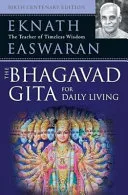
The Bhagavad Gita for Daily Living
 76
76

The Bhagavad Gita for Daily Living
Eknath Easwaran's The Bhagavad Gita for Daily Living avoids the pitfalls of many modern spiritual commentaries by grounding ancient wisdom in palpable, everyday experience. His translation, a product of ten years of dedicated work, feels less like an academic exercise and more like a conversation with a wise elder. The commentary on Chapter 2, specifically Arjuna's despair on the battlefield, is particularly effective, reframing existential crisis not as a unique failing but as a universal human predicament. Easwaran’s strength lies in his gentle, almost humorous, yet firm guidance. A limitation, however, is that the sheer volume of the three-volume set might feel overwhelming for a casual reader, despite its accessibility. The work ultimately serves as a profound, practical guide, not just a philosophical treatise.
📝 Description
76
Eknath Easwaran's complete translation of the Bhagavad Gita appeared in 2012.
Eknath Easwaran spent a decade on this edition of the Bhagavad Gita, aiming to make its teachings accessible for modern life. The book functions as a verse-by-verse explanation, designed to offer practical advice for daily application. It is for individuals seeking spiritual guidance to manage contemporary demands, appealing to both newcomers to Hindu thought and experienced practitioners. Readers focused on self-improvement, reducing stress, and cultivating inner calm will find Easwaran's perspective useful.
This commentary arrived during a time of growing global interest in Eastern philosophies, especially within the self-help movements of the late 20th and early 21st centuries. Easwaran's method differed from purely academic or devotional readings, concentrating instead on psychological and practical use. The core ideas Easwaran highlights include the self's nature (Atman), the importance of duty (dharma), and the practice of selfless action (karma yoga). He simplifies the philosophical discussions between Krishna and Arjuna, using stories and familiar situations to illustrate points.
The Bhagavad Gita, originating around the 5th to 2nd centuries BCE, is a central part of the Mahabharata epic. Easwaran's interpretation positions it as a guide for practical spirituality, moving beyond strict academic study or devotional ritual. His focus on psychological application and everyday use connects it to traditions that seek to integrate spiritual principles into personal conduct and mental discipline. This approach aligns with streams of thought that emphasize inner transformation and ethical living as paths to understanding.
💡 Why Read This Book?
• Learn practical techniques for managing the 'thousand suns' of daily anxieties, drawing directly from Easwaran's commentary on the Gita's philosophy of detachment as presented in 'Like a Thousand Suns'. • Discover actionable steps to overcome personal sorrow and indecision, as Easwaran interprets Arjuna's crisis on the battlefield in 'The End of Sorrow'. • Gain insights into fostering meaningful relationships and understanding one's purpose through the lens of selfless action (karma yoga), a central theme explored throughout the three volumes.
⭐ Reader Reviews
Honest opinions from readers who have explored this book.
❓ Frequently Asked Questions
When was Eknath Easwaran's Bhagavad Gita for Daily Living first published?
The complete three-volume edition of The Bhagavad Gita for Daily Living by Eknath Easwaran was first published in June 2012, following many years of his dedicated work on the text.
What is the main goal of Eknath Easwaran's commentary on the Bhagavad Gita?
Easwaran's primary goal was to make the Bhagavad Gita's spiritual teachings practical and applicable to the challenges of modern, everyday life, using relatable examples and gentle explanations.
Is this translation of the Bhagavad Gita suitable for beginners?
Yes, Easwaran's translation and verse-by-verse commentary are specifically designed for accessibility, making it an excellent starting point for those new to the Bhagavad Gita or Eastern philosophy.
How does Easwaran's approach differ from other Bhagavad Gita commentaries?
Easwaran focuses on the psychological and practical application of the Gita's teachings, using gentle humor and contemporary examples, rather than purely academic or devotional interpretations.
What are the three volumes of 'The Bhagavad Gita for Daily Living'?
The three volumes are titled 'The End of Sorrow,' 'Like a Thousand Suns,' and 'To Love Is,' each focusing on different aspects of the Bhagavad Gita's wisdom.
Is Eknath Easwaran's translation considered authentic?
Easwaran's translation is highly regarded for its clarity and faithfulness to the spirit of the original Sanskrit, while also being adapted for modern English comprehension and practice.
🔮 Key Themes & Symbolism
The Nature of Sorrow
Easwaran's exploration of 'The End of Sorrow' explores the Gita's analysis of suffering, presenting it not as an external imposition but as a product of our own reactions and attachments. By understanding the impermanent nature of worldly experiences and cultivating inner detachment, as Krishna advises Arjuna, individuals can find liberation from mental anguish. The commentary uses relatable examples of personal loss and disappointment to illustrate how the spiritual path offers solace and resilience, moving beyond temporary grief to a more stable state of being.
Action Without Attachment
Central to Easwaran's interpretation is the concept of Karma Yoga, or selfless action. In 'Like a Thousand Suns,' he explains how performing one's duties without attachment to the results is the key to spiritual progress and inner peace. This involves dedicating actions to a higher purpose and accepting outcomes with equanimity. The work illustrates how this principle can be applied to any task, transforming mundane activities into opportunities for spiritual growth and reducing the anxiety associated with striving and failure.
The Divine Within
Easwaran emphasizes the Gita's teaching on the presence of the divine (represented by Krishna) within all beings. This understanding fosters a sense of interconnectedness and inherent worth. The commentary guides readers to recognize their own spiritual core, the Atman, which is eternal and unchanging. By cultivating devotion and aligning one's will with this inner divinity, individuals can overcome ego-driven desires and find true fulfillment, as explored across the volumes, particularly in 'To Love Is'.
Discipline and Self-Mastery
The text consistently highlights the necessity of self-discipline (samyama) for spiritual advancement. Easwaran breaks down the Gita's teachings on controlling the senses and the mind, presenting practical methods for achieving mental focus and emotional stability. This includes techniques for meditation and consistent spiritual practice, essential for anyone seeking to live a more centered and purposeful life, moving from confusion and reactivity towards clarity and conscious choice.
💬 Memorable Quotes
Direct passages from the work, attributed to the author.
“The purpose of life is not to be happy. It is to do something that will make life, and other lives, more meaningful.”
— This statement expresses Easwaran's practical, action-oriented approach. It shifts the focus from passive pleasure-seeking to active contribution and purpose, aligning with the Gita's emphasis on duty and selfless service as paths to fulfillment.
“The greatest gift you can give is to be the best version of yourself.”
— This aphorism, reflecting Easwaran's emphasis on self-improvement and fulfilling one's potential, ties into the Gita's concept of dharma – acting according to one's true nature and responsibilities with excellence.
“Peace is not an absence of conflict, but the ability to cope with it.”
— This interpretation of inner peace suggests it's not about avoiding life's difficulties but developing the inner strength and perspective to face them without being overwhelmed, a key teaching of Krishna to Arjuna.
💡 Key Ideas
Editorial paraphrase of the work's core concepts — not direct quotes.
When you have realized what you are, you will not be afraid of anything.
This quote points to the core of spiritual realization in the Gita: understanding the true nature of the self (Atman) as eternal and distinct from the transient body and mind. This profound self-knowledge is presented as the ultimate antidote to fear.
We can't solve our problems by using the same kind of thinking we used when we created them.
This is a paraphrase reflecting Easwaran's interpretation of the need for a shift in consciousness. It highlights the limitation of ego-bound or worldly thinking in addressing deeper existential issues, advocating for a spiritual perspective.
🌙 Esoteric Significance
Tradition
While the Bhagavad Gita is a foundational text of Hinduism, Easwaran's commentary positions it within a broader esoteric framework of universal spiritual principles applicable across traditions. It aligns with the yogic and Vedanta lineages but emphasizes the psychological and ethical dimensions often explored in Western esoteric thought, such as self-mastery and the pursuit of inner peace, making it a bridge between Eastern scriptural study and practical Western spiritual disciplines.
Symbolism
Key symbols in the Gita, as interpreted by Easwaran, include the battlefield of Kurukshetra, representing the human mind and the internal struggle between higher and lower impulses. Krishna, the charioteer and divine guide, symbolizes the indwelling divine consciousness or spiritual intellect that directs the individual soul (Arjuna) through life's challenges. The chariot itself often symbolizes the body, with its senses, mind, and intellect, needing careful direction towards a spiritual goal.
Modern Relevance
Easwaran's work continues to influence contemporary discussions on mindfulness, stress management, and ethical leadership. His practical approach appeals to secular applications of wisdom traditions, finding echoes in positive psychology and secular mindfulness programs. Thinkers and practitioners exploring the integration of ancient wisdom into modern life, particularly those seeking actionable strategies for mental well-being and purpose, often draw upon Easwaran's accessible interpretations of the Gita's core teachings.
👥 Who Should Read This Book
• Individuals seeking practical guidance for managing daily stress and finding inner peace, who will benefit from Easwaran's accessible commentary on concepts like karma yoga. • Students of comparative religion and philosophy interested in accessible interpretations of Hindu scripture, particularly those comparing the Gita's teachings to other wisdom traditions. • Seekers of self-improvement and personal growth looking for actionable strategies to cultivate discipline, overcome negative emotions, and live a more meaningful life, as presented across the three volumes.
📜 Historical Context
The Bhagavad Gita, composed likely between the 5th and 2nd centuries BCE, emerged from the Vedic tradition and became a core part of Hindu philosophy, particularly Vedanta. Eknath Easwaran's interpretive work, culminating in the 2012 publication of 'The Bhagavad Gita for Daily Living,' arrived centuries after the original text's formation. It entered a landscape where the Gita was already widely studied, debated, and translated by figures like Swami Vivekananda and Mahatma Gandhi, who emphasized its ethical and political dimensions. Easwaran's approach, however, stood apart by focusing intensely on psychological integration and practical application for the modern individual, often contrasting with more academic analyses or the Advaita Vedanta interpretations prevalent among scholars like Radhakrishnan. His accessible style resonated with the burgeoning global interest in Eastern spirituality during the late 20th century, aligning with self-help and mindfulness movements.
📔 Journal Prompts
Arjuna's dilemma on the battlefield: How do my own duties conflict with my personal desires?
The concept of karma yoga: How can I perform my daily tasks with greater detachment from outcomes?
Krishna's guidance: In what areas of my life do I need to strengthen my self-mastery?
The nature of the Atman: How does understanding my true self (beyond temporary roles) change my perspective on challenges?
The path to ending sorrow: What attachments are causing me the most distress, and how can I begin to loosen them?
🗂️ Glossary
Atman
In Hindu philosophy, the eternal, unchanging self or soul. Easwaran emphasizes realizing the Atman as distinct from the body, mind, and ego, leading to liberation from suffering.
Dharma
One's duty, righteousness, or moral order. Easwaran interprets dharma as fulfilling one's responsibilities with integrity and dedication, aligning with one's true nature.
Karma Yoga
The path of selfless action. Easwaran explains this as performing duties without attachment to the fruits of labor, dedicating actions to a higher purpose.
Krishna
A central deity in Hinduism, depicted as the divine charioteer and teacher in the Bhagavad Gita. Easwaran presents Krishna as the embodiment of spiritual wisdom and the divine within.
Arjuna
The principal human protagonist in the Bhagavad Gita, a warrior prince whose crisis of conscience prompts Krishna's teachings. He represents the struggling soul.
Samsara
The cycle of birth, death, and rebirth, driven by karma and ignorance. The Gita's teachings aim to provide a path to liberation from this cycle.
Moksha
Liberation or release from the cycle of samsara. Easwaran's commentary presents the Gita's various paths as routes to achieving this ultimate spiritual goal.