Vitalism
 72
72

Vitalism
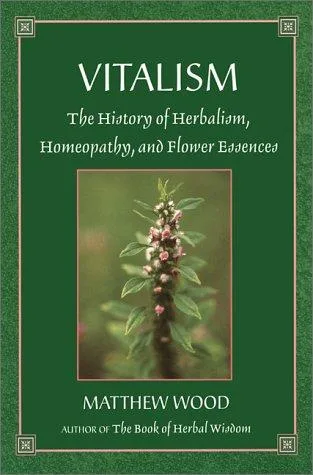
Matthew Wood’s "Vitalism" is a welcome, if somewhat dense, exploration of a philosophical current often sidelined in modern scientific discourse. The author meticulously traces the concept of a distinct life force from its historical proponents, avoiding the pitfalls of mere historical summary by imbuing the narrative with a critical yet sympathetic lens. A particular strength lies in Wood’s detailed exposition of figures like Hans Driesch, whose work on entelechy offers a concrete example of vitalist argumentation. However, the book occasionally suffers from its own depth; the sheer volume of historical figures and philosophical nuances can make it challenging for the uninitiated to maintain a clear through-line. The discussion of the vital force's relationship to biological processes, while thorough, sometimes feels abstract rather than practically grounded. Despite this, "Vitalism" serves as an essential corrective to purely mechanistic views of life, offering a robust defense of an enduring, if heterodox, perspective.
📝 Description
72
Matthew Wood's 2000 book examines vitalism, the idea that life possesses an animating force beyond mere chemical processes.
Matthew Wood's "Vitalism" was published in 2000. It details the philosophy that living things are fundamentally different from nonliving matter. This viewpoint suggests that life has an intrinsic animating principle, a 'vital force,' which cannot be fully explained by physical or chemical interactions alone. The book tracks the history of this concept, showing how it appeared in different scientific and philosophical traditions. Wood discusses how vitalism challenged materialistic views of biology and medicine, particularly during the late 19th and early 20th centuries when it was debated in scientific communities. The work acknowledges that while mainstream science eventually favored reductionist explanations, vitalist thought continued in philosophical and esoteric circles.
This book is for anyone questioning purely materialistic explanations for life, especially those interested in the philosophical basis of biology and medicine. It will appeal to students of esoteric traditions, historians of science, and practitioners who seek to understand the nonphysical aspects of existence. Readers involved with alternative healing or philosophies that highlight an energetic or spiritual dimension to health will find useful insights. A willingness to engage with historical scientific ideas and philosophical arguments is necessary.
Vitalism stands in contrast to purely mechanistic worldviews, aligning with esoteric traditions that acknowledge subtle energies or spiritual forces as fundamental to existence. Throughout history, various occult philosophies have posited such animating principles, distinct from the physical body. This book situates vitalism within a lineage of thought that often ran counter to prevailing scientific materialism, finding resonance with traditions that emphasize a holistic and energetic understanding of life.
💡 Why Read This Book?
• Gain a nuanced understanding of the 'vital force' concept, moving beyond simplistic notions to grasp its historical philosophical context as presented through figures like Hans Driesch. • Explore the historical debates between vitalism and mechanistic science in the late 19th and early 20th centuries, understanding the intellectual climate that shaped these opposing views. • Discover how vitalist philosophy has informed alternative approaches to health and biology, offering a framework for understanding life that extends beyond purely physical explanations.
⭐ Reader Reviews
Honest opinions from readers who have explored this book.
❓ Frequently Asked Questions
What is the primary argument of vitalism as presented in Matthew Wood's book?
The book argues that life possesses an inherent animating principle or 'vital force' that cannot be reduced to or explained solely by mechanical or chemical processes, distinguishing living matter from inanimate substances.
When was Matthew Wood's book 'Vitalism' first published?
Matthew Wood's 'Vitalism' was first published in the year 2000, offering a contemporary analysis of this historical philosophical current.
Which historical figures are discussed in relation to vitalism in the book?
The book discusses various historical figures, including prominent vitalists like Hans Driesch, who are central to understanding the development and arguments of vitalist philosophy.
Does 'Vitalism' by Matthew Wood offer practical applications for modern practitioners?
While primarily a historical and philosophical exploration, the book offers perspectives that can inform practitioners of alternative healing or those interested in holistic views of life and health.
What philosophical challenges does vitalism address?
Vitalism addresses the challenge of explaining the unique characteristics of living organisms, such as self-organization and purpose, which proponents argue are not fully accounted for by purely materialistic or mechanistic scientific models.
Is 'Vitalism' by Matthew Wood suitable for someone new to esoteric philosophy?
The book is suitable for those with an interest in the philosophical underpinnings of life and science, but it assumes a certain level of engagement with historical intellectual discourse.
🔮 Key Themes & Symbolism
The Vital Force
The central concept is the 'vital force,' an intrinsic animating principle that distinguishes living beings from inert matter. Wood explores how this force was conceptualized historically, not as mere energy, but as an organizing and guiding entity. It's presented as the reason life exhibits complexity, self-preservation, and directed activity that purely mechanical or chemical laws struggle to explain. The work examines the implications of this force for understanding biological phenomena, from growth to consciousness, positioning it as a fundamental aspect of existence.
Mechanistic vs. Vitalistic Worldviews
This theme contrasts the reductionist, mechanistic view of life with the vitalist perspective. The book details the historical scientific milieu where materialism gained prominence, offering a counterpoint to the vitalist arguments. It highlights how vitalists perceived the mechanistic model as insufficient to account for the emergent properties of life. The discussion includes the intellectual battles fought by proponents of vitalism against the prevailing scientific orthodoxy of the late 19th and early 20th centuries.
Historical Development of Vitalism
Wood traces the lineage of vitalist thought through various eras and thinkers. This includes examining early animistic beliefs and progressing to more sophisticated philosophical and scientific formulations. The book details how the concept evolved, with figures like Hans Driesch introducing specific concepts like entelechy. This historical survey underscores vitalism's enduring presence as an alternative framework for understanding life, even as it faced significant opposition from mainstream science.
Implications for Biology and Medicine
The book touches upon the practical and theoretical implications of vitalism for understanding biological processes and health. It suggests that a vitalistic perspective can offer insights into disease etiology and treatment that differ from purely symptom-focused or biochemical approaches. This theme explores how an understanding of an animating force might influence how one views the body's inherent capacity for healing and its complex organizational principles.
💬 Memorable Quotes
Direct passages from the work, attributed to the author.
“The concept of entelechy proposed a non-material guiding principle.”
— This refers to Hans Driesch's vitalist concept, suggesting that living organisms are directed by an inherent, non-physical force or purpose that governs their development and functions, a key point of contention with mechanistic science.
“The debate challenged the purely mechanistic reduction of living systems.”
— This interpretation highlights the fundamental conflict explored in the book: vitalism's challenge to the scientific view that life can be entirely explained by physics and chemistry, arguing for a distinct animating principle.
“The vital force is often described as organizational and formative.”
— This concept emphasizes the role of the vital force not just as an energy source, but as a principle that shapes and directs biological structures and processes, giving life its characteristic form and order.
💡 Key Ideas
Editorial paraphrase of the work's core concepts — not direct quotes.
Life is not merely a sum of physical and chemical reactions.
This paraphrased concept captures the core of vitalism, asserting that biological organisms possess a unique quality or force that transcends the physical components alone, making them distinct from non-living matter.
Early vitalists saw an inherent 'will' or 'drive' in nature.
This paraphrased idea points to the historical roots of vitalism, where early thinkers attributed to natural phenomena, particularly living things, an internal impulse or intention, distinct from external physical forces.
🌙 Esoteric Significance
Tradition
Vitalism, as explored in Wood's work, draws from a long lineage of Western esoteric thought that posits an animating principle beyond the purely physical. While not strictly Hermetic, Gnostic, or Kabbalistic, it shares common ground with these traditions in their exploration of subtle energies, life forces (like 'prana' or 'chi' in Eastern thought), and the idea that consciousness or spirit is integral to existence. It represents a philosophical bridge between scientific inquiry and metaphysical speculation, seeking to account for life's inherent dynamism and organization.
Symbolism
While "Vitalism" itself may not be heavily reliant on overt symbolism, the concept of the 'vital force' can be seen as symbolic of life's inherent mystery and irreducible complexity. Historically, vitalist ideas have been associated with symbols of creation, growth, and inherent purpose, such as the tree of life or alchemical processes of generation. The book’s exploration of this force implicitly engages with the symbolic representation of life itself as something dynamic, organized, and more than the sum of its material parts.
Modern Relevance
Contemporary thinkers and practitioners in fields like integral medicine, ecopsychology, and certain branches of bioregionalism echo vitalist sentiments. The critique of purely mechanistic views of health and ecological systems finds resonance today, as does the search for a more holistic understanding of life. While not always explicitly named, the underlying principle that life possesses an inherent organizational capacity and perhaps a form of agency continues to inform perspectives that seek to integrate spirit, consciousness, and the material world.
👥 Who Should Read This Book
• Students of the history of science and philosophy interested in the debates surrounding materialism and the nature of life. • Practitioners of alternative or complementary medicine seeking to understand the theoretical underpinnings of holistic health approaches. • Individuals exploring esoteric or metaphysical frameworks who wish to connect them with historical scientific and philosophical discussions.
📜 Historical Context
Published in 2000, Matthew Wood’s "Vitalism" emerged at a time when the mechanistic paradigm dominated biological and medical sciences. The late 19th and early 20th centuries, however, were a fertile ground for vitalist thought, directly challenging the reductionist approaches gaining traction. Figures like Hans Driesch in Germany, with his concept of 'entelechy,' actively debated against the purely materialistic explanations offered by contemporary scientists. While mainstream science largely moved towards molecular and genetic explanations, vitalist ideas persisted in certain philosophical circles and influenced alternative healing practices. Wood’s work revisits this intellectual conflict, providing a historical and philosophical anchor for understanding an alternative current of thought that, while not dominant, remained a significant undercurrent in the discourse on life.
📔 Journal Prompts
The concept of the vital force as a distinct animating principle.
Hans Driesch's theory of entelechy in biological organization.
The core differences between vitalist and mechanistic explanations of life.
How the historical debate about vitalism informs contemporary views on life.
The idea that living organisms possess an inherent 'drive' or purpose.
🗂️ Glossary
Vitalism
A philosophical doctrine asserting that the processes of life are fundamentally different from and cannot be explained by the processes of non-living matter, positing an intrinsic 'vital force' or principle.
Vital Force
The hypothetical animating principle or energy that proponents of vitalism believe is unique to living organisms and responsible for their distinct characteristics and activities.
Mechanistic Explanation
A scientific approach that seeks to explain phenomena, including life, purely in terms of physical laws, chemical reactions, and material components, without recourse to non-physical forces.
Entelechy
A concept developed by philosopher Hans Driesch, referring to a vitalistic principle or force that guides and organizes living organisms towards their specific form and function.
Reductionism
The practice of analyzing and describing a complex phenomenon in terms of its simple or fundamental constituents, often applied in science to reduce complex biological processes to basic physical and chemical laws.
Holistic Approach
A perspective that emphasizes the interconnectedness and interdependence of all parts of a system, especially in medicine, viewing the body and mind as a unified whole rather than separate components.
Biochemistry
The branch of science that explores the chemical processes within and related to living organisms, often forming the basis for mechanistic explanations of life.
🔮 Readers Also Liked
Browse all →









More by Matthew Wood
All books →

More Free Occult Philosophy Books
View all →