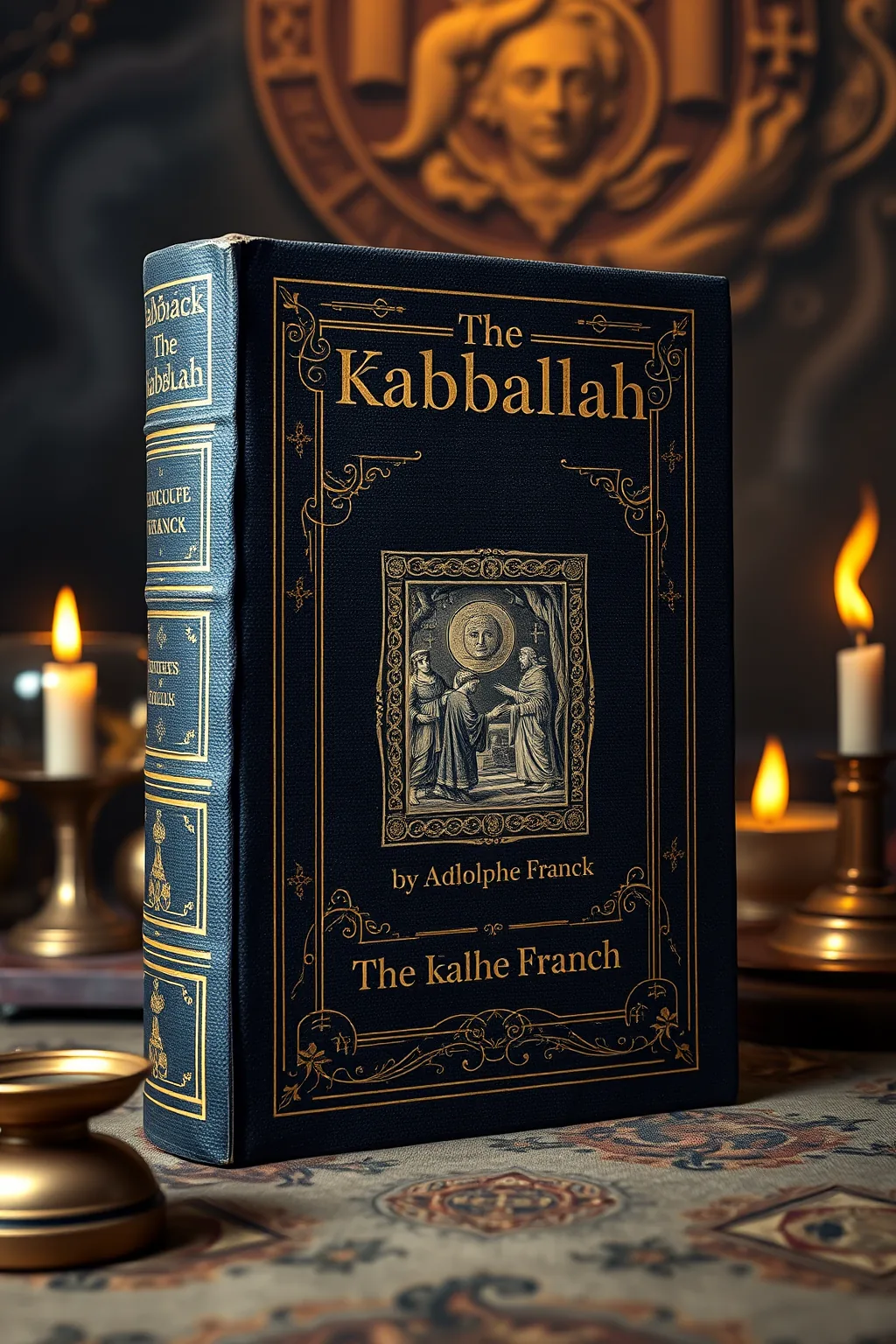
The kabbalah
 62
62

The kabbalah


Lorelei Sage (Contemplative Literature Editor) — Adolphe Franck's 'The Kabbalah' stands as a beacon for those navigating the labyrinthine pathways of Jewish mysticism. Franck masterfully deciphers the complex symbolic language and philosophical underpinnings of this ancient tradition, offering clarity without sacrificing its inherent mystery. His scholarship is evident, yet the text remains accessible to the dedicated seeker. This work is particularly illuminating for its exploration of the Sefirot and the divine emanations, providing a robust framework for understanding the Kabbalistic worldview. It is an essential read for anyone drawn to the esoteric traditions of the West and seeking a deeper connection to the spiritual dimensions of life.
📝 Description
62
Adolphe Franck's 'The Kabbalah' was first published in 1843, examining Jewish mystical thought.
Adolphe Franck's 1843 study, 'The Kabbalah,' examines the core tenets of Jewish mysticism. The author details the concept of Ein Sof, the unmanifest divine, and its subsequent emanations, the Sefirot, as they form the structure of the cosmos. Franck traces the symbolic language and divine names found within Kabbalistic texts, illustrating the Tree of Life and its sacred geometry. The book aims to clarify these complex ideas for the serious student of mysticism. It discusses how Kabbalah views the interconnectedness of existence and the potential for human awareness to reach higher states of being. Franck's work serves as an introduction to the philosophical underpinnings of this esoteric tradition.
Franck carefully lays out the progression of divine manifestation as understood in Kabbalistic lore. He discusses the role of Hebrew letters and divine names as vehicles for mystical insight. The book also touches upon the soul's perceived journey toward reunion with the divine source. Franck's approach is analytical, seeking to present the system of Kabbalah in a coherent manner for a Western audience.
This book engages with the tradition of Kabbalah, a school of Jewish mysticism that developed in the Middle Ages. Kabbalah seeks to understand the divine nature and the creation of the universe through esoteric interpretations of the Torah. Its core concepts include the emanation of the divine into the world (Sefirot), the mystical significance of Hebrew letters and names, and the structure of the cosmos as represented by the Tree of Life. Franck's work, written in the mid-19th century, represents an early scholarly attempt to systematize and explain these complex ideas to a broader, non-Jewish intellectual audience, placing it within the context of Western esoteric studies.
💡 Why Read This Book?
Unravel the profound mysteries of Jewish mysticism. 'The Kabbalah' offers a comprehensive and accessible entry into the esoteric wisdom of this ancient tradition. Ideal for students of comparative religion, spiritual seekers exploring divine architecture, and practitioners aiming to deepen their understanding of Kabbalistic principles and symbolism. Unlock the secrets of creation and the soul's ascent.
⭐ Reader Reviews
Honest opinions from readers who have explored this book.
❓ Frequently Asked Questions
What is Kabbalah?
Kabbalah is a mystical tradition within Judaism that seeks to understand the nature of God and the universe through esoteric interpretations of scripture and divine revelation. It explores concepts like divine emanations and the structure of reality.
Who was Adolphe Franck?
Adolphe Franck (1809-1893) was a prominent French philosopher and scholar, renowned for his in-depth studies of Jewish mysticism and his contributions to understanding Kabbalistic thought, making complex spiritual ideas accessible to a wider audience.
What are the Sefirot?
The Sefirot are the ten divine emanations or attributes through which God, the infinite and unknowable, reveals Himself and interacts with creation. They form the structure of the Kabbalistic Tree of Life.
Is this book suitable for beginners?
While dense with information, Franck's clear prose makes 'The Kabbalah' an excellent starting point for dedicated beginners. It provides a solid foundation before delving into more advanced or specialized Kabbalistic texts.
What makes this book 'esoteric'?
The book is considered esoteric because it delves into hidden meanings, symbolic language, and mystical interpretations of religious texts, aiming to provide insights into the divine and the nature of reality beyond conventional understanding.
🔮 Key Themes & Symbolism
The Divine Emanations (Sefirot)
Franck meticulously details the ten Sefirot, the divine attributes that form the structure of the Kabbalistic universe. These emanations, from Keter (Crown) to Malkuth (Kingdom), represent the stages of God's self-manifestation and the pathways through which creation unfolds. Understanding the Sefirot is crucial for grasping the interconnectedness of the divine and the material realms, offering a map of consciousness and cosmic order.
Symbolism and Divine Language
At the heart of Kabbalah lies a rich system of symbolism, and Franck expertly deciphers the esoteric meanings embedded within Hebrew letters, divine names, and scriptural narratives. This section explores how these symbols are not mere decorations but potent keys to unlocking hidden spiritual truths, revealing the divine blueprint of existence and the underlying unity of all phenomena. It highlights the transformative power of sacred language.
The Ascent of the Soul
This volume illuminates the Kabbalistic concept of the soul's journey toward reunion with the divine. Franck outlines the spiritual disciplines and meditative practices that facilitate this ascent, emphasizing self-knowledge, purification, and the attainment of higher consciousness. The book presents a profound vision of human potential and the ultimate purpose of existence: to achieve union with the Infinite through mystical experience.
💬 Memorable Quotes
Direct passages from the work, attributed to the author.
“The Tree of Life is the key to the universe.”
— This highlights the central importance of the Sefirotic diagram in Kabbalistic cosmology. It serves as a map of divine forces, human consciousness, and the structure of reality, essential for reading through the esoteric pathways.
“Hidden knowledge is revealed through contemplation.”
— This emphasizes the experiential and meditative aspect of Kabbalah. True understanding is not solely intellectual but achieved through deep inner reflection and spiritual practice, unveiling truths beyond ordinary perception.
“The divine is present in every aspect of creation.”
— This speaks to the immanence of God within the Kabbalistic worldview. It suggests that the sacred is not distant but woven into the fabric of the material world, inviting seekers to find the divine everywhere.
“To know God is to know oneself.”
— This points to the profound connection between self-awareness and divine knowledge in Kabbalah. The path to understanding the Infinite is through the introspection and understanding of one's own inner spiritual landscape.
💡 Key Ideas
Editorial paraphrase of the work's core concepts — not direct quotes.
The Kabbalah is the science of the divine.
This quote captures the core purpose of Kabbalah as presented by Franck: not merely a religious philosophy, but a profound system of knowledge that seeks to understand the very essence of the divine and its relationship to all creation.
🌙 Esoteric Significance
Tradition
This work is a starting point for understanding Jewish Kabbalah, one of the most influential esoteric traditions in Western esotericism. It explores the mystical interpretations of the Torah and the Hebrew alphabet, exploring concepts like divine emanations (Sefirot), the nature of the soul, and the pathways to spiritual illumination. It provides a structured yet profound exposition of a lineage of thought that has informed Gnosticism, Hermeticism, and later occult movements.
Symbolism
Franck’s exploration is rich with the symbolic language of Kabbalah. Central to this is the Tree of Life, a diagram representing the ten Sefirot and their interconnections, symbolizing the divine structure of existence and the soul's journey. The Hebrew alphabet, divine names, and scriptural allegories are presented not as literal accounts but as coded keys to unlocking profound metaphysical and cosmological truths, offering a visual and linguistic map of the sacred.
Modern Relevance
In contemporary times, 'The Kabbalah' remains highly relevant for spiritual seekers, philosophers, and practitioners interested in the perennial wisdom traditions. Its insights into consciousness, the nature of reality, and the human potential for spiritual growth resonate deeply with modern inquiries into mindfulness, interconnectedness, and the search for meaning. The book offers timeless frameworks for understanding the self and the cosmos, providing a rich source for personal transformation and philosophical contemplation.
👥 Who Should Read This Book
This important work is essential for scholars of comparative religion and Jewish history, offering a rigorous yet accessible academic foundation. Spiritual seekers and contemplative individuals drawn to the mysteries of creation, divine consciousness, and the soul’s journey will find profound guidance. Practitioners of meditation and esoteric disciplines will benefit from the detailed exposition of Kabbalistic cosmology and symbolism. Beginners seeking a comprehensive introduction to Kabbalah will find Franck’s clear exposition invaluable, while those with prior knowledge will appreciate the depth and scholarly nuance provided.
📜 Historical Context
Adolphe Franck's 'The Kabbalah,' first published in the mid-19th century, emerged during a period of intense scholarly interest in comparative religion and esoteric traditions across Europe. As the Enlightenment's rationalism began to make room for a renewed fascination with mysticism and the occult, scholars like Franck sought to systematically document and explain ancient spiritual systems. His work contributed to a broader effort to make Kabbalistic thought accessible to a non-Jewish audience, bridging the gap between academic inquiry and spiritual exploration. It reflects a time when the intellectual world was grappling with the profound philosophical and theological questions that Kabbalah addresses, positioning it as a significant contribution to the burgeoning fields of religious studies and mystical philosophy.
📔 Journal Prompts
Reflect on the Sefirotic diagram. Which emanation resonates most with your current life experience, and why?
Consider the concept of divine language. How might the symbolic interpretation of words and letters offer new perspectives on your understanding of the world?
Explore the idea of the soul's ascent. What steps can you take in your daily life to foster spiritual growth and connection?
How does the Kabbalistic view of interconnectedness challenge or affirm your personal beliefs about unity and separation?
Contemplate the balance between the hidden and revealed aspects of truth. Where do you encounter this dynamic in your own life or studies?
🗂️ Glossary
Ein Sof
The Kabbalistic term for the infinite, unknowable, and transcendent Godhead, existing beyond all comprehension and manifestation. It represents the ultimate divine mystery before any creation or emanation.
Sefirot
The ten divine emanations or attributes through which God reveals Himself and interacts with creation. They form the structure of the Kabbalistic Tree of Life, representing stages of divine manifestation and cosmic order.
Tree of Life
A central diagram in Kabbalah, composed of ten interconnected Sefirot, symbolizing the divine structure of the universe, the pathways of creation, and the journey of the soul towards spiritual realization.
Tzimtzum
The Kabbalistic concept of divine 'contraction' or withdrawal, believed to have occurred to make space for creation. It signifies God's self-limitation to allow for the existence of a separate reality.
Gematria
A Kabbalistic method of interpreting the Hebrew Bible by assigning numerical values to letters and analyzing the numerical equivalence of words to reveal hidden meanings and connections.
This book appears in 1 collection
🔮 Readers Also Liked
Browse all →







More by Adolphe Franck
All books →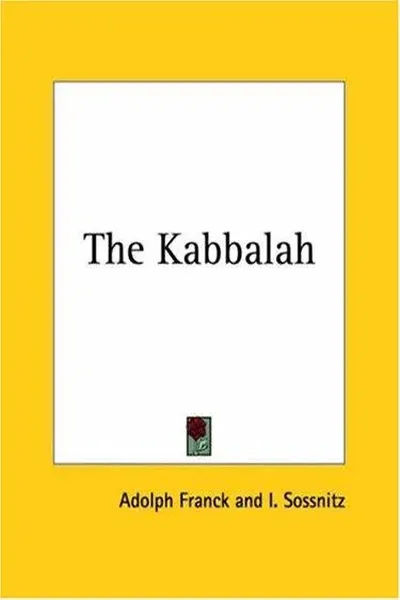
From the “Kabbalah” Collection
View all →






More Free Kabbalah & Jewish Mysticism Books
View all →