The Vibrating Universe
 78
78

The Vibrating Universe
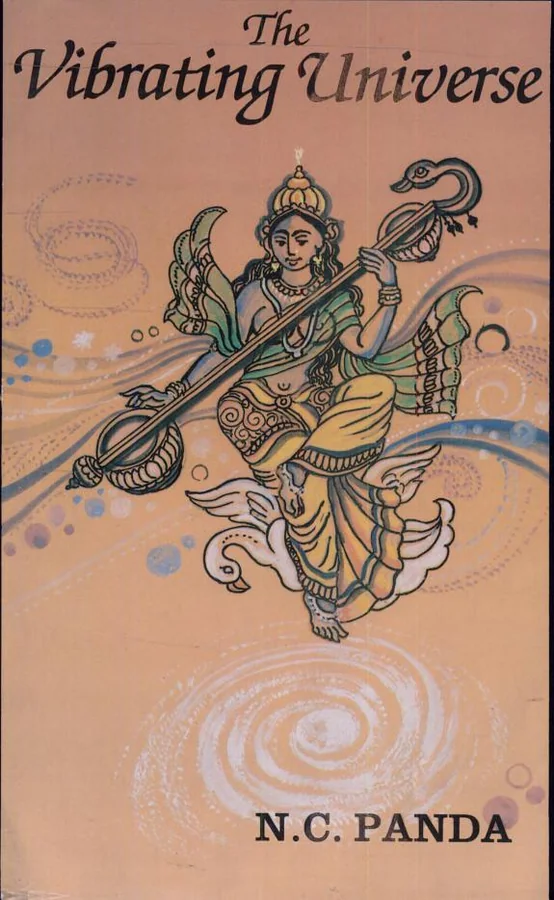
Nr̥siṃhacaraṇa Paṇḍā’s "The Vibrating Universe" attempts a formidable intellectual feat: the unification of advanced physics with ancient Indian metaphysics. The book’s strength lies in its meticulous dissection of philosophical problems like monism versus pluralism, presenting arguments with an academic rigor often absent in popular science-spirituality crossovers. Paṇḍā’s analysis of how superstring theory’s vibrating strings can mirror concepts like 'Nada Brahma' from Advaita Vedanta is particularly compelling. However, the dense philosophical argumentation and specialized terminology can present a significant barrier to entry, even for those familiar with both physics and Vedanta. A passage detailing the re-establishment of non-dualism through this vibrational framework, while conceptually sound, requires considerable reader concentration. Ultimately, it is a serious scholarly contribution for a niche audience, offering a unique, albeit challenging, perspective on reality's fundamental nature.
📝 Description
78
Nr̥siṃhacaraṇa Paṇḍā's 1995 book synthesizes superstring theory with Advaita Vedanta and Kashmiri Saivism.
The Vibrating Universe examines the philosophical conflict between monism and pluralism, tracing its presence in Indian thought, Western philosophy, and scientific theories from classical to modern times. Paṇḍā argues against dualistic and pluralistic views, instead proposing a non-dualistic basis for reality. The book's core idea is that vibration itself forms the fundamental element of existence, connecting physical events with consciousness.
This work is best suited for advanced students and scholars in comparative philosophy, theoretical physics, and esoteric studies. Those interested in harmonizing quantum mechanics with ancient metaphysical ideas will find much to consider. It offers a rigorous intellectual exploration of reality's nature, especially appealing to readers drawn to Indian philosophical systems and their potential links to current scientific thinking.
Published in 1995, this work appeared as dialogue between science and spirituality gained traction. While earlier popular books had linked quantum physics to Eastern mysticism, Paṇḍā's book offered a more focused philosophical and theoretical integration. It centered on vibration as a unifying principle across disciplines. The book's detailed analysis sought to bridge these fields, often facing skepticism from both scientific and traditional philosophical communities.
💡 Why Read This Book?
• Gain a unique perspective on the monism-pluralism debate by understanding how Nr̥siṃhacaraṇa Paṇḍā uses the 1995 publication of "The Vibrating Universe" to argue for non-dualism. • Explore the conceptual overlap between modern superstring theory and ancient Indian philosophical concepts like 'Nada Brahma,' as detailed in the book's synthesis. • Understand the philosophical underpinnings of Kashmiri Saivism concerning vibration, and how it is presented as a unifying principle with contemporary physics.
⭐ Reader Reviews
Honest opinions from readers who have explored this book.
❓ Frequently Asked Questions
What specific theories from modern physics does "The Vibrating Universe" connect with Indian philosophy?
The book primarily synthesizes the superstring theory of modern physics with concepts from Advaita Vedanta and Kashmiri Saivism, focusing on the idea of vibration as a foundational element of reality.
What philosophical problem is central to "The Vibrating Universe"?
The central philosophical problem addressed is monism versus pluralism, which the author analyzes through the lenses of Indian philosophy, Western thought, and classical and modern science.
What is the primary philosophical stance re-established in the book?
The work systematically rejects dualism and pluralism, re-establishing a non-dualistic understanding of existence and reality.
When was "The Vibrating Universe" first published?
The book was first published in 1995, positioning it within a later wave of scholarship attempting to bridge scientific and spiritual/philosophical traditions.
Who is the author of "The Vibrating Universe"?
The author is Nr̥siṃhacaraṇa Paṇḍā, who sought to integrate advanced physics with profound metaphysical doctrines from Indian traditions.
What is the core concept Nr̥siṃhacaraṇa Paṇḍā uses to unify physics and philosophy?
The core concept is 'vibration,' which the author posits as a unifying principle explaining phenomena across both the physical universe as described by superstring theory and the metaphysical insights of Advaita Vedanta and Kashmiri Saivism.
🔮 Key Themes & Symbolism
Vibration as Universal Principle
The book posits vibration not merely as a physical phenomenon but as the fundamental essence of all existence. This concept bridges the gap between the micro-level oscillations of fundamental strings in modern physics and the macrocosmic 'sound' or 'vibration' (Nada Brahma) central to Advaita Vedanta. It suggests that the universe, at its deepest level, is a symphony of interconnected vibrations, offering a unified perspective that transcends materialist or purely spiritual explanations.
Monism vs. Pluralism Reconciled
Nr̥siṃhacaraṇa Paṇḍā critically examines the age-old philosophical debate between monism (the view that reality is fundamentally one) and pluralism (the view that reality consists of many independent entities). By drawing parallels between advanced physics and Indian metaphysical traditions, the work argues for a sophisticated form of monism, where apparent multiplicity arises from a singular, vibratory ground of being, thereby resolving the philosophical tension.
Advaita Vedanta and Kashmiri Saivism
The work meticulously integrates the core tenets of Advaita Vedanta, particularly its concept of Brahman as the sole reality, and Kashmiri Saivism's complex cosmology, often centered on Shiva as the ultimate consciousness. The author demonstrates how the vibrational framework of these traditions offers a sophisticated metaphysical model that speaks to, and can be illuminated by, contemporary scientific theories like superstring theory.
Physics and Metaphysics Convergence
A central aim of "The Vibrating Universe" is to showcase a genuine convergence between the empirical findings of modern physics and the intuitive wisdom of ancient metaphysical systems. It moves beyond superficial comparisons to offer a detailed philosophical argument for how theories describing the fundamental constituents of matter as vibrating strings can be seen as corroborating, or at least harmonizing with, useful insights into the nature of reality developed millennia ago.
💬 Memorable Quotes
Direct passages from the work, attributed to the author.
“The philosophical problem of monism versus pluralism as given in Indian philosophy, Western philosophy and classical as well as modern science has been analytically presented.”
— This highlights the book's intellectual scope, indicating its intent to tackle a foundational philosophical conflict by examining it across diverse intellectual traditions and historical periods.
“In this attempt dualism and pluralism have been rejected and non dualism has been re-established.”
— This statement directly conveys the work's ultimate philosophical conclusion: a return to and reinforcement of a non-dualistic worldview, achieved through the synthesis of scientific and metaphysical concepts.
“The Vibrating Universe synthesizes the superstring theory of modern physics and the vibration concept of advaita vedanta and Kashmiri Saivism.”
— This sentence expresses the book's core methodology and subject matter, emphasizing the fusion of cutting-edge scientific theory with ancient spiritual doctrines centered on the idea of vibration.
“A vibration theory has been successfully brought out with a fusion of the doctrines”
— This suggests the author's success in formulating a cohesive 'vibration theory' by artfully merging disparate philosophical and scientific concepts, presenting it as a key outcome of the book.
“The philosophical problem of monism versus pluralism...”
— This phrase points to the book's analytical approach, suggesting that it doesn't just present ideas but engages in a rigorous examination of fundamental philosophical questions.
🌙 Esoteric Significance
Tradition
This work fits within the broader esoteric tradition of seeking unifying principles between the material and the spiritual, drawing heavily from the Vedanta and Saiva traditions of Indian philosophy. It aligns with the concept of 'perennial philosophy' – the idea that diverse spiritual traditions share a common underlying truth. By framing these ancient insights through the lens of modern physics, it attempts to validate and revitalize esoteric metaphysics for a contemporary, scientifically-minded audience.
Symbolism
The primary symbolic motif is 'vibration' itself, representing the fundamental energy or consciousness from which all phenomena arise. This connects to the Vedic concept of 'Nada Brahma' (the world as sound/vibration) and the Saivite understanding of Shiva's cosmic dance as a manifestation of vibratory energy. The concept of 'strings' in superstring theory becomes a modern symbolic echo of these ancient ideas, suggesting a universal language of resonance and interconnectedness.
Modern Relevance
Contemporary thinkers exploring consciousness, quantum entanglement, and unified field theories often revisit the intersection of physics and metaphysics. Works like Paṇḍā's inform discussions on panpsychism, the nature of reality in quantum mechanics, and the potential for ancient wisdom traditions to offer complementary perspectives to scientific inquiry. It remains relevant for those seeking to understand the philosophical implications of physics beyond its purely empirical applications.
👥 Who Should Read This Book
['• Advanced students of comparative philosophy: Those seeking to understand how Indian metaphysical concepts like Advaita Vedanta and Kashmiri Saivism can be philosophically aligned with modern scientific theories.', '• Theoretical physicists interested in metaphysics: Researchers who are open to exploring the philosophical underpinnings and potential metaphysical interpretations of theories like superstring theory.', '• Practitioners of Indian spiritual traditions: Individuals familiar with Vedanta or Saivism who wish to see their philosophical frameworks discussed in dialogue with contemporary scientific discourse.']
📜 Historical Context
Published in 1995, Nr̥siṃhacaraṇa Paṇḍā’s "The Vibrating Universe" emerged during a period when interdisciplinary dialogues between science and philosophy/spirituality were gaining momentum. Books like Fritjof Capra's "The Tao of Physics" (1975) had already opened the door to comparing quantum mechanics with Eastern thought. However, Paṇḍā’s work distinguishes itself through a deeper philosophical integration, specifically targeting the monism vs. pluralism debate and grounding it in the vibrational concepts of Advaita Vedanta and Kashmiri Saivism. This era saw continued exploration of consciousness studies and quantum physics interpretations, though Paṇḍā's approach offered a distinct theoretical framework. While direct academic engagement or controversy surrounding this specific work is not widely documented, such interdisciplinary texts often faced scrutiny from both traditional scientific circles, which demanded empirical proof, and orthodox philosophical departments, which viewed metaphysical claims with skepticism.
📔 Journal Prompts
The concept of vibration as a unifying principle between physics and Advaita Vedanta.
Analysis of monism vs. pluralism through the lens of superstring theory.
Kashmiri Saivism's perspective on reality's vibratory nature.
Re-establishing non-dualism: Implications of a unified vibration theory.
The philosophical problem of reconciling diverse scientific and philosophical models of existence.
🗂️ Glossary
Superstring Theory
A theoretical framework in physics where the fundamental constituents of the universe are one-dimensional vibrating 'strings' rather than point-like particles. Different vibration modes of these strings correspond to different fundamental particles.
Advaita Vedanta
A prominent school of Hindu philosophy emphasizing the non-duality of existence, positing that Brahman (the ultimate reality) is identical with Atman (the individual self), and the perceived world is ultimately illusory (maya).
Kashmiri Saivism
A non-dualistic Shaivite tradition originating in Kashmir, which views Shiva not just as a deity but as the supreme, all-pervading consciousness and reality, from which the universe emanates.
Monism
The philosophical view that reality is ultimately composed of a single substance or principle. In metaphysics, it asserts that only one kind of substance exists.
Pluralism
The philosophical view that reality consists of many different kinds of substances or principles. It posits the existence of multiple, independent realities or entities.
Dualism
The philosophical view that reality is composed of two fundamental and irreducible principles or substances, often mind and matter, or good and evil.
Nada Brahma
A Sanskrit phrase from Hindu philosophy meaning 'the world is sound' or 'Brahman is sound.' It signifies the concept that the universe originates from and is sustained by primordial vibration or sound.
This book appears in 1 collection
🔮 Readers Also Liked
Browse all →









From the “Vedanta” Collection
View all →





More Free Occult Philosophy Books
View all →