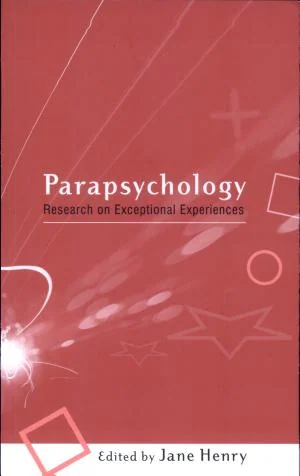
Parapsychology
 75
75

Parapsychology
Jane Henry's "Parapsychology" (2005) approaches its subject with a welcome sobriety, steering clear of the more sensationalist claims often associated with the field. The strength lies in its presentation of research from both UK and US institutions, offering a comparative perspective on the scientific study of psychic phenomena. However, the work occasionally feels like a survey rather than a deep dive, presenting findings without always fully exploring the philosophical implications of what might constitute non-sensory communication. A particularly salient section discusses the challenges in designing experiments to rule out fraud and coincidence, highlighting the intricate nature of validating subjective experiences. While it effectively outlines the research landscape, it leaves the reader pondering the ultimate nature of consciousness. This volume serves as a solid, if reserved, introduction to the scientific inquiry into the paranormal.
📝 Description
75
Jane Henry's 2005 book "Parapsychology" examines phenomena beyond conventional perception.
This work rigorously investigates experiences that fall outside standard sensory understanding, such as precognition, telepathy, and psychokinesis. Henry considers whether these events stem from internal mental processes or point to an unknown communication method. The book includes research findings from leading investigators in the US and UK, aiming to offer a clear overview of the scientific study of psychic experiences.
It is for readers curious about the boundaries of human consciousness and the scientific inquiry into paranormal events. The book suits those who question if psychological factors alone explain psychic occurrences or if non-sensory information channels are involved. Readers seeking a balanced account of research, free from sensationalism, will find value here. It is especially relevant for students and researchers in psychology, consciousness studies, and parapsychology.
Published in 2005, "Parapsychology" enters a discourse where consciousness and anomalous experiences remained debated in academic circles. While mainstream psychology often favored materialistic explanations, the field of parapsychology, represented by the researchers cited in this volume, pursued empirical evidence for psi phenomena. The book builds on decades of research into telepathy and clairvoyance, positioning itself within ongoing discussions about whether current scientific frameworks can fully account for the spectrum of human experience.
💡 Why Read This Book?
• Understand the scientific methodology applied to psychic research, as detailed in the experimental designs presented, offering insights into how phenomena like telepathy were tested in the early 2000s. • Gain clarity on the debate between psychological explanations (hallucinations, judgment errors) and potential non-sensory communication, as explored through case studies and research findings. • Appreciate the historical context of parapsychological research by understanding its place within academic discourse and its relationship with established psychological theories prior to 2005.
⭐ Reader Reviews
Honest opinions from readers who have explored this book.
❓ Frequently Asked Questions
What is the primary focus of Jane Henry's "Parapsychology"?
The book focuses on the scientific research into psychic phenomena, such as telepathy and precognition, exploring whether these experiences can be explained by conventional psychological factors or by unknown means of communication.
When was "Parapsychology" by Jane Henry first published?
The book was first published in 2005, placing its research and discussions within the context of early 21st-century scientific inquiry into anomalous experiences.
Who are the primary contributors to the research presented in the book?
Leading researchers from both the UK and the USA contributed their expertise to the book, providing a cross-national perspective on parapsychological studies.
Does the book present definitive proof of psychic abilities?
No, the book presents a lucid account of research and discusses varying opinions on the causes of psychic experiences, rather than claiming definitive proof.
What alternative explanations does the book consider for psychic phenomena?
It considers explanations such as tricks of the mind, hallucinations, mistaken perception, and errors of judgment, alongside the possibility of non-sensory communication.
What is the main goal of the research discussed in "Parapsychology"?
The main goal is to provide a clear account of research into the science of psychic experience, examining the evidence and theories surrounding these exceptional human experiences.
🔮 Key Themes & Symbolism
Methodology of Psi Research
The book critically examines the rigorous methodologies employed in parapsychological research. It details experimental designs aimed at isolating and testing phenomena like telepathy and psychokinesis, distinguishing them from chance occurrences or psychological artifacts. By presenting studies from both UK and US researchers, it illustrates the diverse approaches taken to achieve empirical validation in a field often fraught with skepticism, highlighting the challenges in designing experiments that can withstand scrutiny.
Mind-Body Dualism vs. Materialism
A central theme is the ongoing debate concerning the nature of consciousness and its relationship to the physical brain. The book explores whether observed psychic phenomena necessitate a departure from strictly materialistic explanations, suggesting the possibility of non-sensory means of communication. This inquiry touches upon philosophical questions about mind-body dualism and the potential for consciousness to operate independently of known biological processes.
Distinguishing Psychic Phenomena from Psychological Artifacts
Parapsychology addresses the critical task of differentiating genuine anomalous experiences from misinterpretations of ordinary events. It analyzes how factors like hallucinations, suggestion, confirmation bias, and errors in judgment can mimic psychic abilities. The work underscores the importance of careful observation and critical analysis in evaluating claims of psychic experience, emphasizing the need for scientific rigor.
The Spectrum of Exceptional Experiences
The book covers a range of experiences that fall outside typical sensory perception, including precognition, telepathy, clairvoyance, and psychokinesis. It acknowledges the surprising commonality of such subjective events while presenting scientific investigations into their potential causes. This broad scope aims to provide a comprehensive overview of the field's research landscape as understood in the early 21st century.
💬 Memorable Quotes
Direct passages from the work, attributed to the author.
“Psychic and other exceptional experiences are surprisingly common but opinions as to their causes vary widely.”
— This opening statement sets the stage for the book's central inquiry, highlighting the prevalence of subjective anomalous experiences and the diverse, often conflicting, interpretations surrounding their origins.
“Can tricks of the mind such as hallucinations, mistaken perception and errors of judgement explain such phenomena or does some yet to be understood non-sensory means of communication come into play?”
— This question expresses the core dilemma explored in the book: whether psychic phenomena have mundane psychological explanations or point towards a more extraordinary form of consciousness and interaction.
“In Parapsychology, leading researchers from both the UK and the USA combine their expertise to form a lucid account of research into the science of psychic experience.”
— This highlights the book's academic approach, emphasizing the collaboration of experts from different national contexts to offer a clear and informed overview of scientific investigations in the field.
“Beginning with an intr...”
— This fragment suggests the book likely starts with an introduction that sets the historical or theoretical groundwork for the subsequent exploration of parapsychological research and concepts.
“the science of psychic experience”
— This phrase defines the book's objective: to present parapsychology not as pseudoscience or folklore, but as a legitimate area of scientific study, examining empirical evidence and theoretical frameworks.
🌙 Esoteric Significance
Tradition
While not strictly adhering to a single lineage, "Parapsychology" engages with themes that resonate with Western esoteric traditions, particularly those exploring the nature of consciousness beyond the physical body. It touches upon concepts found in Spiritualism and Theosophy regarding mind's potential for non-local interaction, but grounds these discussions in empirical research rather than revealed doctrine. The work departs from traditional esotericism by prioritizing scientific methodology and seeking verifiable data, positioning itself as an intersection between the mystical and the empirical.
Symbolism
The book itself does not heavily rely on symbolic imagery in its textual content, focusing instead on research data and theoretical analysis. However, the very concept of 'psi' phenomena can be seen as symbolic of humanity's enduring quest to understand consciousness and its potential beyond the observable. The division between 'psychic experience' and 'psychological artifact' can symbolize the eternal tension between the perceived inner reality and the externally verifiable, mirroring alchemical pursuits of hidden truths.
Modern Relevance
Contemporary thinkers in consciousness studies, transpersonal psychology, and even certain branches of neuroscience continue to grapple with the questions posed by parapsychology. Researchers exploring altered states of consciousness, quantum consciousness theories, and the hard problem of consciousness find the empirical data and methodological discussions in works like Henry's relevant. It informs ongoing debates about the limitations of current scientific models and the potential for expanding our understanding of mind and reality.
👥 Who Should Read This Book
• Students of psychology and consciousness studies seeking an empirical overview of research into anomalous mental phenomena, offering data-driven perspectives beyond anecdotal accounts. • Skeptics and researchers interested in the scientific methodology used to investigate claims of telepathy and precognition, providing insight into experimental design and interpretation challenges. • Individuals curious about the boundaries of human perception and the scientific exploration of subjective experiences, offering a balanced examination of findings and debates.
📜 Historical Context
Published in 2005, Jane Henry's "Parapsychology" arrived during a period when the scientific study of anomalous experiences continued to occupy a contested space within academic psychology. While mainstream disciplines often leaned towards reductionist materialism, parapsychology, as explored in this volume, sought to establish empirical grounding for phenomena like telepathy and precognition. This work built upon decades of research, including the influential work of J.B. Rhine at Duke University in the mid-20th century, which sought to quantify psychic abilities. The book’s contributors, hailing from both the UK and USA, reflect the international nature of this research. It engaged with the ongoing debate against skeptical viewpoints, such as those espoused by figures like James Randi, who championed naturalistic explanations and rigorous debunking. The publication aimed to present a lucid account of research, working through the challenges of subjective experience within scientific frameworks.
📔 Journal Prompts
The distinction between 'psychic phenomena' and 'psychological artifacts' as presented in the research.
The implications of 'non-sensory means of communication' for our understanding of consciousness.
Evaluating the commonality of 'exceptional experiences' versus their scientific explanation.
The role of 'leading researchers' in shaping the discourse on psychic phenomena.
Reflecting on experimental designs meant to detect 'psi phenomena'.
🗂️ Glossary
Parapsychology
The study of alleged psychic phenomena (such as telepathy, clairvoyance, precognition, and psychokinesis) and other paranormal claims, often by scientific methods.
Psi (ψ) phenomena
A general term used in parapsychology to encompass extrasensory perception (ESP) and psychokinesis (PK), referring to abilities or events not explained by known physical or biological mechanisms.
Extrasensory Perception (ESP)
The purported ability to acquire information about events or the world around us through means other than the known human senses; includes telepathy, clairvoyance, and precognition.
Psychokinesis (PK)
The purported ability to influence a physical system by thought alone, without the use of physical means; also known as telekinesis.
Hallucinations
Sensory experiences that appear real but are created by the mind, often associated with psychological conditions or altered states of consciousness.
Precognition
The alleged ability to perceive or know future events; a form of extrasensory perception.
Telepathy
The purported communication of thoughts or ideas by means other than the known senses; mind-to-mind communication.
🔮 Readers Also Liked
Browse all →









More Free Occult Philosophy Books
View all →