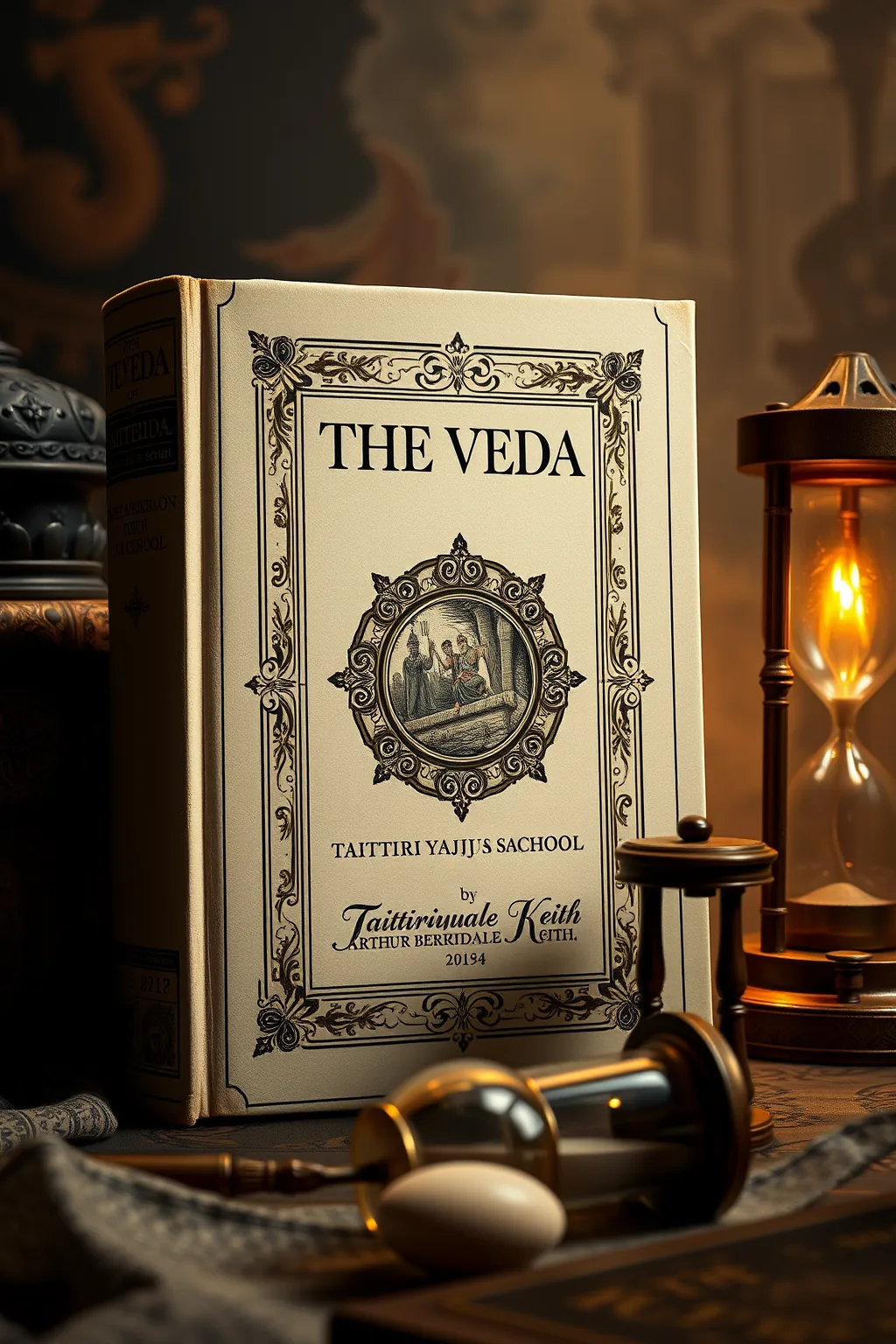
The Veda of the Black Yajus School: entitled Taittiriya Sanhita
 71
71

The Veda of the Black Yajus School: entitled Taittiriya Sanhita



Arthur Berriedale Keith's 1914 rendition of the Taittiriya Sanhita stands as a monumental achievement in Vedic scholarship, particularly for its meticulous translation of the Black Yajus Veda. This work is not merely a historical artifact but a living conduit to the esoteric heart of ancient Indian spiritual practice. Keith masterfully navigates the complex ritualistic and philosophical landscape, revealing the profound symbolism embedded within the mantras and sacrificial formulas. For serious students of Vedic lore, practitioners seeking to understand the roots of their rituals, or scholars of comparative religion, this translation offers unparalleled access to a foundational text. Its strength lies in its faithful adherence to the original, preserving the potent energy and nuanced meaning of these sacred hymns.
📝 Description
71
Arthur Berriedale Keith published his translation of the Taittiriya Sanhita in 1914.
The Taittiriya Sanhita is a central text within the Krishna (Black) Yajur Veda. This collection contains mantras and prose formulas intended for ritual use, particularly for invocation and sacrifice. Tradition attributes its compilation to the sage Tittiri.
Keith's 1914 translation makes these ancient Sanskrit verses available to a contemporary audience. The Sanhita itself describes cosmic order, the relationships between divine powers, and the effectiveness of ritual actions. For scholars and practitioners interested in Vedic traditions, it offers direct access to the language and concepts of this lineage of spiritual transmission.
As a Sanhita of the Yajur Veda, the Taittiriya is a foundational text in Brahmanical Hinduism. It belongs to the Shruti, or "that which is heard," considered divinely revealed. Its focus on precise ritual recitation (yajus) places it within the Karma Kanda, the action portion of Vedic literature. Understanding its structure and content is crucial for grasping the early development of Hindu liturgical practices and cosmological views.
✍️ Author
Arthur Berriedale Keith
Arthur Berriedale Keith was a Scottish Indologist and scholar of Sanskrit literature and law.
💡 Why Read This Book?
Uncover the primordial wisdom of Vedic ritual and philosophy. This translation offers direct access to the foundational mantras and sacrificial formulas of the Black Yajus Veda. Ideal for spiritual seekers, scholars of ancient religions, and practitioners interested in the deep roots of Hindu traditions and their symbolic power.
⭐ Reader Reviews
Honest opinions from readers who have explored this book.
❓ Frequently Asked Questions
What is the significance of the 'Black Yajus'?
The term 'Black' refers to a more condensed and integrated form of the Yajur Veda, where the prose mantras are interspersed with the explanatory Brahmanas, offering a unified ritualistic text.
Who was Tittiri, and why is the Sanhita attributed to him?
Tradition attributes the Taittiriya Sanhita to Tittiri, a disciple of the sage Yaska. This attribution highlights the importance of lineage and oral transmission in the preservation of Vedic knowledge.
What are the primary components of the Taittiriya Sanhita?
The Sanhita is primarily composed of mantras (sacred hymns and verses) and prose formulas (yajus) used in various Vedic sacrifices and rituals, alongside associated cosmological and philosophical insights.
Is this translation suitable for beginners?
While profound, Keith's translation is scholarly. Beginners may benefit from supplementary guides to fully grasp the intricate context of Vedic rituals and philosophy.
What role do sacrifices play in the Taittiriya Sanhita?
Sacrifices are central, serving as a means to connect with the divine, maintain cosmic order, and achieve spiritual merit. The text details the procedures and their underlying symbolic meanings.
🔮 Key Themes & Symbolism
The Power of Mantric Utterance
Explore the profound efficacy of sacred chants and prose formulas, the very essence of Vedic ritual. The Taittiriya Sanhita reveals how specific utterances, when performed with precise intention and pronunciation, are believed to shape reality, appease deities, and invoke cosmic energies. This theme explores the vibrational power of language and its role as a conduit for spiritual transformation and material manifestation.
Cosmic Order and Sacrifice
Uncover the intricate relationship between human actions and the stability of the cosmos. The Sanhita elucidates the concept of Rta (cosmic order) and how sacrifices, as meticulously described, are essential for its maintenance. This theme examines the philosophical underpinnings of Vedic cosmology, the interconnectedness of all things, and the role of ritualistic practice in harmonizing the individual with the universal.
Lineage and Esoteric Transmission
Explore the sacred line of transmission through which this ancient knowledge has been preserved. The attribution to Tittiri signifies a lineage of enlightened masters who safeguarded and passed down these profound teachings. This theme highlights the importance of guru-shishya parampara (teacher-disciple tradition) in esoteric traditions and the value of scholarly translations in making such ancient wisdom accessible to contemporary seekers.
💬 Memorable Quotes
Direct passages from the work, attributed to the author.
“Agni is the messenger.”
— This simple statement points to Agni (Fire God) as the divine intermediary, crucial for carrying offerings and prayers from the human realm to the celestial beings.
“He who knows this, obtains heaven.”
— This highlights the soteriological aspect of Vedic ritual, suggesting that proper knowledge and performance lead to spiritual liberation and attainment of higher realms.
“The sacrifice is the world.”
— A profound assertion of the all-encompassing nature of ritual, implying that the act of sacrifice mirrors and sustains the entire universe.
“The metres are the cows.”
— This symbolic equation links the poetic structures of the Vedas (metres) to the life-sustaining cows, emphasizing the nurturing and vital essence of Vedic verses.
“The Brahman is the offering.”
— This elevates the role of the priest (Brahman) to that of the ultimate offering, signifying the dedication of consciousness and spiritual essence in ritual.
🌙 Esoteric Significance
Tradition
The Taittiriya Sanhita is a foundational text within the Vedic tradition, specifically the Shakha (branch) of the Black Yajur Veda. Its esoteric significance lies in its detailed exposition of ritualistic practices and the underlying cosmology that animates them, offering insights into early Brahmanical thought and its mystical dimensions.
Symbolism
Key symbols abound, including Agni (fire) as the divine messenger, Soma (a sacred plant and deity) representing ecstatic experience, and the intricate symbolism of sacrificial animals and offerings, which represent various cosmic forces and aspects of creation. The metres of the Vedic hymns themselves carry symbolic weight, representing different deities and planes of existence.
Modern Relevance
Despite its ancient origins, the Taittiriya Sanhita continues to resonate with modern spiritual practitioners and scholars. Its exploration of consciousness, ritual efficacy, and the interconnectedness of the universe offers timeless wisdom. The translation provides a direct link to the philosophical and spiritual foundations of Hinduism, offering useful insights for those on paths of self-discovery and spiritual growth.
👥 Who Should Read This Book
This translation is essential for scholars of Vedic studies, Indology, and comparative religion seeking an authoritative English rendering of a core scripture. Spiritual seekers interested in the origins of Hindu rituals, the power of mantra, and ancient cosmological understandings will find profound depth. Advanced practitioners seeking to deepen their understanding of Vedic sacrifice and its philosophical underpinnings will also benefit immensely. While dense, it offers foundational knowledge for anyone committed to exploring the esoteric heart of ancient India.
📜 Historical Context
Published in 1914, Arthur Berriedale Keith's translation of the Taittiriya Sanhita emerged during a period of burgeoning Western interest in Eastern philosophies and religions. The late Victorian and Edwardian eras saw a significant wave of Indology, with scholars striving to decipher and disseminate the ancient texts of India. Keith, a prominent scholar of Sanskrit and Vedic literature, contributed to this movement by making foundational Vedic texts accessible to an English-speaking audience. His work provided an invaluable resource for academics, spiritual seekers, and those interested in comparative mythology and religious studies, bridging the gap between ancient Indian traditions and the modern Western intellectual landscape.
📔 Journal Prompts
Reflect on the concept of 'Rta' (cosmic order) as presented in the Sanhita. How does this ancient understanding of order compare to modern scientific or philosophical concepts?
Consider the role of Agni as the divine messenger. In what ways can we act as messengers of the sacred in our daily lives?
The Sanhita describes intricate sacrifices. What symbolic sacrifices can be made in contemporary life to foster spiritual growth or harmony?
Explore the power of 'mantra' as described in the text. How might focused intention and specific utterances influence our reality?
Contemplate the idea that 'the sacrifice is the world.' What does this profound statement imply about our relationship with creation and our actions within it?
🗂️ Glossary
Sanhita
A collection of Vedic hymns, verses, and prose, forming the primary layer of the Vedas. The Taittiriya Sanhita is a specific collection within the Yajur Veda.
Yajus
Prose formulas or sacrificial formulas used in Vedic rituals, forming a significant part of the Yajur Veda.
Mantra
Sacred utterances, hymns, or verses in Sanskrit, believed to possess spiritual power and used for invocation, meditation, and ritual.
Rta
The cosmic order, truth, righteousness, and the principle that governs the universe. Maintaining Rta is a central theme in Vedic thought.
Agni
The Vedic deity of fire, acting as the messenger between humans and gods, and a central figure in sacrifices.
This book appears in 1 collection
🔮 Readers Also Liked
Browse all →







More by Arthur Berriedale Keith
All books →

From the “Transcendental Meditation” Collection
View all →





More Free Spiritual Development Books
View all →