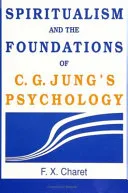
Spiritualism and the Foundations of C. G. Jung's Psychology
 83
83

Spiritualism and the Foundations of C. G. Jung's Psychology
F. X. Charet’s "Spiritualism and the Foundations of C. G. Jung's Psychology" offers a compelling, if occasionally dense, argument for the significant, yet often unacknowledged, influence of 19th-century Spiritualism on Jungian thought. Charet meticulously traces how the Spiritualist movement, with its claims of scientific validation for psychic phenomena and its blending of religious fervor with empirical observation, provided fertile ground for Jung’s early psychological explorations. The author effectively demonstrates how concepts familiar to Spiritualists—such as mediumship and collective unconscious experiences—can be seen as precursors to Jung's later theoretical constructs. One particular strength is the detailed exploration of the 1848 inception of Spiritualism and its subsequent evolution as a 'scientific religion.' A limitation might be the book's academic rigor, which may prove challenging for the casual reader. The discussion surrounding Jung's early exposure to these ideas, particularly the way they informed his understanding of the psyche's non-rational dimensions, is central and well-supported. This work is essential for anyone seeking to understand the full historical and philosophical breadth of Jung's analytical psychology.
📝 Description
83
F. X. Charet's 1993 book connects the Spiritualist movement to C. G. Jung's psychological theories.
Published in 1993, F. X. Charet's work examines the relationship between the 19th-century Spiritualist movement and the development of C. G. Jung's analytical psychology. Charet argues that Jung's ideas were not formed in isolation but were significantly influenced by the intellectual and spiritual currents of his formative years. The book places Jung's intellectual growth within the vibrant spiritual and scientific atmosphere of the late 1800s, a period marked by the Spiritualist movement's claims of a scientific basis for afterlife belief and spirit communication. This era saw a blurring of empirical investigation and metaphysical speculation, shaping the emerging field of psychology.
Charet details how Spiritualist phenomena such as mediumship, automatic writing, and collective psychic experiences informed Jung's later concepts like the unconscious, archetypes, and the collective psyche. The study highlights Jung's early exposure to these ideas, suggesting they offered a conceptual framework for his psychological models. It also notes the period's broad interest in both the paranormal and developing scientific disciplines, illustrating a complex interplay that contributed to Jung's unique perspective.
This book sits within the study of Western esotericism, specifically its engagement with the history of psychology. The late 19th century was a fertile ground for movements like Spiritualism, which sought rational explanations for phenomena traditionally relegated to religion or superstition. Charet's work traces how these currents, often dismissed by mainstream science, provided conceptual seeds for later psychological systems. It positions Jung's psychology not merely as a scientific endeavor but as a product of a broader cultural and intellectual milieu where the boundaries between the material and immaterial, the known and the unknown, were actively being questioned and redefined.
💡 Why Read This Book?
• Understand the specific spiritual currents, like the Spiritualist movement that emerged around 1848, that directly informed Jung's early psychological theories, providing context beyond typical scientific histories. • Grasp how phenomena investigated by Spiritualists, such as mediumship, offered a framework that foreshadowed Jung's concepts of the collective unconscious and archetypes. • Gain insight into the late 19th-century entanglement of science and religion, a crucial historical backdrop for Jung’s attempt to bridge these domains in his psychology.
⭐ Reader Reviews
Honest opinions from readers who have explored this book.
❓ Frequently Asked Questions
When was F. X. Charet's "Spiritualism and the Foundations of C. G. Jung's Psychology" first published?
The book by F. X. Charet, "Spiritualism and the Foundations of C. G. Jung's Psychology," was first published on January 1, 1993, offering a historical analysis of Jung's influences.
What is the connection between Spiritualism and C. G. Jung's work explored in this book?
The book demonstrates how the Spiritualist movement, with its claims of scientific religion and interest in psychic phenomena from 1848 onward, influenced Jung's early life and the development of his psychological theories.
What historical period does the book focus on regarding Spiritualism and Jung?
It focuses on the late nineteenth century, a period characterized by the rise of Spiritualism and a complex relationship between science and religion, which significantly shaped Jung's intellectual environment.
How did Spiritualism function as a 'scientific religion' in the 19th century?
Spiritualism claimed to provide empirical evidence for spiritual realities, such as communication with the dead, thereby attempting to reconcile religious beliefs with the scientific methodologies of the era.
What specific psychological concepts of Jung are linked to Spiritualist ideas?
The work explores how Spiritualist experiences and beliefs may have laid groundwork for Jung's later concepts of the unconscious, archetypes, and the collective psyche, especially phenomena like mediumship.
Is this book primarily about Spiritualism or Jungian psychology?
It is about the foundational influences on Jung's psychology, specifically investigating how the beliefs, experiences, and intellectual climate of the Spiritualist movement contributed to his developing theories.
🔮 Key Themes & Symbolism
Spiritualism as Scientific Religion
Charet examines the late 19th-century Spiritualist movement's ambition to present itself as a "scientific religion." This ambition, born from the 1848 inception and subsequent decades of activity, sought to validate spiritual experiences through empirical observation and repeatable phenomena, mirroring scientific methods. This effort to bridge the chasm between the material and the spiritual profoundly influenced the intellectual landscape, creating an environment where unconventional ideas about consciousness and the psyche could take root and later inform figures like Jung.
Entangled Science and Religion
The book highlights the unique historical juncture where science and religion were not rigidly separated but often intertwined. In the era of Spiritualism's rise, the boundaries were porous, with scientific investigation being applied to purportedly paranormal events. This intellectual climate allowed for a more fluid approach to understanding human experience, where mystical and empirical modes of knowing could coexist and inform each other, providing fertile ground for Jung's later synthesis of scientific rigor and spiritual inquiry.
Early Influences on Jung
Charet details how Jung's early life and intellectual development were shaped by the pervasive ideas and experiences of Spiritualism. Phenomena such as mediumship, collective psychic experiences, and the belief in spiritual communication, central to the Spiritualist movement, are presented as significant, though often unacknowledged, precursors to Jung's own groundbreaking concepts. The work suggests these early exposures provided a vital, albeit unconventional, foundation for his later theories on the unconscious and the collective psyche.
Phenomena and the Unconscious
The exploration of Spiritualist phenomena, including automatic writing and claimed spirit communications, serves as a lens through which to view the nascent understanding of the unconscious mind. These experiences, documented and debated in the late 19th century, represented attempts to access dimensions of human consciousness beyond ordinary rational awareness. Charet connects these historical investigations to Jung's eventual theoretical framework for understanding the depths of the psyche.
💬 Memorable Quotes
Direct passages from the work, attributed to the author.
“Jung's psychology finds itself living between science and religion.”
— This statement captures the fundamental tension and synthesis inherent in Jung's work, positioning it as a bridge between empirical understanding and spiritual or metaphysical exploration, a legacy shaped by his era.
“Spiritualism... became a movement that claimed to be a scientific religion.”
— This highlights the movement's unique ambition to legitimize spiritual beliefs through the language and methods of science, a key characteristic of the intellectual climate that influenced Jung.
“Jung's early life was influenced by the experiences, beliefs, and ideas that characterized Spiritualism.”
— This points to the direct lineage Charet establishes, suggesting that Jung's foundational psychological concepts were not formed in isolation but were deeply rooted in the esoteric and spiritual currents of his youth.
“The entangled relationship that existed between science and religion in the late nineteenth century.”
— This phrase emphasizes the permeable boundaries and mutual influence between these two domains during a critical period, setting the stage for how new psychological ideas could emerge and be received.
“The controlling belief was that t [communication with spirits was possible].”
— This distilled tenet of Spiritualism underscores its core focus on transcending material limitations through direct experience, a pursuit that parallels the exploration of the psyche's hidden dimensions.
🌙 Esoteric Significance
Tradition
This work fits within the broader tradition of Western Esotericism, particularly the sub-genres concerned with psychical research, mediumship, and the exploration of consciousness beyond the rational ego. It connects to the lineage of Theosophy and other movements that sought to synthesize scientific discovery with spiritual revelation, though Charet's specific focus is on the direct impact of Spiritualism on a foundational figure in modern psychology.
Symbolism
The book implicitly engages with symbols of the veil or curtain, representing the perceived barrier between the material world and the spirit realm, central to Spiritualist beliefs. Mediumship itself acts as a symbolic conduit, a bridge between the seen and unseen. The concept of collective psychic experience also functions symbolically, pointing towards a shared, unconscious layer of human experience that transcends individual boundaries.
Modern Relevance
Contemporary thinkers and practitioners in areas like transpersonal psychology, depth psychology, and even certain branches of consciousness studies continue to grapple with the nature of subjective experience and the unconscious. Charet's work provides historical grounding for understanding how these explorations, including those rooted in esoteric movements like Spiritualism, laid crucial groundwork for modern psychological thought, influencing how we approach the non-rational and the spiritual aspects of the human psyche.
👥 Who Should Read This Book
• Students of Jungian psychology seeking to understand the historical and philosophical underpinnings of his theories beyond conventional academic sources. • Researchers in the history of religion and esoteric movements interested in the influence of Spiritualism on intellectual history and the development of psychology. • Individuals curious about the intersection of science, spirituality, and the human psyche, particularly during the late 19th century.
📜 Historical Context
Published in 1993, F. X. Charet’s work revisits the late nineteenth century, a period defined by the fervent rise of Spiritualism following its 1848 inception. This era witnessed a unique intellectual climate where science and religion were not mutually exclusive but often engaged in a complex, entangled relationship. Spiritualism itself claimed the status of a 'scientific religion,' attempting to validate psychic phenomena and spirit communication through empirical observation. This context is crucial for understanding the foundations of C. G. Jung’s psychology, as Charet argues Jung’s early life was steeped in these currents. While figures like William James explored similar liminal spaces between the psychological and the paranormal, Charet focuses specifically on how Spiritualist beliefs and experiences directly informed Jung's developing theories, offering a counterpoint to purely materialistic or strictly orthodox religious interpretations of the human psyche.
📔 Journal Prompts
The entanglement of science and religion in the late nineteenth century.
Spiritualism's claim to be a 'scientific religion'.
Jung's early exposure to Spiritualist ideas.
The role of phenomena like mediumship in shaping psychological thought.
The tension between empirical investigation and metaphysical belief in early psychology.
🗂️ Glossary
Spiritualism
A religious movement, prominent in the 19th century, that asserted the possibility of communication with the spirits of the deceased, often claiming scientific validation for these experiences.
Analytical Psychology
The school of psychology founded by C. G. Jung, focusing on the interplay of the conscious and unconscious mind, archetypes, and the process of individuation.
Mediumship
The practice within Spiritualism where an individual, the medium, is believed to channel or communicate with spirits from the afterlife.
Collective Unconscious
A term coined by C. G. Jung to describe a layer of the unconscious mind shared by all humanity, containing inherited archetypes and instincts.
Archetypes
Universal, archaic patterns and images that derive from the collective unconscious and are the psychic counterpart of the instincts.
Psychical Research
The study of paranormal and psychic phenomena, often employing scientific methodologies to investigate claims of telepathy, clairvoyance, and spiritualism.
Scientific Religion
A movement or ideology that attempts to integrate religious or spiritual beliefs with scientific principles and methodologies, seeking empirical validation for its doctrines.