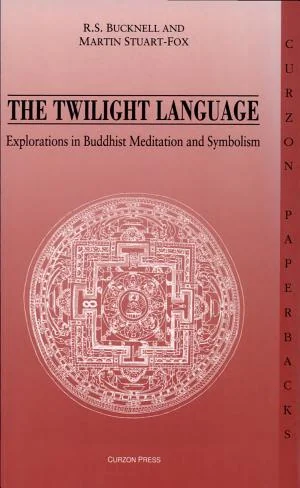
The Twilight Language
 78
78

The Twilight Language
Bucknell and Stuart-Fox's 'The Twilight Language' offers a compelling argument for the validity of symbolic and non-rational modes of knowing within religious and mystical contexts. Its strength lies in its disciplined approach to subjects often dismissed as fringe, particularly its exploration of altered states and the 'twilight language' itself. The authors meticulously dissect how these symbolic systems function, moving beyond mere description to offer a theoretical architecture. A notable passage discusses the limitations of purely objective analysis when confronting subjective spiritual experiences, highlighting how certain truths are only accessible through analogy and intuition. However, the book's academic prose, while precise, can occasionally render its profound ideas somewhat dense for the uninitiated. It demands a reader willing to engage deeply with abstract concepts. Ultimately, 'The Twilight Language' provides an indispensable, if challenging, intellectual framework for understanding esoteric communication.
📝 Description
78
Published in 1993, 'The Twilight Language' examines how meaning is made in spiritual traditions beyond rational thought.
'The Twilight Language,' by Roderick S. Bucknell and Martin Stuart-Fox, published in 1993, offers a scholarly look into the symbolic and esoteric sides of religious experience. It goes beyond standard theological or historical views to consider the less rational ways spiritual traditions build and share meaning. The authors address ideas often ignored by mainstream academic study, treating them with careful intellectual rigor. The book is for anyone seriously interested in comparing religions, mysticism, or the philosophy of language, especially where these meet altered states of consciousness and symbolic interpretation. Academics aiming to expand their view of religious phenomena will find it useful, as will practitioners of esoteric paths seeking a theoretical basis for their experiences. Readers focused on the psychology of religion and the nature of subjective truth will also gain value.
When it appeared in the early 1990s, the book coincided with growing academic attention to non-Western religions and alternative spiritualities. It confronted the limits of empirical and linguistic methods when trying to grasp subjects that resist simple definitions. The academic environment was slowly becoming more open to post-structuralist and phenomenological approaches that could account for subjective experience. However, many academics remained skeptical of esoteric traditions, making the detailed analysis in this book stand out.
This work engages with the study of religious experience through a lens that acknowledges the validity of non-rational and symbolic modes of understanding. It positions itself within a tradition of inquiry that seeks to bridge the gap between intellectual analysis and subjective spiritual phenomena. By focusing on a 'twilight language,' the authors highlight how esoteric traditions often communicate truths that elude direct, logical expression. This approach resonates with historical attempts to articulate ineffable spiritual realities, often found in mystical writings and Gnostic texts, which likewise employ symbolism and paradox to convey deeper insights.
💡 Why Read This Book?
• Gain insight into the concept of 'twilight language' as a mode of symbolic, non-rational communication, as detailed in the book's analysis of religious experience, which offers a unique lens distinct from purely logical discourse. • Understand how altered states of consciousness, discussed in relation to shamanism and mysticism, shape the creation and reception of esoteric meaning, providing a psychological depth rarely found in standard theological texts. • Appreciate the book's 1993 scholarly engagement with esoteric traditions, offering a historical perspective on the academic study of mysticism that grounds its theoretical claims in a specific intellectual era.
⭐ Reader Reviews
Honest opinions from readers who have explored this book.
❓ Frequently Asked Questions
What is the core concept of 'twilight language' as presented in the book?
The 'twilight language' refers to a mode of communication in religious and mystical experiences that is neither purely rational nor completely irrational. It uses symbols, analogies, and evocative imagery to convey truths that are often intuitive or felt, bypassing ordinary logical structures.
When was 'The Twilight Language' first published?
The book 'The Twilight Language' by Roderick S. Bucknell and Martin Stuart-Fox was first published in 1993.
What academic disciplines does this book engage with?
The book bridges the fields of comparative religion, mysticism, the philosophy of language, and the psychology of religion. It explores how symbolic systems function in spiritual traditions.
Does the book focus on a specific religious tradition?
No, 'The Twilight Language' examines symbolic communication across diverse religious and mystical traditions, including discussions relevant to shamanism and general mystical experiences, rather than focusing on a single one.
What kind of reader would benefit most from 'The Twilight Language'?
Scholars of religion, students of mysticism, and practitioners of esoteric traditions seeking a theoretical framework for subjective spiritual experiences would benefit most.
What is the significance of the authors' names in relation to the book's subject?
Roderick S. Bucknell and Martin Stuart-Fox bring academic rigor to the study of esoteric and symbolic phenomena, aiming to provide a structured analysis of subjective religious experience.
🔮 Key Themes & Symbolism
Symbolic Communication in Mysticism
The work posits that mystical and religious understanding often relies on a 'twilight language,' characterized by symbols, analogies, and evocative imagery rather than linear logic. This language is crucial for conveying subjective experiences that defy empirical description. The authors explore how this symbolic apparatus functions across traditions, allowing for a deeper, intuitive grasp of spiritual realities that standard discourse cannot access.
Altered States and Meaning Construction
Bucknell and Stuart-Fox look at how altered states of consciousness, such as those experienced in shamanic or mystical practices, facilitate the creation and apprehension of meaning through symbolic systems. These states are presented not as mere psychological aberrations but as potent environments for accessing different modes of knowing, where the 'twilight language' becomes paramount for articulating useful insights.
Philosophy of Religious Language
The book critically examines the limitations of conventional linguistic and philosophical frameworks when applied to religious experience. It argues for the necessity of understanding symbolic language as a distinct and valid form of cognition, capable of expressing truths about existence that are otherwise ineffable. This perspective challenges purely rationalist approaches to spirituality.
Comparative Esoteric Frameworks
By analyzing symbolic communication across various spiritual paths, 'The Twilight Language' offers a comparative framework for understanding esoteric traditions. It seeks common patterns in how meaning is generated and transmitted through myth, ritual, and symbol, providing a unified perspective on the underlying structures of mystical thought.
💬 Memorable Quotes
Direct passages from the work, attributed to the author.
“The language of religious experience often operates in a realm between the rational and the irrational.”
— This highlights the core concept that spiritual insights and communications possess a unique quality, distinct from everyday logic, relying on symbolism and intuition.
“Symbolic systems are not mere decorations but are fundamental to how we apprehend and articulate profound truths.”
— This emphasizes the functional importance of symbols in esoteric traditions, suggesting they are essential tools for understanding and expressing deep, often ineffable, realities.
“The effectiveness of a religious symbol lies in its capacity to evoke a complex web of associations and feelings.”
— This points to the multi-layered nature of symbols in spiritual contexts, where their power comes from the rich, subjective responses they generate in the individual.
“Understanding altered states requires methods that acknowledge their unique mode of reality and communication.”
— This suggests that traditional analytical approaches are insufficient for grasping the phenomena of altered consciousness, advocating for a more nuanced, context-specific understanding.
“The twilight language functions through analogy and metaphor to convey insights beyond literal description.”
— This clarifies the mechanism of the 'twilight language,' underscoring its reliance on figurative speech to express truths that are difficult or impossible to state directly.
🌙 Esoteric Significance
Tradition
This work fits within the broader esoteric and mystical studies tradition, particularly engaging with the philosophy of religion and comparative mysticism. While not strictly adhering to a single lineage like Hermeticism or Kabbalah, it provides a theoretical framework applicable to understanding the symbolic language found across many esoteric paths. It departs from purely historical or anthropological accounts by focusing on the cognitive and communicative functions of esoteric symbolism.
Symbolism
Key symbols explored implicitly relate to the nature of consciousness and perception. The 'twilight' itself serves as a potent symbol for a liminal state of awareness, situated between the known and unknown, the rational and intuitive. The book also engages with the symbolic power of myth and ritual, viewing them as vehicles for transmitting profound, often ineffable, truths that shape individual and collective understanding.
Modern Relevance
Contemporary thinkers in consciousness studies, depth psychology, and fields exploring psychedelic-assisted therapy often draw upon concepts like the 'twilight language' to articulate the non-ordinary states of mind encountered. The book's emphasis on symbolic communication remains relevant for those seeking to integrate esoteric insights into modern spiritual or therapeutic practices, offering a language for experiences that transcend typical discourse.
👥 Who Should Read This Book
• Students of comparative religion and mysticism seeking to understand the underlying structures of spiritual communication across diverse traditions. • Academics and researchers interested in the philosophy of language and its application to subjective or non-rational forms of knowledge, particularly within religious contexts. • Practitioners of esoteric or contemplative disciplines who wish to deepen their theoretical understanding of symbolic interpretation and altered states of consciousness.
📜 Historical Context
Published in 1993, 'The Twilight Language' emerged within an academic landscape increasingly open to the study of religion beyond its institutional and doctrinal aspects. The late 20th century saw a rise in interest in subjective experience, mysticism, and non-Western spiritualities, partly fueled by New Age movements, though this book maintained a critical distance. It addressed the growing recognition of the limitations of purely empirical or positivist methodologies in grasping phenomena like religious experience. At the time, scholars were beginning to employ hermeneutic, phenomenological, and post-structuralist approaches to religious studies, which provided intellectual space for analyzing symbolic language. However, many mainstream academic circles still viewed esoteric traditions with skepticism, making the book's detailed, structured analysis of 'twilight language' a significant contribution. Contemporaries like Huston Smith, though approaching religion from a different philosophical stance, also championed the value of understanding diverse spiritual experiences.
📔 Journal Prompts
The concept of 'twilight language' and its symbolic function.
How do analogies and metaphors in religious texts shape understanding?
Reflecting on personal experiences of non-rational insight.
The role of altered states in accessing symbolic meaning.
Comparing symbolic communication across different spiritual traditions.
🗂️ Glossary
Twilight Language
A mode of communication in religious and mystical experiences that is neither purely rational nor entirely irrational, relying on symbols, analogies, and evocative imagery to convey intuitive truths.
Symbolic Systems
Frameworks of signs, symbols, and images used to represent and communicate complex ideas, emotions, or spiritual realities, often operating on multiple levels of meaning.
Altered States of Consciousness
Any mental state significantly different from a normal waking state, often associated with profound subjective experiences, altered perception, and unique modes of cognition.
Mysticism
The pursuit of achieving, through contemplation or asceticism, direct apprehension of ultimate reality, truth, or divine knowledge, often involving subjective experiences.
Hermeneutics
The theory and methodology of interpretation, especially the interpretation of biblical texts, wisdom literature, or other symbolic systems, focusing on understanding meaning.
Analogy
A comparison between two things, typically for the purpose of explanation or clarification, used in 'twilight language' to bridge the gap between the known and the unknown.
Ineffable
Too great or extreme to be expressed or described in words; a quality often attributed to profound spiritual or mystical experiences.
This book appears in 1 collection
🔮 Readers Also Liked
Browse all →









From the “Meditation” Collection
View all →






More Free Occult Philosophy Books
View all →