Mossflower
 74
74

Mossflower
Mossflower’s enduring appeal lies in its meticulously crafted setting and the vivid personalities that inhabit it. Brian Jacques possessed a remarkable ability to imbue his animal characters with distinct voices and motivations, making the defense of Redwall Abbey feel both grand and deeply personal. The pacing, particularly during the siege, is masterfully handled, ratcheting up tension with each chapter. However, the clear-cut morality, while effective for younger audiences, can sometimes feel simplistic for more seasoned readers; the line between protagonist and antagonist, though often blurred by circumstance, rarely feels truly ambiguous. A passage detailing the communal effort to repair the Abbey walls after the conflict, highlighting the shared purpose and resilience, best exemplifies the book’s strength in portraying community. It’s a robust fantasy adventure that champions the spirit of resistance against tyranny.
📝 Description
74
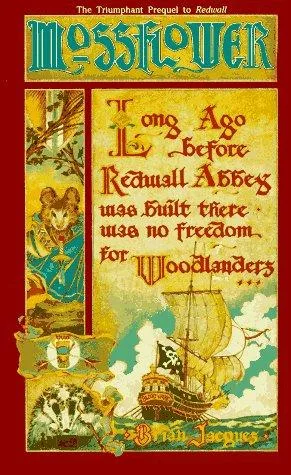
Brian Jacques' 1988 novel Mossflower launched the Redwall series with an epic siege.
Mossflower, published in 1988, is the first book in Brian Jacques' Redwall series. While often categorized as children's fantasy, its detailed world and character interactions hold appeal for adults. The story follows the peaceful residents of Redwall Abbey as they defend their sanctuary against the pirate Claudius and his invading vermin. The Abbey, a symbol of peace and tradition, becomes the center of an intense siege.
The narrative focuses on the Abbey as a stronghold of peace and order, facing constant threats from destructive forces. Courage is portrayed not only as bravery in battle but also as the resolve to protect one's home and community. The book examines the recurring cycle of conflict and the importance of defending hearth and home against those who seek to conquer or destroy it. Readers who enjoy detailed fantasy settings, morally complex characters, and stories about defending a cherished place against outside aggression will find Mossflower engaging. It also serves as an easy introduction to the fantasy genre, offering adventure alongside a sense of lasting community.
While not overtly esoteric, Mossflower's allegorical depth and focus on defending a sacred space against chaos resonate with broader philosophical concerns. The Abbey functions as a bastion of order, its defense a symbolic act against encroaching disorder. This theme of a protected sanctuary facing external threats and the internal fortitude required for its preservation echoes traditions that examine the struggle between civilization and barbarism, order and chaos. The animal characters embody virtues and vices, presenting a moral framework that can be interpreted beyond a simple children's tale.
💡 Why Read This Book?
• Gain an appreciation for the allegorical power of animal fantasy, learning how characters like Matthias embody the struggle for preserving sanctuaries, a concept explored in many mythologies. • Understand the narrative structure of a protracted siege, mirroring historical conflicts and the psychological toll of defending a community, as seen in the Abbey's defense against Claudius. • Explore the theme of legacy and tradition, recognizing how the history of Redwall, as recounted within the book, directly influences the actions and courage of its present-day inhabitants.
⭐ Reader Reviews
Honest opinions from readers who have explored this book.
❓ Frequently Asked Questions
When was Mossflower first published?
Mossflower, the first book in the Redwall series, was first published in 1988, establishing the beloved world of Redwall Abbey and its inhabitants.
Who is the main antagonist in Mossflower?
The primary antagonist in Mossflower is the ruthless pirate captain, Claudius, who leads an invasion force against the peaceful inhabitants of Redwall Abbey.
What is the central setting for the Mossflower story?
The central setting is Redwall Abbey, a haven of peace and tradition for its inhabitants, which becomes the focal point of a significant conflict.
Is Mossflower part of a series?
Yes, Mossflower is the first book in Brian Jacques' long-running Redwall series, which continues the adventures and lore surrounding Redwall Abbey.
What are the main themes explored in Mossflower?
Key themes include courage, community, the defense of home, the cyclical nature of conflict, and the importance of legacy and tradition.
Who wrote Mossflower?
Mossflower was written by Brian Jacques, an English author known for his extensive work on the Redwall series.
🔮 Key Themes & Symbolism
The Abbey as Sacred Space
Redwall Abbey functions as more than just a building; it is a symbol of peace, culture, and civilized life, meticulously detailed with its great hall, peaceful gardens, and ancient traditions. Its defense becomes paramount, representing the struggle to preserve order and beauty against the forces of chaos and destruction embodied by Claudius and his horde. This concept of a sacred, defensible space is a recurring motif in many mythologies and philosophical traditions, highlighting the inherent human desire for sanctuary.
Courage and Heroism
The narrative examines courage in various forms, from the overt bravery of warriors like Matthias to the quiet resilience of the Abbey's inhabitants. It posits that heroism is not solely the domain of the strong but can arise from necessity and a deep-seated commitment to protecting one's home and way of life. This contrasts with the often brutal and self-serving motivations of the invaders, underscoring the moral dimension of true courage.
Legacy and Tradition
The history and legends of Redwall Abbey, passed down through generations, play a central role in inspiring the characters. The stories of past heroes and the Abbey's founding provide a moral and historical anchor, shaping the identity of its current residents. This emphasis on lineage and the enduring power of narrative reflects the importance placed on oral traditions and historical accounts in many ancient cultures, suggesting that understanding the past is key to facing the future.
The Cycle of Conflict
While Mossflower focuses on a specific conflict, the narrative implies a recurring pattern of peace followed by invasion, and subsequent rebuilding. The book explores how communities respond to external threats, the sacrifices required for survival, and the eventual restoration of order. This cyclical view of history, where periods of conflict are inevitable but can be overcome through unity and perseverance, reflects philosophical interpretations of historical progression found in various traditions.
💬 Memorable Quotes
Direct passages from the work, attributed to the author.
“Courage is not the absence of fear, but the will to act despite it.”
— This sentiment, embodied by characters like Matthias, speaks to the nature of true bravery, suggesting it is found in overcoming internal apprehension to perform necessary actions, rather than a lack of any fear.
“The Abbey remembers its heroes.”
— This phrase underscores the importance of legacy and tradition within Redwall, indicating that the past actively informs and inspires the present inhabitants, shaping their sense of duty and identity.
“Even the smallest creature can harbor the greatest courage.”
— This concept emphasizes that heroism is not limited by size or species, suggesting that individuals, regardless of their apparent stature, possess the potential for remarkable bravery when called upon.
💡 Key Ideas
Editorial paraphrase of the work's core concepts — not direct quotes.
Peace is a fragile thing, easily shattered.
This quote captures the central conflict of Mossflower, highlighting the precarious nature of the tranquility enjoyed by the Abbey's residents and the ever-present threat of external aggression.
We defend what we love.
A simple yet powerful declaration, this quote articulates the core motivation for the Abbey's inhabitants: the fierce protective instinct that arises from deep affection for their home and community.
🌙 Esoteric Significance
Tradition
While not explicitly tied to a single esoteric lineage, Mossflower’s themes of defending a sacred, ordered space (Redwall Abbey) against chaotic, destructive forces (Claudius’s horde) can be seen as echoing Gnostic dualism or the Hermetic principle of As Above, So Below, where the microcosm of the Abbey reflects a larger cosmic struggle. The Abbey’s rich internal culture and traditions also hint at a lineage of preserved knowledge and spiritual practice, akin to monastic traditions in Western esotericism.
Symbolism
The Abbey itself serves as a primary symbol, representing the sacred hearth, the ordered cosmos, and the repository of culture and peace. The vermin, particularly Claudius, symbolize primal chaos, greed, and the forces that seek to dismantle established order. The recurring motif of food and feasting within the Abbey represents the bounty of nature, community celebration, and the sustenance of life, directly contrasted with the destructive hunger of the invaders.
Modern Relevance
Contemporary fantasy authors continue to draw inspiration from Jacques’ intricate world-building and character archetypes. The book’s exploration of community defense and the ethical dimensions of conflict remains relevant in discussions of social cohesion and resistance movements. Furthermore, the enduring appeal of Redwall Abbey as a symbol of peace and resilience continues to resonate with readers seeking narratives that affirm the possibility of maintaining order and culture in the face of adversity.
👥 Who Should Read This Book
• Young readers (ages 8-12) discovering the joys of epic fantasy, who will connect with the clear moral compass and action-packed narrative of Matthias and his friends. • Adult fans of classic fantasy literature seeking richly detailed settings and compelling character arcs, appreciating the allegorical depth beyond the surface-level adventure. • Students of comparative literature interested in the evolution of animal fantasy and allegorical storytelling, examining how Jacques uses anthropomorphism to explore universal themes of courage and community.
📜 Historical Context
Published in 1988, Mossflower emerged within a thriving late 20th-century fantasy landscape, one that had been profoundly shaped by J.R.R. Tolkien’s mythopoeic creations. Brian Jacques’ work, however, carved out its own niche with a distinct focus on animal protagonists and a particularly robust depiction of siege warfare and communal defense. While not directly engaging with esoteric traditions in an overt manner, the book’s allegorical depth—its portrayal of a peaceful sanctuary under existential threat—resonated with readers during a period marked by geopolitical shifts and a renewed interest in themes of community and resilience. Its success contributed to a resurgence in the popularity of animal fantasy, a genre that had previously seen varied critical reception, and firmly established the Redwall franchise as a significant cultural touchstone for a generation.
📔 Journal Prompts
The defensive strategies employed by the Abbey dwellers against Claudius’s forces.
The symbolic meaning of the Abbey’s great hall in moments of both feast and defense.
Matthias’s internal conflict between his initial desire for vengeance and his eventual role as protector.
The passing of legends and how they shape the actions of the Abbey’s inhabitants in 1988.
The concept of 'peace' as depicted within Redwall and its fragility.
🗂️ Glossary
Redwall Abbey
The central setting of the book, a historic and peaceful sanctuary inhabited by mice, badgers, otters, and other woodland creatures, renowned for its culture and traditions.
Claudius
The primary antagonist, a ruthless pirate captain leading a horde of vermin in an assault against Redwall Abbey in 1988.
Matthias
A young, courageous mouse who emerges as a central hero, driven by a quest for a legendary weapon to defend the Abbey.
Siege
A prolonged military operation in which enemy forces surround a town or building, attempting to capture it by blockade or assault, a key plot element in the book.
Woodland Creatures
The term used for the diverse group of anthropomorphic animals who inhabit Redwall Abbey and are generally peaceful and civilized.
Vermin
The collective term for the antagonists, typically consisting of rats, stoats, weasels, and ferrets, who represent chaotic and destructive forces.
The Sword of Martin the Warrior
A legendary weapon sought by Matthias, believed to hold the power to defend Redwall Abbey against its enemies.
🔮 Readers Also Liked
Browse all →









More by Brian Jacques
All books →



More Free Occult Philosophy Books
View all →