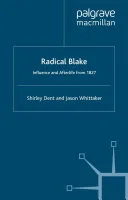
Radical Blake
 81
81

Radical Blake
Radical Blake offers a compelling, if sometimes uneven, exploration of William Blake's persistent cultural echo. The strength of S. Dent and J. Whittaker's collection lies in its specific thematic dissections, moving beyond generalized praise to analyze concrete instances of Blake's influence. The chapter on 'Metropolitan Blake,' for example, effectively links Blake's engravings of London to later urban anxieties in art and literature. However, the collection occasionally struggles with maintaining a consistent critical voice across its diverse essays, leading to moments where the analysis feels more descriptive than deeply interrogative. A particular highlight is the discussion of Blake's engagement with radical dissent, showing how his critiques of established religion and state power were reinterpreted by 20th-century artists. While the book successfully demonstrates Blake's broad reach, it could have benefited from a more sustained engagement with the esoteric interpretations that have long surrounded his work. Ultimately, Radical Blake serves as a valuable, if not exhaustive, resource for understanding Blake's complex legacy.
📝 Description
81
Radical Blake, published in 2002, traces William Blake's afterlife in culture and thought.
This 2002 volume by S. Dent and J. Whittaker moves beyond standard biography or literary analysis to chart the enduring influence of William Blake. The authors investigate how Blake's visionary output continues to shape contemporary thought and creative practices, extending his impact far beyond his immediate historical context. The book examines Blake's engagement with nationalism, urban experience, and gender, showing how his prophetic works, like his depictions of London, became symbols for later social commentary. It also addresses Blake's spiritual cosmology, often seen as proto-occult or Gnostic, and how various movements appropriated it seeking alternative enlightenment and critique.
The work is intended for scholars of Romanticism, art historians, literary critics, and anyone interested in the reception of major cultural figures. It specifically appeals to those interested in the intersection of art, politics, and spirituality, and how radical ideas can permeate subsequent generations of artists, writers, and thinkers. Radical Blake positions itself within a scholarly discourse that saw renewed interest in Blake's social and political critiques in the late 20th and early 21st centuries, particularly through lenses of post-colonialism and cultural materialism.
The book examines William Blake's spiritual cosmology, often described as proto-occult or Gnostic. This cosmology, with its unique symbols and alternative interpretations of religious and societal structures, became a touchstone for later movements seeking radical enlightenment. The authors trace how these ideas, initially contained within Blake's prophetic works, were appropriated by subsequent generations and traditions that sought forms of societal critique and spiritual alternative outside established norms. This positions Blake's work within a broader history of esoteric thought that challenges conventional understanding.
💡 Why Read This Book?
• Gain a concrete understanding of Blake's influence on specific artistic and literary movements since 2002, moving beyond vague assertions of impact. • Explore the thematic connections between Blake's 18th-century critiques of London and later urban studies, offering a historical lens on city life. • Analyze how Blake's controversial ideas on nationalism and women were reinterpreted by subsequent generations, providing insight into evolving social and political discourse.
⭐ Reader Reviews
Honest opinions from readers who have explored this book.
❓ Frequently Asked Questions
What specific aspects of William Blake's work does 'Radical Blake' focus on?
The book concentrates on Blake's enduring influence across themes like his representation of London ('Metropolitan Blake'), his connection to nationalist sentiments, and his engagement with representations of women in art and literature.
When was 'Radical Blake' originally published?
Radical Blake was first published on October 2, 2002.
Who are the primary authors of 'Radical Blake'?
The book is authored by S. Dent and J. Whittaker.
What is the primary audience for 'Radical Blake'?
It is intended for scholars of Romanticism, art historians, literary critics, and those interested in the reception and ongoing impact of William Blake's work.
Does 'Radical Blake' discuss Blake's artistic techniques?
While primarily focused on influence and thematic afterlife, the book implicitly engages with Blake's artistic output as the source of his impact, particularly his engravings and prophetic works.
How does 'Radical Blake' connect Blake to later esoteric traditions?
The work traces how Blake's unique spiritual cosmology and critiques of established religion have been interpreted and adopted by various movements seeking alternative spiritual or societal frameworks.
🔮 Key Themes & Symbolism
Metropolitan Blake
This theme investigates how William Blake's powerful and often critical depictions of London, particularly in his engravings and prophetic books, have served as a touchstone for subsequent artistic and literary explorations of urban life. The work examines how Blake's symbolic cityscapes, fraught with social commentary and spiritual unease, became a template for understanding the alienation and sublime terror of modernity. It traces the lineage from Blake's 'London' to later critiques of industrialization and metropolitan expansion, highlighting his foundational role in urban artistic discourse.
Blake and Nationalism
Radical Blake addresses the complex relationship between William Blake's visionary output and the burgeoning concept of nationalism in late 18th and early 19th century Britain. It explores how Blake's critiques of empire, established church, and state authority were later reinterpreted by nationalist movements seeking cultural identity. The work analyzes the appropriation and adaptation of Blakean symbols and prophecies, considering how his radical dissent was sometimes co-opted or misunderstood by those forging national narratives.
Blake and Women
This section of the book looks at the complex representations of women within William Blake's oeuvre and their subsequent reception. It examines Blake's often unconventional portrayals, which challenged patriarchal norms of his era, and how these images have been interpreted by feminist and gender studies scholars. The analysis considers Blake's mythological female figures and his engagement with themes of desire, oppression, and liberation, tracing their afterlife in feminist art and theory.
Blake's Spiritual Cosmology
While not exclusively focused on esoteric studies, Radical Blake touches upon the deeply spiritual and often heterodox nature of Blake's visionary system. It acknowledges how his unique cosmology, blending elements of Gnosticism, mysticism, and personal revelation, has attracted subsequent interest from esoteric practitioners and scholars. The work explores how Blake's rejection of orthodox religion and his creation of a personal mythology have made him a figure of enduring significance for those seeking alternative spiritual pathways.
💬 Memorable Quotes
Direct passages from the work, attributed to the author.
“Blake's enduring popularity amongst a large and diverse audience as a poet, artist and engraver.”
— This observation from the original blurb highlights the remarkable breadth of William Blake's appeal, extending far beyond academic circles to encompass a wide array of creative professionals and enthusiasts.
“More artists, writers, filmmakers and composers working under the influence of Blake than any other figure from the Romantic era.”
— This statement posits Blake's outstanding influence within the Romantic period, suggesting his visionary concepts and artistic innovations have a more pervasive afterlife than contemporaries like Wordsworth or Shelley.
“Radical Blake traces his influence and afterlife across a range of major themes.”
— This indicates the book's central methodology: not just analyzing Blake's work itself, but meticulously following the trajectory of his ideas and artistic impact through subsequent cultural developments.
“Metropolitan Blake, Blake and Nationalism, and Blake and Women.”
— These are presented as key thematic areas explored within the book, signaling its focus on Blake's engagement with urban environments, national identity, and gender dynamics.
“Blake has maintained an enduring popularity.”
— This foundational statement underscores the continued relevance and widespread recognition of William Blake's contributions to poetry and art, even centuries after his lifetime.
🌙 Esoteric Significance
Tradition
William Blake's work, while not strictly belonging to a single defined esoteric lineage, draws heavily from Gnostic cosmology, Hermetic principles, and Swedenborgian mysticism. Radical Blake engages with how these influences manifest in Blake's rejection of orthodox religious structures and his creation of a unique spiritual universe. The book implicitly positions Blake as a precursor to modern esoteric thought, particularly in his emphasis on inner vision and the critique of materialist rationalism.
Symbolism
Key symbols explored include the 'Tyger,' representing divine ferocity and the sublime terror of creation; 'Jerusalem,' symbolizing spiritual freedom and the potential for a redeemed social order; and the complex mythology of Urizen, representing restrictive reason and fallen divinity. These symbols, deeply embedded in Blake's personal mythology, function as archetypes for exploring consciousness, liberation, and the struggle against oppressive forces.
Modern Relevance
Contemporary thinkers and practitioners in fields ranging from psychoanalysis to post-structuralist literary theory continue to draw on Blake's insights into the human psyche and societal structures. His critiques of industrialization and reason find echoes in environmentalist and anti-globalization movements. Furthermore, his visionary art and poetry remain a source of inspiration for artists, musicians, and spiritual seekers exploring alternative modes of perception and consciousness.
👥 Who Should Read This Book
• Art historians and literary critics specializing in the Romantic period seeking to understand Blake's extended influence beyond his immediate contemporaries. • Scholars of cultural studies and reception history interested in how a figure's legacy is constructed and debated across different eras and thematic concerns. • Artists, writers, and cultural theorists exploring the impact of visionary art and radical thought on contemporary creative and intellectual discourse.
📜 Historical Context
Published in 2002, Radical Blake emerged within a vibrant field of Blake scholarship that had been significantly shaped by figures like Northrop Frye, whose influential work in the mid-20th century cemented Blake's canonical status. The late 20th century saw a surge of critical re-evaluations, often employing post-structuralist, feminist, and cultural materialist approaches, moving beyond Frye's more archetypal interpretations. This period also witnessed a growing appreciation for Blake's radical politics and his critiques of industrialization, aligning with broader intellectual currents questioning Enlightenment progress. While Blake's engagement with esoteric ideas had long been acknowledged, 2002 saw these threads increasingly integrated into mainstream academic analysis, moving away from earlier dismissals of his 'prophetic books' as mere eccentricities. The book thus arrived at a time when Blake's complex legacy, encompassing art, prophecy, and social critique, was being actively debated and re-contextualized.
📔 Journal Prompts
Blake's 'Metropolitan Blake' and the urban landscape.
The evolution of Blake's ideas on nationalism.
Examining Blake's representations of women.
Blake's spiritual cosmology and its influences.
The impact of Blake's prophetic books on later artists.
🗂️ Glossary
Prophetic Books
A term used to describe William Blake's later, more complex works, characterized by unique mythologies, symbolic language, and often engraved illustrations, such as 'The Marriage of Heaven and Hell' and 'Jerusalem'.
Urizen
In Blake's mythology, Urizen is often depicted as the embodiment of restrictive reason, law, and materialism, representing the fallen state of divinity and humanity.
Gnosticism
An ancient religious movement characterized by a belief in a secret knowledge (gnosis) that leads to salvation, often involving a dualistic worldview and a rejection of the material world.
Swedenborgianism
The mystical and theological doctrines of Emanuel Swedenborg, an 18th-century Swedish scientist and mystic, which significantly influenced Blake's spiritual views.
Romantic Era
A broad artistic, literary, musical, and intellectual movement that originated in Europe towards the end of the 18th century, emphasizing emotion, individualism, and the glorification of the past and nature.
Engraving
A printmaking technique where a design is incised into a metal plate, typically copper or zinc, and then inked to produce an image.
Reception History
The study of how a particular work of art, literature, or philosophy has been understood, interpreted, and utilized by different audiences and critics throughout history.