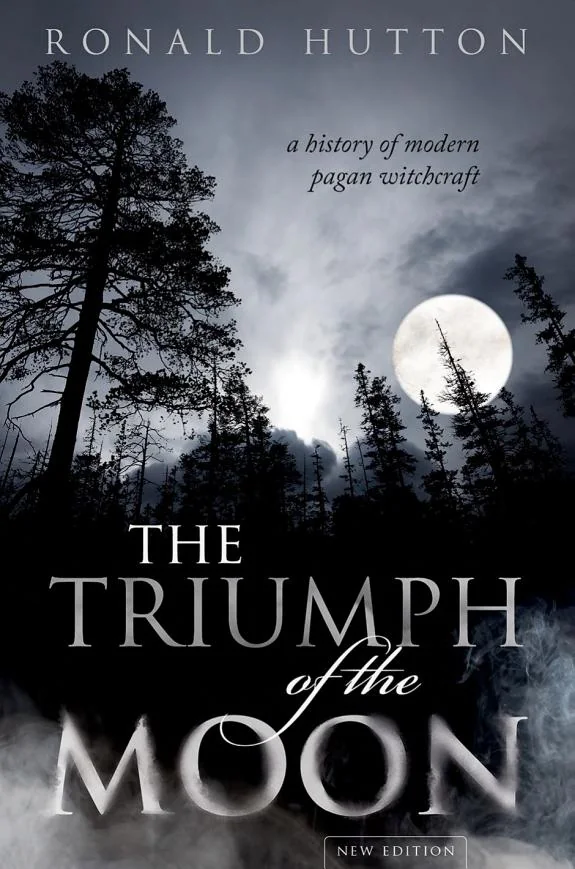
The Triumph of the Moon
 81
81

The Triumph of the Moon
Ronald Hutton’s revised edition of The Triumph of the Moon is an indispensable work for anyone seeking to understand the origins and trajectory of modern pagan witchcraft. Hutton’s meticulous scholarship, particularly his tracing of the movement’s roots from obscure 19th-century revivalists to its global presence today, is unparalleled. He masterfully contextualizes Wicca not as an ancient survival, but as a distinctly modern religious creation. A particular strength lies in his nuanced analysis of the period between the Victorian era and the mid-20th century, where he carefully unpacks the influences and personalities that shaped early traditions. While the book is dense and academic, eschewing sensationalism, this very rigor is its power. Its limitation, perhaps, is that its sheer depth can be overwhelming for the casual reader. The section detailing the post-war emergence of Gerald Gardner's coven offers a vivid glimpse into the foundational moments. This is the definitive historical account of a significant Western religion.
📝 Description
81
Ronald Hutton's 2000 book, The Triumph of the Moon, examines modern pagan witchcraft.
Ronald Hutton's The Triumph of the Moon offers a scholarly look at modern pagan witchcraft, a religion that began in England and is now practiced worldwide. This revised edition provides a thorough historical and sociological analysis of its growth. Hutton examines the main ideas and practices of this distinct spiritual path, following its development from its beginnings to its spread across the globe. The book aims to objectively understand this religion, moving beyond common public views.
The work is suited for serious students of esotericism, religious studies academics, and anyone wanting a detailed, evidence-based account of contemporary pagan witchcraft. It appeals to readers who value in-depth historical research and a critical approach to religious movements. Those interested in the history of religion in Britain, the sociology of belief, and the study of magic will find much here. It is an academic study, not a practical guide.
Hutton places the rise of modern witchcraft within the larger historical context of views on paganism, magic, and witchcraft in British society from 1800 onward. He tracks the effects of Victorian occultism, figures like Aleister Crowley, and the post-war revival that led to Wicca's formalization. The book compares how modern pagans see themselves with historical views and laws concerning witchcraft, acknowledging the intellectual atmosphere that supported both esoteric interest and skepticism.
This book fits within the scholarly study of Western esotericism, specifically focusing on modern magical and pagan revivals. It engages with the history of occultism and alternative spiritualities that emerged or were redefined in the 19th and 20th centuries. Hutton's work situates the development of contemporary witchcraft traditions, such as Wicca, within broader cultural and intellectual currents, contrasting their self-perceptions with historical societal reactions to magic and pagan beliefs. It is a sober academic assessment of a religious phenomenon often misunderstood.
💡 Why Read This Book?
• You will learn about the specific historical influences, such as the Victorian occult revival and the work of Gerald Gardner, that coalesced to form modern pagan witchcraft, providing context unavailable in generalized spiritual texts. • You will gain an understanding of the academic debate surrounding the 'witch-cult hypothesis' and Hutton's scholarly refutation of its historical accuracy, offering a critical perspective distinct from devotional accounts. • You will discover the development of key concepts like the Horned God and the Triple Goddess within the context of modern religious innovation, rather than as immutable ancient doctrines.
⭐ Reader Reviews
Honest opinions from readers who have explored this book.
❓ Frequently Asked Questions
What is the primary focus of Ronald Hutton's The Triumph of the Moon?
The book's primary focus is a scholarly history and analysis of modern pagan witchcraft, examining its origins, development, and nature as a religion that emerged primarily in 20th-century Britain and spread internationally.
When was the second edition of The Triumph of the Moon published?
The second, extensively revised edition of The Triumph of the Moon was published in 2019.
Does the book present witchcraft as an ancient, unbroken tradition?
No, Hutton meticulously argues against the notion of an unbroken ancient tradition, presenting modern pagan witchcraft as a relatively recent religious development, albeit drawing inspiration from various historical and cultural sources.
Who is Gerald Gardner in the context of this book?
Gerald Gardner is presented as a pivotal figure in the formation of modern Wicca, whose writings and coven activities in the mid-20th century significantly influenced the development and public perception of witchcraft.
What historical periods does Hutton examine regarding attitudes towards witchcraft?
Hutton examines attitudes towards witchcraft, paganism, and magic in British society primarily from 1800 onwards, tracing influences from Victorian occultism through to the modern era.
Is this book suitable for someone seeking practical witchcraft instructions?
No, this book is an academic historical and sociological study. It is not a practical guide for performing witchcraft rituals or spells.
🔮 Key Themes & Symbolism
Modern Religious Innovation
Hutton emphasizes that modern pagan witchcraft, particularly Wicca, is a product of the 20th century rather than a direct survival of ancient European paganism. He meticulously traces the influences of figures like Gerald Gardner and the broader context of the occult revival in Britain to demonstrate how contemporary practices were consciously constructed. The work analyzes the creation of rituals, theology, and community structures that define this new religion, highlighting its distinctiveness from historical witchcraft accusations.
History of Witchcraft Beliefs
The book offers a sweeping survey of how witchcraft, paganism, and magic have been perceived and discussed in British society since 1800. Hutton examines the evolution of ideas from folk magic and cunning folk traditions to the romanticized notions of Victorian occultists and the subsequent academic and popular discourse. He differentiates between historical perceptions of witchcraft, often rooted in fear and persecution, and the self-identification of modern pagans.
The Nature of Pagan Practice
Hutton looks at the core elements of modern pagan witchcraft, exploring concepts such as the veneration of the divine (often represented by the Horned God and Triple Goddess), the significance of initiation and coven structures, and the role of magic and ritual. He analyzes the symbolism and cosmology employed by practitioners, distinguishing between the lived experience of contemporary pagans and external interpretations or misrepresentations.
Academic vs. Popular Understanding
A central theme is the tension between scholarly analysis and popular myth surrounding witchcraft. Hutton critically evaluates the 'witch-cult hypothesis' and other theories attempting to link modern practices to ancient matriarchal religions. His work provides a grounded, evidence-based perspective that challenges sensationalized or romanticized views, offering a more accurate historical and sociological understanding of the movement.
💬 Memorable Quotes
Direct passages from the work, attributed to the author.
“The first edition... was written in the belief that it might prove to be the only scholarly study of the subject ever to be published.”
— This statement reflects the perceived obscurity and lack of academic attention given to modern pagan witchcraft prior to Hutton's work, underscoring the book's pioneering status in the field.
“Gerald Gardner's writings of the 1940s and 1950s became the foundation of the religion.”
— This highlights the crucial role of Gerald Gardner and his publications in codifying and disseminating the practices and beliefs that would become central to modern Wicca and pagan witchcraft.
“The book examines the history of attitudes to witchcraft, paganism and magic in British society since 1800.”
— This indicates the broad historical scope of the work, placing the emergence of modern witchcraft within a wider societal and cultural context of evolving beliefs about the occult.
“It is arguably the only fully-formed religion that England has ever given the world.”
— This provocative assertion emphasizes the unique and significant contribution of English culture to the global religious landscape through the development of modern pagan witchcraft.
“The work reveals village cunning folk, Victorian occultists, and post-war covens.”
— This expresses the diverse range of historical figures and groups that Hutton investigates, illustrating the complex lineage and influences informing contemporary pagan practices.
🌙 Esoteric Significance
Tradition
This work fits within the broader academic study of Western Esotericism, specifically focusing on religious movements that emerged from the occult revival. While not a practitioner's manual, it provides essential historical grounding for traditions that draw upon Hermeticism, folk magic, and neopagan theology. Hutton's approach departs from internal sectarian histories by prioritizing empirical evidence and sociological analysis, offering an external scholarly perspective on what many consider a living spiritual tradition.
Symbolism
Key symbols explored include the Triple Goddess (Maiden, Mother, Crone) and the Horned God, representing cyclical nature, fertility, and the wild. Hutton analyzes how these archetypes, often reinterpreted from historical and mythological sources, form the divine core of many modern pagan traditions. The book also implicitly discusses the symbolism of ritual itself, the circle, and initiation as potent markers of transformation and community.
Modern Relevance
The Triumph of the Moon is foundational for contemporary scholars and practitioners of Wicca and neopaganism. Thinkers and community leaders in movements like Reclaiming, ADF (Ár nDraíocht Féin), and various independent Wiccan traditions frequently cite Hutton's work for its historical accuracy and balanced perspective. His analysis of the social construction of these religions remains relevant for understanding their ongoing evolution and interaction with mainstream society.
👥 Who Should Read This Book
• Students of religious studies and Western Esotericism: Gain a comprehensive, evidence-based historical overview of modern pagan witchcraft, moving beyond popular misconceptions. • Practicing Wiccans and Neopagans: Understand the historical development and scholarly analysis of your tradition, including key figures like Gerald Gardner and debates surrounding origins. • Cultural historians and sociologists: Analyze the emergence and growth of a significant new religious movement in the 20th century and its societal impact.
📜 Historical Context
Published in its first edition amidst a growing, yet often sensationalized, interest in witchcraft, Ronald Hutton’s The Triumph of the Moon arrived as a vital corrective. The late 20th century saw popular culture awash with images of witches, often divorced from the reality of emerging modern pagan traditions. Hutton’s work, first appearing in 1999 and revised in 2019, provided a much-needed scholarly framework. It directly engaged with and critiqued Margaret Murray’s influential, though now largely discredited, ‘witch-cult hypothesis’ which posited an unbroken lineage of pagan witchcraft surviving persecution. Hutton situated the origins of modern Wicca firmly within the 20th century, influenced by figures like Aleister Crowley and the broader esoteric milieu of the time, rather than ancient survivals. His rigorous historical methodology offered a stark contrast to more romantic or polemical accounts, establishing a benchmark for future scholarship on the subject.
📔 Journal Prompts
The post-war emergence of Gerald Gardner's coven and its foundational role.
Hutton's critique of the witch-cult hypothesis and its implications.
The concept of the Triple Goddess and Horned God within 20th-century construction.
Attitudes towards magic and paganism in British society since 1800.
The global dissemination of modern pagan witchcraft from its English origins.
🗂️ Glossary
Wicca
A contemporary Neopagan religious movement, largely founded in the mid-20th century by Gerald Gardner, characterized by nature-based spirituality, magic, and reverence for the divine.
Neopaganism
A broad term for contemporary religious movements that seek to revive or re-interpret pre-Christian European beliefs and practices, often emphasizing nature, polytheism, and magic.
Witch-cult Hypothesis
A theory, primarily associated with Margaret Murray, proposing that witchcraft persecution targeted a continuous, organized pagan religion that survived from antiquity into the early modern period.
Cunning Folk
Individuals in historical European communities who practiced folk magic, healing, and divination, often distinct from the accusations leveled against 'witches' during periods of intense persecution.
Esotericism
Teachings or practices concerned with hidden knowledge or understanding, often involving spiritual or mystical traditions that are not widely known or accessible.
Horned God
A deity, often depicted with horns, revered in some modern pagan traditions as a masculine principle representing nature, fertility, sexuality, and the wild.
Triple Goddess
A divine female figure often represented in three aspects (Maiden, Mother, Crone), symbolizing the cycles of life, death, and rebirth, prominent in many Neopagan beliefs.
This book appears in 1 collection
🔮 Readers Also Liked
Browse all →




From the “Neopaganism” Collection
View all →







More Free Witchcraft & Paganism Books
View all →