Llewellyn's 2018 Sabbats Almanac
 82
82

Llewellyn's 2018 Sabbats Almanac
The 2018 edition of Llewellyn's Sabbats Almanac presents a familiar, well-trodden path for the modern Pagan calendar. Its strength lies in its consistent, accessible format, offering a reliable resource for those who plan their spiritual year around the Sabbats. The inclusion of multiple contributors ensures a variety of perspectives on ritual and lore, which is a definite plus for finding approaches that resonate with individual practice. However, the sheer volume of content can sometimes feel overwhelming, and a deeper dive into the historical origins of some traditions, rather than just presenting them as established practice, would have been welcome. The section on "Crafts & Recipes" for Litha, for example, offers practical ideas but lacks the scholarly rigor one might hope for when exploring ancient solar festivals. Ultimately, it functions effectively as a functional toolkit for the year's observances, but offers little in the way of novel exploration for the seasoned practitioner.
📝 Description
82
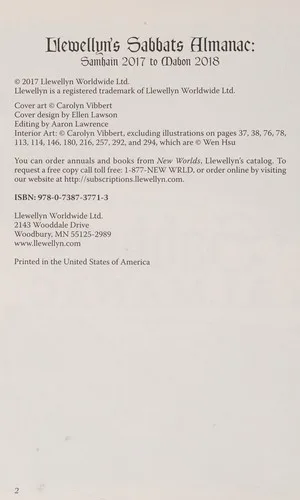
Llewellyn's 2018 Sabbats Almanac was published in 2017 as a guide to the eight Wiccan holidays.
This annual almanac focuses on the eight Wiccan and neo-pagan holidays, providing practical advice for observing the turning of the year. It offers rituals, lore, and structured guidance for celebrating these sacred times, which typically align with solstices, equinoxes, and cross-quarter days. The book is intended for modern Pagans, especially Wiccans, and others interested in seasonal celebrations and earth-based spirituality. It functions as a resource for both solitary practitioners and groups aiming to strengthen their connection to natural cycles throughout 2018.
Each Sabbat is presented with its associated themes, deities, and magical correspondences. Readers will find meditations, recipes, and divination methods designed to help them understand the energetic shifts of each festival. The almanac covers Samhain, Yule, Imbolc, Ostara, Beltane, Litha, Lughnasadh, and Mabon, detailing their significance within the agricultural and solar calendar.
This almanac continues a tradition of neo-pagan and Wiccan publications that gained traction in the late 20th century, particularly after the 1960s. This era saw renewed interest in pre-Christian European beliefs and the codification of practices, notably those influenced by Gerald Gardner. The almanac makes ritualistic and folkloric material accessible to contemporary followers of these traditions, connecting them to a lineage of nature-based spirituality.
💡 Why Read This Book?
• Gain specific ritual frameworks and correspondences for each of the eight Sabbats, such as the harvest themes for Lughnasadh, allowing for more focused and meaningful seasonal observance. • Discover practical magical workings and divination techniques tied directly to the unique energies of 2018's Sabbat dates, enhancing personal spiritual practice. • Explore folkloric traditions and deity associations relevant to each festival, providing historical grounding and inspiration beyond generic seasonal celebrations.
⭐ Reader Reviews
Honest opinions from readers who have explored this book.
❓ Frequently Asked Questions
What are the main Sabbats covered in Llewellyn's 2018 Sabbats Almanac?
The almanac covers the eight major Sabbats: Samhain, Yule, Imbolc, Ostara, Beltane, Litha, Lughnasadh, and Mabon, detailing their historical significance and modern practices for 2018.
Who are the primary authors or editors for Llewellyn's 2018 Sabbats Almanac?
While Llewellyn Publications is the publisher, the 2018 edition features contributions from various authors, including Blake Octavian Blair and Deborah Castellano, offering diverse perspectives.
What kind of content can I expect for each Sabbat in the 2018 edition?
Each Sabbat section typically includes lore, mythology, deity correspondences, ritual outlines, magical workings, divination methods, and often crafts and recipes relevant to the season.
Is this almanac suitable for beginners in Paganism?
Yes, the almanac is designed to be accessible for beginners, providing clear explanations of Sabbat traditions and practical guidance for observance throughout 2018.
Does the almanac offer astrological information for 2018?
Yes, the almanac often includes astrological insights and planetary correspondences relevant to the specific dates of the Sabbats in 2018, aiding in ritual timing.
What is the publication year of the first edition of Llewellyn's Sabbats Almanac?
The Llewellyn's Sabbats Almanac series began publication much earlier, but this specific 2018 edition was first published in 2017.
🔮 Key Themes & Symbolism
The Wheel of the Year
This central concept structures the entire almanac, representing the cyclical nature of time and the seasons as observed in many Pagan traditions. It divides the year into eight major festivals (Sabbats) that mark significant solar and agricultural events. The work explores the energetic shifts and thematic significance of each turning point, from the deep winter of Yule to the harvest bounty of Lughnasadh, encouraging practitioners to align their spiritual lives with these natural rhythms. Understanding this cycle is presented as fundamental to a grounded Pagan practice.
Seasonal Deities and Archetypes
The almanac connects each Sabbat to specific deities, spirits, and archetypal energies that are believed to be most potent during that time. For instance, Beltane might be associated with fertility gods and goddesses, while Samhain invokes ancestors and the Lord of the Underworld. It guides readers in understanding these figures and how to invoke their presence and blessings in rituals. This exploration of divine and archetypal forces provides a rich mythological framework for seasonal observance.
Ritual and Magical Practice
A core component is the provision of practical, actionable content for celebrating each Sabbat. This includes detailed ritual outlines, suggested correspondences (colors, herbs, crystals), magical workings for specific intentions relevant to the season, and divination techniques. The almanac aims to equip readers with the tools and knowledge to perform meaningful ceremonies, whether solitary or in groups, fostering a direct engagement with the energies of the year.
Folkloric Traditions and Lore
Beyond ritual, the book looks at the folklore, mythology, and historical roots associated with each Sabbat. It presents stories, legends, and traditional customs from various European cultures that have influenced modern Pagan celebrations. This aspect enriches the understanding of why certain practices are performed and connects contemporary Pagans to a lineage of seasonal observance stretching back through centuries.
💬 Memorable Quotes
Direct passages from the work, attributed to the author.
“The turning of the wheel reminds us that endings are also beginnings.”
— This captures the cyclical essence of the Sabbats, particularly the transition from Samhain to Yule, highlighting the interconnectedness of death, rebirth, and the continuous flow of life's energies.
“Each Sabbat offers unique energies for spellwork and introspection.”
— This emphasizes the practical application of seasonal magic, suggesting that specific times of the year are more conducive to certain types of magical endeavors or personal reflection.
“Honoring the ancestors is a vital part of Samhain's observance.”
— This points to the specific focus of the Samhain festival, underscoring the importance of remembrance, connection to lineage, and acknowledging the spiritual area of the departed.
“Beltane celebrates the union of the divine masculine and feminine.”
— This highlights the archetypal themes of fertility, passion, and the sacred marriage often associated with the May Day Sabbat, Beltane.
“The longest night of Yule invites us to find light in the darkness.”
— This captures the theme of Yule, the Winter Solstice, focusing on themes of hope, renewal, and the eventual return of the sun's strength.
🌙 Esoteric Significance
Tradition
The almanac firmly resides within the modern Neo-Pagan and Wiccan traditions, specifically those that observe the Wheel of the Year. It represents a popularization and codification of practices that emerged and evolved from earlier European folk traditions and the ceremonial magic revival. While not strictly Hermetic or Kabbalistic, it incorporates elements of nature-based spirituality and the cyclical understanding of time prevalent in many esoteric systems, adapting them for contemporary practitioners.
Symbolism
Key symbols include the Sun and Moon, representing the masculine and feminine principles and the solar/lunar cycles that underpin the Sabbats. The 'Wheel of the Year' itself is a potent mandala symbolizing cosmic order, cyclical rebirth, and the interconnectedness of all seasons. Fire is another significant symbol, particularly prominent during Beltane and Litha, representing purification, passion, and the life-giving power of the sun.
Modern Relevance
Contemporary Pagans, Wiccans, and earth-based spiritual practitioners continue to rely on such almanacs for structuring their annual observances. Modern witchcraft covens and solitary practitioners often use these guides as a foundational resource for ritual planning, magical work, and understanding seasonal energies. The almanac's influence can be seen in the widespread adoption of the eight-Sabbat system as a common framework for celebrating the Pagan year across diverse traditions.
👥 Who Should Read This Book
• Aspiring Wiccans and Pagans: Individuals new to earth-based spirituality will find clear explanations of the Sabbats, practical rituals, and correspondences to begin their journey. • Solitary Practitioners: Those who practice alone can use the almanac's detailed rituals and workings as a guide for meaningful personal observance throughout 2018. • Coven Leaders and Members: Groups seeking inspiration for seasonal ceremonies and a shared framework for the year's celebrations will benefit from the diverse material presented.
📜 Historical Context
Published in 2017 for the 2018 calendar year, Llewellyn's Sabbats Almanac exists within a long tradition of popularizing Neo-Paganism and Witchcraft that gained significant traction from the mid-20th century onwards. Following figures like Gerald Gardner and Doreen Valiente, who laid foundations for modern Wicca in the 1950s and 60s, publishers like Llewellyn played an important role in disseminating these practices to a wider audience. The almanac's format, offering practical guidance for the eight Sabbats, directly addresses the needs of contemporary practitioners seeking structure and inspiration. It emerged in an era where esoteric spirituality was becoming more mainstream, often contrasted with the more established, institutionalized religions. While not engaging directly with academic discourse, works like this were instrumental in creating a shared cultural and practical framework for a growing community, often drawing from or being influenced by authors like Scott Cunningham, whose accessible guides to Wiccan practice were highly popular.
📔 Journal Prompts
Reflect on the harvest themes of Lughnasadh and how they manifest in your life.
Consider the symbolism of the Solstice fires during Litha and their connection to your personal growth.
Explore the concept of the 'divine marriage' as presented for Beltane.
Meditate on the ancestral connections highlighted for Samhain.
How does the transition from darkness to light at Yule inform your current outlook?
🗂️ Glossary
Sabbat
One of the eight major festivals observed in many Neo-Pagan and Wiccan traditions, marking significant points in the solar and agricultural year, such as solstices, equinoxes, and cross-quarter days.
Wheel of the Year
A conceptual model representing the cyclical passage of the year through the eight Sabbats, symbolizing the eternal rhythm of life, death, and rebirth observed in nature.
Samhain
The Sabbat marking the end of the harvest and the beginning of winter, often associated with honoring ancestors, divination, and the thinning veil between worlds.
Yule
The Winter Solstice Sabbat, celebrating the longest night and the return of the sun, symbolizing rebirth, hope, and the rekindling of inner light.
Imbolc
A cross-quarter Sabbat celebrated around February 1st, marking the halfway point between Yule and Ostara, often associated with purification, inspiration, and the first stirrings of spring.
Ostara
The Spring Equinox Sabbat, celebrating balance between day and night and the burgeoning life of spring, associated with fertility and new beginnings.
Beltane
A cross-quarter Sabbat celebrated around May 1st, marking the height of spring, associated with fertility, passion, the union of divine masculine and feminine, and fire.
Litha
The Summer Solstice Sabbat, celebrating the longest day and the peak of the sun's power, associated with abundance, joy, and harnessing solar energy.
Lughnasadh
The first harvest Sabbat, celebrated around August 1st, marking the beginning of the grain harvest, associated with gratitude, sacrifice, and community feasting.
Mabon
The Autumn Equinox Sabbat, celebrating the second harvest and the balance between day and night, associated with reflection, gratitude, and preparing for winter.
🔮 Readers Also Liked
Browse all →
![ERIC ED085284: World History. Volumes I and II. [Sahuarita High School Career Curriculum Project].](/img/thumb/eric-ed085284-world-history-volumes-i-and-ii-sahuarita-high-school-career-curriculum-project-eric.webp)




More Free Witchcraft & Paganism Books
View all →