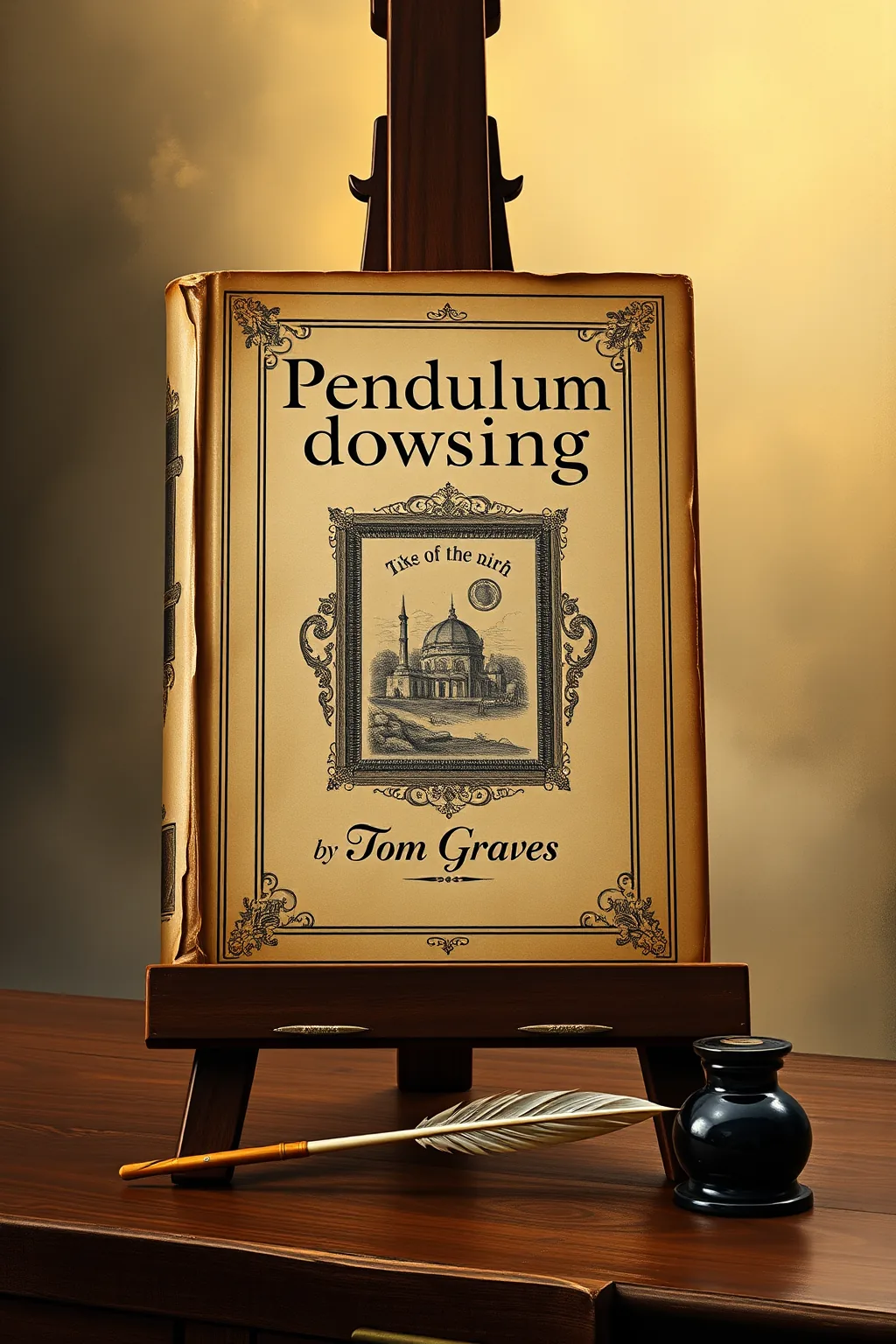
Pendulum dowsing
 83
83

Pendulum dowsing
Tom Graves' "Pendulum Dowsing" provides a refreshingly grounded approach to a practice often mired in esotericism. Unlike many superficial manuals, Graves anchors the technique in tangible energetic principles, a significant strength that elevates it beyond mere parlor trickery. His discussion on attuning to the pendulum, particularly the concept of the subconscious acting as a conduit, is well-articulated and offers a practical framework for understanding how dowsing might function. A limitation, however, is the relative brevity with which some historical precedents are discussed; one wishes for more detail on specific historical dowser accounts or debates. The section detailing how to formulate precise questions for the pendulum is particularly valuable, illustrating the importance of clarity in intent. This book is a solid primer for the serious student of esoteric tools.
📝 Description
83
Tom Graves' 1996 book examines pendulum dowsing as a method for accessing subtle energies.
This text details pendulum dowsing, a practice using a suspended weight to find information. Graves moves beyond basic instructions to discuss the underlying principles and applications of this esoteric technique. He presents dowsing not just as a way to locate lost items or water, but as a method for tapping into subtle energies and subjective awareness.
Pendulum dowsing is for those interested in divinatory tools and psychical research. It suits individuals curious about how energetic perception works and who seek practical ways to improve their intuition. The book also speaks to practitioners of alternative healing, geomancy, or anyone wanting to develop a more sensitive connection with their surroundings and inner self. An open mind and a willingness to experiment are necessary.
Dowsing for water and minerals has historical roots stretching back centuries, appearing in European texts from the 15th century. The use of pendulums for divination became more common in occult and spiritualist circles in the late 19th and early 20th centuries. This era saw increased interest in psychical phenomena, with figures like Helena Blavatsky and the Theosophical Society promoting various esoteric disciplines. Graves' work continues this tradition, placing pendulum dowsing within a larger context of energetic exploration.
💡 Why Read This Book?
• Learn to differentiate between subjective bias and genuine energetic feedback when using a pendulum, a crucial skill for reliable results presented through Graves' practical exercises. • Understand the historical trajectory of dowsing, from its early documented uses in the 15th century to its integration into 20th-century occultism, providing context for its esoteric applications. • Develop specific techniques for formulating questions that yield meaningful information from a pendulum, moving beyond vague inquiries to precise energetic diagnostics.
⭐ Reader Reviews
Honest opinions from readers who have explored this book.
❓ Frequently Asked Questions
Can pendulum dowsing be used for health diagnostics?
While "Pendulum Dowsing" by Tom Graves focuses on broader energetic and divinatory uses, the principles discussed can be adapted for health assessments. The book emphasizes understanding energetic fields, which some practitioners apply to identify imbalances or sensitivities within the body.
What is the difference between pendulum dowsing and other divination methods?
Pendulum dowsing, as explored in the book, directly interacts with subtle energy fields via a physical instrument. Unlike Tarot or I Ching, it relies on the dowser's subconscious or intuitive responses to specific energetic stimuli, mediated by the pendulum's movement.
How does one choose the right pendulum?
The book suggests that the most effective pendulum is often one that feels right to the user, rather than adhering to strict material rules. Personal resonance and a clear intention are highlighted as key factors in selecting and attuning to a dowsing tool.
Is pendulum dowsing based on scientific principles?
While the book engages with energetic concepts that are not universally accepted by mainstream science, it grounds dowsing in principles of subtle energies and subconscious response. It explores how focused intent might interact with these fields.
When was pendulum dowsing first documented?
The practice of dowsing, often for water or minerals using rods, has been documented in European texts as far back as the 15th century. The specific use of pendulums for broader divination expanded significantly in later occult traditions.
What are the ethical considerations for pendulum dowsing?
Graves' work touches upon the importance of responsible use. Ethical considerations include maintaining objectivity, avoiding manipulation, and respecting the privacy and autonomy of individuals or situations being dowsed, as well as understanding the limitations of the tool.
🔮 Key Themes & Symbolism
Subtle Energy Dynamics
The work elucidates pendulum dowsing as a method for interacting with and interpreting subtle energy fields. It posits that the pendulum acts as an amplifier or indicator of these energies, which are imperceptible to ordinary senses. Graves likely explores how the dowser's own bio-energetic field, along with external environmental energies, influences the pendulum's motion. This concept positions dowsing as a practical application of psychical physics, allowing practitioners to map and understand unseen forces that shape our reality.
The Subconscious Mind as Conduit
A central theme is the role of the subconscious mind in facilitating accurate dowsing. The book likely explains that the conscious mind's biases and analytical processes can interfere with intuitive perception. By learning to quiet the conscious mind and trust the subtle impulses directed through the pendulum, practitioners can access deeper layers of knowledge. This perspective aligns with various psychological and esoteric traditions that view the subconscious as a reservoir of untapped wisdom and information.
Intent and Question Formulation
The text stresses the critical importance of clear and precise intent when engaging in pendulum dowsing. The effectiveness of the practice hinges on the dowser's ability to formulate unambiguous questions. Ambiguous or poorly worded queries can lead to confusing or misleading results. The book likely provides guidance on structuring questions to elicit specific, actionable information, thereby enhancing the reliability and utility of the dowsing process for practical decision-making or seeking specific knowledge.
Historical Roots and Esoteric Lineage
Graves situates pendulum dowsing within a broader historical and esoteric context. The work likely traces the evolution of dowsing practices, from ancient rod-based methods to the more refined pendulum techniques popular in occultism. By connecting the practice to historical precedents, the book validates its place within Western esotericism and suggests a lineage of practitioners who have used similar tools to explore hidden realities. This historical grounding adds depth and credibility to the contemporary application of pendulum dowsing.
💬 Memorable Quotes
Direct passages from the work, attributed to the author.
“The pendulum is not a source of knowledge, but an indicator of what the dowser already knows subconsciously.”
— This interpretation highlights the pendulum as a tool for externalizing internal information. It suggests that the accuracy of dowsing depends on the dowser's ability to access and interpret their own subconscious perceptions, rather than relying on the pendulum as an independent oracle.
“Precision in questioning is paramount; vague queries yield vague answers.”
— This emphasizes the active role of the dowser in the dowsing process. It implies that the quality of the information received is directly proportional to the clarity and specificity of the question posed, framing dowsing as a disciplined art.
“Recognize the pendulum's swing as a physical manifestation of subtle energetic currents.”
— This interpretation frames the pendulum's movement not as random, but as a tangible signal of unseen forces. It encourages the practitioner to view the physical motion as a direct reflection of the energetic landscape being investigated.
“Ethical dowsing respects the integrity of information and the autonomy of the subject.”
— This points to the responsibility inherent in using divinatory tools. It suggests that ethical practice involves maintaining objectivity, avoiding coercion, and acknowledging the limitations and potential impact of the information sought or revealed.
💡 Key Ideas
Editorial paraphrase of the work's core concepts — not direct quotes.
Attunement involves developing a sympathetic vibration between the dowser and their chosen instrument.
This paraphrased concept suggests that a successful dowsing relationship is built on energetic resonance. It implies that the pendulum becomes an extension of the dowser's own energetic field through practice and focused intention.
🌙 Esoteric Significance
Tradition
This work fits within the Western Esoteric tradition, particularly touching upon psychical research and modern occultism. It draws from traditions that explore subtle energies and the power of the mind, akin to certain Hermetic principles concerning "as above, so below" applied to energetic fields. While not strictly Kabbalistic or Gnostic, it shares with them an interest in hidden knowledge and methods for accessing it, diverging by focusing on a specific, tangible tool for divination and energetic mapping.
Symbolism
The pendulum itself is a primary symbol, representing a focal point for intention and a sensitive instrument for detecting unseen forces. Its oscillation can symbolize movement, direction, and the flow of energy. The string or chain represents connection – between the conscious and subconscious mind, or between the dowser and the subject of inquiry. The act of dowsing can symbolize the seeker's journey towards hidden truths or lost items.
Modern Relevance
Contemporary practitioners of energy healing, intuitive development, and even certain branches of coaching and self-help draw upon the principles outlined in such works. Modern psychical researchers and those exploring consciousness studies may find its approach to subjective perception and energetic interaction relevant. Its emphasis on practical application makes it a valuable resource for individuals seeking to develop their intuitive faculties in tangible ways.
👥 Who Should Read This Book
• Aspiring dowsers and diviners seeking a structured introduction to pendulum techniques, offering practical guidance on tool selection and question formulation. • Students of esoteric history and psychical research interested in the evolution and application of divination tools within occult traditions. • Individuals exploring consciousness and subtle energies who wish to develop practical methods for interacting with and understanding their energetic environment.
📜 Historical Context
Tom Graves' "Pendulum Dowsing" emerged in 1997, a period when interest in alternative spiritualities and esoteric practices was experiencing a resurgence, partly fueled by the internet. While dowsing itself has historical roots stretching back to at least the 15th century, its application within occult and psychical research circles solidified in the late 19th and early 20th centuries. This era saw figures like J.W. Dunne exploring theories of time and psychical phenomena. Graves' work can be seen as contributing to a broader contemporary revival of interest in divination and energy work, distinct from the more dogmatic approaches of earlier occult societies. It arrived at a time when New Age thought was popularizing various forms of energy healing and intuitive development, offering a practical tool within that milieu. The book implicitly engages with contemporary skepticism by grounding its explanations in energetic principles and subconscious interaction, rather than purely supernatural claims.
📔 Journal Prompts
The pendulum's relationship to subconscious knowing: What personal biases might interfere with its clear indication?
Formulating precise questions: How can a vague inquiry about 'well-being' be refined for pendulum dowsing?
Energetic attunement: Describe the sensation of connecting with your pendulum before a session.
Interpreting movement: Beyond simple yes/no, what subtle pendulum motions could indicate nuance?
Ethical dowsing: Consider a situation where seeking information via pendulum might infringe on another's autonomy.
🗂️ Glossary
Dowsing
The practice of using a pendulum or rods to detect information, often related to locating water, minerals, or answering questions through intuitive or energetic responses.
Subtle Energy
Hypothesized forms of energy that are not part of the electromagnetic spectrum recognized by mainstream science, believed to be detectable by psychical means and influencing living organisms.
Attunement
The process of establishing a harmonious energetic connection or resonance between the dowser and their dowsing instrument, such as a pendulum.
Intent
The focused mental direction and purpose behind the act of dowsing, crucial for guiding the pendulum and interpreting its movements accurately.
Psychical Research
An academic and investigative field dedicated to studying purported psychic phenomena, such as telepathy, clairvoyance, and psychokinesis, often employing scientific methodologies.
Bio-energetic Field
The theoretical energy field surrounding and emanating from living organisms, often considered to be influenced by and influencing health and consciousness.
Divination
The practice of seeking knowledge of the future or the unknown by supernatural or magical means, employing tools like pendulums, cards, or runes.
🔮 Readers Also Liked
Browse all →









More by Tom Graves
All books →





More Free Occult Philosophy Books
View all →