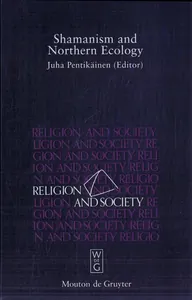
Sacred Geometry for Greater Health and Happiness

 71
71

Sacred Geometry for Greater Health and Happiness
Michael D. Miller’s "Sacred Geometry for Greater Health and Happiness" approaches the well-trodden path of geometric symbolism with a fresh, practical bent. The author’s strength lies in demystifying complex concepts like the Platonic Solids, making them accessible without sacrificing their inherent esoteric weight. I found the chapter discussing the application of the Flower of Life symbol to personal energy fields particularly insightful, moving beyond mere description to actionable guidance. However, the book occasionally leans into assertions about direct causal links between geometric forms and specific health outcomes that could benefit from more robust scientific (or even rigorously philosophical) backing. While it effectively bridges ancient wisdom and contemporary self-help, a deeper engagement with the critiques or alternative interpretations of sacred geometry within academic circles might have provided a more balanced perspective. Overall, Miller offers a well-intentioned and largely effective guide for those seeking to harness geometric principles for personal betterment.
📝 Description
71
Michael D. Miller's 2022 book connects geometric forms to human well-being.
Sacred Geometry for Greater Health and Happiness examines how geometric patterns, observed in nature and historical architecture, can influence human vitality and emotional balance. Miller presents geometric concepts not as abstract math, but as active forces that shape our experience. The book aims to help individuals integrate esoteric principles with practical self-improvement, appealing to those interested in the links between spirituality, science, and personal growth. Readers curious about symbolic patterns, ancient philosophies, or new ways to achieve mental clarity and resilience will find value here. It addresses how universal order might appear in daily life.
This work draws upon a long history of sacred geometry study, tracing back to figures like Pythagoras and his school in the 6th century BCE, who believed numbers and shapes revealed fundamental truths. The Renaissance, with artists such as Leonardo da Vinci, also saw a renewed interest in geometric principles. Miller's 2022 publication enters this tradition, offering contemporary insights into ideas discussed over centuries.
The study of sacred geometry has ancient roots, with thinkers like Pythagoras in the 6th century BCE exploring mathematical relationships in the cosmos. This tradition posits that numbers and geometric shapes embody fundamental truths about reality. Later, during the Renaissance, artists and architects like Leonardo da Vinci incorporated these principles into their work. Michael D. Miller's book engages with this historical lineage, applying modern perspectives to concepts that have been contemplated by thinkers across millennia.
💡 Why Read This Book?
• You will learn specific techniques for applying geometric patterns, like the Seed of Life, to create focused meditation spaces, a practical application not commonly found in introductory texts on the subject. • You will understand the historical significance of the five Platonic Solids, as presented by Plato himself in his dialogue 'Timaeus,' gaining context for their enduring mystical importance. • You will feel empowered by actionable methods for using geometric concepts, such as the Golden Ratio, to consciously influence your environment and mental state for improved well-being.
⭐ Reader Reviews
Honest opinions from readers who have explored this book.
❓ Frequently Asked Questions
What is the primary goal of applying sacred geometry for health and happiness?
The primary goal is to align one's personal energy and environment with the inherent harmonious patterns of the universe, as represented by sacred geometric forms, to promote balance, vitality, and emotional well-being.
When was 'Sacred Geometry for Greater Health and Happiness' first published?
Michael D. Miller's book was first published in 2022, making it a contemporary exploration of ancient principles.
Does the book explain the meaning of specific geometric symbols like the Flower of Life?
Yes, the book explains the multifaceted meanings and applications of symbols such as the Flower of Life, exploring its significance across various spiritual traditions and its potential use in personal practice.
Who is Michael D. Miller, the author?
Michael D. Miller is the author of 'Sacred Geometry for Greater Health and Happiness,' a work that draws upon his research and understanding of esoteric principles and their practical applications.
What are the Platonic Solids mentioned in the book?
The Platonic Solids are five unique, convex regular polyhedra: the tetrahedron, cube, octahedron, dodecahedron, and icosahedron. The book discusses their historical significance and their role in understanding the fundamental structure of the cosmos.
Are there practical exercises or meditations included in the book?
Yes, the book offers practical exercises and guidance for meditation, encouraging readers to actively engage with sacred geometric forms to cultivate health and happiness.
🔮 Key Themes & Symbolism
Geometric Harmonics
This theme explores the underlying principle that the universe operates on mathematical and geometric order. Miller posits that specific geometric forms, such as the Vesica Piscis and the Seed of Life, emit distinct energetic frequencies. By understanding and consciously interacting with these frequencies, individuals can purportedly achieve greater balance, clarity, and vitality. The work suggests that nature itself is a grand expression of these harmonic geometries, and attuning to them can lead to a more integrated and peaceful existence, bridging the gap between the material and the spiritual through numerical patterns.
Ancient Wisdom in Modern Life
The book connects the esoteric knowledge of ancient civilizations, particularly their understanding of geometry and its sacred significance, to contemporary challenges. It highlights how principles observed by figures like Pythagoras or embedded in structures like the Great Pyramid of Giza can offer solutions for modern-day stress and disharmony. Miller argues that rediscovering and applying this ancestral wisdom, often dismissed as mere symbolism, is crucial for holistic personal growth and achieving lasting happiness in the 21st century.
Personal Energetic Alignment
A core focus is the application of sacred geometry for individual energetic enhancement. This involves understanding how geometric patterns can be used in personal spaces, through visualization, or even in mindful contemplation to influence one's own vibrational state. Concepts like 'energetic resonance' are discussed, suggesting that by surrounding oneself with or focusing on specific geometric forms, one can cultivate a more positive and stable energetic field, thereby supporting physical health and emotional resilience.
The Blueprint of Creation
This theme looks at the idea that sacred geometry represents the fundamental blueprint of all existence. Miller examines how geometric patterns are not only abstract concepts but are intrinsically woven into the fabric of reality, from the arrangement of atoms to the spiral of galaxies. The book encourages readers to see these patterns as divine architecture, understanding which can lead to a deeper appreciation of the interconnectedness of all things and a sense of awe.
💬 Memorable Quotes
Direct passages from the work, attributed to the author.
“The universe speaks in the language of form and number.”
— This statement captures the book's central thesis: that underlying the apparent chaos of existence is a profound, mathematical order expressed through geometric shapes and their relationships, which can be understood and utilized.
“Harmonic resonance is not magic, but a fundamental principle of energetic interaction.”
— This interpretation clarifies that the book presents geometric influences not as mystical enchantments but as natural phenomena rooted in energetic principles, akin to physics, that can be consciously engaged with for beneficial outcomes.
“Applying geometric principles to one's environment can shift personal vibration.”
— This interpretation suggests that conscious arrangement of space or focus on specific geometric patterns can actively alter an individual's energetic state, leading to improvements in mood, health, and overall well-being.
“Nature reveals the sacred geometry in every leaf, flower, and shell.”
— This highlights the book's emphasis on observing the ubiquity of geometric patterns in the natural world, suggesting that these forms are not just man-made constructs but intrinsic elements of creation.
💡 Key Ideas
Editorial paraphrase of the work's core concepts — not direct quotes.
The Platonic Solids are the elemental forms from which all matter arises.
This paraphrased concept highlights the book's exploration of the five regular polyhedra as foundational building blocks of the cosmos, reflecting ancient philosophical and esoteric views on the universe's structure.
🌙 Esoteric Significance
Tradition
This work draws heavily from the Hermetic and Neoplatonic traditions, which have long explored the concept of the universe as an ordered, mathematical whole. It aligns with the Hermetic principle 'As Above, So Below,' suggesting that the geometric perfection observed in the cosmos is mirrored within the human being and can be accessed through conscious understanding. Miller's approach departs from purely philosophical or religious interpretations by focusing on practical application for personal wellness, a hallmark of modern esoteric movements.
Symbolism
Key symbols explored include the 'Platonic Solids,' representing the fundamental elements and structures of existence, and the 'Flower of Life,' a potent symbol of creation and interconnectedness found in numerous ancient cultures. The 'Golden Ratio' (Phi) is presented not just as a mathematical constant but as a divine proportion governing beauty, harmony, and growth, influencing everything from plant structures to facial aesthetics.
Modern Relevance
Miller's work appeals to contemporary movements in holistic health, mindfulness, and consciousness studies. Thinkers and practitioners in fields like bioGeometry, sound healing, and even certain branches of architectural psychology implicitly or explicitly engage with the principles Miller outlines. His emphasis on practical application makes the ancient wisdom of sacred geometry accessible to a wider audience interested in personal transformation and energetic alignment.
👥 Who Should Read This Book
• Individuals interested in practical spirituality: Those seeking tangible methods to enhance their daily lives through the application of universal patterns and principles. • Students of esoteric traditions: Learners exploring the foundational role of geometry in Hermeticism, Pythagoreanism, and other mystical philosophies will find a clear, modern perspective. • Seekers of holistic well-being: Readers looking for complementary approaches to health and happiness, who are open to exploring the energetic and symbolic dimensions of existence.
📜 Historical Context
Michael D. Miller's "Sacred Geometry for Greater Health and Happiness" (2022) emerges within a contemporary resurgence of interest in esoteric traditions, particularly those linking mathematics, spirituality, and well-being. This movement echoes earlier revivals, such as the Theosophical Society founded in the late 19th century, which sought to synthesize diverse spiritual and scientific knowledge. Miller's work can be seen as engaging with the legacy of thinkers like Rudolf Steiner, who explored geometric forms in relation to human consciousness and development. While Miller's approach is distinct, the underlying premise—that geometric patterns hold keys to cosmic and personal order—has a long lineage. The 20th century also saw figures like Dane Rudhyar, who integrated astrology with geometric symbolism, influencing later esoteric thought. Miller's contemporary contribution lies in framing these ancient ideas within a modern self-help paradigm, distinct from the more academic or purely mystical approaches of earlier eras.
📔 Journal Prompts
Reflect on the geometric patterns observed in nature and their connection to the concept of Harmonic Resonance.
How does the principle of 'As Above, So Below' relate to your personal understanding of the Platonic Solids?
Consider the symbolism of the Flower of Life in relation to your own creative processes.
Explore the potential impact of the Golden Ratio on your perception of beauty in everyday objects.
Meditate on the tetrahedron and its association with the element of fire, noting any personal energetic shifts.
🗂️ Glossary
Platonic Solids
The five unique, convex regular polyhedra (tetrahedron, cube, octahedron, dodecahedron, icosahedron) believed by ancient philosophers to represent the fundamental elements and structure of the universe.
Golden Ratio (Phi)
An irrational number, approximately 1.618, found in nature, art, and architecture, believed to represent aesthetic harmony and natural growth proportions.
Flower of Life
A sacred geometric pattern composed of multiple overlapping circles, symbolizing the interconnectedness of all life and the fundamental patterns of creation.
Harmonic Resonance
The concept that specific geometric forms emit energetic frequencies that can interact with and influence human consciousness and physical well-being.
Vesica Piscis
A symbol formed by the intersection of two circles of the same radius, representing duality, union, and the creation of new forms from opposing forces.
Seed of Life
A sacred geometric symbol derived from the Flower of Life, representing the seven days of creation and the origin of all existence.
Energetic Alignment
The process of bringing one's personal vibrational frequency into harmony with universal principles or desired states of being, often facilitated by geometric forms.
🔮 Readers Also Liked
Browse all →






More by Michael D. Miller
All books →
More Free Occult Philosophy Books
View all →