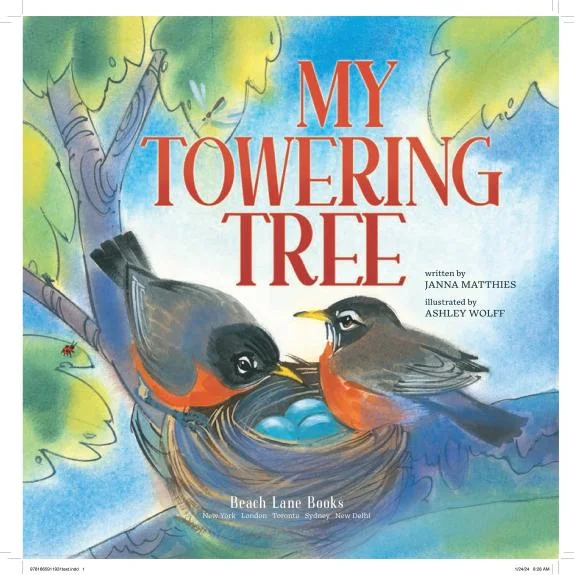
My Towering Tree
 78
78

My Towering Tree
Janna Matthies's "My Towering Tree" offers a welcome antidote to nature deficit disorder, focusing its lens on the often-overlooked wonders of a backyard. The prose is delicate, almost reverent, particularly in its descriptions of the 'towering tree' that serves as the book's anchor. Matthies excels at drawing the reader's attention to the minute details—the texture of bark, the hum of an insect, the subtle shift of light through leaves. The book’s primary strength lies in its ability to transform the familiar into the extraordinary. Its limitation, however, might be its singular focus; readers seeking broader ecological narratives or more analytical approaches might find it too introspective. A passage describing the intricate root system of the tree, reaching unseen beneath the soil, vividly illustrates the book’s power to reveal hidden complexity. "My Towering Tree" is a quiet, beautifully rendered ode to the commonplace.
📝 Description
78
Published in 2024, Janna Matthies's 'My Towering Tree' finds the extraordinary in the ordinary backyard.
Janna Matthies's "My Towering Tree" invites readers to see the everyday backyard as a universe. It details the complex relationships between plants and animals, the cycles of growth and decay, and the quiet exchanges within this small ecosystem. The book encourages readers to pause, observe their immediate surroundings, and find wonder there. It connects the smallest insect to the largest tree, suggesting an interconnectedness in all life.
This book is for those drawn to nature who may not have easy access to wild places. It speaks to parents wishing to instill a sense of awe in their children, teachers needing simple ecological examples, and anyone seeking quiet reflection. Matthies's writing is lyrical and encouraging, aiming to spark curiosity. The work builds on a tradition of nature writing that values close observation and ecological awareness, but it focuses on the domestic garden, making grand themes of biodiversity accessible. It reflects a modern interest in localism and finding the remarkable in familiar places.
This book connects with a contemporary spiritual current that finds the sacred within the immanent, rather than solely in transcendent realms. It echoes traditions that emphasize immanent divinity, where the divine is perceived through the natural world and its processes. By focusing on the detailed observation of a local environment, Matthies taps into a practice of mindful attention often found in contemplative traditions, suggesting that profound spiritual insight can arise from direct, unmediated experience of the immediate physical world. It aligns with movements that seek to re-enchant the everyday through a deeper, more attentive relationship with nature.
💡 Why Read This Book?
• Gain a renewed appreciation for the immediate natural world, learning to see the profound ecological interactions within your own backyard, inspired by Matthies's detailed observations of the "towering tree." • Cultivate a practice of mindful observation, similar to the author's approach to the garden bed, discovering the subtle beauty and complexity often missed in daily life. • Understand the interconnectedness of seemingly small elements, like the buzzing bee and its environment, fostering a sense of ecological awareness applicable even in urban settings.
⭐ Reader Reviews
Honest opinions from readers who have explored this book.
❓ Frequently Asked Questions
What is the central theme of Janna Matthies's "My Towering Tree"?
The central theme is the appreciation of the natural world within a backyard setting. It encourages readers to observe and find wonder in elements like a "towering tree," garden beds, and insects, fostering a connection to immediate surroundings.
When was "My Towering Tree" first published?
The book "My Towering Tree" by Janna Matthies was first published on August 27, 2024.
Who would most benefit from reading "My Towering Tree"?
Individuals interested in nature writing, mindfulness, and ecological awareness, especially those seeking to find wonder in everyday environments, parents, and educators will find this book particularly rewarding.
Does the book offer practical advice for gardening?
While "My Towering Tree" focuses on observation and appreciation rather than instructional gardening, its detailed descriptions of the "garden bed" and its inhabitants can inspire a deeper engagement with one's own green spaces.
What is the tone of "My Towering Tree"?
The tone is gentle, contemplative, and appreciative. It invites readers to slow down, breathe, and connect with the natural world through lyrical and observant prose, avoiding technical jargon.
How does "My Towering Tree" relate to other nature writing?
It aligns with contemporary nature writing's emphasis on ecological interconnectedness but distinguishes itself by focusing intently on the micro-environment of a backyard, making grand themes accessible on a personal scale.
🔮 Key Themes & Symbolism
The Backyard Microcosm
The book posits the backyard as a universe teeming with life and intricate relationships. It moves beyond viewing this space as mere decoration or utility, instead presenting it as a dynamic ecosystem. By focusing on specific elements such as the "towering tree" and the "garden bed," Matthies reveals the complex web of interactions between plants, insects, and the environment, urging readers to recognize the profound biodiversity often overlooked in familiar surroundings.
Mindful Observation
Central to "My Towering Tree" is the practice of slowing down and observing the immediate world with focused attention. The narrative encourages a shift from passive viewing to active engagement, highlighting how detailed observation of phenomena like a "buzzing bee" can unlock a deeper understanding and appreciation of natural processes. This theme champions the idea that clear insights and a sense of wonder are accessible through patient, present-moment awareness.
Interconnectedness of Life
Matthies emphasizes the fundamental interconnectedness of all living things within the backyard ecosystem. The book illustrates how the health and vitality of one element, whether the "towering tree" or the smallest soil organism, impacts the entire system. This perspective encourages readers to see themselves not as separate from nature, but as integral parts of this complex, interwoven web, fostering a sense of responsibility and belonging.
The Extraordinary in the Ordinary
A core message of "My Towering Tree" is the discovery of the extraordinary within the ordinary. By meticulously detailing the wonders of a "garden bed" or the life cycle of a common insect, the book challenges the perception that significant natural phenomena are confined to remote wildernesses. It serves as a powerful reminder that magic and complexity exist everywhere, particularly in the spaces we inhabit daily.
💬 Memorable Quotes
Direct passages from the work, attributed to the author.
“A towering tree holds entire worlds within its branches and roots.”
— This highlights the book's central idea: that even seemingly simple natural elements like a tree are complex ecosystems, housing vast biodiversity and intricate life cycles deserving of attention.
“The garden bed breathes with unseen life.”
— This phrase emphasizes the hidden vitality within the soil and amongst plants in a garden, suggesting that a deeper, more attentive gaze reveals a constant, dynamic process of existence.
“Even the smallest bee is a vital messenger.”
— This points to the significance of individual creatures, like the bee, within the larger ecological balance. It suggests that each being plays a crucial role and carries important information about the health of its environment.
“Stop. Take a breath. Notice the world around you.”
— This is a direct invitation to the reader, encapsulating the book's purpose: to encourage mindfulness and a deliberate pause in daily life to appreciate the immediate natural surroundings.
“Wonder lives in the spaces between.”
— This suggests that moments of awe and discovery are often found not in the obvious subjects, but in the subtle connections, transitions, and overlooked details within the natural environment.
🌙 Esoteric Significance
Tradition
While not overtly aligned with a specific esoteric lineage like Hermeticism or Gnosticism, "My Towering Tree" shares a profound kinship with animistic traditions and nature-based spiritualities. It reflects the worldview found in shamanic practices and certain forms of indigenous spirituality that perceive spirit and consciousness within all natural phenomena. The work encourages a reverence for the 'genius loci'—the spirit of place—found within the domestic landscape, fostering a sense of sacredness in the everyday natural world.
Symbolism
The "towering tree" itself functions as a potent symbol, representing stability, connection between earth and sky, and the unfolding of life through time, much like the Tree of Life in Kabbalistic thought. The "garden bed" symbolizes cultivation, growth, and the potential for transformation through human interaction with nature. The "buzzing bee" can represent diligence, community, order, and the vital force of pollination and creation, echoing ancient solar and fertility myths.
Modern Relevance
This work appeals to contemporary movements focused on mindfulness, ecopsychology, and localism. Thinkers and practitioners in these fields often emphasize the importance of reconnecting with the immediate environment for psychological well-being and ecological responsibility. "My Towering Tree" provides a gentle, accessible entry point for individuals exploring these concepts, offering a practical framework for finding the sacred and the significant within their own living spaces.
👥 Who Should Read This Book
• Aspiring nature observers seeking to cultivate a deeper connection with their immediate surroundings, learning to find wonder in the commonplace. • Parents and educators looking for accessible ways to introduce children to ecological concepts and foster a love for nature through relatable examples. • Individuals interested in mindfulness and contemplative practices who wish to integrate a deeper awareness of the natural world into their daily lives.
📜 Historical Context
Published in 2024, "My Towering Tree" arrives amidst a resurgence of interest in nature writing and ecological consciousness, building upon the foundations laid by authors like Rachel Carson, whose key work "Silent Spring" (1962) alerted the public to environmental dangers. Matthies’s focus on the hyper-local—the backyard—distinguishes her from earlier writers who often explored grander, wilder landscapes. The book reflects a contemporary trend toward appreciating the immediate environment, perhaps as a response to global environmental anxieties and a desire for tangible connection. It emerges in a period where urban ecology and the importance of green spaces within cities are increasingly recognized. While not directly engaging with a specific intellectual movement like Transcendentalism, it echoes its core tenet of finding spiritual and profound meaning in nature, albeit on a much smaller, more accessible scale. Its reception is likely to align with the growing audience for mindful, nature-focused literature.
📔 Journal Prompts
Reflect on the "towering tree" in your vicinity: what unseen life does it support?
Consider the "garden bed" as a microcosm: what cycles of life and decay are evident?
Analyze the role of a "buzzing bee" in your local ecosystem.
Describe a moment of unexpected wonder found in your backyard.
How does the act of stopping and breathing change your perception of the ordinary?
🗂️ Glossary
Towering Tree
A central metaphor and subject in the book, representing a complex, living ecosystem within the backyard, symbolizing stability and connection.
Garden Bed
Represents a cultivated space where life emerges and cycles unfold, serving as a focal point for observing natural processes and human interaction with nature.
Buzzing Bee
Symbolic of vital ecological processes, diligence, and the interconnectedness of life, highlighting the importance of even small creatures.
Microcosm
The concept that a small, contained space, like a backyard, can reflect the complexity and dynamics of the larger natural world.
Mindful Observation
The practice of paying deliberate, non-judgmental attention to the present moment, particularly to the details of the natural world.
Interconnectedness
The principle that all elements within an ecosystem are linked and influence one another, emphasizing ecological relationships.
Ecological Awareness
An understanding of the relationships between living organisms and their environment, and the impact of human actions on these systems.
This book appears in 1 collection
🔮 Readers Also Liked
Browse all →






From the “Mindfulness” Collection
View all →







More Free Occult Philosophy Books
View all →