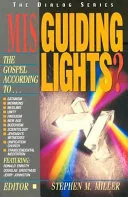
Misguiding Lights?
 82
82

Misguiding Lights?
Stephen M. Miller’s *Misguiding Lights?* offers a dense, comparative scriptural analysis that sets it apart from more generalized surveys of world religions. Its strength lies in its systematic, almost academic, approach to dissecting the core tenets of movements from Scientology to Hinduism. Miller’s willingness to tackle such a wide array of belief systems, including those often considered fringe or heretical, is commendable. However, the sheer breadth means that depth is sometimes sacrificed; the treatment of any single tradition can feel brief, particularly given the complexity of their respective scriptures. A notable passage is the early examination of the Book of Mormon, where Miller attempts to reconcile its narrative with biblical accounts, highlighting the challenges inherent in textual comparison. The book’s value is primarily as a reference for specific doctrinal points rather than a holistic spiritual guide. It serves as a diligent, if sometimes dry, comparative study.
📝 Description
82
Stephen M. Miller published Misguiding Lights? in 1991 to compare scriptural analyses of spiritual movements.
Stephen M. Miller's 1991 book, Misguiding Lights?, systematically compares the foundational texts and doctrines of numerous spiritual and religious groups. Miller examines belief systems including Satanism, Mormonism, Islam, the Unity School of Christianity, Hinduism, the Unification Church, New Age philosophies, Buddhism, Scientology, Jehovah's Witnesses, and Transcendental Meditation. His method involves a close reading of each system's scriptures and core teachings. He aims to identify divergences from what he considers orthodox interpretations and to articulate each group's distinct theological structure.
This book is designed for readers interested in comparative religion and theology. It will particularly benefit those who are evaluating different belief systems or scrutinizing religious claims. Students of esotericism and anyone curious about the doctrinal bases of various spiritual paths will find Miller's comparative approach useful for understanding the diversity of global religious thought. The work offers a detailed look at the scriptural underpinnings of these traditions.
Published in 1991, Misguiding Lights? entered a period marked by increased interest in the New Age and a proliferation of alternative religious groups. While comparative religious studies were growing, Miller's work concentrated specifically on scriptural comparison and doctrinal differences, rather than broader syncretic approaches. The book engages with the late 20th century's intellectual climate, which was conducive to examining diverse religious doctrines and questioning religious authenticity.
💡 Why Read This Book?
• Gain a factual understanding of scriptural differences between major and minor religious movements, as explored in the detailed comparisons of texts like the Quran, the Book of Mormon, and Buddhist sutras. • Develop a critical framework for evaluating religious claims by examining Miller's method of comparing doctrines, particularly his approach to the Unification Church's theology. • Appreciate the diversity of spiritual interpretation through Miller's direct scriptural examination of Transcendental Meditation and New Age beliefs, distinct from typical philosophical treatises.
⭐ Reader Reviews
Honest opinions from readers who have explored this book.
❓ Frequently Asked Questions
What is the primary focus of Stephen M. Miller's *Misguiding Lights?* regarding different religions?
The book's primary focus is a scriptural evaluation of various religious and spiritual movements, including Satanism, Mormonism, Islam, Hinduism, and Buddhism. Miller examines their foundational texts and doctrines to understand their unique theological frameworks.
When was *Misguiding Lights?* first published and what was the context?
First published in 1991, the book emerged during a period of increased interest in alternative spiritualities and comparative religion. This era saw many new religious movements gaining traction, prompting critical examinations of their doctrinal bases.
Which specific religious groups are analyzed in *Misguiding Lights?* by Stephen M. Miller?
Miller analyzes a wide range of groups including Satanism, Mormons, Muslims, Unity, Hinduism, the Unification Church, New Age movements, Buddhism, Scientology, Jehovah's Witnesses, and Transcendental Meditation.
What is the author's role or perspective in *Misguiding Lights?*
Stephen M. Miller adopts the perspective of a pupil or student. He is engaged in a meticulous, analytical study of each belief system's scriptures and doctrines, rather than presenting himself as an authoritative guru.
Does *Misguiding Lights?* offer a definitive judgment on the 'truth' of these religions?
No, the book's aim is scriptural evaluation and comparison, not to declare one religion definitively 'true' or 'false'. It presents an analysis of doctrines and texts, allowing readers to draw their own conclusions.
What kind of insights can a reader expect from the examination of New Age beliefs in this book?
Readers can expect an analysis of the scriptural or textual foundations claimed by New Age movements, as presented by Miller. It focuses on how these beliefs are articulated and supported by their respective texts.
🔮 Key Themes & Symbolism
Scriptural Divergence
The core of Miller's work lies in identifying and analyzing how the foundational scriptures of various religious and spiritual movements diverge from one another and, in some cases, from established orthodoxies. This theme is explored through direct comparisons of texts attributed to groups like the Jehovah's Witnesses and the Unification Church, highlighting differences in theological interpretation and narrative structure. Miller’s methodical approach invites readers to consider the textual evidence presented for each belief system.
Doctrinal Frameworks
Miller systematically examines the doctrinal frameworks erected upon the scriptures of diverse traditions, including Buddhism, Scientology, and various New Age philosophies. He assesses how core tenets concerning divinity, salvation, and the nature of reality are articulated within each system. The book serves as a comparative study of these distinct theological architectures, demonstrating the wide spectrum of belief systems that have emerged and how they interpret their sacred texts.
The Student's Perspective
Adopting the stance of a 'pupil,' Miller approaches each tradition with a desire to understand its internal logic and scriptural basis. This perspective is crucial, as it frames the analysis not as an authoritative judgment but as an earnest inquiry. His examination of Mormon scriptures, for instance, reflects a student’s attempt to grasp its unique place within religious history and theology, encouraging a similar posture of open yet critical learning in the reader.
Comparative Religious Analysis
The book functions as a broad comparative analysis of religious thought and practice, focusing on their scriptural underpinnings. By juxtaposing the texts of seemingly disparate groups such as Hinduism and Transcendental Meditation, Miller provides a panoramic view of religious expression. This comparative method is central to understanding the scope of human spiritual inquiry and the varied ways meaning is constructed through sacred narratives.
💬 Memorable Quotes
Direct passages from the work, attributed to the author.
“Pupil.”
— This single-word descriptor highlights Miller's approach. He presents himself not as an expert dictating truths, but as a student diligently studying and analyzing the scriptures of various traditions, inviting readers to learn alongside him.
“Miller's analysis of the Book of Mormon's narrative.”
— Miller’s work scrutinizes the Book of Mormon, comparing its narrative and theological claims against other scriptural traditions. This reflects the book's core method of textual comparison to understand doctrinal differences.
“The examination of New Age spiritual texts.”
— This refers to Miller's engagement with the scriptural basis of New Age beliefs, a key component of his comparative study across diverse spiritual movements published in 1991.
“Comparing the tenets of Islam and Buddhism.”
— Miller's comparative scriptural evaluation extends to major world religions like Islam and Buddhism, showcasing the diverse theological landscapes he explores within the book.
💡 Key Ideas
Editorial paraphrase of the work's core concepts — not direct quotes.
Scriptural evaluation of the Gospel according to Satanism, Mormons, Muslims, Unity, Hinduism, Unification Church, New Age, Buddhism, Scientology, Jehovah's Witnesses, and Transcendental Meditation.
This quote, from the original blurb, expresses the book's ambitious scope. It signals Miller's intent to engage directly with the foundational texts of a wide array of belief systems, positioning the work as a comparative scriptural study rather than a philosophical or historical overview.
🌙 Esoteric Significance
Tradition
While not explicitly aligning with a single esoteric lineage like Hermeticism or Gnosticism, *Misguiding Lights?* engages with the broader esoteric milieu by critically examining movements that often position themselves outside mainstream religious structures. Its method of textual deconstruction and comparative analysis aligns with a scholarly approach to esoteric traditions, seeking to understand their origins and doctrines from a textual perspective. The work implicitly participates in the esoteric discourse by scrutinizing alternative spiritualities that emerged prominently in the late 20th century.
Symbolism
The book’s focus is primarily on scriptural content rather than overt symbolism, but the 'Gospel according to Satanism' itself can be seen as a symbolic inversion, challenging traditional Christian narratives. Similarly, the diverse interpretations of enlightenment in Buddhism or the concept of the Divine in Mormonism represent symbolic frameworks for understanding existence. Miller’s analysis implicitly engages with how these symbolic systems function within their respective belief structures.
Modern Relevance
In an era where online discourse can rapidly disseminate and distort religious and spiritual claims, Miller’s work offers a grounding in textual analysis. Contemporary thinkers and practitioners exploring comparative religion, theology, or the history of new religious movements might reference his 1991 study for its foundational scriptural comparisons. The ongoing interest in understanding the doctrinal underpinnings of various spiritual paths ensures the continued, albeit niche, relevance of such comparative textual scholarship.
👥 Who Should Read This Book
• Students of Comparative Religion: Individuals seeking to understand the doctrinal foundations and scriptural variations across a wide array of belief systems, from Hinduism to Scientology. • Critical Inquirers: Those who approach spirituality with a questioning mindset and wish to examine the textual basis of different religious claims before forming conclusions. • Researchers of New Religious Movements: Scholars and enthusiasts interested in the theological range of the late 20th century, particularly the doctrinal aspects of movements that gained prominence around 1991.
📜 Historical Context
Published in 1991, *Misguiding Lights?* arrived at a time when Western societies were increasingly exposed to a multitude of religious and spiritual options. The late 20th century, particularly the 1980s and early 1990s, saw a rise in the popularity of New Age thought and a greater public awareness of various Eastern religions and non-traditional Western faiths. This period followed the counter-cultural shifts of the 1960s and 70s, which had opened doors for diverse spiritual explorations. Miller’s work can be seen as a response to this burgeoning landscape, offering a critical, text-based examination. While scholars like Huston Smith were providing accessible overviews of world religions in works such as *The World’s Religions* (first published 1958, revised editions throughout), Miller’s approach was more narrowly focused on scriptural comparison and potential doctrinal inconsistencies, acting as a counterpoint to more syncretic or purely philosophical engagements with spirituality.
📔 Journal Prompts
The scriptural claims of Mormonism and their comparison.
Analyzing the 'Gospel according to Satanism' as presented by Miller.
The doctrinal framework of the Unification Church.
Miller's approach to New Age scriptural interpretations.
Contrasting the core tenets of Islam and Buddhism as examined.
🗂️ Glossary
Scriptural Evaluation
The process of examining and assessing religious texts to understand their content, doctrines, historical context, and theological implications. Miller applies this method to diverse traditions.
Mormonism
A religious tradition originating in the United States in the 19th century, centered on the Book of Mormon, which adherents believe to be another testament of Jesus Christ alongside the Bible.
Unity School of Christianity
A spiritual movement founded in the late 19th century, emphasizing practical spiritual truths and the application of Jesus' teachings for healing and prosperity.
New Age
A broad spiritual movement that emerged in the mid-20th century, characterized by a blend of Eastern and Western spiritual traditions, mysticism, and alternative healing practices.
Scientology
A body of beliefs and practices created by L. Ron Hubbard, focused on spiritual enlightenment and rehabilitation through the application of his theories and techniques.
Jehovah's Witnesses
A Christian denomination characterized by its distinct beliefs regarding the Second Coming of Jesus, evangelism, and refusal of military service and blood transfusions.
Transcendental Meditation (TM)
A specific form of silent mantra meditation developed by Maharishi Mahesh Yogi, intended to promote deep relaxation and inner peace.
This book appears in 1 collection
🔮 Readers Also Liked
Browse all →








From the “Transcendental Meditation” Collection
View all →


![An answer of a letter from a gentleman in Fife, to a nobleman, containing a brief acccount [sic] of the barbarous and illegal treatment, these poor women accused of witchcraft, met with from the baillies of Pittenweem and others, ... To which is adde](/img/thumb/an-answer-of-a-letter-from-a-gentleman-in-fife-to-a-nobleman-containing-a-brief-acccount-sic-of-the-barbarous-and-illegal-treatment-these-poor-women-accused-of-witchcraft-met-with-from-the-baillies-of.webp)





More Free Spiritual Development Books
View all →