Little Book of Chakras

 71
71

Little Book of Chakras
Patricia Mercier’s *Little Book of Chakras* offers a refreshingly direct approach to a subject often mired in New Age platitudes. The strength lies in its clear articulation of each chakra's function, particularly how the Anahata chakra is linked to emotional balance, a concept explored with particular clarity. However, the book occasionally feels constrained by its brevity, sometimes glossing over the deeper interconnections between the energy centers. A notable passage discusses the Ajna chakra’s role in intuition, but one wishes for more illustrative examples of its manifestation in daily life. Ultimately, this volume serves as a competent primer for those new to the topic, though seasoned practitioners may seek greater depth.
📝 Description
71
Patricia Mercier's "Little Book of Chakras" clarifies the body's subtle energy centers.
This book examines the seven major chakras, the subtle energy centers in the human body as understood in esoteric traditions. Mercier moves beyond simple definitions to explain the function and energetic effects of each primary chakra. The aim is to give readers practical knowledge for understanding and working with their own energy systems.
It is suitable for those new to chakra theory and energy work. Readers interested in meditation, holistic wellness, and accessible introductions to these topics will find it helpful. The book avoids overly academic language or complicated philosophical discussions, offering a clear and straightforward guide.
The concept of chakras originates in ancient Indian Tantric traditions. Popularized in the West in the late 19th and early 20th centuries, particularly through Theosophy, chakra knowledge connects to broader ideas of subtle anatomy. Mercier's work interprets these historical roots for a modern audience, situating them within the spiritual currents that influenced counterculture movements.
💡 Why Read This Book?
• Gain a clear understanding of the seven primary chakras, including their Sanskrit names like Muladhara, and their specific energetic functions, allowing for more targeted self-awareness. • Learn practical methods for sensing and balancing your own energy field, inspired by ancient Indian Tantric traditions, potentially leading to improved emotional and physical well-being. • Discover the significance of prana flow and how blockages in specific chakras, such as the Vishuddha, can impact communication, enabling you to address energetic imbalances more effectively.
⭐ Reader Reviews
Honest opinions from readers who have explored this book.
❓ Frequently Asked Questions
When was Patricia Mercier's Little Book of Chakras first published?
The Little Book of Chakras by Patricia Mercier was first published in 2025. This recent publication date indicates a contemporary perspective on traditional chakra teachings.
What are the main topics covered in the Little Book of Chakras?
The book covers the seven major chakras, their associated colors, Sanskrit names, symbolic meanings, and their connection to physical and emotional health, as well as the concept of prana flow.
Is this book suitable for beginners interested in energy work?
Yes, the Little Book of Chakras is designed for beginners. It provides an accessible introduction to chakra theory without overwhelming readers with overly complex esoteric jargon.
What is the historical origin of chakra concepts discussed in the book?
The book acknowledges the historical roots of chakra concepts in ancient Indian Tantric traditions, while also noting their popularization in the West from the late 19th century onwards.
Does the book offer practical exercises for chakra balancing?
While the book focuses on understanding the functional role and energetic implications of each chakra, it aims to equip readers with knowledge that can inform practical self-awareness and energy work practices.
What is the significance of the Anahata chakra according to the book?
The Anahata chakra, associated with the heart, is explored for its role in emotional balance and connection, a key concept within the book's examination of subtle energy centers.
🔮 Key Themes & Symbolism
Subtle Anatomy of Energy Centers
The work meticulously details the seven primary chakras, positing them not merely as abstract concepts but as integral components of our subtle anatomy. Mercier elucidates their positions within the body, their corresponding colors (from the root Muladhara's red to the crown Sahasrara's violet), and their specific vibrational frequencies. The book emphasizes how these centers act as conduits for prana, the vital life force, and how their state directly influences physical health and emotional equilibrium. Understanding this energetic map is presented as foundational for self-awareness.
Prana and Energetic Flow
Central to Mercier's exploration is the concept of prana, the universal life energy that flows through channels known as nadis, converging at the chakras. The book explains how blockages or imbalances in this flow, often stemming from emotional distress or physical strain, can manifest as illness or psychological unease. It discusses the potential for clearing these energetic obstructions through focused awareness and intention, thereby restoring vitality and promoting holistic health. The interplay between prana and the chakras forms a core tenet of the text.
Chakra Correlation to Well-being
Mercier draws explicit connections between the functioning of individual chakras and specific aspects of human experience. For instance, the Svadhisthana chakra is linked to creativity and sensuality, while the Manipura is associated with personal power and digestion. The text explores how cultivating awareness of the Ajna chakra can enhance intuition and clarity, and how the Vishuddha chakra relates to authentic communication. This correlation provides readers with a framework for identifying areas of imbalance and working towards greater harmony.
Modern Application of Ancient Wisdom
While rooted in ancient Indian Tantric traditions, *Little Book of Chakras* frames these concepts for contemporary relevance. Mercier bridges the gap between historical esoteric knowledge and modern psychological and wellness practices. The book suggests that by understanding the energetic blueprint of the chakras, individuals can engage in more effective self-care, stress management, and personal growth. It positions chakra work not as a fringe pursuit, but as a practical tool for working through the challenges of modern life.
💬 Memorable Quotes
Direct passages from the work, attributed to the author.
“Each chakra acts as a vital nexus for prana, influencing physical vitality and emotional states.”
— This statement highlights the functional role of chakras as energy distribution points. It suggests that the health of these centers directly correlates with our overall well-being, both physically and emotionally.
“The Ajna chakra governs our capacity for intuitive perception and mental clarity.”
— This interpretation focuses on the third eye chakra's connection to higher consciousness. It implies that by understanding and potentially working with the Ajna, one can sharpen intuition and achieve greater mental acuity.
“Blockages in the Vishuddha chakra can manifest as difficulties in authentic self-expression.”
— This concept links the throat chakra to communication. It suggests that issues related to speaking one's truth or being heard might stem from energetic impediments in this specific energy center.
“The Anahata chakra's balance is crucial for fostering healthy relationships and inner peace.”
— This highlights the heart chakra's role in emotional connection and harmony. It posits that a balanced Anahata is fundamental for both interpersonal dynamics and one's internal state of calm.
“Understanding the Muladhara's grounding energy provides a foundation for all other energetic developments.”
— This emphasizes the root chakra's significance as the base of the energetic system. It suggests that establishing stability and security through the Muladhara is a prerequisite for exploring higher energetic centers.
🌙 Esoteric Significance
Tradition
This work draws primarily from the yogic and Tantric traditions of India, which form a significant pillar of esoteric thought globally. It specifically focuses on the chakra system, a core concept within these traditions that describes energetic centers within the subtle body. Mercier's approach, while modern and accessible, aligns with the broader Hermetic principle of 'As Above, So Below,' by relating these internal energetic structures to observable states of physical and emotional well-being. It departs from more complex Tantric rituals to offer a foundational understanding relevant to contemporary energy work.
Symbolism
Key symbols include the lotus flower, often depicted with varying numbers of petals corresponding to specific chakras (e.g., the thousand-petaled lotus for Sahasrara). Colors are also highly symbolic, with red representing the grounding energy of Muladhara and blue signifying the communicative vibrations of Vishuddha. The concept of prana itself is symbolic of life force, the animating principle that flows through all existence, with the chakras acting as regulators and transformers of this essential energy.
Modern Relevance
Contemporary thinkers and practitioners in fields such as holistic psychology, energy healing, and mindfulness-based stress reduction frequently reference chakra concepts. Schools of yoga and meditation often integrate chakra awareness into their teachings. Mercier's accessible presentation ensures that this ancient system remains relevant for modern practitioners seeking tools for self-awareness, emotional regulation, and spiritual development, bridging the gap between historical esoteric knowledge and current wellness practices.
👥 Who Should Read This Book
• Aspiring practitioners of energy healing and holistic wellness seeking foundational knowledge of the body's subtle energy systems. • Individuals interested in comparative spirituality and the influence of Indian esoteric traditions on Western thought, looking for a clear introduction to chakra theory. • Readers new to meditation and mindfulness who wish to understand the energetic underpinnings of emotional balance and personal well-being.
📜 Historical Context
The early 20th century saw a surge of interest in Eastern philosophies within Western esoteric circles, largely fueled by translations and interpretations of ancient Indian texts. Helena Blavatsky's Theosophical Society, founded in 1875, was instrumental in introducing concepts like chakras and kundalini to a Western audience, though often through a highly synthesized lens. Figures like Arthur Avalon (Sir John Woodroffe), whose *The Serpent Power* (1919) offered detailed studies of Tantric practices, provided more scholarly, albeit dense, explorations. Mercier's *Little Book of Chakras* engages with this lineage, presenting a more streamlined and accessible version of chakra theory for a contemporary readership. It arrives in an era where discussions of subtle energy and holistic health, previously confined to niche movements, have entered mainstream wellness discourse, a stark contrast to the more clandestine reception these ideas often faced in the early 20th century, sometimes viewed with suspicion by mainstream academia and religious institutions.
📔 Journal Prompts
Reflect on the core functions attributed to the Manipura chakra.
Consider the symbolism of the lotus flower in relation to the Sahasrara.
How might blockages in the Vishuddha chakra affect your daily communication?
Map the connections between the Anahata chakra and your interpersonal relationships.
Explore the concept of prana and its perceived flow within your own being.
🗂️ Glossary
Chakra
Energetic centers within the subtle human body, often visualized as spinning wheels of light, believed to regulate the flow of prana and influence physical, emotional, and spiritual states.
Prana
The vital life force or energy that permeates the universe, flowing through channels (nadis) in the body and concentrated within the chakras.
Muladhara
The root chakra, typically located at the base of the spine, associated with grounding, security, and survival instincts. Often depicted as red.
Anahata
The heart chakra, located in the center of the chest, associated with love, compassion, emotional balance, and relationships. Often depicted as green or pink.
Ajna
The third eye chakra, located between the eyebrows, associated with intuition, inner wisdom, and psychic perception. Often depicted as indigo.
Nadis
Subtle energy channels within the body through which prana flows. The three main nadis are Ida, Pingala, and Sushumna, which are often linked to the spine.
Sanskrit
An ancient Indo-Aryan language that is the classical language of Hinduism, Buddhism, and Jainism, and from which many terms related to chakras originate.
🔮 Readers Also Liked
Browse all →









More by Patricia Mercier
All books →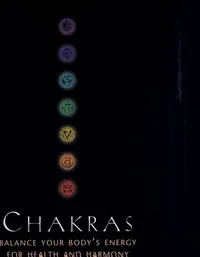




More Free Spiritual Development Books
View all →